


The Silent Run: How a Late-Detected Pathogen Gained Ground in Congo’s Gold Country
The road stretching fifty miles north from Bunia to the mining town of Mongbwalu in the Democratic Republic of Congo is more than a geographic corridor; it is a vivid window into a persistent humanitarian crisis. Marked by heavily armed military checkpoints and shadowed by a protracted history of localized ethnic violence, this volatile region has inadvertently constructed the ideal launchpad for the latest Ebola outbreak. Though the Democratic Republic of Congo has battled seventeen recorded incursions of the virus since its clinical discovery near the northern Ebola River in 1976, this latest emergency is proving to be uniquely devastating because the pathogen operated in darkness for months. Active transmission is estimated to have silently seeded itself in local communities as early as March, yet the sentinel signal—the first officially diagnosed patient—was not captured until May 15. Compounding this disastrous operational delay is a terrifying biological reality: this epidemic is driven not by the common Zaire variant, for which modern science has developed highly effective vaccines, but by the rare Bundibugyo virus strain. Currently lacking any approved prophylactic therapy or targeted cure, the Bundibugyo strain presents a terrifying mortality rate of fifty percent. In a bustling gold-mining hub packed with thousands of highly mobile migrant workers from throughout Central Africa, the delay in diagnostic detection coupled with high regional mobility has turned what might have been a localized epidemiological event into a dangerous regional threat.
A Desperate Defense: Inside the Underfunded Wards of Mongbwalu
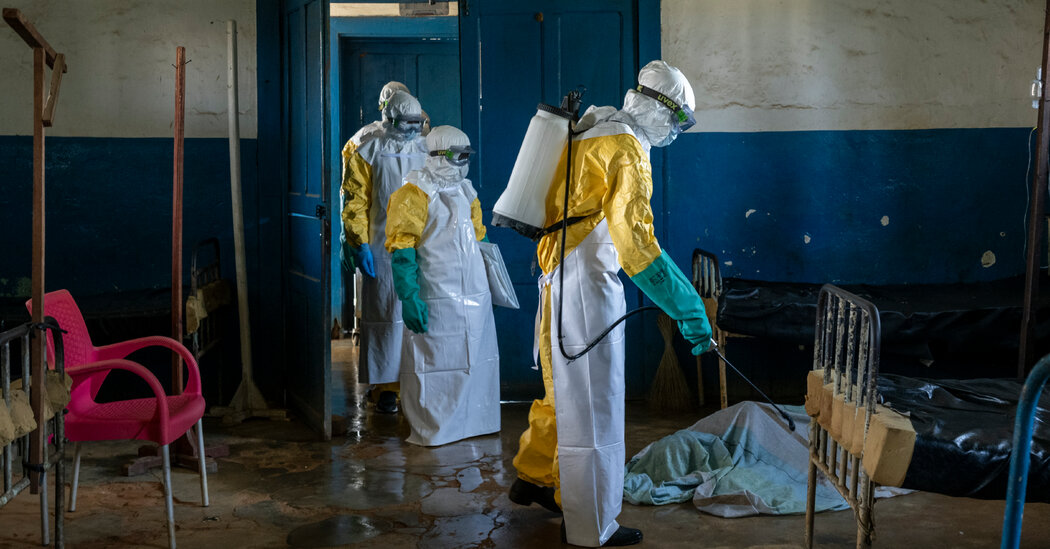
At the epicenter of the outbreak in Mongbwalu, healthcare workers are launching a heroic defense with virtually empty hands due to a severe humanitarian aid reduction. Inside the makeshift wards, foreign correspondents have witnessed a harrowing lack of basic clinical security, where diagnostic tools are almost nonexistent and local health workers must confront patients with severely compromised margins of safety. The lack of standard personal protective equipment (PPE) has turned these clinics into highly hazardous zones, marked by a constant, chaotic flow of family members moving freely through areas that should be strictly quarantined. This acute resource deficit is directly linked to the sudden, widespread contraction of international aid networks, including the recent closure of critical offices like USAID, which previously funded advanced epidemiological surveillance programs. Despite this systemic abandonment, the vacuum has been filled by inspiring acts of local bravery: ordinary farmers, merchants, and gold miners have volunteered to join the Red Cross, completing rapid training modules to safely handle and disinfect infectious bodies. Meanwhile, international humanitarian organizations like Doctors Without Borders (MSF) are racing against the clock, working frantically to build secure, isolated treatment units to protect medical staff and surrounding communities, realizing that in an epidemic of this scale, every hour spent without proper containment protocols accelerates the geographical spread of the virus toward neighboring Uganda and South Sudan.
Suspicion and Sacred Rites: The Cultural Battleground of Epidemic Control
Halting the spread of this lethal pathogen requires far more than cold medical infrastructure; it demands a deep understanding of local psychology and the deconstruction of dangerous misconceptions. Because Mongbwalu completely escaped the impacts of the country’s previous major epidemics, its population lacks a collective memory of preventative health measures, creating a dangerous vacuum where toxic conspiracy theories have taken root. Locals, bewildered by a mysterious wave of sudden deaths throughout the spring, began whispering that foreign medical teams and aid groups had introduced the virus to depopulate the area. This widespread paranoia drives sick individuals away from formal clinics and toward traditional spiritual healers, meaning that by the time a patient finally presents at a hospital, their infection has progressed to an irreversible, terminal stage. When families see their loved ones enter these understaffed facilities only to emerge in coffins, they begin to associate the clinic with death rather than survival. Furthermore, traditional funeral rituals, which encourage mourners to touch and kiss highly contagious bodies as a final mark of respect, have inadvertently acted as massive superspreader events. Bridging this profound trust deficit is now the primary objective for field workers, who must patiently educate suspicious communities and convince them that adopting safe, dignified burial protocols is the single most effective way to protect their surviving kin.
Friction on the Periphery: From Canadian Secessionism to Europe’s Surfeit of Fields
While Central Africa struggles with biological containment, other corners of the globe are experiencing different forms of systemic crisis, demonstrating how global stability is constantly challenged by political and economic volatility. In the resource-rich, politically conservative Canadian province of Alberta, a growing sense of economic alienation has fueled a highly controversial push for a secession referendum. Citizens like Steven Lovelace display a complex duality, expressing a deep affection for Canada while signing petitions for a vote on independence, reflecting a broader rise in isolationist sentiment across the globe. Meanwhile, across the Atlantic, European agricultural markets are reeling from a bizarre geopolitical byproduct: an unprecedented potato surplus that has driven spot-market prices for frozen fries in Belgium down to zero. Desperate farmers, unable to bear the cost of harvesting, have been forced to dump millions of pounds of high-quality produce back into their fields, while German growers have organized massive public giveaways known locally as the “Kartoffel-Flut,” or potato flood. This luxury glut is directly linked to international conflict, specifically the ongoing war in Iran, which has sparked massive inflation, raised transport costs, and rendered industrial refrigeration prohibitively expensive, cutting off historic export corridors to the Middle East and proving that remote geopolitical battles can dismantle trade networks half a world away.
The Cycles of Taste: Fashion Paradoxes, Noir Epics, and Ancestral Anchors
In times of widespread socioeconomic instability, society frequently turns to cultural experimentation, artistic expression, and historical nostalgia as crucial psychological survival mechanisms. This is evident in the surprising revival of the “socks and sandals” combination, long heralded as a stylistic paradox. Dating back to the Roman Empire, this polarizing pairing spent decades relegated to the realm of uncool eccentricity, only to be resurrected by modern stylists who praise it as a clean, streamlined look. This search for comfort in historical styles is mirrored in the entertainment industry, where Nicolas Cage’s performance in “Spider-Noir” blends vintage comic book mythos with mid-century cinema, offering audiences an escapist escape. Similarly, in literature, Ada Ferrer’s Pulitzer Prize-winning memoir “Keeper of My Kin” provides a deeply moving exploration of her family’s exile following the Cuban Revolution, showing how personal memories survive political chaos. Sociological research supports this search for ancestral roots, proving that structured, meaningful dialogue between grandparents and grandchildren provides vital psychological benefits, functioning as a cultural anchor that fosters resilience across generations.
Sanctuary in the Storm: Building Ruins and Folding Manti in an Uncertain Era
Ultimately, when macro-level systems falter under the weight of pandemics, economic recessions, and shifting geopolitical borders, humanity naturally turns its focus toward the home, using architecture, regional cuisine, and domestic rituals to cultivate a sense of peace in a turbulent world. This desire for grounding and permanence is visible in modern design trends, such as the rise of minimalist architecture in Central America, epitomized by a seaside patio house in Costa Rica explicitly built to mimic historical ruins, celebrating natural decay and organic resilience. In the kitchen, this search for solace is reflected in the global appreciation of traditional recipes like manti, the comforting meat-filled dumplings of Central Asia and Turkey. Modern home cooks have transformed this ancient, labor-intensive dish into an accessible vegetarian delicacy, swapping traditional dough for wonton wrappers and pairing the mushroom filling with garlic-infused yogurt and spiced tomato sauce. From Red Cross volunteers risking their lives in the Congolese forest to European farmers navigating supply chains, and families sharing stories across generational divides, humanity’s response to crisis remains defined by a profound ability to adapt, discover beauty, and cultivate community amid the challenges of an unpredictable world.