

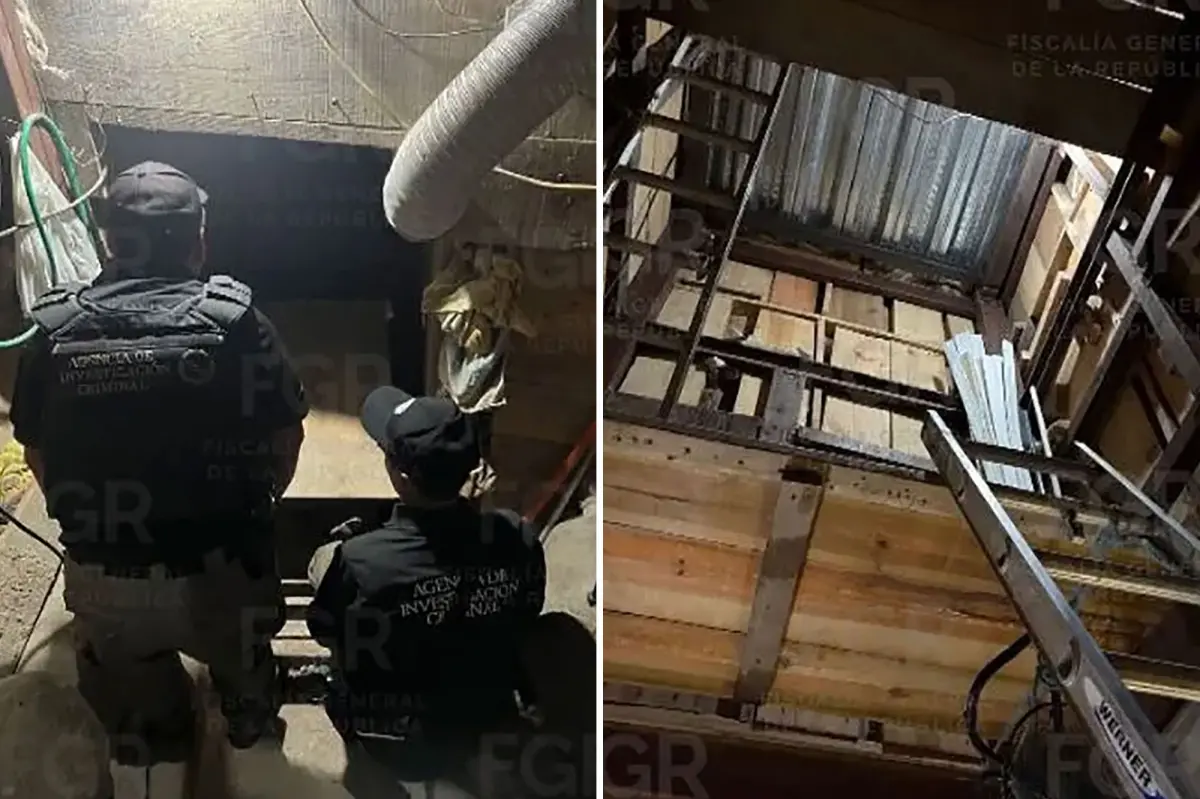
The relentless hum of Tijuana’s northern borderlands is a sensory overload of growling semi-trucks, bustling street vendors, and the constant, heavy presence of security walls separating Mexico from the United States. In the working-class neighborhood of Nueva Tijuana, life normally moves to the predictable rhythm of maquiladora shifts and family routines, completely detached from the silent world hidden just beneath the pavement. This domestic peace was shattered on a recent Saturday when a convoy of Mexican federal authorities, flanked by heavily armed personnel from the Mexican Navy, descended upon an unassuming residential property. Armed with a federal search warrant, the officers penetrated what appeared to be an ordinary domestic or commercial structure, only to uncover a staggering feat of clandestine engineering: a massive, wood-lined subterranean tunnel plunging twenty-one feet into the earth and stretching approximately 869 feet toward the United States border. The discovery of this sophisticated engineering marvel immediately transformed a quiet urban street into an active international crime scene, highlighting the incredible, unseen efforts transnational criminal networks expend to bypass some of the most heavily fortified border security infrastructure on earth.
Behind the sheer physical statistics of this 869-foot passage lies a harrowing human narrative of labor, desperation, and exploitation that rarely makes the official police blotters. Tunnels of this magnitude are not built by machines; they are carved out of the dense, unforgiving earth by the hands of forgotten laborers, often referred to in whispers as “dirt moles.” These workers, frequently recruited from impoverished rural regions of Mexico under false pretenses or coerced by the ruthless cartels, spend months in claustrophobic, pitch-black chambers where the air is thick with dust and desperately thin on oxygen. Working by the dim glow of temporary string lights, hand-tooling clay and rock while constantly listening for the terrifying creak of shifting soil, these men risk being buried alive for meager wages, far removed from the lavish lifestyles of the cartel bosses who finance these operations. The sturdy wooden lining framing the walls of this newly discovered passage is a testament to both crude craftsmanship and a calculated attempt to prevent a catastrophic collapse, highlighting the dark synergy between desperate human sweat and sophisticated criminal architecture designed to weaponized the very earth beneath our feet.
When investigators finally breached the subterranean property, they did not just find an empty void of dirt and timber; they discovered the messy, tactile detritus of a highly active logistical nerve center. Scattered throughout the property were the discarded artifacts of a dangerous, fast-paced underground economy: a scattering of modern cell phones containing untold networks of whispered secrets, bank cards used to launder and distribute millions in illicit cash flows, and a digital video recorder that likely kept watch over the cartel’s prized asset. Alongside these tools of administrative coordination lay the physical reality of the border war—dozens of individual doses of highly addictive methamphetamine destined for American streets, crates of live ammunition, and evidence pointing to the storage of heavy weaponry and volatile explosive materials. Each of these seized items represents a human story: a family devastated by addiction, a community terrorized by cartel violence, or a young foot soldier caught in the machinery of a modern, multi-billion-dollar corporate drug enterprise that views human lives as nothing more than acceptable collateral damage.
The shockwaves of the Saturday raid quickly rippled across the international boundary line, galvanizing law enforcement agencies on both sides of the border into a tense, coordinated hunt. While Mexican federal prosecutors assumed custody of the seized property and physical evidence, their American counterparts in San Diego were plunged into an urgent, high-stakes investigation of their own. Special Agents with Homeland Security Investigations (HSI), working alongside the elite Homeland Security Task Force, immediately began mobilized operations around the Otay Mesa area—a sprawling, industrial port of entry in San Diego County known for its intense commercial traffic and, historically, as a prime target for subterranean incursions. The atmosphere among these investigators is one of calculated vigilance and deep claustrophobia, as agents face the daunting task of locating where this dark artery emerges on U.S. soil. Due to the high-stakes nature of the operation and the very real threat of violent retaliation or the destruction of crucial evidence, federal authorities have kept a tight lid on the specifics, withholding details about whether the tunnel had breached American territory, how long it had been operational, or if any arrests have been made, emphasizing the quiet, dangerous chess game played out daily in the shadows of the borderlands.
For the residents of Tijuana and San Diego, who share a deeply interconnected cultural and economic ecosystem, the discovery of such a massive tunnel serves as a stark reminder of the fragile ground upon which their daily lives are built. To live in these sister cities is to accept a strange, dual reality where families are divided by towering steel bollards above ground, while beneath their feet, integrated criminal syndicates carve out secret passages that disregard sovereign borders entirely. The realization that a major logistical hub for weapons, explosives, and narcotics sat quietly in the middle of a residential neighborhood like Nueva Tijuana brings a chilling sense of vulnerability to local families, who must grapple with the knowledge that their children play on streets that double as roofs for the international drug trade. This subterranean encroachment reveals the limits of physical walls, showing that as security apparatuses grow taller and more militarized on the surface, they inevitably force the desperate, lucrative flows of humanity and contraband into the dangerous, unseen depths of the earth, transforming quiet neighborhoods into unwilling battlegrounds.
Ultimately, the unraveling of this Tijuana-to-San Diego passage underscores the endless, cyclical nature of the war on drugs and the systemic pressures that drive it. As long as the insatiable demand for narcotics persists in the United States and the despair of poverty and violence continues to plague communities in Latin America, these tunnels will continue to be dug, no matter how many are discovered and filled with concrete. This 869-foot corridor of wood and dirt is more than just a crime scene; it is a profound metaphor for the enduring, unseen connections that bind the two nations together in a complex embrace of mutual dependence and shared tragedy. It proves that human ingenuity, whether driven by the pursuit of immense profit or the sheer will to survive, will always find a way to bypass artificial barriers, leaving societies on both sides of the border to grapple with the painful reality that no wall is high enough to keep out the problems we refuse to solve on the surface.