


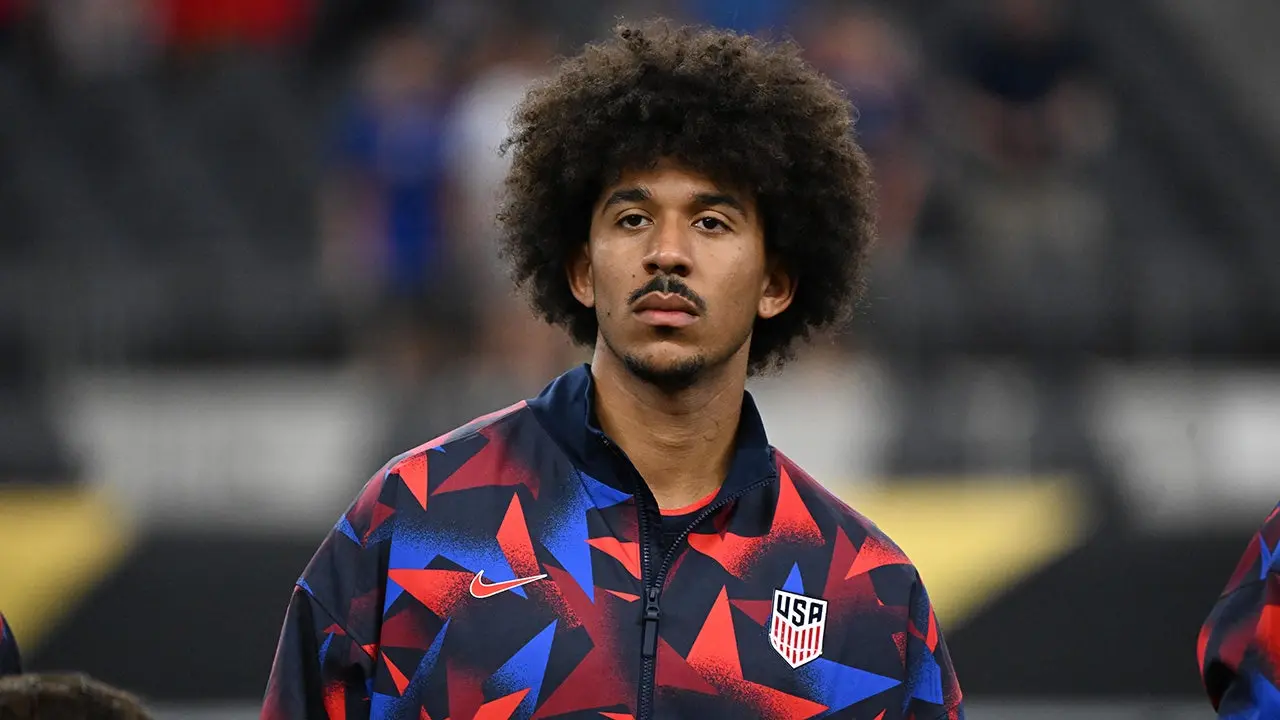
The countdown to a home-soil FIFA World Cup is supposed to be a time of unbridled optimism, a golden hour where a nation dares to dream of soccer glory on the grandest stage of all. But for the United States Men’s National Team, that dream has been clouded by an all-too-familiar specter of professional athletics: the cruel, unpredictable timing of an injury. Chris Richards, the towering 26-year-old Crystal Palace defender widely celebrated as the irreplaceable anchor of the American backline, has thrown a massive wrench into the team’s meticulously laid plans before a single World Cup tournament ball has even been kicked on American soil. What should have been a celebratory buildup to the legendary tournament has instead morphed into an anxious waiting game, as fans and analysts alike process the devastating news that Richards will not be traveling with the squad for their crucial upcoming international friendly against Senegal. This absence is not just a minor tactical setback; it is a psychological blow to a young team that has spent years cultivating a core group of players capable of competing with the global elite. Richards has long been envisioned as the steady, calming presence at the heart of the defense, the modern center-back who possesses both the physical dominance to win aerial duels and the composure on the ball to initiate critical attacks from the back. Without him, the collective heartbeat of the American defense falters, leaving a glaring, unstable void that threatens to undermine the sophisticated tactical framework constructed by new manager Mauricio Pochettino. The silence regarding his return only amplifies the tension, transforming what should be a triumphant march toward the tournament opener into a desperate, agonizing race against the clock, reminding everyone of the fragile tightrope that elite athletes walk every single day of their careers.
As his teammates board the charter flight bound for Charlotte, North Carolina, where a formidable and physically punishing Senegal side awaits them, Richards remains isolated at the USMNT’s state-of-the-art training facility in Atlanta, Georgia. This physical separation serves as a stark, melancholic metaphor for the lonely reality of an injured player, forced to watch his comrades-in-arms prepare for battle from the sidelines while he works in isolation. Mauricio Pochettino, a manager renowned for his emotional intelligence, deep empathy, and intense tactical demands, has chosen a cautious path, prioritizing the long-term viability of his star defender over the immediate tactical needs of a warm-up match. Under the humid Atlanta sky, Richards is confined to the frustrating, repetitive grind of physical rehabilitation—a silent world of elastic resistance bands, ice packs, and solitary pool sessions, far removed from the adrenaline-fueled roar of a packed stadium. Pochettino’s public statements reflect a mixture of pragmatism and deep concern, acknowledging that the best course of action is for Richards to remain stationary, focus entirely on healing his damaged ankle, and take things day by day under the watchful eyes of the medical staff. Yet behind the scenes, the manager’s anxiety is palpable, characterized by frantic, repetitive inquiries to his trusted assistant coach, Jesús Pérez, seeking even a shred of optimism regarding Richards’ recovery timeline. This nervous energy from the coaching staff underscores the sheer importance of the Crystal Palace defender, whose presence on the pitch is so vital that his potential absence forces a complete re-evaluation of the team’s tactical identity, defensive alignment, and overall strategy for the tournament.
The narrative surrounding Richards’ injury is further complicated by his recent club season in England, where he battled through grueling Premier League fixtures only to watch the final weeks of the campaign slip through his fingers. His absence from the USMNT’s high-profile, glamorous 26-man roster reveal in the heart of New York City was the first subtle indicator of trouble, replaced instead by a pre-recorded video message sent from Germany, where he sat helplessly on the bench as Crystal Palace competed in a historic European final match. This missed milestone was more than just a logistical hiccup; it was a poignant reminder of the relentless physical toll that modern European club schedules extract from North American players who must constantly cross the Atlantic to represent their national colors. Having not yet participated in a single full training session under Pochettino’s new regime, Richards finds himself in a grueling race against his own anatomy, attempting to master a brand-new tactical system while simultaneously coaxing his body back to peak performance. The emotional weight of this struggle cannot be overstated for a 26-year-old on the absolute precipice of his career’s defining moment, knowing that a single misstep in his rehabilitation could cost him the once-in-a-lifetime opportunity to lead his country in a home World Cup. This agonizing limbo leaves the entire American sporting community wishing for a sports miracle, hoping that the natural resilience of a young athlete can triumph over the cold, calculated projections of medical reports.
In the vacuum created by Richards’ injury, Pochettino’s roster decisions have come under intense scrutiny, highlighting the delicate high-wire act of squad selection in the modern international game. The shocking exclusion of young phenom Diego Luna—who had just starred in high-profile promotional campaigns for Nike—sent shockwaves through the American fanbase, igniting passionate debates about the coach’s tactical philosophy and selection criteria. To compensate for the vulnerability in his central defense, Pochettino made the difficult decision to sacrifice several dynamic attacking options, opting instead to stack his roster with extra defensive depth in a desperate bid to shield his goal from elite international attackers. However, this strategic shift has revealed a worrying truth: while the United States boasts an abundance of versatile, energetic midfielders and explosive wingers, the reservoir of elite, international-caliber center-backs remains perilously shallow. The drop-off in composure, tactical awareness, and physical dominance behind Richards is steep, meaning that any alternative defensive partnership will inevitably lack the chemistry and intuitive understanding required to stifle world-class opposition. As the coaching staff experiments with makeshift defensive pairings in training, the realization sets in that no amount of auxiliary reinforcements can truly replicate the unique blend of defensive steel and distribution skills that Richards naturally brings to the pitch.
The path forward for the USMNT is a grueling gauntlet designed to test their mettle, starting with the physical battle against Senegal in Charlotte before embarking on a high-stakes friendly against an elite German squad. These matches are not mere exhibitions; they are pressure cookers intended to forge team chemistry, refine tactical structures, and answer the burning question of who will step into the breach if Richards cannot recover in time. Under FIFA’s strict tournament regulations, Pochettino faces a ticking clock, with all forty-eight competing nations required to finalize their definitive twenty-six-man rosters by early June, though emergency loop-holes do allow for injury replacements up to twenty-four hours before kickoff. From the training pitches, the team will transition directly into the demanding crucible of Group D, starting with a high-stakes, nerve-wracking opener against a resilient Paraguay side at the iconic SoFi Stadium in Los Angeles on June 12th. From there, the American continent becomes their stage, as they travel to the Pacific Northwest to face a disciplined Australia team in Seattle on June 19th, before returning to Southern California for a potentially decisive group finale against a fiercely competitive Türkiye on June 25th. Each of these opponents presents a unique tactical challenge that demands an organized, cohesive, and completely mistake-free defensive unit—an objective that becomes infinitely more difficult to achieve when the anchor of that unit is sidelined.
Ultimately, the saga of Chris Richards’ ankle injury represents the beautiful, agonizing reality of international football, where years of preparation, dreaming, and sacrifice can hinge on the health of a single joint. For the American players, coaching staff, and millions of passionate fans, the coming days will be defined by a collective holding of breath, hoping that the next medical update brings the salvation of positive news. Yet, it is within these moments of adversity that the true character of a team is forged, offering an golden opportunity for an unexpected hero to emerge from the shadows and etch their name into American soccer folklore. Whether Richards makes a triumphant, dramatic return for the opening match against Paraguay, or the USMNT is forced to navigate the treacherous waters of Group D without their defensive talisman, the journey promises to be a captivating drama of resilience, adaptability, and pure human spirit. Soccer, at its core, is a game of collective belief, and as the players take the field in Charlotte and beyond, they carry not just the tactical instructions of Pochettino, but the shared hopes of a nation eager to prove that American soccer can survive, adapt, and conquer any obstacle in its path.