



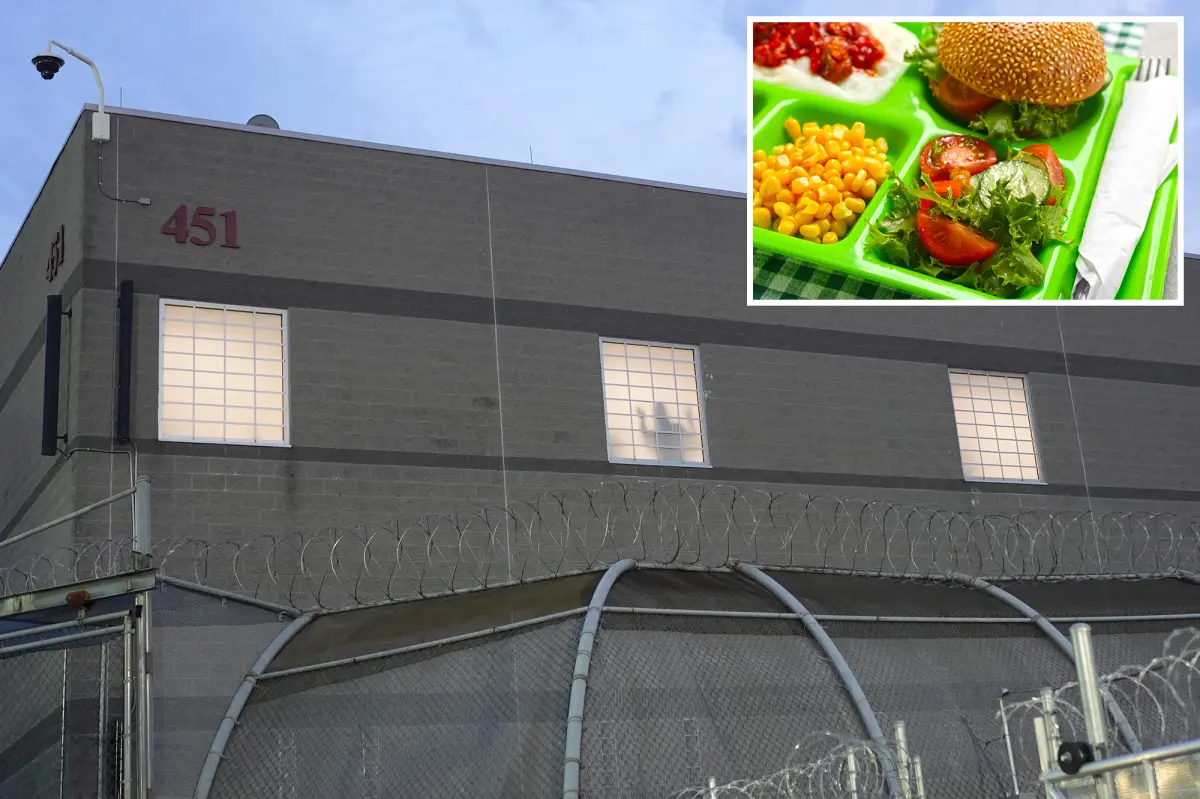
Outside the imposing, institutional facade of Newark’s Delaney Hall, a profound human drama plays out daily on the cold, concrete streets of New Jersey. The air is regularly filled with the passionate, echoing chants of community activists, human rights advocates, and deeply worried family members who gather to protest the treatment of the detainees inside. Armed with cardboard signs, megaphones, and a shared sense of moral outrage, these demonstrators seek to draw public attention to the plight of approximately three hundred migrants currently confined within the walls of this one-thousand-bed facility. To the people standing on the pavement, many of whom have loved ones locked behind those secure doors, the building represents a place of unnecessary suffering and systemic neglect. They tell heartbreaking stories of families fractured by borders and bureaucratic procedures, pointing to reports of poor sanitation, inadequate medical attention, and substandard food quality as evidence of a system that has lost its humanity. Managed by the private prison corporation GEO Group under a contract with federal immigration authorities, Delaney Hall has become a lightning rod for criticism in the Garden State. For the protesters, the struggle is not merely about policy reform; it is a desperate, deeply personal plea for the basic dignity and fair treatment of vulnerable human beings who fled hardship only to find themselves navigating the cold, sterile reality of administrative detention. The fence of the facility, topped with razor wire, stands as a physical and symbolic barrier between those seeking justice and the bureaucratic machinery of the state, reminding everyone of the profound human cost of current immigration policies. Ultimately, this scene serves as a stark reminder of the emotional weight carried by families who are forced to watch their relatives remain isolated from the community, waiting in legal limbo.
This localized outcry has vibrated far beyond the streets of Newark, escalating into a major political battleground that has drawn in some of New Jersey’s most prominent Democratic leaders. These lawmakers have aligned themselves with the grassroots protesters, forcefully demanding that the Department of Homeland Security shut down the privately run facility once and for all. They argue that the state of New Jersey should not be a host to profit-driven institutions that monetize the detention of migrants, asserting that corporate-run centers naturally prioritize administrative cost-cutting over the fundamental welfare of human beings. This political pushback reflects a broader, systemic debate across the United States regarding the ethics of utilizing private contractors for civil immigration enforcement. Opponents of the facility claim that the profit motives of companies like the GEO Group inherently compromise the quality of care provided to detainees, turning a humanitarian challenge into a source of corporate revenue. By framing the closure of Delaney Hall as an urgent necessity, local politicians are attempting to establish a more compassionate standard for how the state interacts with undocumented populations. They argue that a civilized society must be judged by how it treats the most vulnerable among us, and that allowing such facilities to operate under a veil of corporate secrecy is a betrayal of the community’s progressive values. As the debate intensifies, it highlights the deep divisions within the political landscape, where arguments over security and legal compliance clash directly with the moral imperative to provide humane conditions for those seeking refuge.
In sharp contrast to the distressing allegations of starvation and inedible sustenance put forth by critics, the Department of Homeland Security has presented a robust defense centered on the actual daily provisions offered to the detainees. To counter the narrative of neglect, federal authorities released a comprehensive, pre-planned weekly menu designed to demonstrate that the dietary needs of those inside are being met with care and structure. According to the government, the meals served at Delaney Hall are far from the meager rations described by activists, featuring a variety of hot lunches and dinners. On any given week, detainees are reportedly offered menu items such as seasoned chicken fajita meat served in warm flour tortillas for lunch, followed by dinners featuring classic Salisbury steak patties smothered in traditional gravy, all accompanied by fortified, sugar-free beverages to ensure proper nutrition. The Department of Homeland Security emphasizes that these meal plans are not arbitrary but are carefully evaluated by certified dietitians to meet strict daily caloric and nutritional requirements. By detailing these specific meals, the government hopes to paint a picture of an orderly, well-managed environment where the fundamental physical health of every individual is systematically prioritized, challenging the critical assertions of the public with institutional data and structured culinary schedules. This focus on physical sustenance is used by officials to assert that the basic biological needs of the migrants are being met, aiming to de-escalate the public relations crisis surrounding the facility.
Central to the government’s defense is the explicit denial of any ongoing hunger strikes or widespread deprivation within Delaney Hall. A spokesperson for Immigration and Customs Enforcement made it clear that despite the rumors circulating among advocacy networks and fueled by the protests, there is currently no active hunger strike taking place inside the facility. To illustrate their preparedness and adherence to federal oversight, the spokesperson detailed the strict protocols that are put in place even during times of active protest. They explained that in the event of a meal refusal, ICE staff continue to prepare and deliver three complete, dietitian-evaluated meals directly to each individual’s room every single day, while ensuring a constant, unrestricted supply of clean drinking water and other beverages. Furthermore, officials emphasize that the basic necessities of life—such as daily access to hot showers, clean bedding, fresh clothing, soap, and essential personal hygiene products—are guaranteed to all three hundred detainees currently residing there. In an effort to humanize the facility’s operations, authorities also highlighted that migrants are provided with access to telephone systems, allowing them to remain in contact with their families, share updates with loved ones, and consult with their legal counsel as they navigate their immigration proceedings. These measures are framed as part of a comprehensive system designed to maintain safety and decency.
The debate over the quality of life inside Delaney Hall has also touched on the economic realities of detention, particularly regarding the facility’s commissary system. While the government maintains that the standard meals are both nutritious and sufficient, they acknowledge that detainees have access to an internal commissary where they can purchase additional snacks, favorite food items, and personal comfort goods. This system, however, requires financial resources, a detail that has sparked a contentious rhetorical exchange between political factions. Conservative figures have actively defended the facility’s conditions by pointing out that if progressive critics and Democratic lawmakers are truly concerned about the comfort and food options of the detainees, they are entirely free to deposit their own personal funds directly into the migrants’ commissary accounts. This provocative challenge highlights the deep partisan split over who should bear the moral and financial responsibility for individuals in federal custody. It turns a simple transaction—such as a detainee purchasing a favorite snack to find a small moment of comfort—into a political talking point about self-reliance, charity, and the role of the state, demonstrating how even the smallest details of life inside the facility are scrutinized through a highly polarized lens. This political finger-pointing often overshadows the day-to-day lived experiences of the detainees, who find themselves caught in the middle of a systemic ideological battle over funding and human dignity.
Ultimately, the administrative defense of Delaney Hall culminates in a controversial comparison made by the Department of Homeland Security regarding the standards of care in ICE facilities versus traditional American prisons. Federal officials boldly claim that the detention standards maintained at Delaney Hall are actually higher than those found in most municipal and state penitentiaries that house American citizens convicted of crimes. While this claim is intended to reassure the public that the government is meeting its legal and ethical obligations, it also underscores the deep, existential questions at the heart of the immigration debate. For the families waiting anxiously on the outside, and the three hundred individuals facing uncertain futures on the inside, the issue cannot be reduced to a mechanical comparison of prison standards or the nutritional value of a Salisbury steak. The human element—the longing for freedom, the anxiety of legal limbo, and the basic need to be treated with unconditional respect—cannot be fully addressed by corporate policies, dietitian-approved menus, or clean bedding. As the protests outside show no signs of slowing down, Delaney Hall remains a poignant and troubled symbol of a society grappling with the difficult task of balancing its security policies with its fundamental humanitarian values, leaving the real human cost of detention hanging in the balance as we question what it truly means to provide humane care.