


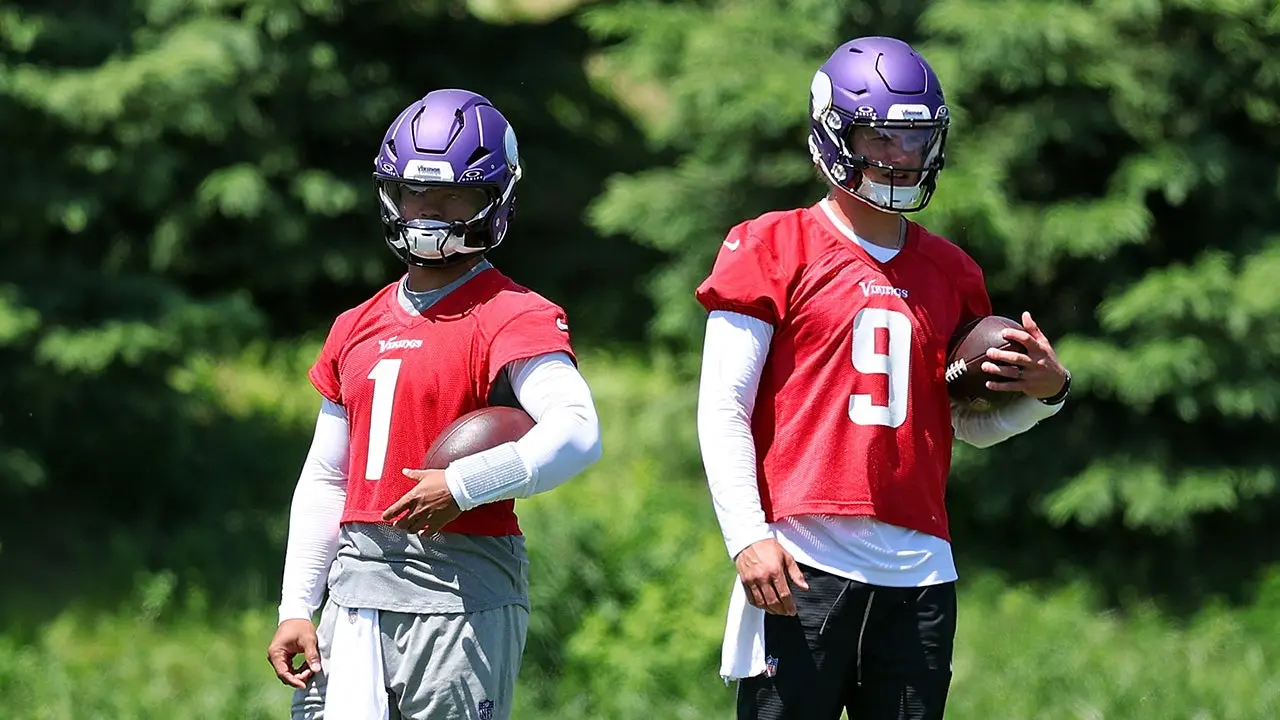
The high-stakes pressure of playing quarterback in the physical and mental crucible of the NFL is a burden few athletes are truly equipped to carry, a reality the Minnesota Vikings and their young signal-caller J.J. McCarthy learned all too well during a turbulent campaign. After a spectacular 14-3 season led by the reliable Sam Darnold, the Vikings organization made the bold decision to let their veteran orchestrator walk in free agency, choosing instead to draft McCarthy in the first round of the 2025 draft as the undisputed future of the franchise. However, the best-laid plans of the front office were immediately shattered when a devastating knee injury sidelined the highly touted rookie for the entirety of his inaugural year, forcing him into a grueling period of rehabilitation while backup option Carson Wentz held down the fort. When McCarthy finally returned to the gridiron, his long-awaited debut season proved to be an unpredictable roller coaster, navigating a volatile 6-4 record across ten games while fighting to establish his professional rhythm. The young quarterback showcased flashes of undeniable athletic brilliance but was heavily hindered by rookie inconsistency, passing for a modest 1,632 yards and throwing 11 touchdowns against 12 costly interceptions with a 57.6% completion rate. Recognizing the raw edges of their young player and the desperate need for stability at the game’s most critical position, head coach Kevin O’Connell and the front office pivoted quickly during the offseason, entering the free-agent market to sign veteran Kyler Murray, the former elite number-one overall draft pick who was looking for a fresh start after an up-and-down career with the Arizona Cardinals. This high-profile acquisition instantly injected a heavy dose of intrigue and competitive tension into the team’s training facility, sparking an intense league-wide debate over who will earn the starting nod under center for the highly anticipated Week 1 matchup.
As the media descended upon the offseason practice facility, the spotlight naturally turned to the burgeoning dynamic between the seasoned veteran and the young, recovering former first-round pick who are now locked in a direct battle for their professional survival. Kyler Murray, preparing to enter his eighth season in the league, approached his press availability with the polished diplomacy and measured grace of a veteran who has weathered the storm of both heavy public criticism and franchise superstardom. When asked about his relationship with McCarthy, Murray offered an incredibly positive, nurturing perspective that painted a picture of an ideal professional mentorship and safe learning environment. He emphasized his desire to serve as a supportive resource for the young player, acknowledging his own status as an elder statesman in the locker room despite still feeling young at heart, noting that he is eager to pass along any valuable knowledge he has accumulated over his extensive career. Murray went on to praise McCarthy’s receptiveness to guidance, describing him as overly accepting, highly communicative, and constantly asking insightful questions to sharpen his understanding of the game. By framing their daily interactions as a collaborative, team-oriented partnership focused entirely on what is best for the collective success of the Vikings franchise, Murray effectively neutralized early narratives of locker room hostility and positioned himself as a mature, team-first leader ready to guide the organization forward.
However, the carefully crafted narrative of a harmonious mentor-student relationship was swiftly disrupted when J.J. McCarthy took the podium to share his own, strikingly different perspective on the locker room dynamic. Rather than echoing Murray’s warm sentiments of fraternal bonding and mutual support, the young Michigan standout offered a brutally honest, almost chilly description of their day-to-day interactions. McCarthy compared their working dynamic to “two guys in a classroom,” explaining that Murray sits on one side of the room while he sits on the other, leaving the responsibility of teaching and coaching entirely in the hands of the coaching staff. This stark metaphor immediately piqued the curiosity of reporters, who pushed further to ask if there was any underlying awkwardness or animosity brewing between the two highly competitive athletes. McCarthy downplayed the tension but did so with an equally intriguing comparison, likening the atmosphere to the social distance one feels in high school when there is another person on the opposite side of the room. By clarifying that it was “just kinda how it is” and not necessarily awkward, McCarthy unintentionally pulled back the curtain on the hyper-competitive, survivalist mindset permeating elite athletic facilities, where friendly pleasantries take a backseat to the relentless battle for professional survival.
This stark contrast in responses highlights the deep psychological complexity inherent to NFL quarterback rooms, where individual ambition is forced to coexist with the collective goals of the franchise. In the modern sports landscape, public relations departments make great efforts to project a sense of seamless unity and mentorship, yet the reality of a professional locker room is often far more isolated and transactional. For an established veteran like Kyler Murray, welcoming a younger competitor with open arms is a strategic move that demonstrates maturity, solidifies his image as a leader, and curries favor with the coaching staff. Conversely, for a young player like J.J. McCarthy, who has already endured the physical heartbreak of a missed rookie season and the mental weight of a turnover-heavy comeback campaign, there is little room for superficial camaraderie. McCarthy’s perspective reveals a hyper-focused athlete who views his peer not as a big brother, but as a direct obstacle standing between him and his lifelong dream of being a franchise savior. Rather than playing the role of the submissive apprentice, McCarthy’s “classroom” comments suggest a desire to maintain a professional distance, treating the quarterback competition as an objective, clinical race decided solely by the playbooks and the coaches on the whistle.
The heightened stakes surrounding this quarterback drama are further amplified by the lingering shadow of the team’s recent history, specifically the painful departure of former quarterback Sam Darnold. The Vikings are coming off a disappointing 9-8 finish in Kevin O’Connell’s fourth year at the helm, a significant regression from the spectacular 14-3 season they enjoyed when Darnold was under center while McCarthy was rehabbing his knee injury. Instead of keeping Darnold, the front office allowed him to sign with the Seattle Seahawks, choosing to trust a roster depth chart that paired McCarthy with veteran backup Carson Wentz during the 2025 offseason. This decision proved to be an agonizingly bitter pill for Minnesota fans to swallow, as Darnold went on to experience an astonishing career renaissance in Seattle, culminating in a historic Super Bowl LX victory over the New England Patriots. Watching their former quarterback hoist the Lombardi Trophy in another jersey has put immense pressure on General Manager Kwesi Adofo-Mensah and Coach O’Connell to prove that their long-term vision was correct. By signing Kyler Murray, the front office is signaling that they cannot afford another mediocre season or wait indefinitely for McCarthy’s painstaking development, turning the upcoming campaign into a high-stakes referendum on the organization’s entire leadership structure.
As training camp approaches, the stage is set for one of the most intriguing and closely watched quarterback battles in recent NFL history, one that will test both the tactical acumen of Kevin O’Connell and the psychological fortitude of his players. The cold, classroom-like peace currently maintained by Murray and McCarthy will inevitably be stress-tested once the intense summer heat sets in, the pads are strapped on, and every single practice rep is dissected by coaches, media, and fans alike. Murray’s proven athletic pedigree and veteran experience make him the logical favorite to command the offense in Week 1, but McCarthy’s high draft capital and raw, unyielding competitive drive ensure that he will not surrender the starting job without a fierce fight. Ultimately, the success of the Minnesota Vikings’ season will not depend on whether these two contrasting personalities become close friends off the field, but on how effectively O’Connell can harness this cold, competitive tension to elevate the play of both athletes. If managed correctly, the intense rivalry could forge a battle-tested leader capable of returning Minnesota to the elite tier of the NFC; if mismanaged, the quiet distance between the classroom desks could expand into a rift that fractures the entire team.