

The story of Jai Vang is a deeply human narrative of youthful mistakes, decades of quiet redemption, and the sudden, terrifying clash between federal immigration enforcement and state-sanctioned mercy. Born in Laos, Vang arrived in the United States as a child, navigating the complex and often vulnerable landscape of a refugee family trying to plant roots in an unfamiliar land. In 1994, at the volatile age of eighteen, Vang made a grave error that would cast a shadow over the next thirty years of his life: he was convicted of aiding and abetting an armed robbery in Hennepin County, Minnesota. After serving his designated prison sentence, he was released back into American society, carrying the heavy stigma of a criminal record but possessing a fierce determination to rebuild his life from the ground up. Over the course of nearly three decades, Vang quietly transformed himself, marrying, starting a family, and founding a successful local painting business that became a pillar of his neighborhood. He paid his taxes, abided by every law, and actively contributed to the economic and social fabric of Minnesota, believing that his debt to society had been paid and his reformation complete.
However, the fragile peace of the life Vang had painstakingly built was shattered in January during a targeted sweep by Immigration and Customs Enforcement (ICE) known as “Operation Metro Surge.” Because Vang was not a formalized U.S. citizen, his old felony conviction remained a latent fuse, allowing immigration authorities to arrest him with the intent of deporting him back to Laos—a nation he had not seen since his earliest childhood and where he had no remaining ties, family, or language fluency. The sudden arrest sent shockwaves through his family and local community, highlighting the terrifying reality faced by many reformed immigrants who live under the constant, looming threat of retroactive exile. To Vang and his loved ones, the deportation order felt less like a measure of public safety and more like a cruel, bureaucratic erasure of a man who had spent thirty years proving his value to the only country he truly called home.
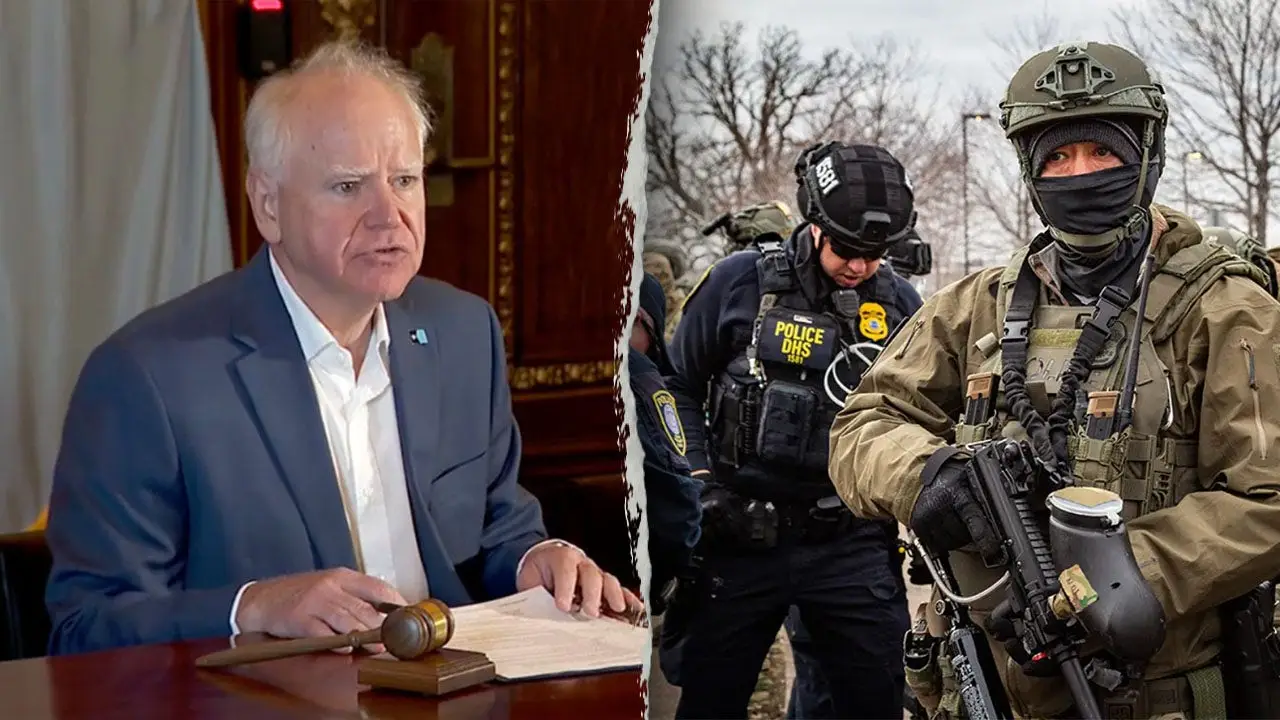
Recognizing the profound human tragedy unfolding in his state, Minnesota Governor Tim Walz took extraordinary measures to intervene on Vang’s behalf. Upon learning of Vang’s impending deportation and his desperate plea for clemency, Walz bypassed standard timelines to call an emergency, special session of the Minnesota Board of Pardons’ Clemency Review Commission. This high-stakes meeting brought together a powerful triumvirate of state leadership, including Governor Walz, state Attorney General Keith Ellison, and Minnesota Supreme Court Chief Justice Natalie Hudson. Operating with a shared understanding of restorative justice and the human capacity for transformation, the commission carefully reviewed Vang’s life post-incarceration, noting his spotless criminal record over three decades, his entrepreneurial contributions, and his devotion as a father and husband. Recognizing that deporting Vang would serve no constructive purpose, the commission voted unanimously to grant him a full pardon, effectively stripping the federal government of the legal grounds required to deport him.
During the emotionally charged clemency hearing, Governor Walz’s defense of Vang was so impassioned that he repeatedly and inaccurately referred to the Laotian immigrant as a “citizen,” a slip of the tongue that underscored how deeply integrated Vang was perceived to be within the local community. Walz argued vehemently that Vang had long since transcended his legal status through his actions, describing him as a “critical member” of the state whose deportation would actively harm Minnesota. “I can find no reason how Minnesota will be safer or better if Mr. Vang is deported to a country he has not been to since he was a child,” Walz declared, questioning the logic of a system that would banish a taxpaying business owner who was actively creating job growth and living a peaceful, upright life. Attorney General Keith Ellison echoed these sentiments from afar, joining the meeting via telephone to affirm his thorough review of the case and throw his full support behind Vang’s petition, signaling a united state front against what they viewed as a cold and counterproductive federal mandate.
This act of state-level defiance, however, took place against a backdrop of intense political warfare and deeply polarized views on immigration and law enforcement. The pardon drew sharp criticism from federal officials and became a flashpoint in Governor Walz’s ongoing political feud with immigration authorities. During “Operation Metro Surge,” Walz had consistently and bitterly fought federal interventions, using fierce, emotionally charged rhetoric that compared ICE’s tactics to historical atrocities. He famously likened the agency’s sweeps to the actions of the Gestapo, describing immigrant communities as living in terror, “hiding in their houses” much like those hiding during the Holocaust. These remarks drew a fierce, public rebuke from then-Acting ICE Director Todd Lyons, who implored the governor to temper his language, pointing out that such extreme comparisons placed federal officers in physical danger and ignored the fact that ICE was simply executing laws enacted by Congress.
Ultimately, the story of Jai Vang is a powerful testament to the ongoing debate over the soul of American justice: whether it should be defined by the rigid, retroactive application of federal law or by the localized capacity for grace, rehabilitation, and common-sense compassion. By securing a unanimous partition from Minnesota’s highest authorities, Vang was spared the devastating fate of exile, allowing him to remain with the family and the business he spent his adulthood building. Yet, his case remains a symbol of a deeply fractured nation, where a person’s safety, identity, and right to belong can depend entirely on the ideological divide between the governor’s mansion and the federal agents pounding on the door. For the Vang family, the pardon was a miraculous gift of survival, but for the country, it remains a vivid illustration of the delicate, often contradictory nature of mercy in the modern American landscape.