



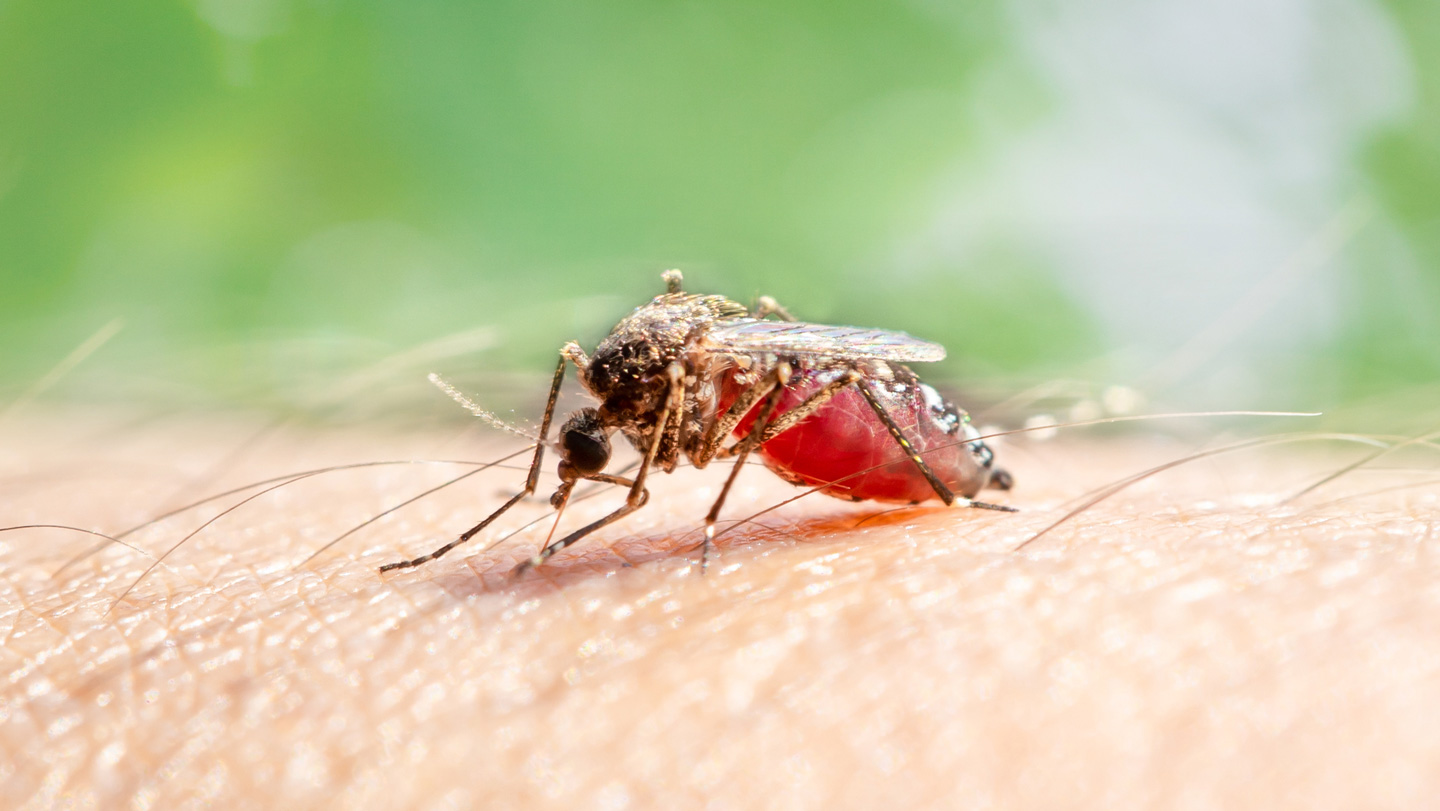
For decades, the global struggle against mosquitoes has been defined by a relentless, high-stakes game of biological warfare. At the center of this battle is the yellow fever mosquito (Aedes aegypti), a highly adaptable vector responsible for spreading devastating diseases like dengue, Zika, and yellow fever across urban and tropical landscapes. To shield ourselves, we have relied heavily on chemical repellents, with N,N-Diethyl-meta-toluamide—commonly known as DEET—reigning as our undisputed, gold-standard shield since its development by the United States Army in the aftermath of World War II. However, groundbreaking research published in the Journal of Experimental Biology has delivered a startling revelation that challenges our fundamental assumptions about these pesky insects. Scientists have discovered that yellow fever mosquitoes can actually undergo a cognitive shift, learning to associate the sharp, chemical odor of DEET not with danger or repulsion, but with the promising reward of a warm blood meal. This remarkable display of neural plasticity suggests that these tiny pests possess a sophisticated capacity for associative learning, allowing them to rewrite their hardwired protective instincts and transform a traditionally negative sensory experience into a highly alluring positive signal.
To appreciate the gravity of this discovery, it is essential to understand the long-standing scientific enigma surrounding how DEET actually deters insects. Despite more than seventy years of widespread global use, neuroscientists and entomologists remain divided over the chemical’s precise mode of action. One school of thought argues that mosquitoes possess specific olfactory receptors that detect DEET and find its scent inherently repulsive, driving them to flee. Another theory suggests that the chemical acts as a sensory scrambler, cloaking human body odors—such as lactic acid, carbon dioxide, and warmth—leaving mosquitoes functionally blind to our presence. Driven to unravel this mystery, Dr. Clément Vinauger, a leading neuroethologist at Virginia Tech, designed an elegant laboratory experiment to test whether these insects could modify their behavioral responses to DEET through prior experience. Vinauger and his team housed female mosquitoes in custom-designed chambers equipped with dual airflows, allowing them to control the exact odor profiles the insects encountered. By pairing brief ten-second exposures of DEET-laced air with access to a warm, nourishing artificial blood feeder, the researchers set out to systematically condition the mosquitoes, mimicking the classic Pavlovian training typically studied in domestic animals.
The most compelling phase of the study occurred when the researchers put this new conditioning to the test, moving the insects from controlled chambers into narrow testing tubes to dry-run a real-world encounter. To observe their raw hunting behavior, a courageous researcher placed one untreated hand at one end of a testing apparatus and another hand heavily sprayed with a commercial DEET repellent at the opposite end. When naive, untrained mosquitoes were introduced to the tubes, they performed exactly as expected, displaying a natural aversion to the chemical barrier and steering clear of the treated skin. However, when the cohort of conditioned mosquitoes was introduced, the results were dramatic and highly unexpected: the trained insects flew directly toward the repellent-treated hand, clinging to the mesh and actively attempting to bite through the barrier to reach their perceived reward. This stark contrast in behavior provided definitive visual proof that the mosquitoes were not merely suffering from a scrambled sense of smell; they were actively perceiving the unique scent of DEET, remembering its association with food, and choosing to override their natural aversion in pursuit of a meal.
Despite these fascinating findings, translating laboratory successes into a natural, open-air environment introduces several complex biological hurdles that must be carefully evaluated. Dr. Anandasankar Ray, a distinguished neuroscientist at the University of California, Riverside, who was not involved in the Virginia Tech study, points out that mosquito navigation is a highly sophisticated, multi-sensory process that does not rely on a sense of smell alone. Specifically, mosquitoes are equipped with specialized gustatory receptors located not on their heads, but on their tarsi—the very tops of their legs. In a real-world setting, a mosquito cannot simply hover near a human and feed; she must eventually land directly on our skin, bringing her feet into immediate contact with the applied repellent. Under normal conditions, landing on a fresh coat of DEET produces an intensely bitter, physically noxious sensation, serving as a powerful chemical deterrent. Dr. Ray notes that even if a mosquito is initially lured toward a person by a learned appreciation for the airborne smell of DEET, the moment her legs touch the concentrated chemical, she would experience a painful behavioral punishment rather than a reward, likely forcing an immediate retreat.
This apparent paradox between airborne attraction and physical repulsion can be reconciled by examining what happens to insect repellents as they wear off over time. Dr. Vinauger hypothesizes that the true danger of this learned preference manifests hours after a person first applies repellent to their skin, when the protective barrier begins to break down. As body heat, perspiration, environmental wind, and evaporation gradually degrade the active ingredients in DEET, the concentration of the chemical drops to a sub-lethal, non-repellent level. In this faded state, the lingering trace of DEET may no longer be strong enough to trigger the painful “bitter touch” on the mosquito’s legs, allowing her to land safely, pierce the skin, and successfully feed. Once she completes her meal under these depreciated chemical conditions, the positive association between the scent of DEET and a successful blood reward is officially locked into her memory. During her subsequent hunting cycles, she may no longer require the raw, unmasked scent of human body odor to find a host; instead, she could actively seek out the faint chemical fingerprint of DEET, turning our primary line of defense into a homing beacon for her next attack.
Fortunately, these remarkable biological insights do not mean we should abandon our primary tool for insect defense or panic during our outdoor activities this season. Dr. Vinauger stresses that DEET remains our absolute gold standard for personal protection, saving countless lives globally by preventing the transmission of dangerous vector-borne pathogens. Rather than discouraging repellent use, this research serves as a valuable wake-up call regarding the physical dynamics of chemical application and the critical importance of human behavior. Because different manufacturers package DEET in varying concentrations—ranging from weak family formulas to heavy-duty woodsman sprays—the rate of degradation and the overall duration of protection will vary wildly from product to product. To prevent mosquitoes from exploiting the vulnerable, degraded window of fading repellent, we must become highly vigilant consumers. Outsmarting these remarkably adaptable, blood-hunting pests requires us to diligently read product labels, understand the active concentration we are applying, and commit to regular, timely reapplications to ensure our chemical shield remains thick, painful, and undeniably effective.