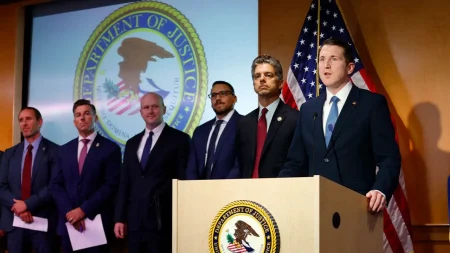



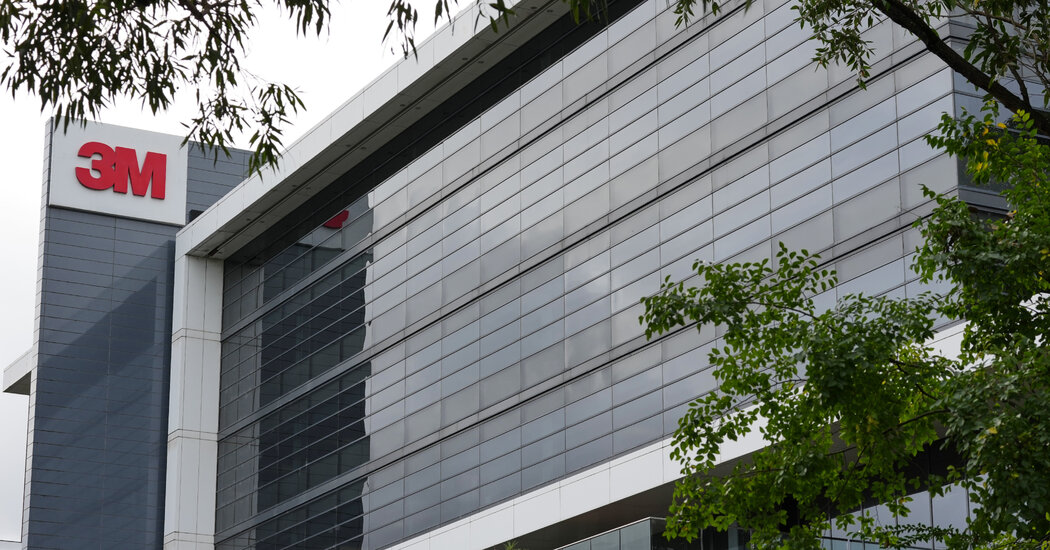
In an extraordinary and unprecedented confrontation between a sovereign nation and one of the world’s most dominant multinational corporations, the Australian federal government has launched a historic lawsuit against the American industrial giant 3M, seeking more than $1.4 billion in damages. Announced in the nation’s capital of Canberra by Attorney General Michelle Rowland, this massive legal action represents the largest single damages claim ever initiated by the Australian government. The lawsuit targets the Minnesota-based conglomerate for its role in manufacturing and distributing specialized firefighting foams containing per- and polyfluoroalkyl substances—colloquially and chillingly known as “forever chemicals” or PFAS. According to the Australian state, 3M actively and systematically concealed critical scientific data regarding the severe environmental and human health risks associated with these synthetic compounds, despite knowing internally of their toxic potential. The legal battle centers on the extensive, long-term contamination of twenty-eight domestic military installations spread across the country, where these toxic foams were utilized for decades in routine training exercises and emergency response operations. In her address to reporters, Attorney General Rowland framed the lawsuit as a defining moment of national sovereignty and corporate accountability, asserting that her government is fully prepared to leverage its resources to challenge a global corporate behemoth. This legal endeavor is not merely a dry pursuit of financial compensation; it is a profound effort to hold a massive multinational entity responsible for a legacy of environmental degradation. The sheer scale of the lawsuit underscores a growing global impatience with corporate impunity, signaling that governments are no longer willing to absorb the astronomical clean-up costs of industrial pollution while the manufacturing corporations pocket billions in profits. For the local communities surrounding these contaminated military sites, the lawsuit offers a glimmer of hope that the heavy burden of living near poisoned land and water might finally be addressed by those who originally created the threat.
To understand the gravity of the Australian government’s legal crusade, one must look at the insidiously destructive nature of the substances at the heart of the dispute. Known widely as “forever chemicals” because their incredibly strong carbon-fluorine bonds prevent them from breaking down naturally in the environment, PFAS are a class of thousands of synthetic chemistries designed to resist heat, water, and oil. For over half a century, these miraculous but deadly compounds became incredibly ubiquitous in modern life, integrated into everything from stain-resistant clothing and household carpets to nonstick frying pans and highly effective firefighting foams. However, the physical durability that made PFAS highly attractive to industries is precisely what makes them an ecological and epidemiological nightmare. Once released into the environment, they migrate effortlessly through soil, contaminate groundwater plumes, bioaccumulate in the tissues of plants and animals, and ultimately find their way into the human bloodstream. Scientific and medical research has relentlessly linked prolonged PFAS exposure to a terrifying array of severe health conditions, including liver damage, developmental disorders in children, compromised immune systems, thyroid dysfunction, and various forms of aggressive cancers. For the unsuspecting families residing near Australia’s contaminated military bases, these scientific realities are not abstract data points; they represent a persistent, anxiety-inducing threat to daily life. Parents are left to wonder whether the water running from their kitchen taps, the vegetables grown in their backyards, and the soil where their children play contain invisible, indestructible traces of toxins. By bringing these human health crises to the forefront of the legal battle, the lawsuit seeks to validate the lived experiences of thousands of citizens whose physical well-being and peace of mind have been compromised by a silent intruder that refuses to decay.
The primary vehicle for this environmental crisis was the widespread utilization of Aqueous Film-Forming Foam (AFFF), a highly efficient firefighting agent developed in collaboration with the military to smother intense fuel-based fires. Across the globe, militaries adopted these PFAS-laden foams as standard safety equipment for emergency-response training and accident mitigation; in the United States alone, the Department of Defense has identified more than 720 installations where these chemicals may have been released into the environment, necessitating millions of dollars in federal cleanup funding. In Australia, the catastrophic legacy of these foams unfolded over several decades of intensive use at twenty-eight designated military sites. While environmental and health concerns eventually prompted the general phaseout of PFAS-containing foams in Australia’s civilian sectors by 2003, the country’s Department of Defence was slower to act, only commencing its official phaseout in 2004. An investigation conducted by the Defence Department previously confirmed that the highest concentrations of toxic PFAS were located precisely where these foams were stockpiled, utilized, or discarded. The delay in transitioning away from these foams prolonged community exposure and dramatically amplified the eventual cleanup costs. Ironically, the Australian defense establishment has already found itself on the receiving end of intense domestic anger and legal action over this issue. Since 2020, the Department of Defence has been forced to pay out over $366 million in taxpayers’ funds to settle a series of highly publicized class-action lawsuits brought by angry local communities whose property values and health were devastated by the migrating chemical plumes. This massive domestic expenditure highlights the double victimhood of the Australian taxpayer, who has had to fund both the defense department’s legal settlements and the ongoing municipal remediation efforts, prompting the government to aggressively pursue 3M for restitution.
At the absolute core of Australia’s legal argument is a devastating accusation of corporate deception and deliberate secrecy on the part of 3M. Attorney General Michelle Rowland has publicly accused the American conglomerate of actively withholding critical environmental and toxicological test results generated by its own in-house laboratories. According to the lawsuit, these internal tests provided undeniable, early evidence that the chemicals in the firefighting foams possessed significant and long-lasting toxicological properties that posed a threat to ecosystems and human health. Despite harboring this damning scientific knowledge, 3M allegedly continued to market and sell the products to international buyers under the false pretense that they were entirely safe to use, could be disposed of without special precautions, and posed virtually no significant hazards to the surrounding environment. This alleged campaign of corporate disinformation has had catastrophic economic consequences for Australia. Rowland emphasized that 3M’s misconduct has forced the Department of Defence and the broader Australian public to incur staggering expenses, with more than $1 billion spent to date merely to investigate, remediate, and mitigate the spreading PFAS contamination across the country. Peter Khalil, the assistant defense minister, explained that the $1.4 billion in damages sought through this lawsuit is not intended to sit in government coffers but is earmarked for vital direct-action initiatives. The funds will be deployed to treat deeply contaminated soil, install advanced water filtration systems to clean up regional aquifers, and provide safe, alternative drinking water supplies to vulnerable regional communities situated adjacent to the affected military sites. For these communities, this funding represents a critical lifeline, offering the technical and financial support necessary to reclaim their environment and rebuild their fractured trust in the safety of their local infrastructure.
In response to this multi-billion-dollar legal onslaught, 3M has mounted a defiant defense, signaling its intention to vigorously contest the Australian government’s claims within the judicial system. In an official corporate statement, the company pointedly noted that it has never actually manufactured PFAS chemistry within Australia’s borders and that it voluntarily ceased selling the specific firefighting foam products in the country approximately twenty years ago. In an apparent attempt to shift the legal blame, 3M argued that despite their commercial withdrawal from the market, the Australian Department of Defence chose to continue storing and using the PFAS-containing foams for nearly two additional decades, suggesting that the government’s own sluggish administrative practices are responsible for the scale of the contamination. This defensive posture, however, must be viewed within the context of 3M’s deeply troubled global legal landscape. In 2024, the company was forced to agree to a monumental $10.3 billion settlement over a ten-year period to resolve a series of massive civil lawsuits brought by public water suppliers across the United States. Furthermore, numerous state and local governments, including Minnesota, Alabama, and New Jersey, have successfully sued the company, resulting in expansive financial settlements. Under the mounting pressure of these multi-billion-dollar liabilities and a shifting regulatory climate, 3M announced in 2022 that it would completely cease the manufacturing of all PFAS chemicals by the end of 2025. Yet, even as they prepare to exit the market, corporate executives have maintained the stance that these chemicals can be produced and utilized safely, a claim that seems increasingly out of touch with scientific consensus but is understandable given that PFAS-related products have historically yielded about $1.3 billion in annual net sales for the corporation.
The unfolding legal drama in Australia highlights a terrifying global truth: the crisis of PFAS contamination extends far beyond the boundaries of military airfields and training grounds, representing a pervasive threat to global environmental health and food security. A disturbing investigative report published by The New York Times revealed that 3M’s own internal scientists had discovered as early as the start of the twenty-first century that these toxic, bioaccumulative compounds were turning up in municipal sewage systems. This contaminated sewage was subsequently distributed and spread across vast swaths of American agricultural land as cheap organic fertilizer, introducing these “forever chemicals” directly into the food supply chain, where they were absorbed by crops and livestock. Outrage over these historical disposal methods is not new; in Minnesota, 3M’s home state, the company routinely dumped massive quantities of chemical manufacturing waste at various suburban landfill sites throughout the Twin Cities metropolitan area from the 1950s through the 1970s. This reckless disposal eventually triggered a landmark lawsuit by Minnesota’s attorney general in 2010, resulting in a historic $850 million settlement in 2018 to fund local drinking water projects. As Australia takes its place at the forefront of this global legal reckoning, the case serves as a stark reminder of the long-term, transgenerational consequences of putting corporate profits before ecological and human safety. The battle over PFAS is a watershed moment for environmental justice, forcing society to confront the uncomfortable reality that the very chemical innovations designed to protect us from fire are now slowly and silently threatening the fundamental ecological systems that sustain human life on Earth.