


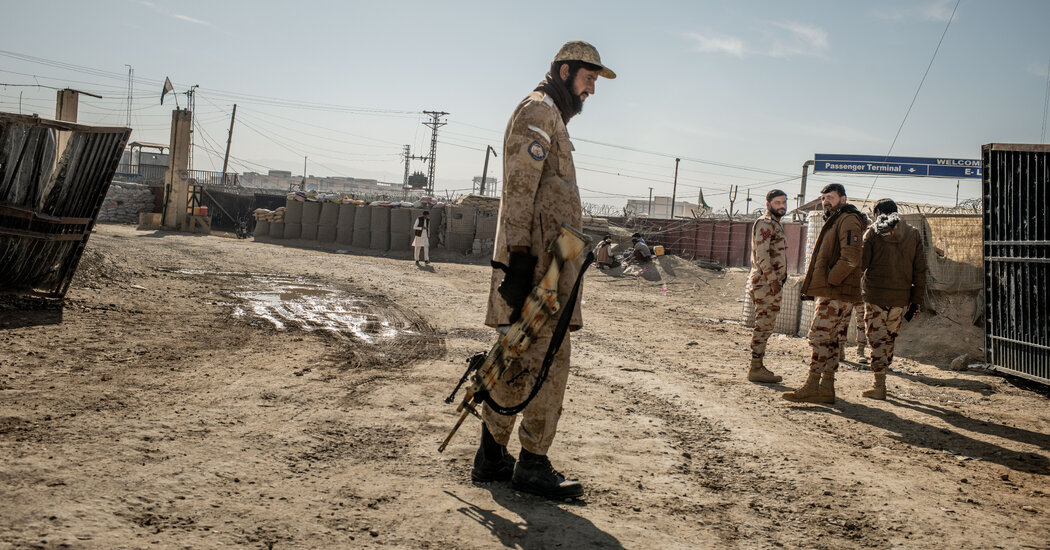
On the grand stage of global diplomacy, Pakistan’s leaders frequently present themselves as sophisticated international peacemakers, jetting across continents in high-profile attempts to broker harmony between long-standing adversaries like the United States and Iran. Yet, behind this polished facade of global statesmanship lies a grim, bloody, and deeply personal tragedy unfolding right at their own doorstep. Since late February, when Pakistan declared what has effectively become an “open war” on its neighbor, Afghanistan, the two countries have been locked in a relentless cycle of cross-border violence. Despite behind-the-scenes diplomatic interventions from regional powers like China, the fighting continues to tear apart communities that have historically shared deep cultural, religious, and familial ties. The profound irony of a nation striving to extinguish geopolitical fires abroad while actively fueling a devastating conflagration at home highlights the tragic disconnect between high-level statecraft and the lived reality of those caught in the crossfire.
The true cost of this undeclared war is written not in political communiqués, but in the blood and ruin of ordinary human lives along the rugged, 1,600-mile border. In just a few short months, Pakistani airstrikes and heavy artillery shelling have claimed the lives of at least 372 Afghan civilians and left nearly 400 others wounded, turning peaceful villages and border towns into terrifying battlefields. The sheer horror of this military campaign was felt most acutely in mid-March, when a Pakistani airstrike targeted a drug rehabilitation center in Kabul. In a single, devastating instant, the strike transformed a place of healing and second chances into a mass grave, killing 269 recovering addicts—vulnerable individuals desperately working to rebuild their lives—and injuring 172 others. Along the border at the Torkham crossing, once a bustling sanctuary of trade and human connection, a vital marketplace was burned to the ground and a transit center for returning refugees was left shattered and abandoned, leaving displaced families with nowhere to turn.
This devastating violence is fueled by a deeply entrenched and bitter blame game between Islamabad and Kabul, where national security concerns have entirely eclipsed human empathy. Pakistan fiercely defends its aggressive military campaign as a matter of self-defense, accusing the Afghan Taliban of harboring and facilitating the Tehreek-e-Taliban Pakistan (TTP), a militant group responsible for a wave of deadly attacks on Pakistani civilians and security forces. Pakistani Prime Minister Shehbaz Sharif has publicly vowed to press forward with the offensive with “full resolve” until Kabul takes decisive action to rein in these groups. In contrast, Afghan Taliban officials, while privately acknowledging that some of their fighters share ideological ties with the TTP, vehemently deny hosting or supporting the militants, insisting that Pakistan’s security failures are its own internal problem. This profound ideological and political rift was captured perfectly by Abdul Mateen Qani, the spokesman for Afghanistan’s interior ministry, who lamented that the two nations, once bound together like a powerful magnetic force, now violently repel each other with no reconciliation in sight.
Beyond the immediate terror of falling bombs, Pakistan has deployed a quiet but equally devastating weapon: economic strangulation and bureaucratic warfare. By repeatedly sealing key border crossings and initiating the mass expulsion of hundreds of thousands of Afghan refugees, Islamabad has effectively severed the vital economic and humanitarian lifelines of its landlocked neighbor, which relies heavily on Pakistan for food, construction materials, and healthcare supplies. In pharmacies across Kabul, shelves that once held life-saving medications for chronic diseases like diabetes are now distressingly empty, forcing pharmacists like Parwez Khairi to watch helplessly as desperate patients leave empty-handed. Though the Taliban administration has urged domestic pharmaceutical companies to desperately scale up production and has reached out to countries like India and Russia for aid, the blockade continues to inflict silent, daily suffering on millions of innocent civilians who have no voice in this geopolitical dispute.
This escalating humanitarian crisis is further compounded by a sense of global abandonment, as the international community, led by the United States, has largely turned its back on the region. Following its chaotic military withdrawal from Afghanistan in 2021, Washington has heavily de-prioritized the country, choosing instead to support Islamabad’s right to self-defense—a stance that many Afghan officials and regional experts view as a tacit green light for Pakistan’s aggressive military operations. Security analysts point out that Pakistan has actively capitalized on this international indifference, utilizing the geopolitical vacuum to strike Afghan territory with impunity. This perceived betrayal has left the Afghan people feeling trapped in a cruel double bind: ruled by a repressive, isolated domestic regime on one side, and subjected to devastating military cross-border incursions by a powerful neighbor on the other, all while the rest of the world looks away.
The prospects for a peaceful resolution remain buried under deeply rooted historical suspicion, as evidenced by the dramatic collapse of recent diplomatic efforts. Last month, China attempted to use its immense economic leverage to bring the warring neighbors together for eight days of intensive, closed-door negotiations in the city of Urumqi. However, those familiar with the discussions reveal that the talks quickly deteriorated into a bitter stalemate, marred by profound mistrust and an absolute unwillingness to compromise. Pakistani officials demanded concrete, written guarantees that Kabul would crack down on cross-border militancy, while Afghan officials rejected these demands as unrealistic and accused Pakistan of aiming to completely destabilize and topple their government. As the talks fell apart and negotiators returned to their respective capitals, the guns along the border began to fire once more, leaving the ordinary citizens of both nations to bear the heavy, heartbreaking burden of a war with no end in sight.