

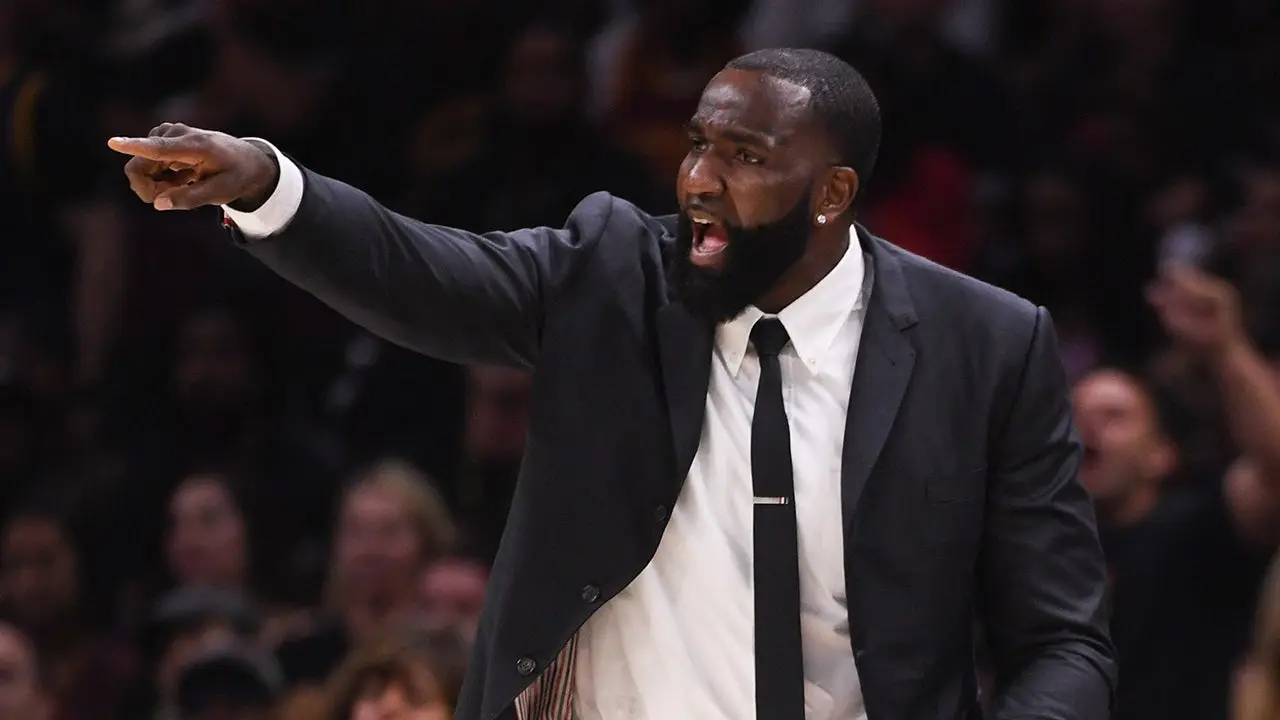
To step into the world of youth athletics is to enter a high-pressure, emotionally charged ecosystem where the lines between competitive passion and protective instinct can easily blur. For Kendrick Perkins, the 6-foot-10 former NBA center who has transitioned into a prominent, opinionated, and unfiltered ESPN analyst, life has always been defined by his willingness to stand his ground. On television, his booming voice and unapologetic takes are his signature weapons, but recently in a crowded gym in Norman, Oklahoma, his physical presence and protective nature took center stage in a way that captured the internet’s brief, hyper-focused attention. It is incredibly easy to watch a blurry, fifteen-second TMZ video of a giant man being held back by colleagues at an AAU basketball game and instantly jump to conclusions about hot-headedness and out-of-control egos. Yet, beneath the sensationalized headlines lies a deeply human story about the responsibilities of leadership, the unspoken pact between parents and coaches, and the heavy burden of guardianship over teenagers who are navigating the physical and emotional battlegrounds of grassroots basketball. The raw video of the altercation caught Perkins screaming at an unseen antagonist, a moment that could easily be weaponized to paint him as just another aggressive former athlete unable to leave his competitive anger behind in retirement. However, the lived reality of that afternoon in Oklahoma was not born out of a desire for conflict, but rather out of a sudden, visceral reflex to safeguard a vulnerable young player who had been caught in the crosshairs of an incredibly dangerous situation.
The flashpoint occurred during a highly competitive tournament featuring 17U teams, where Perkins’ own program, YPG Perkins—which he actively sponsors and coaches—faced off against a physical rival, the Swaveway Playaz. Throughout the contest, the atmosphere inside the gymnasium was electric and increasingly chippy, a common occurrence in high-stakes grassroots basketball where college scouts watch from the sidelines and young athletes play with everything on the line. As the final buzzer sounded and YPG Perkins secured the victory, the competitive spirits that should have subsided instead boiled over into something much more hazardous. A player from the opposing team, described by Perkins as a massive individual standing roughly seven feet tall and weighing close to four hundred pounds, engaged in a highly dangerous post-game confrontation with one of Perkins’ teenage players, culminating in the young man being violently body-slammed to the hardwood floor. For Perkins, who had spent the game observing calmly from the bench, the sound of a child hitting the floor in such a brutal manner bypassed all analytical reasoning and triggered the ancient, protective instinct of an elder statesman and guardian. When a teenager is subjected to that level of physical violence in what is supposed to be a safe, structured space for development, the role of a coach instantly evolves from a strategic instructor to a shield of defense. It was in this chaotic aftermath, with players rushing to defend their teammate and tensions reaching a boiling point, that Perkins stepped into the fray to separate the groups, restore order, and demand accountability from those who had allowed the situation to escalate.
The viral age has a cruel tendency to strip away the essential context of human actions, leaving only the most explosive, visually engaging moments for social media feeds to dissect. When the footage of a visibly furious Perkins being restrained by his coaching staff began circulating online, the reaction in the digital colosseum was swift, predictable, and devoid of nuance, forcing the former athlete to quickly reclaim the narrative on his own terms. Rather than retreating into public relations speak or offering a hollow apology to quiet the noise, Perkins met the internet head-on with a defiantly honest post on the social media platform X, formerly known as Twitter. “Damn right, and it probably won’t be the last time!” he wrote, followed by a powerful declaration that reframed the entire incident from a mindless athletic squabble into a matter of profound moral duty: “I’m going to protect every single kid in my organization like they’re my own.” This public response was crucial because it humanized the anger that looked so intimidating on camera, revealing it to be the fierce, protective fury of a father figure rather than the unchecked rage of a bully. It challenged the public to look past the intimidating stature of a 6-foot-10 former NBA enforcer and see a man who refused to allow the young people placed under his care to be victimized or left to fend for themselves in a hostile environment, proving that his loyalty to his players extends far beyond the stat sheet.
To truly understand the depth of his conviction, one had to listen to Perkins speak about the incident during a candid appearance on ESPN’s “The Pat McAfee Show,” where he masterfully peeled back the layers of what had transpired and explained the profound weight of responsibility he carries as the head of his youth program. He painted a picture of a chaotic post-game scene where he initially attempted to act as a peacemaker, urging everyone to calm down and pulling his own players back to prevent a full-scale brawl, only to be met with intense hostility when he approached the opposing coach to demand control of their team. The opposing coach’s aggressive refusal to de-escalate the situation, coupled with his hostile dismissal of Perkins’ authority, was the catalyst that pushed the former Celtic over the edge, exposing the deep-seated frustrations that arise when adult mentors fail to act as the mature guardians they are supposed to be. Perkins revealed a critical piece of human context that had been completely absent from the viral reports: the parents of the young man who had been body-slammed to the floor were not present at the tournament, meaning their absence had placed the entire weight of their child’s safety directly onto Perkins’ broad shoulders. When parents pack their child’s bags, hand them over to a coach, and send them off to an out-of-town tournament, they are not just signing a permission slip; they are entering into a sacred trust, believing that the adults in charge will value their child’s life and safety as much as they would their own. Recognizing this sacred trust, Perkins knew that he had to stand as a surrogate father in that terrifying moment, ensuring that the injured and shaken young man would be protected at all costs and return home to his family in one piece.
This protective, no-nonsense instinct is not a new development in Perkins’ life; rather, it is a direct continuation of the identity he forged over a grueling and highly successful fourteen-season career in the NBA. Born in Texas, Perkins developed a reputation early on as a fierce competitor who understood that winning required sacrifice, physicality, and an unwavering commitment to protecting his teammates from any physical threats on the court. During his eight memorable seasons with the Boston Celtics, where he served as the starting center and defensive anchor for the legendary 2008 championship team, he was the literal muscle of the squad, a player whose primary job was to set bruising screens, rebound with authority, and make sure that no opponent could intimidate his star teammates like Paul Pierce, Kevin Garnett, or Ray Allen. When he was traded to the Oklahoma City Thunder in 2011, he brought that same veteran leadership and protective grit to a young roster featuring future MVPs Kevin Durant and Russell Westbrook, helping them navigate their rise to the NBA Finals by serving as their trusted bodyguard on the hardwood. Throughout his subsequent stints with the Cleveland Cavaliers and the New Orleans Pelicans before his retirement, Perkins was never the most prolific scorer, but he was always the ultimate teammate—the guy who would gladly take a technical foul, stand up to an opposing giant, or absorb a hard blow if it meant keeping his locker room safe and united. The fierce loyalty and protective rage he displayed in that Oklahoma gym was not a departure from the Kendrick Perkins basketball fans have known for decades; it was simply the continuation of his lifelong role as the ultimate protector, now applied to the vulnerable teenagers of the next generation.
Ultimately, this incident serves as a stark, powerful reminder of the complex realities of youth sports in America, highlighting the vital need for genuine leadership in an era often dominated by personal brands, social media highlight reels, and toxic competitive environments. It is easy to criticize an adult for raising his voice or reacting with visible anger in a public setting, but when that anger is born out of a desperate need to protect a defenseless child after other adults have failed their duty, it becomes an act of profound care rather than an act of aggression. The story of Kendrick Perkins in Norman, Oklahoma is not a cautionary tale about an athlete behaving badly, but a deeply human portrait of a mentor who takes the heavy mantle of leadership seriously, refusing to remain comfortable on the sidelines when his players are in harm’s way. In a youth sports landscape that can occasionally lose its moral compass in the pursuit of victories and exposure, having a giant who is willing to take the heat, stand in the gap, and declare that the safety of a child is worth more than any public-relations image is a reassuring sign of true guardianship. By standing up for a player whose parents were miles away, Perkins honored the sacred bond of the coaching profession, reminding us all that the most important victories in sports have nothing to do with the final score, but everything to do with ensuring that every kid who takes the floor makes it back home safe, sound, and fully supported.