




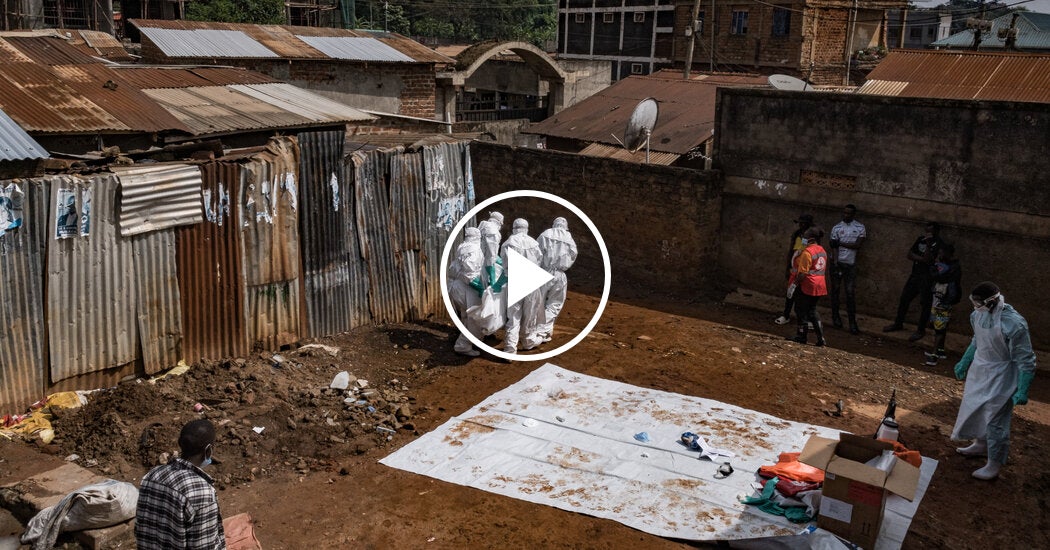
Fortress of Containment: Uganda Seals the DRC Border to Arrest a Rising Biosecurity Threat
In a decisive move to halt the potential transcontinental spread of one of the world’s most lethal pathogens, the government of Uganda officially closed its western border with the Democratic Republic of Congo on Wednesday. This drastic epidemiological intervention, reported by international correspondents on May 27, 2026, was catalyzed by an increasingly alarming development: the confirmation of seven active cases of Ebola virus disease within the densely populated metropolitan boundaries of Kampala, Uganda’s administrative and economic capital. The decision to sever public transit along this highly porous, 500-mile frontier underscored the government’s acute anxiety over an urban outbreak, which presents far more complex containment challenges than those historically confined to isolated rural villages. By choking off the primary physical conduits connecting the two nations, public health officials are attempting to establish a territorial firebreak, hoping to isolate the pathogen before it can establish a self-sustaining transmission chain in East Africa’s highly connected urban centers. The geopolitical and logistical reality of this closure, however, immediately transformed the bustling border posts—usually teeming with traders, agricultural laborers, and families—into militarized visual symbols of a public health emergency, where armed security personnel and medical screening units now stand as the regional line of defense against an invisible, hemorrhagic threat.
The Lifeline in the Lockdown: Balancing Public Health with Humanitarian and Economic Survival
                      ┌───────────────────────────┐
                      │    UGANDA-DRC BORDER      │
                      │   RESTRICTED TRANSIT      │
                      └─────────────┬─────────────┘
                                    │
            ┌───────────────────────┴───────────────────────┐
            ▼                                               ▼
[ PERMITTED MERCHANDISE ] [ BANNED PATRONAGE ]- Food & Essential Cargo – Unscreened Public Travel
- Humanitarian Relief Aid – Informal Cross-Border Trade
- Medical Response Teams – Unauthorized Foot Traffic
While the border closure represents a severe tightening of regional biosecurity, the Ugandan Ministry of Health and its geopolitical planners recognized that an absolute, hermetic seal would trigger an immediate socioeconomic catastrophe and compromise ongoing medical operations. Consequently, the government has instituted strict, highly managed exemptions to the shutdown, permitting the continued movement of authorized Ebola response teams, international humanitarian aid operations, vital medical supplies, essential food commodities, cargo transportation networks, and state security details. This delicate policy balance reflects the complex interdependencies of the East African Community, where the eastern provinces of the Democratic Republic of Congo rely heavily on Ugandan supply chains for consumer goods, refined fuel, and agricultural imports, while Uganda depends on the DRC as a critical market for its exports. By maintaining these closely monitored corridors, authorities are attempting to preserve the regional economy and facilitate the international flow of medical expertise, even as they aggressively monitor the truck drivers and logistics personnel who are now subjected to rigorous, mandatory thermal imaging, fluid sampling, and rapid diagnostic screening at designated, high-security customs checkpoints.
Echoes of Resilience and Anxiety: How the Ugandan Public Navigates the Specter of Epidemic Return
Throughout the bustling streets of Kampala and along the dusty transit hubs of the western borderlands, the announcement of the closure sparked a profound psychological division among local residents, reflecting a mixture of acute anxiety and battle-tested optimism. For many citizens, particularly those who remember the devastating toll of previous viral outbreaks, the government’s measures do not go far enough, with some arguing that all cross-border movement from high-risk, endemic regions in the DRC should be completely banned unless travelers are subjected to exhaustive, multi-day quarantine and verification procedures before entering the country. Conversely, a resilient segment of the population view this latest health crisis through a lens of hard-won experience, drawing reassuring parallels to how the nation successfully navigated the COVID-19 pandemic and previous localized Ebola events. This camp expresses profound, unyielding trust in the institutional competence of the Ugandan Ministry of Health, whose rapid-response epidemiological teams, community-level contact tracing networks, and transparent public communication campaigns have historically earned high marks from global health observers, casting this latest border closure not as a harbinger of doom, but as a familiar, albeit painful, protocol in an ongoing regional war against infectious disease.
The Pathogen’s Footprint: Understanding Africa’s Dual Struggle with Ebola and Porous Frontiers
┌────────────────────────────────────────────────────────────────────────┐
│ CHRONOLOGY OF CO-EXISTENCE │
├───────────────┬────────────────────────────────────────────────────────┤
│ 1976 │ Co-discovery of Ebola near the Ebola River (Zaire/DRC) │
├───────────────┼────────────────────────────────────────────────────────┤
│ 2000 │ Gulu Outbreak (Uganda) establishing rapid protocols │
├───────────────┼────────────────────────────────────────────────────────┤
│ 2018-2020 │ Kivu Outbreak (DRC) demonstrating urban vulnerabilities│
├───────────────┼────────────────────────────────────────────────────────┤
│ Present (2026)│ Border closures enforced to protect metropolitan hubs │
└───────────────┴────────────────────────────────────────────────────────┘
To fully comprehend the gravity of Uganda’s current defensive posture, one must examine the deep historical and epidemiological context of the Ebola virus within the Albertine Rift and the wider Great Lakes region of Africa. Since the pathogen was first identified in 1976 near the Ebola River in what is now the DRC, the virus—characterized by its high mortality rate and transmission via direct contact with bodily fluids—has repeatedly spilled over from its natural zoonotic reservoirs, often wild fruit bats, into human populations, finding fertile ground in areas where public health infrastructure has been compromised by conflict, poverty, and geographical isolation. The eastern provinces of the DRC, particularly North Kivu and Ituri, have long been endemic hotspots where active conflict and community distrust have severely hindered international vaccination and treatment campaigns, turning the region into a permanent epidemiological hazard for bordering nations like Uganda. Because the frontier between these two countries is characterized by deep cultural ties, shared languages, and hundreds of informal, unmonitored footpaths cutting through dense tropical rainforests, the threat of cross-border transmission remains a constant reality, forcing Uganda to maintain a state of perpetual vigilance and invest heavily in early-warning detection systems to prevent minor regional flare-ups from escalating into country-wide disasters.
Urban Containment: The High-Interactivity Battle to Stop transmission in High-Density Kampala
The detection of seven confirmed Ebola cases in Kampala marks a dangerous escalation in the current outbreak, shifting the battlefield from remote forest clearings to a teeming urban environment home to millions of highly mobile residents. In rural areas, epidemiologists can easily map, isolate, and quarantine a transmission chain because social circles are closely knit and travel patterns are relatively restricted; however, in a sprawling metropolis like Kampala, characterized by packed informal settlements, crowded open-air markets, and thousands of public minibuses, or matatus, acting as daily vectors of human transport, a single undiagnosed case can interact with hundreds of strangers within hours. This high-density reality leaves absolutely no room for administrative error, forcing the Ministry of Health to rapidly deploy specialized incident management teams to conduct exhaustive contact tracing, construct temporary isolation units with high-level biosafety containment gear, and initiate aggressive public hygiene campaigns to reintroduce handwashing stations and temperature checks in all public venues. The primary challenge in Kampala is not merely medical, but logistical and informational, as authorities work around the clock to counter medical misinformation, build trust in vulnerable neighborhoods, and ensure that anyone showing early symptoms—such as fever, severe headache, muscle pain, and unexplained bleeding—is safely transported to an isolation ward rather than self-treating in private, unequipped neighborhood clinics.
A United Front: Regional Bilateralism and the Global Push for Lasting Epidemiological Security
  [ INTERNATIONAL COALITION ] <───> [ REGIONAL SURVEILLANCE ]
    - World Health Organization       - Uganda Ministry of Health
    - West African Aid Agencies       - DRC Border Guard Services
    - Academic Research Teams         - Community Health Volunteers
Ultimately, Uganda’s decision to temporarily shut down its border with the Democratic Republic of Congo serves as a stark reminder that epidemics do not respect national sovereignty and that isolationist policies, while structurally necessary in moments of acute crisis, are merely temporary shields rather than permanent solutions. Long-term epidemiological security in East Africa requires a coordinated, well-funded, and deeply collaborative regional approach, supported by the World Health Organization, the Africa Centres for Disease Control and Prevention, and international research universities. This collaborative effort must focus on upgrading diagnostic laboratories, expanding the distribution of highly effective vaccines—such as those targeting the Zaire and Sudan strains of the virus—and building resilient healthcare systems capable of diagnosing and containing infectious pathogens at the point of origin, rather than waiting for them to reach international borders. By viewing this current border closure not as a diplomatic rift, but as a shared tactical pause, both Uganda and the DRC, alongside their global partners, can utilize this critical window to reinforce their healthcare networks, deploy life-saving therapeutics, and refine their containment strategies, demonstrating to the world that systemic solidarity and scientific innovation remain humanity’s most potent defense against the recurring threat of viral pandemics.