



Deep within the heart of Alabama lies a crescent-shaped region known as the Black Belt, named originally for its rich, dark, fertile soil and historically tethered to the painful legacy of cotton plantations, slavery, and systemic segregation. Today, this region is home to vibrant, resilient communities of Black Americans who view their right to vote not as an abstract civic duty, but as a hard-won shield forged through generations of sacrifice and struggle. For these citizens, congressional representation is a direct line to vital resources—funding for failing infrastructure, access to rural healthcare, and a voice in the halls of national power. However, this fundamental promise of democracy is once again under siege. In a high-stakes legal maneuver, Alabama’s Republican leaders have urgently petitioned the United States Supreme Court, asking the justices to permit the use of a congressional district map that a federal lower court has twice determined unlawfully discriminates against the state’s Black voters. By appealing directly to the nation’s highest court, state officials have transformed a local redistricting battle into a monumental national testing ground, forcing a confrontation over who belongs at the table of American democracy and whether the constitutional promises of representation still apply to those who have historically been shut out.
This escalating legal warfare represents the first major test of how the Supreme Court intends to apply its own controversial April ruling, which dramatically narrowed the scope of the landmark Voting Rights Act of 1965. In that ruling, the conservative-dominated high court raised the legal threshold for proving racial discrimination, declaring that courts should only strike down voting maps if there is undeniable evidence of an explicit intent to discriminate, rather than a mere partisan effort to secure electoral advantages. Sensing a historic opportunity to protect their razor-thin, highly vulnerable majority in the United States House of Representatives ahead of the critical midterm elections, Alabama Republicans acted instantly. They sought to swap out the state’s congressional map to resurrect a previously rejected layout that packs the state’s significant Black population into just a single majority-Black district out of seven, despite Black residents comprising more than a quarter of the state’s total population. By seeking a Supreme Court ruling in their favor, conservative strategists hope to secure a safe Republican seat, effectively neutralizing the political influence of hundreds of thousands of Black voters and reducing their collective voice to a quiet whisper in a single, isolated district.
Despite fears from civil rights advocates that the Supreme Court’s newly elevated standard for proving discrimination would be virtually impossible to meet, a three-judge federal panel stood firm in defense of equal representation. In a sweeping, unanimous 79-page decision, the panel—composed of two judges appointed by Republican President Donald Trump and one appointed by Democratic President Bill Clinton—shattered the state’s legal arguments by ruling that Alabama’s proposed map violated even the newly raised legal bar. The judges did not mince words, explaining that they were painful aware of the profound political gravity of their ruling, yet they found the underlying reality of the case neither complex nor close. They refused to stand by and watch Alabamians be forced to cast their ballots under a system tainted by intentional, race-based discrimination. By rejecting the state’s attempts to hide behind partisan excuses, this ideologically diverse panel asserted a powerful moral and legal truth: that the deliberate dilution of a minority community’s political power is an unacceptable assault on the democratic process, regardless of how the high court chooses to frame the rules of engagement.
Meanwhile, the rapid approach of the special primaries scheduled for August has thrown the state’s local electoral infrastructure into absolute chaos, creating a deeply human crisis of confusion and exhaustion for ordinary citizens. In their urgent Wednesday filing, Alabama officials demanded that the Supreme Court issue a decision by June 1, or as soon as possible thereafter, arguing that they must immediately resume election preparations and assign voters to their respective districts. Yet, this aggressive rush to implement a disputed map ignores the real-world toll on local election administrators, grassroots volunteers, and individual voters who are left in a state of perpetual limbo. When voting boundaries are constantly redrawn and legally challenged, ordinary people are left wondering who their representatives actually are, where they are supposed to cast their ballots, and whether their participation even matters. This administrative turbulence acts as an invisible barrier to the ballot box, wearing down voter confidence and inducing a sense of fatigue that quietly disenfranchises communities by making the simple act of voting feel like an unstable, exhausting game of musical chairs.
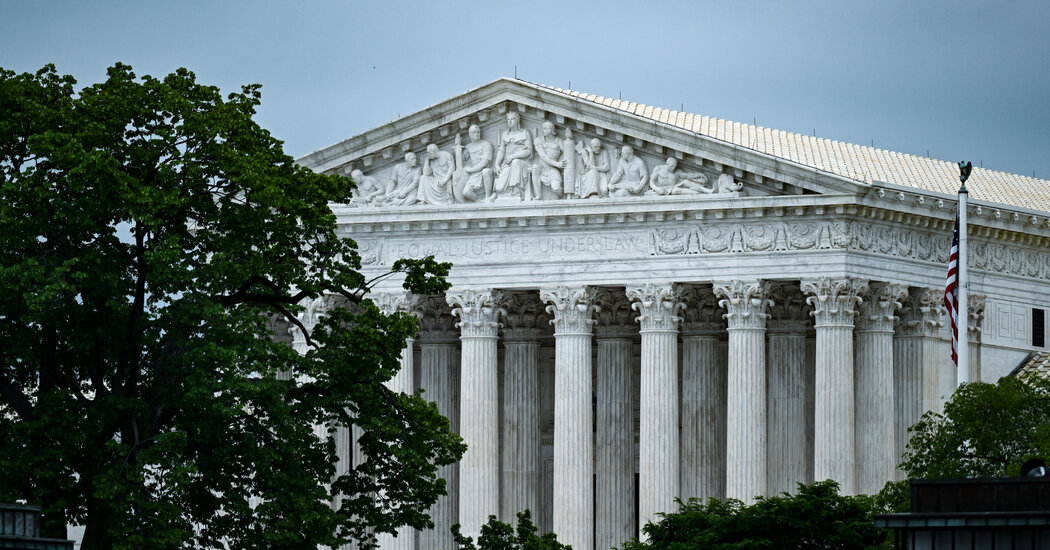
This volatile battle highlights a deepening crisis of institutional legitimacy for the Supreme Court itself, as the justices face intense public scrutiny for altering the ground rules of representation in the middle of an active election season. The court’s shifting jurisprudence has triggered a frantic scramble across the American South, where Republican-led legislatures have felt emboldened to aggressively dismantle majority-minority districts, even as voters are physically heading to the polls to make their primary selections. This judicial disruption has sparked an internal debate among the justices, exposing a profound philosophical divide over the court’s role in American life. While conservative Chief Justice John G. Roberts Jr. has repeatedly taken to public forums to defend the court’s integrity, insisting that the justices are impartial, non-political arbiters, liberal Justice Ketanji Brown Jackson has offered a sharp, public critique of the court’s disruptive scheduling decisions. This clash of viewpoints underscores a haunting reality: when the nation’s highest legal authority alters the rules of democracy mid-game, it risks eroding the fragile public trust that holds the entire democratic system together, transforming the court in the eyes of many from a protector of constitutional rights into a partisan participant.
Ultimately, the battle over Alabama’s congressional map is not merely a clinical policy debate or a strategic chess match for control of the federal government; it is a continuation of a decades-long struggle for basic human dignity. The timeline of this specific conflict—starting with the Republican legislature’s heavily gerrymandered November 2021 map, moving through a surprise Supreme Court victory for civil rights advocates in 2023, and culminating in the present-day legal stand-off—reveals a relentless effort by state officials to resist fair representation at every turn. For the Black residents of Alabama’s historic districts, the struggle to be seen and valued by their government remains an ongoing battle against modern-day iterations of voter suppression. As the Supreme Court prepares to weigh in once again, the eyes of the nation are on Alabama, waiting to see if the legal system will uphold the foundational promise of equal protection under the law, or if it will allow political convenience to overwrite the voices of citizens who have already spent a lifetime fighting just to be heard.