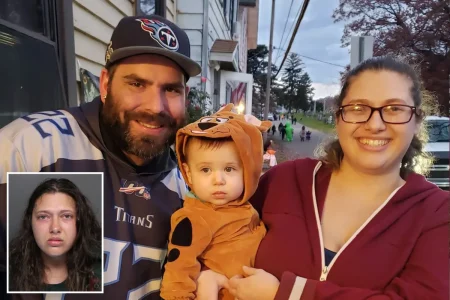



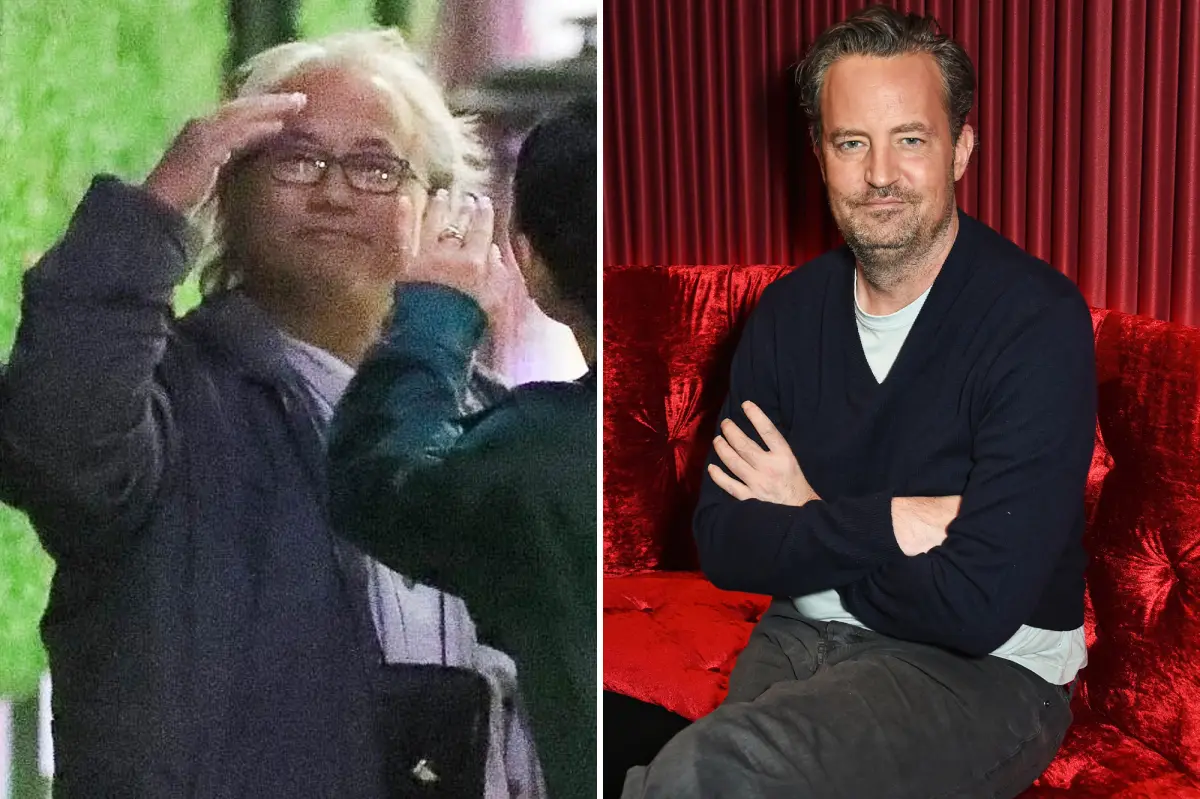
The tragic and agonizing legal saga following the untimely death of Matthew Perry is finally drawing to a close, culminating in a somber courtroom finale that lays bare the devastating human cost of addiction, codependency, and betrayal. In a Los Angeles federal courtroom presided over by Judge Sherilyn Peace Garnett, sixty-year-old Kenneth Iwamasa will stand to receive his final sentencing. Having spent two and a half years at the very center of a complex federal investigation, Iwamasa is the last of five co-defendants to face the bench. For the first time since the details of Perry’s death became public, the former personal assistant will appear in open court to answer for his central role in the actor’s demise. As the person responsible for both procuring the illicit ketamine and physically administering the lethal doses, Iwamasa was the critical link that bridged Perry’s private pain with a predatory underground drug market. In August 2024, he pleaded guilty to one count of conspiracy to distribute ketamine resulting in death, securing a plea deal by agreeing to cooperate fully with federal prosecutors. This cooperation transformed him into the government’s star witness, prompting prosecutors to request a sentence of three years and five months. While this recommended sentence is significantly shorter than the decades he might have faced without a plea agreement, it remains a severe penalty that reflects the gravity of his actions. In the eyes of the law, the public, and Perry’s grieving family, Iwamasa represents the ultimate failure of trust, having turned a duty of care into a fatal enablement.
At the heart of this tragedy lies a complex and deeply dysfunctional power dynamic that highlights the profound isolation often experienced by the ultra-wealthy and famous. Hired by Perry in 2022, Iwamasa was paid a handsome annual salary of $150,000 to live with the actor in his luxurious Los Angeles residence, serving not just as an assistant but as a constant helper in his daily routines. In court documents, Iwamasa’s defense attorneys have painted a portrait of a man caught in an inescapable cycle of compliance, arguing that he possessed a “particular vulnerability” when it came to his relationship with his employer. They contend that the boundaries between professional duty and personal devotion had completely dissolved, creating an atmosphere where Iwamasa felt he could not “simply say no” to Perry’s increasingly desperate demands for drugs. This defense attempts to humanize a man who slipped from being a supportive assistant into a direct enabler, suggesting that the pressure of maintaining employment with a legendary celebrity compromised his moral compass. However, this defense also highlights a chilling truth about the celebrity ecosystem: when an individual commands immense wealth and influence, the traditional safety nets of accountability are often replaced by “yes-men” paid to facilitate their employer’s destructive impulses, turning a beautiful Hollywood home into a gilded cage of self-destruction.
For the family of Matthew Perry, no psychological explanation or legal defense can lessen the sharp pain of Iwamasa’s betrayal. In agonizing victim impact letters submitted to the judge, Perry’s loved ones made it clear that they reserve their deepest anger and blame for the assistant they once trusted to protect him. His mother, Suzanne Morrison, wrote a particularly poignant and heartbreaking reflection on the misplaced trust that ultimately cost her son his life. She recalled how the family believed Iwamasa was a protective shield, a dedicated companion, and a guardian who would stand by Perry in his lifelong, exhausting war against addiction. Instead, they discovered that the man they trusted was actively feeding the actor’s worst impulses, secretly injecting him with high doses of a powerful anesthetic without any medical training or emergency equipment nearby. Morrison’s words paint a picture of a grieving family forced to confront the reality that they entrusted their vulnerable child to a man who, in her words, proved to be “without a conscience.” This deep sense of betrayal elevates the tragedy beyond a simple criminal case, framing it as an intimate, domestic nightmare where those hired to protect a vulnerable soul became the very ones who paved his path to the grave.
The investigation into Perry’s death exposed a sprawling, predatory pipeline that thrived on the actor’s wealth and desperation, showing how easily clinical medical treatments can be warped by greed. Perry had originally been taking ketamine legally and under proper medical supervision to treat his severe depression, a therapeutic method that has gained popularity in recent years. However, when his legitimate doctors refused to increase his dosages, Perry turned to the black market, initiating a chain of exploitation that involved several key figures. Among them was Dr. Salvador Plasencia, a medical professional who violated his oath by selling off-the-books ketamine directly to Perry and training Iwamasa on how to administer the injections, a crime for which Plasencia was sentenced to two and a half years in prison. When that source proved insufficient, Iwamasa began purchasing additional supplies through Erik Fleming, an acquaintance who acted as an intermediary to secure drugs from a notorious street dealer known as the “Ketamine Queen,” Jasveen Sangha. Fleming was recently sentenced to two years in prison, while Sangha received a heavy fifteen-year sentence for her role as the primary source of the lethal supply. This network of opportunists saw Perry not as a human being in desperate need of mental health support, but as an endless source of cash, highlighting a dark and predatory system that preys on wealthy individuals struggling with addiction.
The harrowing details of Perry’s final days paint a devastating picture of isolation, physical vulnerability, and systemic neglect. In the weeks leading up to October 23, 2023, Perry’s addiction had escalated to a terrifying degree, with Iwamasa administering between six and eight ketamine injections every single day. On that final afternoon, after injecting the fifty-four-old actor with a massive, highly dangerous dose of the anesthetic, Iwamasa left the house to run routine errands, leaving his heavily medicated employer completely unattended. When he returned to the property hours later, he found Perry lifeless and floating face-down in his backyard Jacuzzi, a scene that confirmed their worst fears. The Los Angeles County Medical Examiner later determined that the primary cause of death was acute ketamine toxicity, with drowning listed as a secondary factor. Panicked and aware of his own complicity, Iwamasa’s immediate reaction was self-preservation; he lied to local police officers on the scene, omitting any mention of ketamine and hiding his history of injecting the actor. It was only when federal investigators executed a search warrant on his residence in January 2024 that the walls closed in, forcing Iwamasa to abandon his facade, confess his actions, and begin cooperating with the federal authorities in their push to dismantle the illicit drug network.
As the legal proceedings draw to a close, the memory of Matthew Perry remains a powerful and poignant cultural touchstone, serving as both a celebrated legacy and a tragic cautionary tale. To millions of fans worldwide, Perry will always be cherished as Chandler Bing, the quick-witted, sarcastic, and deeply lovable character on NBC’s hit sitcom “Friends,” which he starred in alongside Courteney Cox, Jennifer Aniston, Matt LeBlanc, David Schwimmer, and Lisa Kudrow from 1994 to 2004. The painful irony of Perry’s life is that while he brought joy, laughter, and comfort to homes across the globe, he spent much of his adult life privately battling severe addiction, depression, and loneliness. His tragic passing serves as a stark reminder of the fragile nature of mental health and the dangerous vulnerabilities that can hide behind fame. While the sentences handed down to Iwamasa and his co-defendants offer a measure of accountability, they cannot restore the life of the brilliant man who was lost to this systemic failure. Ultimately, Matthew Perry’s legacy is defined not by the dark circumstances of his death, but by his enduring artistic contributions, his candid honesty about his struggles, and the hope that this tragedy will foster a more compassionate, accountable, and vigilant approach to caring for those fighting the quiet battles of addiction.