




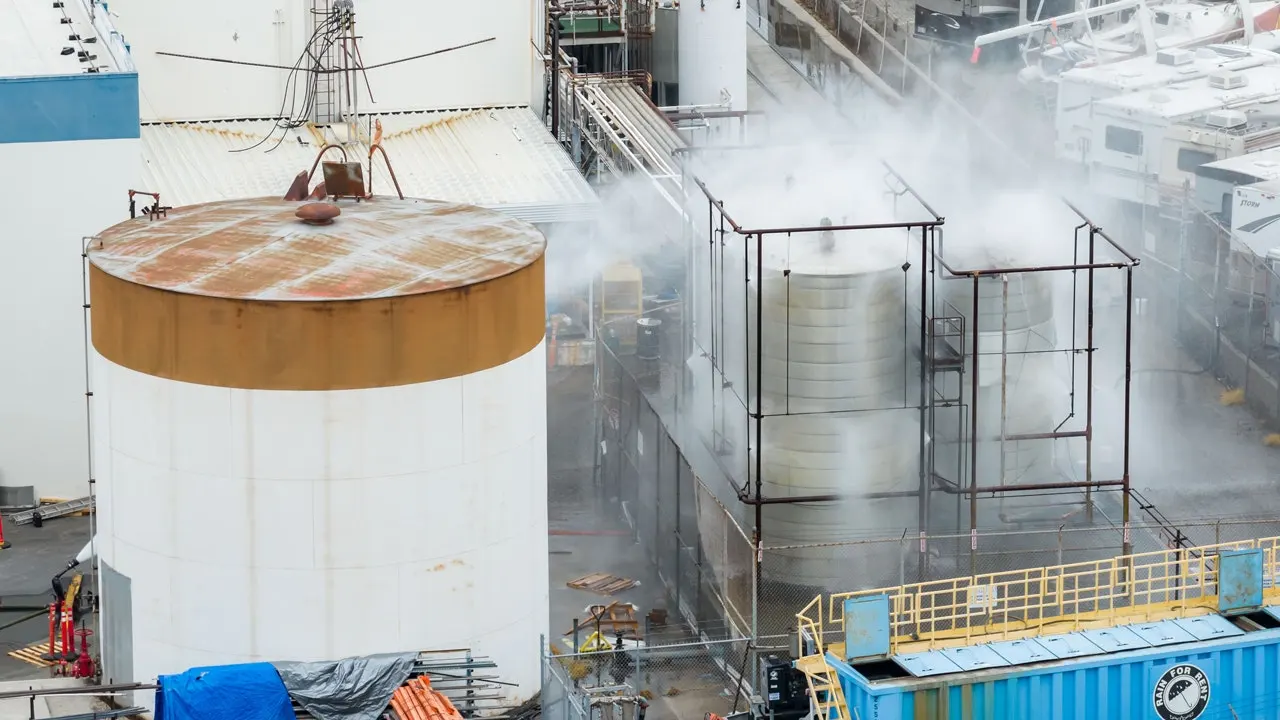
For the residents of Garden Grove, a sunny and typically serene suburb nestled in the heart of Southern California’s Orange County, the anticipated arrival of the Memorial Day holiday weekend promised a blissful reprieve from the daily grind. Families had planned backyard barbecues, children were looking forward to long afternoons in local parks, and the entire community was ready to embrace the warm, festive atmosphere of a long-awaited three-day weekend. However, this idyllic suburban dream was shattered in an instant, replaced by a sudden, terrifying reality that none of them could have anticipated. Sirens pierced the air, and urgent emergency alerts began flashing across mobile phone screens, delivering a chilling message: a catastrophic industrial emergency was unfolding in their immediate vicinity. The source of this widespread terror was the GKN Aerospace Transparency Systems facility, a massive industrial site located precariously close to quiet, tree-lined residential neighborhoods. This plant, which manufactures critical flight components and windshields for both commercial and military aviation, was suddenly harboring a monumental threat inside a compromised chemical storage tank. Recognizing the extreme peril of an imminent blast, emergency officials made the agonizing decision to order the immediate evacuation of approximately 50,000 residents in Garden Grove and surrounding areas. For these families, the holiday weekend was instantly transformed into a frantic, heart-pounding rush to pack up beloved pets, essential medications, and irreplaceable family mementos. They fled their homes with panic clawing at their chests, navigating gridlocked suburban streets as they cast desperate glances backward, wondering if the neighborhoods they loved would still be standing when they were finally allowed to return.
At the core of this escalating nightmare lay a highly dangerous chemical compound known as methyl methacrylate, or MMA, trapped within a pressurized 7,000-gallon steel storage vessel. Under normal operating conditions, this volatile chemical is utilized to produce the high-strength, transparent acrylics essential for aerospace engineering, carefully regulated by a sophisticated, continuous industrial chilling system. However, when those cooling systems fail, MMA becomes an unpredictable and extremely volatile threat, prone to a rapid and self-sustaining chemical reaction called polymerization. This process generates massive amounts of internal heat and pressure, effectively transforming a standard industrial tank into a massive, pressurized bomb capable of devastating an entire community. Over the weekend, the GKN facility’s critical cooling mechanics suffered a mysterious and complete failure, prompting the internal temperature of the tank to climb aggressively, peaking at a highly dangerous 100 degrees Fahrenheit. The terrifying nature of the crisis was double-edged; an explosion would not only obliterate the immediate surrounding area but would also release a massive, toxic plume of vapor into the atmosphere. According to the Environmental Protection Agency, inhaling MMA can prompt severe, immediate respiratory irritation, painful burning of the eyes and throat, skin rashes, and even acute neurological symptoms. For the thousands of displaced families waiting in temporary shelters, local motels, or the cramped confines of their cars, the threat was not merely structural, but deeply biological, as they worried about the invisible poison potentially settling over their gardens, parks, and children’s bedrooms.
As the pressure within the vibrating tank built to a critical threshold, emergency crews launched into a harrowing, round-the-clock battle to prevent a catastrophic failure of the container. Firefighters from the Orange County Fire Authority, alongside specialized chemical hazard teams, worked under extreme physical and mental duress, operating in close proximity to a vessel that could violently rupture at any single second. Recognizing the immense scale of the impending disaster, California Governor Gavin Newsom officially declared a state of emergency over the weekend, a vital administrative move that mobilized specialized state resources and allowed emergency commanders to shift from cautious, defensive operations to high-risk, offensive tactics. Crews continuously doused the superheated steel with massive streams of water from specialized aerial monitors and manual hoses, while company engineers and brave responders meticulously stripped away layers of thick, heat-trapping insulation. In the midst of this desperate struggle against thermodynamic laws, an extraordinary event occurred: a physical crack spontaneously split open on the tank’s exterior. While a rupture is typically a harbinger of doom, this unexpected fracture served as a saving grace. It allowed the highly pressurized, trapped vapor to safely bleed off into the air in a slow, controlled release rather than building to a sudden, catastrophic detonation. This structural failure paradoxically bought the emergency crews the essential time they needed to regain control of the situation and steadily lower the boiling internal temperature.
Throughout this intense, multi-day ordeal, a surreal and jarring contrast played out only a few miles away, where the world-famous Disneyland Resort in Anaheim remained fully operational. While families just down the road were sleeping in gymnasium cots and worrying about the survival of their homes, tourists under the very same Southern California sky were enjoying theme park rides and watching colorful firework displays, highlighting the bizarre juxtaposition of suburban life and corporate tourism. By Monday, the immediate threat of a catastrophic explosion had begun to safely subside, allowing a large majority of the initial 50,000 evacuees to return to their homes, yet a weary contingent of approximately 16,000 residents remained in forced exile as Tuesday dawned. Emergency personnel refused to let down their guard, maintaining their constant vigil over the compromised tank and continuously measuring its internal temperature until it finally dropped to a stable 92 degrees. The true turning point arrived when incident commanders made the calculated decision to completely shut off the auxiliary cooling sprinklers; for four long, silent hours, the tank’s internal temperature remained entirely stable without any external assistance. With the chemical reaction officially declared neutralized, Orange County Fire Authority Division Chief Craig Covey stood before an anxious, packed town hall meeting to deliver the words thousands had been waiting to hear: “All residents will go home.” The announcement triggered an emotional wave of relief, tears, and applause, marking the end of a grueling, multi-day displacement for a weary and exhausted community.
Although the immediate safety threat has been resolved and families have finally crossed their thresholds to sleep in their own beds, the quiet neighborhood of Garden Grove continues to grapple with the profound psychological and environmental aftermath of the near-miss. Walking back into their homes, residents were met not with the joyful peace of a normal week, but with the haunting realization of how close they came to losing everything they had worked so hard to build. Public health officials have worked diligently to reassure the public, announcing that their extensive, real-time air monitoring equipment had not detected any hazardous concentration of toxic chemicals or toxic fumes in the surrounding residential zone. However, local trust is fragile, and the invisible nature of chemical hazards leaves many feeling deeply unsettled and skeptical of quick official clearances. Recognizing this lingering anxiety, local environmental agencies have committed to a highly thorough, long-term monitoring strategy that will stretch on for several months. Specialized environmental teams will continue to continuously sample the local air quality, conduct extensive testing of the sewer infrastructure, and analyze runoff water within storm drains to guarantee that no harmful chemical residues or toxic runoff bypassed containment barriers and entered the public biosphere. This ongoing surveillance serves as a sobering reminder of the long-term impact of industrial accidents, where the psychological threat lingers long after the emergency sirens have fallen silent.
As the immediate smoke clears, the focus of the Garden Grove community has shifted rapidly from frantic crisis management to a fierce, unrelenting demand for political accountability and systemic reform. Tempers flared at local community meetings as outraged residents demanded to know why large, hazardous manufacturing facilities storing thousands of gallons of explosive chemicals were ever permitted to operate in such close proximity to family homes, schools, and parks. Garden Grove Mayor Stephanie Klopfenstein strongly echoed this collective fury, promising her constituents that she would hold GKN Aerospace fully accountable for the systemic cooling failures that jeopardized the lives of tens of thousands of citizens. In response to the growing public anger, GKN Aerospace issued a formal public apology, expressing their profound regret for the massive disruption to daily life and reiterating that their priority remains the absolute safety and well-being of their neighbors. Meanwhile, the official investigation into the incident continues, with Orange County Fire Authority Chief TJ McGovern indicating that a complete mechanical breakdown of the tank’s critical regulatory cooling apparatus was the primary catalyst for the near-disaster, though investigators are still searching for the precise cause of the malfunction. This sobering incident has ultimately ignited a much larger, necessary conversation about industrial zoning laws, safety protocols, and corporate responsibility, ensuring that the lessons learned from this frightening near-miss will reshape how this Southern California community protects its families for generations to come.