


The air inside the Paycom Center was thick with a familiar, crackling electricity, the kind of atmosphere that can only be generated by a community that lives and breathes every single bounce of the basketball. For the passionate fans of Oklahoma City, this was far more than just Game 5 of the Western Conference Finals; it was the physical manifestation of a dream deferred, dismantled, and meticulously rebuilt. The defending Western Conference champions played with the poised, clinical urgency of a squad that understands exactly how fleeting greatness can be in this league, standing a mere forty-eight minutes away from securing a second consecutive trip to the NBA Finals. When the final buzzer sounded, signaling a commanding 127-114 victory over the visiting San Antonio Spurs, the collective roar of the crowd was not merely a celebration of a single postseason win, but a deeply emotional release. There is an incredibly compelling human story written into the floorboards of this arena—one of transition, grueling grit, and the quiet determination of a young roster that has grown up under the blinding, unforgiving spotlight of championship expectations. Watching the Thunder pull away in the second half was like watching a perfectly synchronized machine transition clean gears to discover a devastating, effortless momentum. They absorbed every physical punch the youthful, defiant Spurs threw at them, displaying a competitive maturity that completely belied their average age. This victory placed them on the precious precipice of sporting history, giving them a 3-2 lead in a series that has felt like a heavyweight slugfest from the opening tip-off. For the city, the journey back to basketball’s grandest stage is no longer a distant hope, but an imminent reality that sits just one victory away, proving that their steady rise was never a fluke, but the inevitable result of a cultural foundation built on trust, patience, and relentless drive.
At the beating heart of this formidable Thunder lineup is Shai Gilgeous-Alexander, a player whose basketball genius lies in his uncanny ability to make the truly extraordinary look completely effortless. On a night when the competitive pressure reached its absolute peak, the reigning two-time NBA Most Valuable Player put on a clinic, anchoring his team with a majestic 32 points and nine assists. Watching Gilgeous-Alexander operate on the court is like watching an artist paint with a deliberate, slow-motion grace that defies the frantic, hyper-athletic chaos swirling all around him. He does not rush; he coaxes his defender into mistakes, using subtle shifts of weight, crafty hesitations, and a masterclass mid-range game to dismantle San Antonio’s defensive schemes piece by piece. His teammates feed off this tranquil confidence, finding psychological solace in their leader’s unshakeable demeanor when the momentum begins to shift. Every single time the Spurs attempted to construct a run, it was Gilgeous-Alexander who stepped up with a deflating bucket or a brilliant, defense-splitting pass to keep the opponents at arm’s length. Beyond the gaudy statistics on the box score, his performance represented the quiet, blue-collar work ethic that Oklahoma City has come to embrace as its proud civic identity. He did not showboat, nor did he seek the cameras; instead, he methodically went about his business, understanding that personal accolades mean absolutely nothing without the ultimate crown. As he walked off the floor to a deafening standing ovation, his face remained a mask of pure concentration, a stark reminder that while the fans were celebrating a crucial step toward the Finals, the job was far from finished in his eyes, cementing his role as the steady anchor of a franchise reaching for legendary status. This stoic attitude has galvanized his teammates, turning a group of incredibly young, talented individuals into a singular, unified competitive force.
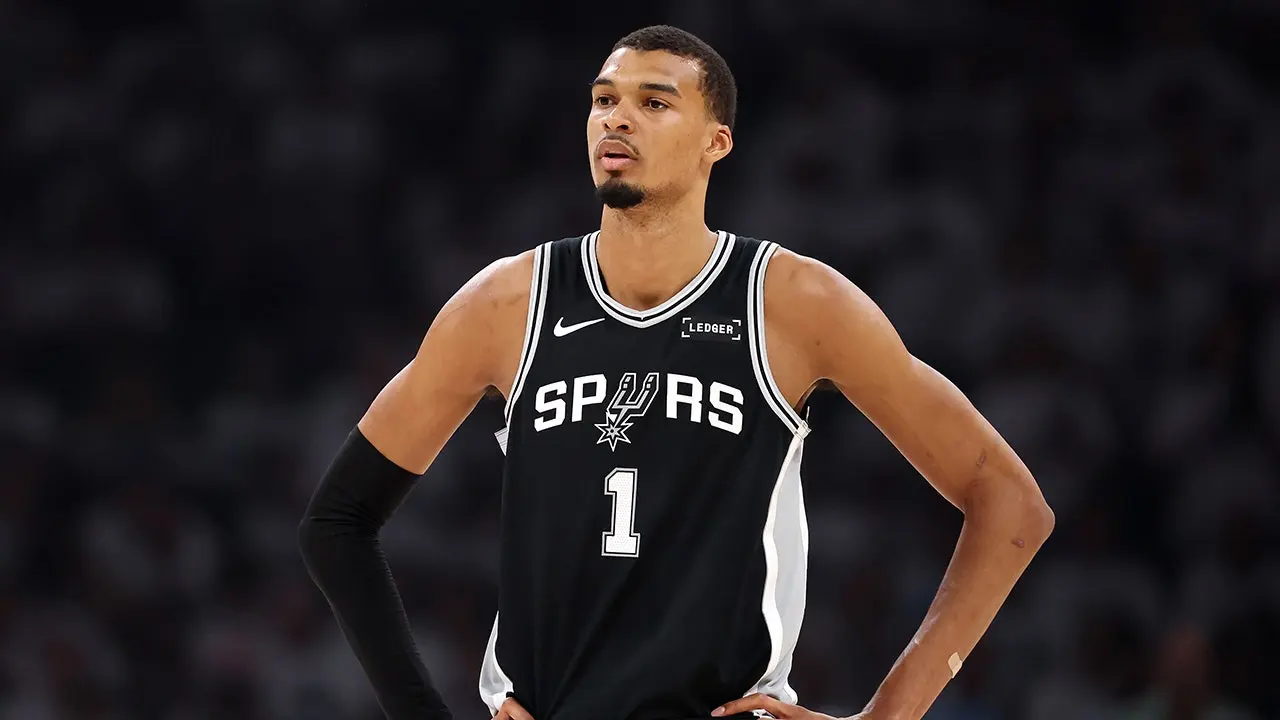
On the opposite side of this emotional spectrum stood Victor Wembanyama, the towering French prodigy whose rookie season has captivated the entire sports world, now experiencing the exhausting, humbling reality of deep postseason basketball. Throughout this series, the formula for the San Antonio Spurs had been remarkably simple and completely transparent: when Wembanyama was the most dominant, unstoppable force on the hardwood, they emerged victorious; when he was neutralized, they struggled to keep pace. After delivering spectacular, jaw-dropping performances of 41 and 33 points in San Antonio’s two previous wins, the young phenomenon found himself thoroughly locked in the suffocating defensive crosshairs of Oklahoma City in Game 5. The Thunder’s coaching staff drew up a brilliant, highly physical defensive blueprint designed to deny him his preferred spots on the floor, forcing him into a frustrating, series-low 20-point performance. Wembanyama looked uncharacteristically out of sync, shooting a dismal 4-for-15 from the field and missing all five of his attempts from beyond the three-point arc as the physical toll of this grueling playoff run caught up with his young frame. For a player who has been treated like a mythical deity since his arrival in the league, this game was a stark, humanizing reminder that growth in the NBA is rarely a straight line, and even the most gifted athletes must endure painful, developmental trial-by-fire moments. Yet, even in his struggles, Wembanyama’s sheer presence on the floor demanded immense attention, showcasing his unique ability to impact the game emotionally and defensively even when his offensive shots refused to fall, paving the way for a learning experience that will undoubtedly shape the future of his promising career. The visible frustration on his face as his shots rattled out spoke volumes about his competitive spirit, revealing a young warrior who deeply feels the weight of his franchise’s hopes and dreams on his broad, developing shoulders.
The measure of Wembanyama’s evolving leadership and the Spurs’ resilient spirit was put on full display early in the third quarter when the Thunder unleashed a furious offensive barrage, opening up an intimidating eighteen-point lead that threatened to turn the contest into a blowout. Sensing the game slipping away, Wembanyama gathered his teammates during a timeout two minutes into the half and delivered an incredibly passionate, throat-searing speech on the bench. It was a raw, vulnerable moment of pure fire that instantly ignited a spark of hope within the young San Antonio roster. Although Oklahoma City initially extended their lead to a daunting twenty points on the very next play, the Spurs refused to fold, embarking on a gritty, inspiring comeback attempt that eventually cut the deficit down to just eight points later in the quarter. Leading this spirited charge alongside Wembanyama was the fearless rookie Stephon Castle, who played with the composure of a seasoned veteran, leading San Antonio with an impressive 24 points and five rebounds. Castle’s fearless attacks on the rim and relentless on-ball defense provided a desperately needed emotional lift, showing that the future of the silver-and-black is incredibly bright regardless of the ultimate outcome of this playoff run. This courageous stretch of play illustrated the beautiful, unpredictable drama of the NBA postseason, where a single timeout speech and the emergence of an unexpected young hero can completely shift the emotional trajectory of a high-stakes game, keeping the fires of competition burning even under the heaviest duress. Their collective refusal to surrender, despite the overwhelming noise of the hostile crowd and the clinical execution of the opposition, exemplified the core values of grit and brotherhood that define this legendary San Antonio organization. It was an inspiring display of competitive sportsmanship that resonated far beyond the final score of the basketball game.
As the drama of this Western Conference battle raged with fierce intensity on the court, echoes of its significance reverberated all the way across the country to the basketball mecca of Madison Square Garden. The New York Knicks, having already secured their spot in the next round, found themselves in a holding pattern, waiting to see which battle-tested Western team would ultimately advance to meet them on the grandest stage. The basketball-mad fans in Manhattan, energized by their own team’s sensational playoff run, had already begun chanting, “We want Wemby! We want Wemby!” in a loud, boisterous display of anticipation that quickly went viral across social media. When asked about this chaotic, big-city hype before Game 5 tipped off, San Antonio’s poise-filled coach, Mitch Johnson, offered a grounded, incredibly human perspective that perfectly captured the stark contrast between media circus and locker-room reality. Johnson acknowledged the passion of the New York fan base, noting that the city was clearly on fire and enjoying a magnificent postseason run that they richly deserved. However, he quickly redirected the conversation inward, expressing that his mind and heart were completely locked into the immediate task and the incredibly tough opponents standing right in front of him in Oklahoma City. This candid exchange highlighted the fascinating psychological duality of the NBA playoffs: the outside world is constantly projecting ahead to historical matchups and dream scenarios, while the players and coaches in the trenches must maintain an almost monastic, day-by-day focus to survive the grueling physical and mental demands of the present moment. A single distracted thought or momentary lapse in discipline can mean the difference between a championship parade and a devastating summer of regret. Johnson’s disciplined response served as a masterclass in modern sports psychology, reminding everyone involved that in the high-stakes theater of professional sports, the future belongs entirely to those who can successfully conquer the challenges of today.
Now, the stage is set for a dramatic Game 6, a contest that promises to test the absolute limits of human endurance, mental fortitude, and athletic excellence for both of these incredible franchises. For the Oklahoma City Thunder, the goal is tantalizingly clear and exquisitely simple: they must find a way to summon that same ruthless, clinical energy on the road to close out a desperate and incredibly dangerous opponent. They must play with the understanding that the final win of a series is always the hardest to secure, requiring a level of focus and emotional control that goes far beyond raw talent. For the San Antonio Spurs, the upcoming game is a defining test of survival, an opportunity to defend their home court, protect their postseason lives, and force a winner-take-all Game 7 back in Oklahoma City. This is where legends are forged and where the human drama of sport reaches its absolute peak, as young men push their bodies and minds past the point of exhaustion in pursuit of a dream they have chased since childhood. The looming battle is not just about tactical adjustments, shooting percentages, or matchups; it is a profound test of collective character, heart, and the sheer will to win. As the basketball world holds its breath in anticipation of this epic showdown, one thing remains absolutely certain: whether the Thunder climb back to the NBA Finals or the Spurs pull off a historic, back-to-the-wall escape, the journey itself has already given us a breathtaking masterclass in the human spirit, showcasing the beautiful, excruciating pursuit of athletic immortality. We are witnesses to a modern epic on hardwood, where every dribble carries the hopes of entire cities and every shot is etched into the permanent archives of basketball history. The ultimate destination of this grueling journey may still fly under the dark banner of uncertainty, but the passion, tears, and sweat driving both teams forward are as real and human as the game itself.