


To live in Lebanon is to exist in a state of suspended animation, navigating a fragile landscape where “peace” is often nothing more than a phantom captured on a piece of paper, and war remains a constant, lurking shadow. A Lebanese cease-fire is a peculiar geopolitical construct: it is signed in distant capitals and clean diplomatic rooms, yet it holds no real jurisdiction over the blood-soaked soil it claims to protect. These agreements are signed, sealed, and globally televised, yet they rarely take actual effect, leaving the internal mechanisms of violence completely intact. It is a cruel, recurring theater where the sovereign state of Lebanon binds itself to international obligations on behalf of armed actors—namely Hezbollah—that it cannot control, cannot disarm, and cannot hold accountable. For the ordinary citizens of Beirut, Tyre, or the small farming villages of the south, this creates a profound psychological weariness. They are caught in a perpetual limbo, forced to calculate their daily survival based on a highly selective and shifting geography of violence. When a cease-fire is announced, it does not bring the profound relief of a war resolved; rather, it introduces a tense, agonizing quiet, where people brace themselves for the inevitable moment when the ink on the treaty dries and the bombs begin to fall once more. This structural dysfunction ensures that every truce is merely a pause in an ongoing tragedy, leaving the citizens to bear the emotional and physical burden of a state that negotiates for a security it cannot enforce.
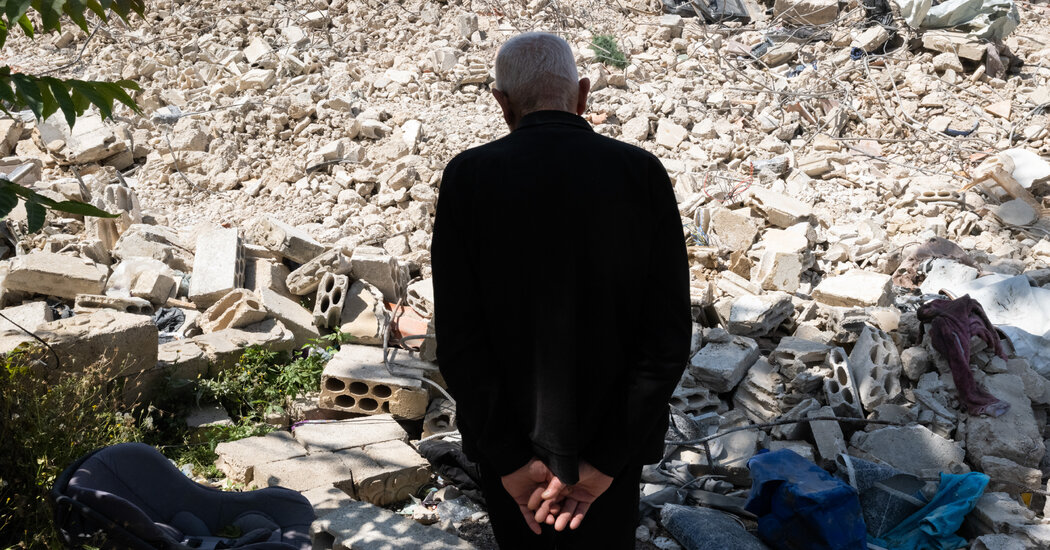
This tragic dynamic was vividly illustrated in the latest round of devastating conflict, where the geopolitical chess board of the Middle East was once again played out across the bodies and homes of the Lebanese people. The violence erupted when Hezbollah launched a barrage of rockets into northern Israel—not to defend the Lebanese border, but as a calculated act of proxy retribution to avenge the killing of Ayatollah Ali Khamenei during the ongoing, shadow-filled conflict between Israel, the United States, and Iran, Hezbollah’s primary financial and ideological benefactor. The scale of the Israeli retaliation was swift and merciless, transforming vibrant neighborhoods into concrete graveyards. Aggressive aerial bombardments shook the foundations of Beirut, while ground operations completely razed and ultimately occupied several ancient villages in southern Lebanon, cutting short the lives of hundreds of innocent Lebanese civilians and displacing hundreds of thousands more. Yet, when the international community intervened to broker a truce, the paradox of Lebanese sovereignty was laid bare once again. It was the cash-strapped, politically paralyzed Republic of Lebanon that sat at the negotiating table with the United States, signing a cease-fire that mandated the government to take “meaningful steps” to prevent Hezbollah from launching further attacks on Israel. This was a diplomatic fiction of the highest order. The Lebanese government had made an identical promise in the wake of the 2006 war, and again in 2024, despite the glaring, painful reality that the Lebanese Army possesses neither the heavy weaponry, the political mandate, nor the military capability to confront and disarm Hezbollah’s highly trained, state-sponsored militia.
This phenomenon of the empty cease-fire is not entirely unique to the borders of Lebanon; rather, it reflects a broader, cynical erosion of international diplomacy on a global scale. We see this hollowing out of peace treaties in the short-lived, routinely ignored truces of Russia’s brutal war on Ukraine, and in the frequently shattered humanitarian pauses of the catastrophic war in Gaza. As global powers increasingly treat diplomacy as a tactical tool rather than a moral imperative, cease-fires have been stripped of their original, life-saving meaning. According to Gopi Krishna Bhamidipati, a researcher at the New Lines Institute for Strategy and Policy in Washington, the statecraft of modern international leadership has transformed cease-fires into mere instruments of temporary crisis management, rather than genuine, long-term conflict resolution. This decay of diplomatic integrity predates recent political shifts, manifesting as a systemic failure of successive global administrations. For instance, the U.S.-brokered November 2024 agreement—meticulously drafted by seasoned diplomats under the Biden administration—stipulated that Israel cease all offensive military operations against Lebanese territory and that the Lebanese Army maintain absolute, exclusive control over all weaponry in the country. On paper, this truce officially endured for fifteen months. In reality, the United Nations documented a staggering 7,500 violations of Lebanese airspace by Israeli military aircraft and nearly 2,500 ground-level incursions, a period of supposed peace during which at least 197 Lebanese civilians were killed. This tragic pattern historicizes United Nations Security Council Resolution 1701, which was celebrated for ending the 33-day war between Hezbollah and Israel in 2006 under the presidency of George W. Bush, yet remained punctuated by thousands of documented violations by both sides for nearly two decades.
To truly comprehend the deep-seated skepticism of the Lebanese populace, one must understand that this cycle of empty promises has been inherited across generations, tracing its roots back to the very dawn of the modern state. Since the signing of the initial armistice in 1949, Lebanon has technically remained in a state of unresolved war with Israel, creating a seventy-five-year legacy of structural vulnerability and national insecurity. For three quarters of a century, Lebanese families have navigated an environment where foreign intelligence agencies, regional powers, and ideological movements have utilized their homeland as a convenient, low-cost proxy battleground. Grandmothers who once sought shelter in dark basements during the civil wars of the 1975-1990 era now watch their own grandchildren do the same, teaching them how to distinguish the menacing, low-pitched hum of reconnaissance drones from the sudden, deafening roar of precision-guided missiles. The physically scarred landscape of Lebanon tells this story of cyclical destruction and stubborn reconstruction, where collapsed apartment blocks are cleared away and rebuilt with the quiet understanding that they may be targeted again. In this environment, the word “cease-fire” does not evoke images of soldiers returning home or borders opening; instead, it conjures the image of a temporary band-aid slapped over a deep, infected wound. It is a system where the international community steps in to manage the immediate humanitarian fallout, only to retreat once the headlines fade, leaving the local population to sweep up the shattered glass, bury their dead, and wait for the next inevitable spark to ignite the dry tinder of unresolved geopolitical grievances.
Yet, despite this exhausting history of betrayal and disappointment, the human spirit possesses an almost illogical capacity for hope, a stubborn refusal to accept that permanent war is Lebanon’s ultimate destiny. When the latest cease-fire was announced, a profound, unfamiliar whisper of optimism rippled through a weary public, carrying with it the fragile thought that perhaps, this time, things really would be different. For the first time in modern memory, the Lebanese government appeared to be throwing off its traditional role as a helpless bystander and acting aggressively on its own behalf, asserting its presence at the diplomatic table with a newfound sense of agency. Even more revolutionary was the shifting dynamic surrounding Hezbollah; the powerful Shiite militant and political organization, which had long wielded an absolute, heavily armed veto over the country’s domestic affairs and foreign policy, was no longer unilaterally speaking in the name of the entire Lebanese population. There was a visible yearning for change, symbolized by the rise of a new generation of competent, young, and technocratic leaders who promised to replace the corrupt, entropic sectarian politics of the past with clean institutional governance. Most remarkably, the Lebanese state, which had lived in a state of suspended hostility since 1949, began to speak openly and constructively of peace. This was a monumental shift in a society where the mere mention of peace with Israel had for decades been treated as an dangerous, unspeakable taboo, buried deep under the weight of political treason charges, ideological polarization, and historical trauma.
Ultimately, if Lebanon is to transition from this cycle of phantom truces to a lived reality of genuine security, the international community and the Lebanese people must recognize that peace cannot be imported, nor can it be sustained by purely diplomatic signatures. True, lasting peace must be built from the inside out, by physically and politically transforming the Lebanese state from an impotent spectator into a strong, sovereign protector of its own territory. This arduous journey begins with the absolute reinforcement of the Lebanese Army, ensuring it possesses the real, uncontested monopoly on the legitimate use of force across every square inch of the nation’s borders. It requires a collective, domestic courage to dismantle the parallel military infrastructures that have for so long hijacked the state’s sovereign decision-making and dragged innocent citizens into devastating regional conflicts without their consent. The resilient people of Lebanon—who have survived economic collapse, massive explosions, and relentless foreign interventions—deserve far more than international crisis management; they deserve a functioning nation-state that can protect its children, rebuild its southern agricultural fields, and guarantee its own future. As the dust settles on this latest agreement, the ultimate test will not be whether the documents remain intact in Washington or Geneva, but whether a young family in south Lebanon can finally plant their olive trees, sleep soundly beneath a quiet sky, and believe, with absolute certainty, that the war is truly over.