


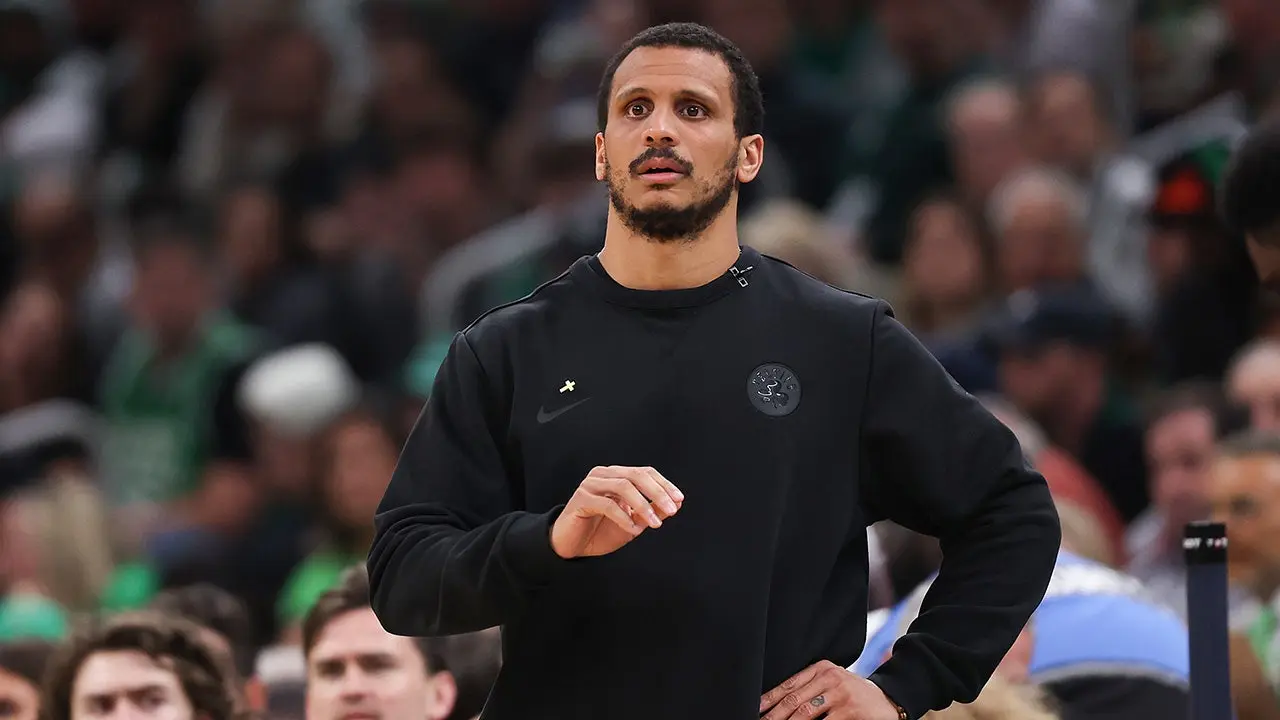
In a modern sports landscape that is increasingly dominated by individual branding, carefully manicured public relations campaigns, and athletes who are as concerned with their digital footprints as they are with their on-court performance, Boston Celtics head coach Joe Mazzulla stands out as a wonderfully authentic and blunt anomaly. When asked by reporters back in March about his chances of winning the NBA’s prestigious Coach of the Year award, Mazzulla did not offer the type of safe, polished, and rehearsed platitudes that media trainers love to preach. Instead, he flatly and without hesitation labeled the entire accolade “stupid.” It was a classic Mazzulla moment—deeply honest, slightly abrasive, and completely unbothered by the spotlight that so many of his peers actively chase. This raw and filter-free reaction was not a calculated display of false modesty, nor was it an attempt to reverse-psychology his way into the good graces of the voters; rather, it was a genuine reflection of his core philosophical beliefs. To Joe, the very concept of singling out one human being in a sharp suit for the hard work, mental exhaustion, and daily grind of a massive, multi-faceted basketball organization felt fundamentally flawed. Yet, in a delicious twist of cosmic irony, the NBA’s voting body chose to completely ignore his protests, officially announcing him as the winner of the coveted honor. Leading his beloved Celtics to a stellar 56-26 record and securing the highly competitive No. 2 seed in the Eastern Conference, Mazzulla’s tactical masterclass during the regular season was simply too brilliant to ignore, even if the recipient himself would have preferred to lock the trophy away in a dark, forgotten closet. This amusing paradox—a coach winning an award he actively trash-talked—not only humanizes a figure who is often perceived as intensely private or intensely eccentric, but also highlights a leader whose definition of success is entirely disconnected from personal vanity.
To fully understand why Mazzulla was so quick to dismiss the honor, one must look closely at the relentless, unseen machinery that powers a professional basketball franchise throughout an exhausting eighty-two-game schedule. This is precisely why the young coach argued with such passion that the league should abandon individual coaching awards in favor of a “Coaching Staff of the Year” honor. Humanizing the endless grind of an NBA season, Mazzulla painted a vivid and deeply appreciative picture of the silent, overworked warriors who keep the Celtics’ engine running at peak performance day in and day out. He spoke with immense warmth and dynamic detail about the video coordinators running on nothing but pure adrenaline and caffeine, spending thirty hours straight clipping, sorting, and coding hundreds of hours of raw game film at three in the morning so the players have customized scouting tapes waiting on their tablets by breakfast. He highlighted the assistant coaches who make painful emotional sacrifices, missing their children’s plays, wedding anniversaries, and family dinners to sit in windowless rooms dissecting defensive rotations or enduring exhausting late-night flights across multiple time zones. There is a heavy, quiet toll that professional sports extracts from coaches’ families, and Mazzulla spoke of this reality not with the detached air of an executive, but with the profound empathy of a man who feels personally responsible for their well-being. He expressed a deep, almost paternal sense of guilt that his staff could not physically share the podium with him, declaring himself forever indebted to the men and women who sacrifice their personal lives to give the Celtics a fighting chance to compete every single night. In championing his staff, Mazzulla transformed a standard post-award press conference into an emotional tribute to collective labor, illustrating that true leadership is about lifting up those in the shadows rather than standing alone under the bright lights.
Stepping into the head coaching position for the iconic Boston Celtics is easily one of the most psychologically taxing and history-laden challenges in all of global sports, carrying a legendary weight that has broken many talented minds before him. The ceiling of the TD Garden is heavy with championship banners and the imposing spirits of basketball titans, none more legendary than Red Auerbach himself—the cigar-chomping, fiercely competitive patriarch who defined Boston’s winning culture and after whom the Coach of the Year trophy is named. Auerbach’s immense shadow looms large over anyone who dares to lead this franchise, having guided the Celtics to a historic nine NBA titles, including an unprecedented run of eight consecutive championships from 1959 to 1966. When Mazzulla’s name was officially etched onto that sacred trophy, he did not just win an award; he joined an incredibly exclusive holy trinity of franchise royalty, standing alongside Tom Heinsohn in 1973 and Bill Fitch in 1980. At just thirty-seven years of age, Mazzulla became the youngest head coach to receive this historic accolade since the legendary Phil Jackson won it back in 1975, a mind-boggling milestone when considering the emotional maturity required to manage a locker room filled with modern, multi-millionaire superstars. Mazzulla’s approach to this immense pressure is not characterized by the aloof, intellectual distance of older coaches; instead, he coaches with a wild, combustible passion that mirrors his young age and fierce competitive spirit. This is, after all, the same head coach who famously amused fans and media alike by admitting he wished a referee a sarcastic “Merry Christmas” during a heated, irate, and incredibly explosive postgame outburst. He is a raw, emotional human force who wears his heart on his sleeve, matching the intense, blue-collar dedication of the Boston fan base and proving that carrying Auerbach’s torch requires a willingness to get down in the dirt with your team rather than watching from a safe, comfortable distance.
The narrative of Mazzulla’s coaching tenure is far from a simple, clean, and uncomplicated fairytale of non-stop success; rather, it is a complex, dramatic, and deeply human tapestry woven with ecstatic championship peaks and devastating, heartbreaking playoff lows. The absolute pinnacle of his professional journey arrived in 2024, when he masterfully navigated a pressure-packed postseason run to guide the Celtics to a dominant 4-1 series victory over the Dallas Mavericks, capturing another glorious Larry O’Brien Trophy for the city’s historic mantle. Yet, the brutal and unforgiving nature of NBA basketball was laid bare when contrasting that ultimate triumph with the agonizing postseason disappointment that preceded it, where a healthy Celtics squad suffered a shocking, heartbreaking first-round exit, losing a grueling Game 7 to the Philadelphia 76ers. This sharp, whiplash-inducing contrast is made even more poignant by the fact that the team had fought so hard to remain competitive during the regular season, playing much of the year without several of their top stars, including superstar Jayson Tatum who was sidelined for the majority of the season. To watch a young team overcome such massive, long-term adversity only to stumble at the finish line once they finally got healthy is a cruel irony that only professional sports can provide. This stark, emotional roller coaster—the unimaginable high of holding the championship trophy versus the hollow, silent shock of an early playoff departure—illustrates the intense emotional and psychological toll that professional sports inflicts on those at the helm. For Mazzulla, navigating this chaos meant showing up to the facility everyday with the same unwavering work ethic, teaching his players that neither the highest praise nor the deepest criticisms define their true value as human beings. It is this profound emotional resilience, forged in the crucible of both painful defeats and historic victories, that has deeply humanized him in the eyes of his players, proving that he is a coach who will stand firmly by their side whether they are raising a championship banner or picking up the pieces of a broken season.
This remarkable growth and organizational stability did not occur in some isolated vacuum, as Brad Stevens, the Celtics’ brilliant president of basketball operations and Mazzulla’s predecessor, has been instrumental in cultivating a supportive, nurturing environment that allowed the young coach to thrive. Stevens, celebrated as one of the most analytical and cerebral basketball minds of his generation, offered incredibly warm, glowing praise for his head coach, emphasizing that this Coach of the Year award was a highly deserved recognition and a testament to both Joe’s work ethic and the collaborative culture of his staff. Stevens pointedly highlighted the massive mountains of unknowns and roster uncertainties the team faced before the season began, commending Mazzulla for doing a truly fantastic job of building trust, creating team harmony, and helping individual players discover the absolute best, most selfless versions of themselves within the cooperative framework of the team. He praised how Joe pours every single ounce of his energy and soul into competing at a high level day in and day out. Rather than imposing a rigid, dictatorial system, Mazzulla’s leadership was defined by a rare flexibility, allowing his players to express their unique talents while staying firmly committed to the overarching goals of the collective unit. The sheer quality of the coaches Mazzulla bested for this award further highlights the elite standard of his achievement, with Pistons head coach J.B. Bickerstaff finishing in a close second place after a highly impressive campaign of his own, and San Antonio Spurs leader Mitch Johnson securing third place. This friendly but fierce competition among the league’s top tacticians underscores the mutual respect and shared humanity of a coaching fraternity where peers are constantly pushing one another to survive, adapt, and innovate on a nightly basis.
In the final analysis, Joe Mazzulla’s reluctant and highly cynical acceptance of the Coach of the Year award serves as the ultimate metaphor for his entire basketball and life philosophy: the day-to-day process is the true reward, and any individual honor that threatens to separate him from his collective team is viewed with deep, healthy skepticism. By fiercely refusing to let the spotlight shine solely on himself, he has ironically endeared himself even more to his players, his assistant coaches, and the famously demanding Boston basketball community. His inspiring journey is a powerful reminder that leading other human beings through intense pressure requires far more than just brilliant strategic diagrams on a whiteboard; it requires profound empathy, relentless loyalty, a willingness to shoulder the blame during public failures, and a complete rejection of personal self-importance. In an era where modern sports culture often over-hypes individual brands, selfish statistics, and superficial social media attention, Mazzulla stands as a refreshing, old-school throwback to a much simpler and more communal ethos of basketball. He does not need a golden trophy named after Red Auerbach to validate his thousands of sleepless nights, his grueling film sessions, or his absolute devotion to his squad. He will undoubtedly continue to protect his staff, fight relentlessly for his players, and perhaps occasionally lose his temper at an official on a cold winter night, remaining entirely and unapologetically true to his authentic self. While the physical trophy will eventually collect dust in the Celtics’ historic archives, the true legacy of Joe Mazzulla will remain in the unbreakable bonds built behind closed doors, in the quiet hours of mutual sacrifice, and in the enduring pursuit of collective greatness. He has shown that a “stupid” award can still reveal a very smart, deeply human way to lead.