


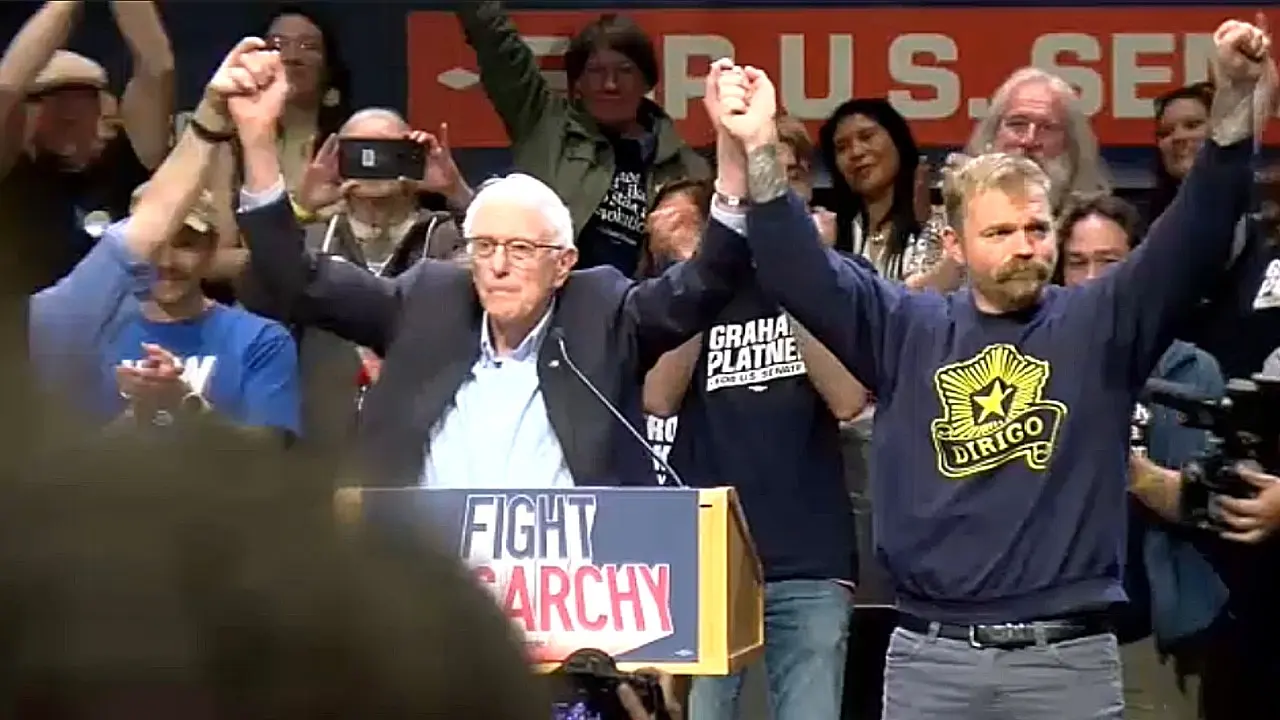
Inside the bustling venue in Portland, Maine, the atmosphere crackled with the unmistakable electricity of a grassroots rebellion. As the autumn air outside turned crisp, hundreds of everyday Mainers packed into the warmth of the hall, their faces lit with a mixture of frustration and hope. They had gathered for a rally boldly titled “Fighting Oligarchy,” spearheaded by Vermont Senator Bernie Sanders, who was traveling across the state alongside gubernatorial candidate Troy Jackson and a fresh, passionate political force: Graham Platner. Seeking to unseat the formidable, five-term Republican Senator Susan Collins, Platner stood before the crowd not just as a political candidate, but as a voice for the working class. The rally was designed to mobilize a community weary of the political status quo, transforming a standard campaign stop into a deeply personal gathering where citizens could voice their exhaustion with an economic system that many feel has bypassed them entirely. To those in attendance, Platner represented a rare opportunity to challenge the entrenched power structures of Washington, bringing a raw, unfiltered sincerity to a stage often dominated by polished, focus-grouped talking points.
Taking the microphone, Platner did not mince words as he tapped into a wellspring of populist discontent, aligning himself closely with the democratic socialist ideology that has defined Sanders’ career. He spoke directly to the lived experiences of families struggling to keep up with rising costs, framing his campaign as a “political revolution” aimed at reclaiming the dignity of the average worker. With passionate intensity, Platner accused corporate magnates and wealthy elite of turning greed into a virtue and corrupting the democratic process. He targeted Senator Susan Collins directly, casting her as the quintessential product of a broken political system where politicians amass personal fortunes while leaving their constituents with mere scraps. The crowd erupted in cheers as Platner pointedly criticized health insurance executives for profiting off human suffering, declaring that they were lining their pockets with the “blood, sweat, and tears” of ordinary people. By centering his pitch on these deeply felt hardships, Platner sought to spark a sense of shared purpose, urging the crowd to stand up and reclaim what he argued was rightfully theirs from the hands of an indifferent corporate structure.
The critique of modern governance did not stop at domestic economic policy; Platner also turned his gaze toward America’s role on the global stage, delivering a sobering message about foreign policy and humanitarian priorities. He spoke passionately to the moral conscience of the audience, questioning why billions of American tax dollars are continuously funneled into weapons and military interventions abroad, particularly concerning conflicts involving Gaza and Iran. In a deeply humanizing moment, Platner urged the crowd to consider the tragic human toll of war, arguing that our collective resources should be used to heal rather than destroy. “Our tax dollars can build schools and hospitals in America instead of bombs to drop on them in Gaza and Iran,” he stated, highlighting a stark contrast between domestic neglect and international violence. That statement resonated deeply with voters who see their own local schools underfunded and healthcare systems strained, offering a vision of a nation that prioritizes empathy, education, and community well-being over global military projection.
When Bernie Sanders took the stage, the veteran senator threw the full weight of his progressive legacy behind the newcomer, framing Platner’s candidacy as a critical pivot point for the future of the entire country. Sanders, with his trademark gravelly voice and urgent delivery, made a bold promise to the energized crowd: electing Platner would not just change Maine’s representation in Congress, but would help fundamentally transform the fabric of America. The endorsement felt like a passing of the torch, connecting Platner directly to the populist movement that Sanders has cultivated for decades. Watching the two men share the stage, the audience saw a unified front against the modern political establishment, bridging the gap between a seasoned statesman who has spent his life fighting corporate dominance and a young, eager challenger ready to pick up the mantle. Sanders’ presence lent immense credibility to Platner’s grassroots campaign, signaling to progressives across the nation that Maine could be the next major battleground for systemic economic change.
Central to their shared platform was a direct, unapologetic assault on the extreme concentration of wealth in America, exemplified by Sanders’ proposal to tax the nation’s wealthiest individuals. Sanders explicitly tied Platner to his legislative efforts to implement a 5% annual wealth tax on the country’s 938 billionaires—a policy aimed at reversing decades of growing income inequality. This tax proposal was presented not merely as a matter of fiscal policy, but as a moral imperative to rebuild the middle class and fund vital social programs. For the people sitting in the audience—mechanics, teachers, nurses, and small business owners—the concept of taxing billionaires is not about envy, but about fairness and survival. Proponents argue that the staggering fortunes of a select few should be reinvested into the communities that helped generate that wealth in the first place, ensuring that basic human needs like education, healthcare, and infrastructure are fully funded.
To conclude his speech, Sanders warned of a near future where a handful of tech billionaires, like Elon Musk and Mark Zuckerberg, could hold unchecked dominion over artificial intelligence and robotics. Sanders and Platner cautioned that without immediate intervention, these powerful technologies will be weaponized to maximize corporate profits at the expense of human labor and societal well-being. By framing the campaign around the control of future technologies, they elevated the local Senate race into a larger crusade to safeguard human agency against a cold, algorithmic future controlled by the ultra-wealthy. Ultimately, the Portland rally was more than a mere bid for votes; it was a rallying cry for a more compassionate and equitable society. As the event concluded, attendees left with a renewed belief that through collective action, they could reject the crumbs of a corporate-driven system and build a future rooted in public dignity, peace, and mutual care.