



The quiet, majestic landscapes of Hampshire County, West Virginia, have long beckoned those seeking solace, adventure, and a deeper connection with the natural world. On a recent Saturday, it was this very allure that drew a spirited group of twenty-eight young adventurers and their leaders from Boy Scout Troop 1865, based out of Fairfax, Virginia, to the winding currents of the scenic Cacapon River. For these young men, the excursion was intended to be a classic rite of passage—a weekend dedicated to honing their outdoor survival skills, navigating the gentle bends of the river, and strengthening the bonds of brotherhood under the canopy of the Appalachian wilderness. Equipped with canoes, tents, sleeping bags, and carefully packed dry bags, the scouts set out with high spirits and the determination that has defined the scouting movement for generations. In scouting, the motto “Be Prepared” is not merely a slogan but a way of life, a philosophy designed to instill resilience, foresight, and adaptability in the face of life’s unpredictable currents. Little did these young scouts know that their training, character, and unity would soon be put to an ultimate, real-world test, transforming what was supposed to be a peaceful, routine weekend retreat into a dramatic and heart-pounding rescue mission that would capture the attention and the hearts of communities across two states.
As the troop paddled further down the river, the atmosphere began to shift with an alarming and sudden intensity, demonstrating just how quickly the serene wilderness can transform into a theater of raw, uncontrollable power. A localized storm had unleashed a deluge of rain upstream, and the runoff quickly funneled into the narrow Cacapon River valley, causing the water levels to rise with terrifying speed. What had been a manageable, leisurely current morphosed within minutes into a swirling, muddy torrent of fast-moving floodwaters that threatened to capsize the heavy aluminum canoes and sweep the young scouts downstream. Seeing the river rapidly swell and sensing the escalating danger, the troop’s experienced adult leaders, including Micah Campbell, knew they had to act immediately to ensure the safety of the boys. Campbell and his co-leaders made the decisive, mature call to abort the journey and head directly for the shore, prioritizing the preservation of human life over the completion of their weekend itinerary. However, as the scouts scrambled up the muddy banks to safety, they made a sobering realization: the relentless power of the rising current had forced them onto the wrong side of the river, leaving them utterly stranded in a remote, inaccessible area with a violent stretch of flooded water separating them from their vehicles and the path home.
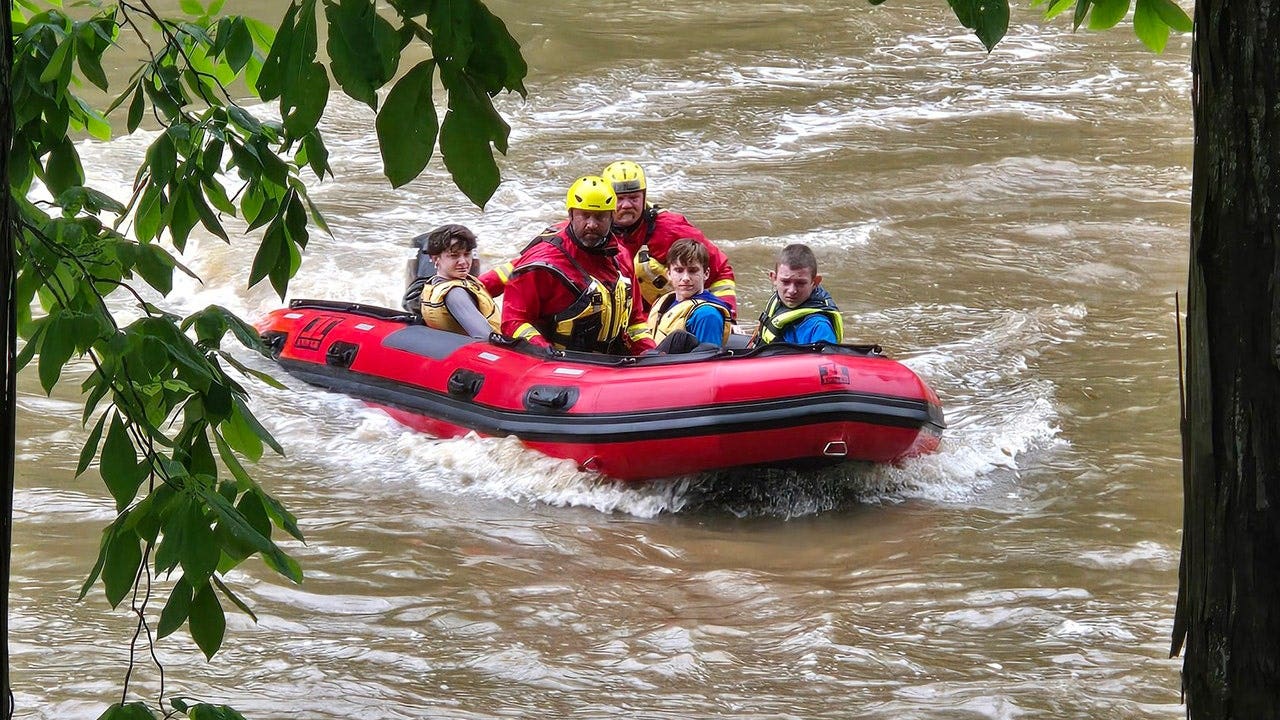
Huddled together on the isolated riverbank, the twenty-eight boys and their leaders faced a period of intense vulnerability, waiting for forty-five long minutes as the roaring river rushed past them. In such moments, panic can easily spread like wildfire, especially among young teenagers stranded in the cold dampness of an unforgiving wilderness. Yet, it was during this critical window that the true spirit of the scouts shone brightest; relying on their training, the boys remained remarkably calm, supportive of one another, and disciplined, refusing to let fear dictate their actions on the riverbank. Meanwhile, a lifeline was being cast on the other side of the river, where emergency services were contacted and a coordinated rescue operation was swiftly set into motion by local West Virginia first responders. These brave rescue crews, familiar with the treacherous and unpredictable nature of the county’s waterways during heavy rains, quickly arrived at the scene equipped with specialized watercraft capable of navigating the powerful and debris-laden currents. This swift, professional response was a testament to the dedication of local emergency personnel who routinely risk their own safety to protect strangers, showing these young boys a profound example of civic duty and heroism in action.
The rescue operations were further aided by the extraordinary hospitality of the local community, beautifully personified by Jeffrey West and his father, who owned a rustic cabin situated near the very stretch of river where the scouts had become stranded. West had initially traveled to Hampshire County anticipating a quiet, peaceful weekend of relaxation far away from the hustle and bustle of daily life, but he suddenly found his cabin at the epicenter of a major rescue operation. As rescue watercraft systematically and safely ferried the twenty-eight wet and shivering scouts across the dangerous, churning waters to safety, West threw open the doors of his cabin, transforming it into a warm sanctuary of refuge and comfort. The sheer relief of the scouts as they stepped onto solid ground was quickly met with the legendary hospitality of the West Virginia hills, as they were welcomed into the cozy warmth of the cabin woodstove. West and his family wasted no time in ordering plenty of fresh, hot pizza and brewing large pots of rich, steaming hot cocoa, ensuring that the cold, exhausted boys had full bellies and warm spirits while they waited for their alternative transportation home to Fairfax to be arranged.
While the story is ultimately one of triumph, survival, and overwhelming gratitude, the fierce and unforgiving power of the Cacapon River did not leave the scouts entirely unscathed, as the raging floodwaters claimed almost all of their material possessions. The sudden and violent onslaught of the current was strong enough to sweep away a significant portion of the troop’s essential canoeing and camping equipment, including dry bags, sleeping gear, and sealed five-gallon buckets containing the boys’ extra clothes, personal items, and scouting supplies. For a non-profit scout troop, the loss of such a massive amount of specialized outdoor gear represents a devastating economic and logistical blow, as these items are accumulated over years of fundraising and are vital for future adventures. Yet, as the leaders reflected on the day’s events, the loss of gear served as a humbling reminder of the sheer power of nature, emphasizing the timeless lesson that material objects can always be replaced, but the lives and safety of twenty-eight young men are completely priceless. The experience served as an invaluable, real-world classroom for the scouts, teaching them firsthand about the unpredictability of the natural world, the importance of quick decision-making under pressure, and the profound value of community support.
In the wake of this unforgettable ordeal, Troop 1865 is reaching out to the surrounding communities and the public with a hopeful call to action, turning a story of survival into an opportunity for collective goodwill. The troop is asking any Good Samaritans, local residents, fishermen, or kayak enthusiasts who might be traveling along or near the Cacapon River in the coming weeks to keep a sharp lookout for any of their lost equipment, particularly the sealed five-gallon buckets and dry bags that may have washed ashore downstream. Anyone who happens to locate any of these items is kindly urged to contact the troop directly at their dedicated email address, [email protected], so that the boys might recover a piece of their adventure. Looking back, what began as a routine weekend river trip in West Virginia became a profound narrative of human resilience, spectacular community mobilization, and the enduring warmth of human kindness. The twenty-eight scouts of Troop 1865 returned home to Fairfax, Virginia, with empty hands but with hearts full of gratitude, forever bonded by a Saturday afternoon on the Cacapon River that proved, beyond a shadow of a doubt, that they were indeed prepared for whatever life might throw their way.