



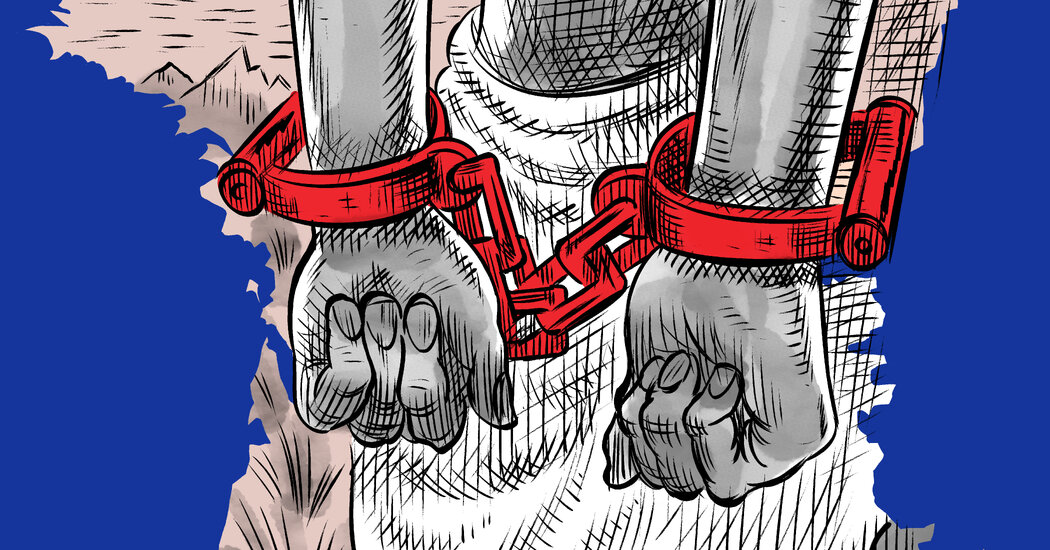
It was a moment of profound, quiet reckoning inside the halls of the French National Assembly in May 2025, one that momentarily shattered the carefully polished veneer of modern French statehood. During a routine legislative session, Prime Minister François Bayrou found himself unprepared for a devastatingly simple question posed by an parliamentary colleague: Why, after nearly two centuries of proclaiming liberty, equality, and fraternity, did the French Republic still technically retain the Code Noir—the infamous seventeenth-century body of law that institutionalized and regulated the brutal enslavement of millions of Black human beings—within its legal framework? The look of genuine astonishment on Bayrou’s face spoke volumes; like the vast majority of his compatriots, he had assumed that such a barbaric relic had long since been cast into the dustbin of history. In the wake of this revelation, a wave of collective discomfort swept through the government, prompting an immediate promise to introduce a bill to formally annul the code. Though political fortunes shifted and Bayrou’s government subsequently fell, the moral urgency of the question did not dissolve. Now, a year later, a dedicated, cross-party legislative push engineered by Max Mathiasin, a deputy representing the Caribbean island of Guadeloupe, is set to bring this monumental issue back to the floor of the National Assembly. On May 28, 2026, French lawmakers will finally vote to formally, legally dismantle a system of oppression that was set into motion 341 years ago by the quill of King Louis XIV. While the impending vote is a vital acts of legislative hygiene and symbolic justice, the true significance of this moment lies not in the mere striking down of ancient words, but in the painful opportunity it presents for France to confront the deeply buried architecture of its colonial past and the human lives that were commodified under its authority.
To truly comprehend the weight of what is being repealed, one must look past the sterile legalese of the Code Noir—literally the “Black Code”—and peer into the terrifyingly methodical worldview that birthed it in 1685. Far from being a mere tool of crude economic exploitation, the Code was an intricate, state-sponsored manifesto that sought to reconcile the insatiable greed of colonial plantation owners with the rigid, conservative Catholic theology of the Sun King. It transformed human beings into meubles—movable, heritable chattel property that could be bought, sold, worked to death, and passed down to heirs like livestock or farm equipment. Yet, in a chilling testament to the ideological purity of Louis XIV’s court, the opening article of this infamous document did not even mention African slaves; instead, it ordered the immediate and complete expulsion of Jewish people from the French Caribbean. This detail reveals a regime obsessed with creating a uniform, highly controlled society where commerce and extreme religious devotion were seamlessly fused. Under French rule, the horrific reality of the transatlantic slave trade was wrapped in a cloak of divine mission. Unlike their Protestant English counterparts in Virginia or Jamaica, who often avoided baptizing enslaved people out of a theological anxiety that fellow Christians could not lawfully be held in bondage, the French monarchy offered a dark and twisted bargain: in exchange for their earthly freedom and the violent theft of their labor, African captives were forcibly baptized into the Catholic faith, with the Crown disingenuously claiming that their suffering on earth was a small price to pay for the eternal salvation of their souls.
This bizarre, devastating synthesis of religious paternalism and systemic cruelty was not lived out in the abstract; it was carved directly into the flesh of the women, men, and children who labored in the grueling sugar fields of the West Indies. The everyday management of this system was often entrusted to religious orders, such as the Jesuits and Dominicans, who used the profits generated from slave labor to fund their schools, charities, and evangelical missions. The human cost of this hypocrisy is perfectly embodied in the historical figure of Father Jean-Baptiste Labat, a Dominican priest who took over the administration of a sugar plantation in Martinique during the 1690s. Labat’s historical diaries reveal a man trapped in a monstrous paradox: on one hand, he possessed a deeply personal, human tenderness, writing with genuine, heartbreaking sorrow when a young enslaved child died on his estate. On the other hand, this very same man of God would, without a shred of hesitation, order the brutal, systematic torture of any enslaved person caught practicing African spiritual traditions or attempting to escape. To modern eyes, Labat appears as a psychological enigma—a man capable of simultaneous compassion and unimaginable sadism—but within the framework of the Code Noir, he was not a moral failure; he was the system operating exactly as it was designed to. The Code created a world where torment and religious duty were two sides of the same coin, convincing a nation that it could love the souls of Black people while violently destroying their bodies.
The distinct horror of the French Code Noir was not its capacity for brutality, as it belonged to a global family of equally ruthless colonial laws, but rather its unparalleled bureaucratic reach and systematic export across the globe. Long before the British codifying of slave laws in Barbados or the patchwork of racial regulations that defined the American colonies from Massachusetts to Georgia, the Spanish had established their own sweeping legal codes across their vast empires in Central and South America. What set Louis XIV’s edict apart was its centralized, uniform authority dispatched directly from the gilded halls of Versailles to govern the lives of people on opposite sides of the earth. From the sugar plantations of the Caribbean to the Indian Ocean islands of Mauritius and Réunion, the French state exported this legal manual of human degradation. It even crossed onto the North American continent, where a modified version of the Code was enacted in 1724 to govern the massive Louisiana Territory. Decades before Thomas Jefferson executed the Louisiana Purchase in 1803, the daily lives, punishments, family structures, and legal non-existence of tens of thousands of enslaved people living along the Mississippi River had already been deeply shaped by the harsh dictates of French royal law. The Code Noir established a global, interconnected empire of suffering that left a permanent imprint on the physical and legal landscapes of the modern world.
For generations, France has struggled to reconcile this grim global legacy with its own idealized national identity, often choosing historical amnesia over uncomfortable introspection. The celebratory national narrative taught in French schools has long focused on the proud moment in 1794 when the radical French First Republic officially abolished slavery, casting France as a pioneering beacon of universal human rights well ahead of Great Britain or the United States. Yet, this romanticized history conveniently glosses over the painful betrayals that followed: the fact that Napoleon Bonaparte, driven by colonial lobbies and imperial ambitions, brutally reinstated slavery in the Caribbean in 1802, and the subsequent horrors of the Haitian Revolution, where an estimated 200,000 Black Haitians sacrificed their lives to win their independence from French forces. While the Second Republic finally abolished slavery for good in 1848, the Code Noir itself was simply left to gather dust in the legal archives, its survival a quiet testament to a nation that preferred to look away. This reluctance to confront the past is further complicated by France’s deeply held, modern commitment to a “colorblind” universalism, a policy born out of the traumas of World War II when the Vichy regime used racial and religious registries to assist in the deportation of 75,000 Jewish people. In response, modern France has fiercely rejected the collection of any government data based on race or ethnicity, operating under the highly idealistic premise that if the state does not recognize race, racism cannot exist. While noble in theory, this approach has often acted as a powerful shield against self-examination, leaving the country blind to the systemic inequalities and racial disparities that continue to plague its citizens.
As the National Assembly prepares to finally erase the Code Noir from its books, the descendants of those who suffered under its laws are keenly aware that symbolic gestures, while important, are only the beginning of a much grander, more difficult human journey. While cities like Nantes—once a thriving hub of the French slave trade—have built moving memorials to honor the victims of the past, and a landmark law in 2001 officially declared slavery a crime against humanity, the deeper realities of French colonial history remain largely absent from mainstream national consciousness. The legacy of the Code did not vanish with the slave ships; it merely evolved, manifesting today in the spatial and social segregation of the suburban banlieues of Paris, Marseille, and Lyon, where marginalized immigrant communities face systemic barriers, as well as in the economic struggles of overseas departments like Guadeloupe and Martinique, which still grapple with the colonial dynamics of dependency. The American experience has shown that the ghosts of slavery cannot be legislated away overnight; they linger in the cultural, political, and economic foundations of a society. By formally abolishing the Code Noir, France is not closing abook on a distant, regrettable chapter of history; rather, it is finally opening the cover, taking its first tentative, necessary steps toward an honest, national self-appraisal that recognizes that true liberty and equality can only be achieved when we brave the shadows of our shared past.