


The New Delhi Tightrope: Marco Rubio’s Diplomatic Mission to Salvage U.S.-India Relations
Navigating the Rift: Marco Rubio’s High-Stakes Diplomatic Defusion in New Delhi
                              U.S.-INDIA BILATERAL TIES

  Historical Alignment (2000-2024)                 Recent Friction Points (2024-Present)
┌─────────────────────────────────┐               ┌─────────────────────────────────────┐
│ ∙ Bipartisan strategic consensus│               │ ∙ Sudden 50% import tariffs         │
│ ∙ Shared oversight of Indo-Pacific              │ ∙ Disruptions to legal immigration  │
│ ∙ Joint technology & defense R&D│               │ ∙ Volatile personalist diplomacy    │
└────────────────┬────────────────┘               └──────────────────┬──────────────────┘
                 │                                                   │
                 └─────────────────────────┬─────────────────────────┘
                                           │
                             ┌─────────────▼─────────────┐
                             │   Secretary Rubio's Visit │
                             │   to New Delhi (Day 2)    │
                             └──────────────┬────────────┘
                                            │
                                [Strategic Reconciliation]
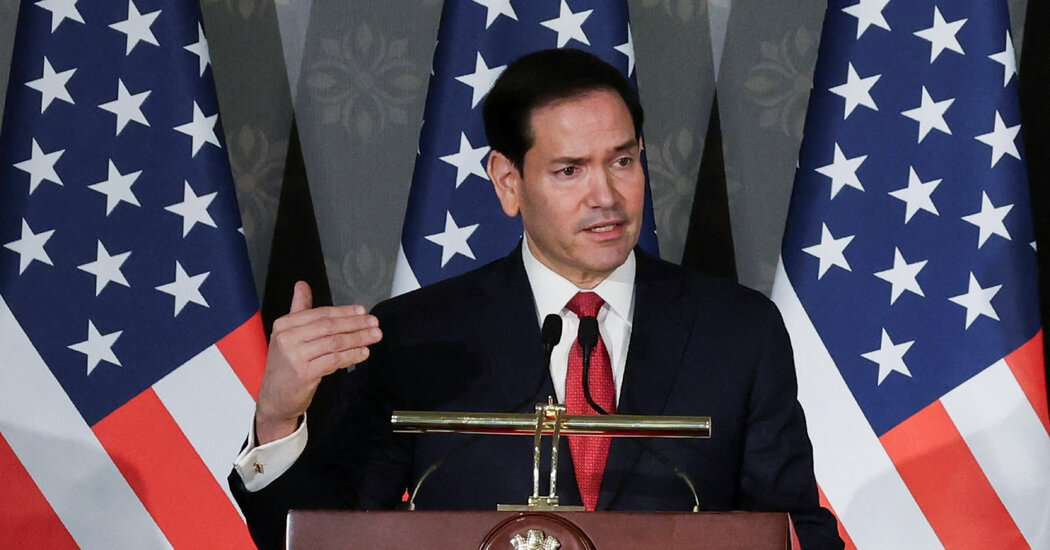
Stepping into the oppressive political atmosphere of New Delhi, Secretary of State Marco Rubio embarked on an urgent, high-stakes diplomatic mission designed to soothe the frayed edges of one of Washington’s most vital, yet increasingly volatile, global partnerships. Over the course of the last year, the traditional security consensus between the United States and India has been repeatedly tested by the unilateralism of President Donald J. Trump, whose transactionist foreign policy and aggressive trade measures have frequently blindsided New Delhi, leaving Indian policymakers questioning the long-term reliability of their Western ally. Standing before a packed press corps on the second day of his four-day Indian tour, Rubio sought to dispel these anxieties, offering public assurances that the fundamental geopolitical convergence between the world’s two largest democracies remains entirely unbroken. “The U.S.-India relationship has not lost any momentum,” Rubio declared with practiced diplomatic optimism, attempting to project stability amid a sea of structural uncertainties. “The relationship continues to be strong.” Yet, beneath this reassuring rhetoric lies a complex reality; since the early 2000s, successive American administrations—both Republican and Democratic—had carefully nurtured a strategic alliance with India as a crucial counterweight to China’s rise in the Indo-Pacific. By highlighting ongoing cooperation in dual-use critical technologies, joint military production, and direct commercial investments during his bilateral meetings with Prime Minister Narendra Modi, Rubio hoped to signal that the foundational architecture of this partnership could withstand the turbulent political storms currently emanating from Washington.
Of Nobels and Trade Wars: The Personalist Politics Behind Trump’s Tariff Regime
                    THE TARIFF RETALIATION LOOP

┌────────────────────────┐         No Nomination       ┌────────────────────────┐
│  Trump's Mediation in  ├────────────────────────────>│ Modi Refuses Nobel     │
│  Kashmir / Cease-fire  │                             │ Peace Prize Support    │
└────────────────────────┘                             └───────────┬────────────┘
                                                                   │
                                                                   │ Retaliatory
                                                                   │ Action
                                                                   ▼
┌────────────────────────┐         Interim Deal        ┌────────────────────────┐
│ Tariffs Struck Down by │<────────────────────────────│ Imposition of 50%      │
│ Supreme Court (Feb)    │         Onerous terms       │ Trump Tariffs on India │
└────────────────────────┘                             └────────────────────────┘
The underlying friction threatening this strategic alignment is not merely systemic, but deeply personal, characterized by a series of retaliatory economic moves that directly followed a notable snub of the American president. According to investigative reporting by The New York Times, President Trump’s abrupt decision to levy a staggering 50 percent tariff on Indian imports last summer was triggered after Prime Minister Modi declined to publicly nominate him for the Nobel Peace Prize—an honor Trump believed he earned by brokering a temporary de-escalation between India and Pakistan following a round of cross-border military strikes. In the wake of this diplomatic refusal, Washington acted swiftly, weaponizing trade policy and demanding an interim agreement that forced New Delhi into highly unfavorable regulatory concessions. While the U.S. Supreme Court eventually struck down these sweeping tariffs on more than a hundred nations, the White House continues to seek alternative domestic legal mechanisms to bypass judicial oversight and reimpose these economic penalties. Rubio, tasksed with reframing these punitive measures, insisted to reporters that the administration’s trade hostilities were not a targeted attack on India, but rather a holistic attempt to rectify structural balance-of-trade deficits across the globe. This explanation, however, does little to change the hard economic reality for American businesses, which ultimately bear the financial burden of importing Indian manufactured goods, nor does it ease the profound frustration of Indian trade officials who view these volatile tariffs as a direct violation of the rules-based international trade order.
The Collision of Native Doctrines: “America First” Meets “India First”
                     THE COALITION OF GEOPOLITICAL INTERESTS

         U.S. FOREIGN POLICY                         INDIA'S GEOPOLITICAL STANCE
     ┌─────────────────────────┐                     ┌─────────────────────────┐
     │     "AMERICA FIRST"     │                     │      "INDIA FIRST"      │
     └────────────┬────────────┘                     └────────────┬────────────┘
                  │                                               │
                  │ ∙ Rebalance global trade                      │ ∙ Strategic autonomy
                  │ ∙ Confront regional adversaries               │ ∙ Diversified alliances
                  │ ∙ Bilateral reciprocity                       │ ∙ Protect domestic talent
                  │                                               │
                  └───────────────────────┬───────────────────────┘
                                          │
                                          ▼
                             [Convergent Realism:
                              Cooperate on trade, defense,
                              advanced tech while maintaining
                              sovereign independence]
This economic conflict has spotlighted a fundamental ideological divergence between the two nations’ leadership cadres, which was on full display during a joint press appearance in the Indian capital. Standing alongside the American Secretary of State, India’s External Affairs Minister Subrahmanyam Jaishankar delivered a succinct, unflinching characterization of the current diplomatic terrain, noting that while the Trump administration has been remarkably direct in prosecuting its “America First” agenda, India operates under its own guiding star of “India First.” This rhetorical counterpoint highlights a mutual commitment to transactional realism, where cooperation is not driven by shared idealistic values, but by cold, calculated national interest. Rubio’s itinerary itself reflected this delicate balance of prioritizing traditional strategic alliances while respecting local sensitivities; his journey to New Delhi followed a tense NATO foreign ministers’ summit in Sweden and featured a symbolic pitstop in Kolkata to pay homage at Mother Teresa’s world-renowned charity. Upon arriving in Delhi, the Secretary of State delivered an official White House invitation for Modi to visit Washington, a gesture aimed at keeping the personal pipeline between the two heads of state open. Yet, as the State Department’s highly sanitized summary of the bilateral talks revealed, behind the formal pleasantries lay incredibly complex discussions regarding technology transfers, defense hardware integration, and the deeply destabilizing geopolitical fallout of the ongoing U.S.-Israeli war against Iran—a conflict where Delhi remains deeply concerned about regional energy supply shocks and the security of its diaspora in the Middle East.
Equilibrium in the Shadow of Rivals: Balancing Beijing and Islamabad
                      REGIONAL GEOPOLITICAL DYNAMICS

                      ┌─────────────────────────────┐
                      │     United States Policy    │
                      └──────────────┬──────────────┘
                                     │
             ┌───────────────────────┼───────────────────────┐
             │ Intermittent Flattery │                       │ Diplomatic Praise /
             │                       │                       │ Mediation Role
             ▼                       ▼                       ▼
   ┌──────────────────┐    ┌──────────────────┐    ┌──────────────────┐
   │      China       │    │      India       │    │     Pakistan     │
   │ (Xi Jinping)     │    │ (Narendra Modi)  │    │  (Islamabad)     │
   └──────────────────┘    └──────────────────┘    └──────────────────┘
             ▲                       ▲                       ▲
             │                       │                       │
             └───────────────────────┴───────────────────────┘
                           Border Friction /
                         Historical Hostility
Beyond the immediate bilateral trade disputes, India’s strategic establishment is deeply unsettled by President Trump’s erratic and unpredictable overtures toward its key regional rivals, China and Pakistan. Just days prior to Rubio’s arrival in India, Trump met with Chinese President Xi Jinping in Beijing, where the two leaders exchanged lavish personal compliments, with the American president forecasting a “fantastic future together” for the two economic superpowers. This public display of camaraderie sent tremors through New Delhi, where strategists fear that Washington could negotiate a grand bargain with Beijing that sacrifices India’s maritime security interests in the Indian Ocean and undermines its territorial standing along the Himalayan border. Compounding these anxieties are Trump’s recent expressions of admiration for leadership in Islamabad, which has played an unexpected intermediary role in keeping communicative channels open during the escalating conflict with Iran. When confronted by Indian journalists about whether Washington’s sudden diplomatic pivot toward Pakistan would compromise its security relationship with New Delhi, Rubio attempted to draw a firm line, assuring his hosts that the United States does not view its international partnerships as a zero-sum game. Nevertheless, the historical memory of American duplicity during the Cold War remains vivid in India, and the prospect of a U.S. administration that vacillates between confronting and courting Beijing and Islamabad keeps Indian defense planners in a state of high alert.
Systemic Disruption: The Diaspora Dilemma and the Threat to the American Dream
                     IMPACT ON INDIAN DIASPORA

 Old Immigration Pipeline                    New Trump Policy Mandate
┌────────────────────────┐                  ┌────────────────────────────────┐
│ ∙ H-1B / L-1 Tech Visa │                  │ ∙ Immigrants awaiting green    │
│ ∙ Continuous US stay   │                  │   cards must leave the U.S.    │
│ ∙ Linear adjustment    │                  │ ∙ Disruption to tech careers   │
│   to Permanent Residency│                 │ ∙ Separation of families       │
└───────────┬────────────┘                  └───────────────┬────────────────┘
            │                                               │
            └───────────────────────┬───────────────────────┘
                                    │
                                    ▼
                       [Socio-Economic Instability
                        for Indian IT Professionals]
Perhaps the most visceral and immediate threat to U.S.-India relations lies in the domain of immigration policy, where the Trump administration’s sweeping crackdowns on legal immigration are directly targeting the highly educated Indian diaspora that serves as the human bridge between Silicon Valley and Bengaluru. A newly announced administrative directive mandates that a vast majority of foreign nationals seeking permanent U.S. residency must leave the country while their green card applications are being processed, throwing the lives of hundreds of thousands of Indian technology professionals, researchers, and engineers into chaos. These individuals, many of whom have spent over a decade living lawfully in the United States on temporary H-1B visas, are now faced with the sudden prospect of uprooting their families, selling their homes, and returning to India to wait out a notoriously backlogged immigration queue. Rubio sought to defend this radical policy shift under the banner of structural reform, asserting that the administration is simply modernizing an archaic immigration framework to meet the realities of the 21st century. However, this clinical policy explanation does little to mitigate the growing anger in India, where the public views these measures not as modernization, but as a deliberate and hostile effort to exclude Indian talent from the American economy, threatening to sever the deep human connections that have historically underpinned the bilateral relationship.
Unmasking the Rhetoric: Racial Undertones and the Fragile Façade of Strategic Alliances
                     THE STRATEGIC VS. RHETORICAL DIVIDE

       OFFICIAL STATECRAFT                       DOMESTIC RHETORIC
   ┌─────────────────────────┐               ┌─────────────────────────┐
   │   "Strategic Alliance"  │               │    "Hellhole" Podcast   │
   │ ∙ Joint defense pacts   │               │     Reprints & Posts    │
   │ ∙ Multi-lateral trade   │               │ ∙ Denigration of culture│
   │ ∙ High-level dialogue   │               │ ∙ Xenophobic framing    │
   └────────────┬────────────┘               └────────────┬────────────┘
                │                                         │
                └────────────────────┬────────────────────┘
                                     │
                                     ▼
                        [Diplomatic Friction:
                         MEA issues historic rebuke;
                         deepening trust deficits]
The underlying cultural anxieties of this diplomatic relationship finally spilled over into public view during a remarkably tense interaction between Secretary Rubio and Sidhant Sibal, a prominent Indian journalist, highlighting the volatile racial and cultural undertones of current American political discourse. When Sibal questioned Rubio regarding a series of highly public, derogatory, and racist comments directed at Indian immigrants by high-profile figures in the United States, Rubio attempted to deflect the query, demanding to know the specific utility of the remarks and dryly remarking that “stupid people in the United States make dumb comments all the time.” Sibal later clarified on social media that the primary source of this offensive rhetoric was President Trump himself, who had recently disseminated a transcript from a right-wing podcast where host Michael Savage denigrated both China and India as “hellholes” while claiming their immigrants failed to integrate into American society unlike those of European descent. This incident forced the Indian Ministry of External Affairs into the highly unusual position of issuing a direct, public rebuke of the White House, labeling the comments as “uninformed, inappropriate, and in poor taste.” The exchange served as a stark reminder that while high-level diplomats like Rubio can draft sophisticated strategic agreements on paper, the survival of the U.S.-India partnership remains deeply vulnerable to the populist, xenophobic rhetoric that has come to define modern American politics, leaving the ultimate path of this critical alliance highly uncertain.
Key Bilateral Metrics & Geopolitical Context
To understand the stakes of Secretary Rubio’s visit, it is helpful to look at the hard metrics that define the U.S.-India relationship today. Despite geopolitical and rhetorical volatility, the structural ties between the two nations remain vast:
| Dimension | Key Metric / Detail | Strategic Significance |
|---|---|---|
| Bilateral Trade | Over $190 billion annually (goods and services) | The U.S. is one of India’s largest trading partners; trade imbalances remain a point of friction for the Trump administration. |
| Defense Procurement | $20+ billion in U.S. defense sales to India | Shifted India away from historic reliance on Russian military hardware toward American aviation and maritime assets. |
| Diaspora in the U.S. | ~4.8 million Indian-Americans | High concentration in technology, medicine, and academia; heavily impacted by changing green card policies. |
| Critical Tech Joint Venture (iCET) | Partnership on AI, semiconductors, and quantum computing | Aims to decouple critical technology supply chains from China. |
This data illustrates that while political rhetoric can fluctuate violently, the deep integration of trade, technology, and national security continues to act as a stabilizing ballast. Whether this structural foundation can permanently withstand the pressures of domestic political maneuvering in both Washington and New Delhi remains the defining question of modern Indo-Pacific geopolitics.