

Indeed, the world has watched with fascination and horror as El Salvador has undergone a radical transformation under its popular but authoritarian president, Nayib Bukele. Internationally recognized for his slick public relations, his tight alliance with foreign political movements, and his iron fisted crackdown on the brutal gang networks that once paralyzed the nation, Bukele has constructed a global narrative of miraculous redemption. Salvadorans themselves widely praise the newly found safety of their neighborhoods, a relief that is undeniably palpable for a population long terrorized by ruthless street violence. Yet, the terrible reality that lies hidden beneath this shiny veneer of security is a devastating, systemic dismantlement of the rule of law and the complete evaporation of constitutional guarantees. Under a continuous state of emergency that has lasted for more than four years, the government has unleashed an unchecked campaign of mass police raids, arresting approximately 90,000 human beings, nearly two percent of the entire adult population of the country. This dragnet does not distinguish between gang members and ordinary citizens. Instead, in a judicial landscape where judges have been systematically replaced, demoted, or intimidated into passive subservience to executive whim, people are subjected to mass, assembly line trials where hundreds of individuals are processed simultaneously without individual evidence, testimony, or basic due process. The state has converted the legal system into a meat grinder, denying detainees any contact with their agonizing families or access to independent counsel, while passing draconian laws that allow life imprisonment sentences to be handed down to children as young as twelve years old. The streets may be safer for some, but they are haunted by the silence of a nation where anyone, at any moment, can be swept into the darkness of an endless, trial free imprisonment. It is a landscape of state sponsored terror disguised as public safety, where the presumption of innocence is eradicated in favor of political theatre. This is the tragic reality where safety and tyranny have become inextricably bound together.
It is within this hostile and authoritarian climate that my brilliant, courageous wife, Ruth Lopez, chose to stand as a rare beacon of legal integrity and defiance. As a respected lawyer who directed the Anti Corruption and Justice Unit at Cristosal, a prominent human rights organization operating across Central America, Ruth dedicated her life to holding power accountable. She did not operate in the shadows; her work was always meticulous, strictly legal, highly detailed, and entirely public. She led groundbreaking, fearless investigations into some of the government’s most sensitive and closely guarded secrets, including the widespread misuse of public funds during the pandemic and the rampant, systemic fraud and transparency failures closely connected to President Bukele’s controversial introduction of Bitcoin as legal tender in El Salvador. Ruth’s dedication to justice was recognized far beyond our borders; in 2023, the BBC honored her as one of the 100 most influential and inspiring women in the world. We naive citizens of a fragile democracy believed that this international spotlight, this global recognition of her professional excellence, would act as an invisible armor against state retribution. We were desperately wrong. In a regime that views independent oversight as an existential threat, her prominence was not a shield; it was a target. Her voice was too loud, her evidence too clear, and her refusal to look away too absolute. On May 18, 2025, that target was finally struck when she was arrested on spurious, entirely unsubstantiated charges, stripped of her right to defend herself, and dragged into the very prison system she had spent years exposing. Ruth was not a criminal; she was a threat to the narrative of absolute government purity, a woman whose profound intolerance for injustice compelled her to speak truth to power, fully aware of the rising, terrifying risks. Ruth recognized that true democracy cannot survive without transparency, and her willing sacrifice is a testament to that unwavering, fierce belief. Through her labor, she was a voice for the voiceless citizens of our country.
The physical event of her arrest remains burned into my memory with an agonizing, cinematic clarity that time refuses to dull. It occurred late on the evening of May 18, 2025, inside our home, a space we believed was safe from the storm raging outside. The tranquility of our night was shattered by a loud, insistent knocking at our door; the police had arrived, weaving a clumsy and fraudulent story claiming that our car had been involved in a traffic accident down the street. When Ruth and I stepped outside into the cool night air to cooperate and clarify the situation, the terrible trap was instantly sprung. They had not come to investigate an accident; they had come to steal my wife. Ruth was still dressed in her pajamas, vulnerable and unprepared for the cruelty that was about to unfold. Rather than allowing her the basic dignity of returning indoors to change her clothes in private, the officers forced her to change into street garments right there on the public sidewalk, exposed to the elements and the cold stares of the state security apparatus. In a move that laid bare the performative and punitive nature of the regime, a government photographer stood nearby, systematically documenting her public humiliation to fuel the state’s propaganda machine. Within minutes, she was whisked away into the dark, leaving behind a silence that was almost deafening. This was not a legal procedure; it was a carefully choreographed spectacle designed to strip away her humanity, humiliate a celebrated legal defender, and broadcast a terrifying message to anyone else who might dare to question the government’s absolute authority. By parading an internationally acclaimed anti corruption lawyer through the streets like a captured target, the regime sought to demonstrate that no amount of prestige or intellectual brilliance could protect an individual from the swift, crushing hand of the state. Her sudden arrest served as a direct demonstration that the authoritarian government would tolerate no dissent, regardless of her prestigious international status.
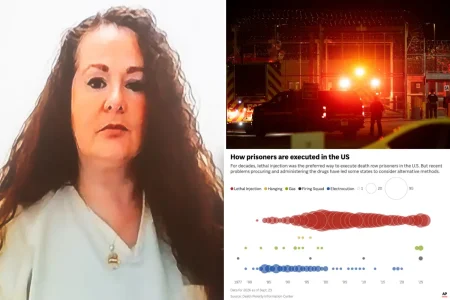
For the first thirty six endless hours following her abduction, Ruth’s elderly mother and I were plunged into a state of absolute, paralyzing terror. We heard absolutely nothing from the authorities. We walked frantically from one local detention facility to another, met with cold indifference, bureaucratic evasion, and flat out denials from officials who claimed to have no record of her whereabouts. We were forced to face the horrific possibility that she had been swallowed whole by the judicial black hole of Bukele’s carceral empire, a system notorious for making human beings vanish without a trace. Though her eventual discovery at a local police station brought a brief, desperate wave of relief, it was quickly extinguished by the shifting machinations of the state. Initially charged with embezzlement related to her previous role as an adviser to El Salvador’s Electoral Tribunal, a laughable accusation given that she never had any authority over or access to public funds, the government quickly recognized the weakness of their case. Two weeks later, they arbitrarily changed the charges to ‘illicit enrichment,’ baselessly claiming her modest personal assets did not align with her past salary, and transferred her to the grim, high security Granja Penitenciaria of Izalco. It is here that my wife has languished ever since, held indefinitely while the state desperately hunts for nonexistent evidence. Izalco is a gateway to the worst horrors of the Salvadoran penal system, a system where Cristosal has documented at least 420 deaths in custody, many bearing the unmistakable marks of severe physical torture, starvation, and the catastrophic denial of basic medical care. In these overcrowded hellholes, prison guards routinely torment inmates with the sadistic reminder that they will never walk out through the front doors, whispering that their only exit will be in a nameless body bag, thrown into a forgotten grave where no one will ever know they existed. This terrifying treatment has become the silent tool by which the regime crushes any residual hope of justice.
The devastating impact of Ruth’s arbitrary detention extends far beyond the quiet rooms of our home, sending shockwaves through what remains of El Salvador’s fragile democratic institutions. Her arrest has triggered a phenomenon now known as the ‘Ruth Lopez effect,’ a chilling warning that has effectively silenced the voices of accountability across the nation. In the months following her disappearance, dozens of independent journalists, courageous defense attorneys, human rights monitors, and democracy advocates have made the painful decision to flee their homeland, realizing that if a figure of Ruth’s international stature could be so easily and lawlessly locked away, absolutely no one is safe. This widespread flight is precisely what President Bukele’s administration intended to achieve. Under the guise of a perpetual state of emergency, the government has transformed the justice system into a highly effective psychological weapon designed to govern through total intimidation. The state of emergency is no longer merely an exceptional legal measure to curb street crime; it has become the fundamental operating system of the state, used to enforce absolute social conformity and criminalize any form of intellectual dissent. By executing arbitrary arrests in the dead of night and denying basic constitutional rights to its citizens, the regime does not merely seek to punish those who speak out; it seeks to terrorize the entire population into preemptive self censorship. It is a calculated strategy to dismantle the very vocabulary of resistance, to condition an entire society into the deadening habit of fear, and to ensure that the cost of asking questions or demanding transparency is understood to be the permanent loss of one’s freedom, family, and physical safety. In this environment of pervasive terror, the defense of human rights is treated as an act of treason, and the silence of the populace is celebrated as a sign of national unity and peace. By systematically dismantling civil society, the authoritarian administration has ensured that its absolute hold on power faces no meaningful internal opposition, creating a quiet desert and calling it order.
As a husband and a fellow lawyer, I find myself trapped in a parallel prison of the mind, struggling daily to find the language to articulate the profound, exhausting weight of this forced separation. The fear that occupies my chest is not an ordinary, acute reaction to a specific danger; rather, it is a formless, shifting specter that has no schedule, no face, and no end. I live in a state of perpetual, agonizing suspense, terrified of the sudden ring of the telephone, a stray piece of grim news, or an unexpectedly prolonged silence from those few who still try to help us. When you are deprived of any direct contact with the person you love, and you possess intimate knowledge of the horrific conditions of the facility where she is held, your imagination becomes your greatest enemy, endlessly inventing nightmares to fill the vacuum of information. This psychological torture is, of course, the regime’s ultimate objective, to paralyze the loved ones of dissenters and ensure they are too broken to resist. The most agonizing hours of this existence occur late at night, when the frantic activities of the day finally cease, the house falls completely still, and there are no more legal briefs to read, no more calls to make, and no more paths to pursue. This quiet hour was once our sacred time, a space where Ruth and I would sit together without haste, discussing everything from the mundane details of our days to books, philosophy, and our shared dreams of how a truly just world ought to look. Now, when that dark hour arrives, there are no words of comfort, no intellectual debates, and no shared laughter. There is only a heavy, suffocating silence that fills our home, a constant, physical reminder of the brilliant woman who was stolen from me, and a quiet testimony to the endless human cost of El Salvador’s terrifying descent into tyranny. I can only hope that our voices will eventually echo loud enough to shatter this darkness.