


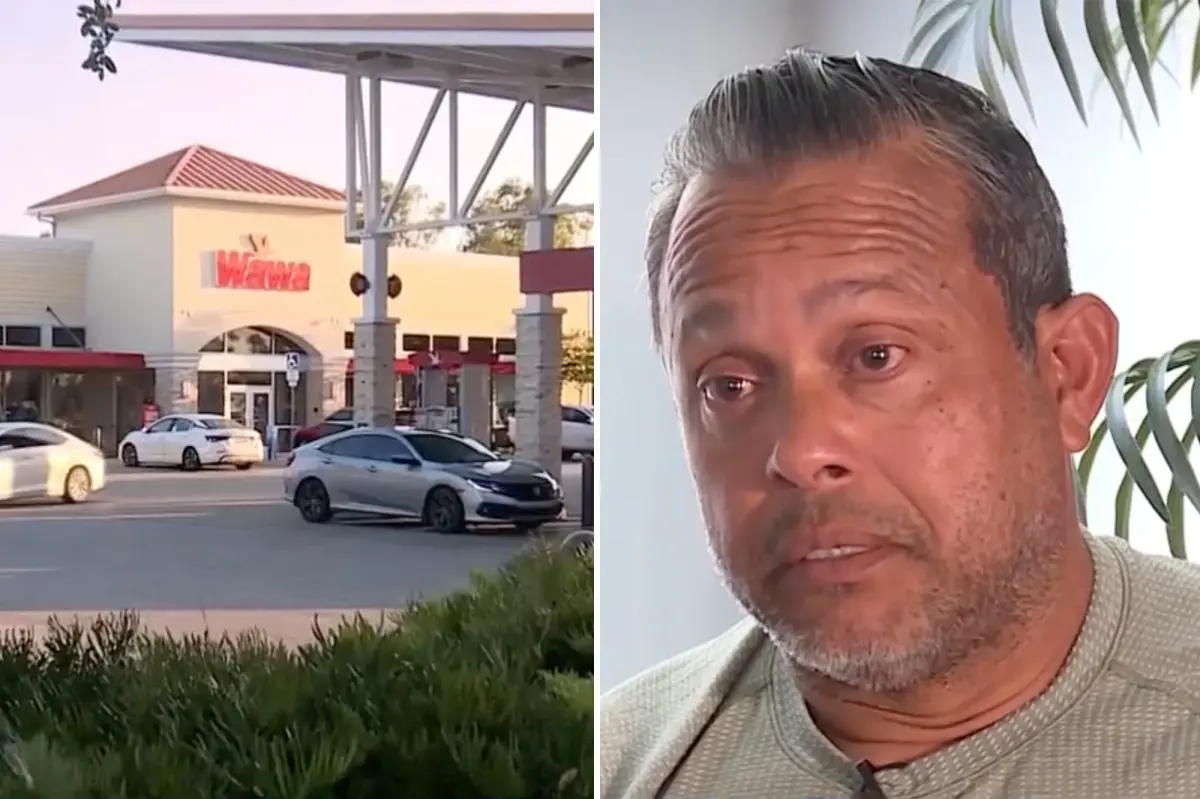
The scorching midday Florida sun beat down mercilessly on May 3, casting a heavy, humid haze over the bustling concrete landscapes that Luis Salazar, a dedicated construction worker, spent his long days shaping with hard physical labor. Seeking a brief, desperate respite from the grueling physical toll of his trade and the relentless afternoon heat, Salazar pulled his truck into a local Wawa convenience store—a familiar roadside oasis filled with the comforting hum of air-conditioning, cold drinks, and churning coffee machines. Stepping into the public restroom to wash the heavy dust and grime of the busy construction site from his hands, his eyes caught an out-of-place, dark object resting quietly in the corner of the small room: a modest, black nylon fanny pack. Curiosity mixing with caution, he picked up the surprisingly heavy bag and gently slid open the zipper, only to be met with an unbelievable sight that would make anyone’s heart slide into their throat. Stuffed to the absolute brim, practically bursting at its seams, was a massive, chaotic fortress of paper currency, a thick stack of bills ranging from humble singles to crisp, green hundred-dollar notes. For a man who made his living through backbreaking physical sweat and meticulously measured hourly wages, this was a life-altering fortune lying completely unattended in a public gas station. Many in his position might have viewed this moment as a stroke of cosmic luck, an easy escape from their own financial anxieties, or a quiet windfall with no witnesses. Yet, as Salazar stood under the sterile hum of the fluorescent restroom lights, his immediate thought was not of what this mountain of cash could purchase for his family, but of the absolute depth of panic and heartbreak the unknown person who left it behind must be experiencing at that very second. He walked out into the Florida heat with the heavy fanny pack securely in his grasp, his mind firmly and instantly made up that he would not rest until every single dollar was returned to its rightful owner.
To truly understand the immense weight and stakes of that lost black fanny pack, one must peer back into the deeply emotional and urgent sacrifice that had brought those thousands of dollars into physical existence in the first place. The money belonged to an unnamed twenty-four-year-old older brother who found himself thrust into a terrifying, silent battle against the soaring costs of modern healthcare. His beloved younger sister was facing an urgent, necessary medical procedure, and the financial stress of the looming treatment hung over their tight-knit family like an immovable, threatening shadow. Desperate to help and completely lacking the immediate liquid savings to fund the steep medical bills on his own, the young man turned to the only physical possession of true, tangible value he had ever owned: his cherished, lifelong collection of rare Pokémon cards. For decades, these colorful pieces of illustrated cardboard had represented far more than a simple childhood hobby; they were a literal physical archive of his youth, filled with sweet memories of playground trades, endless hours of competitive play, and the innocent joys of growing up. Yet, when placed on the scales of life alongside his sister’s health and physical well-being, the priceless sentimental value of those cards vanished in an instant. He made the quick, heartbreaking decision to completely liquidate his childhood memories to protect his sister’s future, rawly selling the entire, hard-won collection to a private buyer for the exact sum of $30,023 in cash. The agonizing transaction was bittersweet and emotionally draining, converting his most cherished childhood remnants into a heavy, literal lifeline of paper bills stuffed tightly inside that simple black fanny pack—a physical manifestation of a brother’s fierce protective love.
The immense relief of successfully securing the necessary medical funds, however, was tragically and cruelly short-lived. Just hours after finalizing the highly emotional sale of his childhood collection, the young brother stopped at the busy Florida Wawa to use the facilities, utterly unaware of the devastating twist of fate that was quietly waiting to unfold. It was not until he had driven miles away from the store, crossing over entire county lines in his vehicle, that his hand instinctively reached out to pat the reassuring, dense fabric of the fanny pack, only to meet empty air. In that singular, terrifying moment, the comfortable quiet of his car ride shattered into absolute chaos; a cold, paralyzing sweat broke out across his skin as the horrific reality of his absentmindedness crashed down upon him. The money—every single cent of the $30,023 meant to alleviate his sister’s physical suffering and pay for her upcoming medical procedure—was entirely gone, left behind in a public restroom where anyone could have claimed it. He later recounted the sheer, breathless terror of that realization to reporters, describing the hollow, suffocating feeling of knowing he had successfully sold his precious childhood past only to lose his family’s urgent future in a fleeting second of distraction. The crushing guilt that followed was almost too heavy to bear, as he sat in his car a county away, staring into a financial abyss and realizing his sister’s life-saving procedure hung in extreme jeopardy. Despair quickly morphed into a frantic, desperate Hail Mary attempt at salvation as he began calling local police departments, clinging to a fading, almost miraculous hope that some honest stranger had found the cash.
Meanwhile, back in the bustling community where the money had been misplaced, Luis Salazar was quietly holding onto the small fortune, treating it not as a lucky ticket out of his own financial struggles, but as a sacred, temporary trust that did not belong to him. For nearly four agonizing days, from May 3 to May 7, the humble construction worker did everything within his power to locate the mysterious stranger who had left the fanny pack behind inside the busy store. The search was incredibly daunting, if not seemingly impossible; Salazar had absolutely no physical identification cards, receipts, names, or contact information to go off of, possessing nothing but a loose, fleeting mental memory of the clothes the young man had been wearing when their physical paths briefly crossed near the restroom. In a contemporary society that so often rewards quiet opportunism and self-interest, where $30,000 could easily pay off overwhelming personal debts, buy a reliable new work vehicle, or fund a much-needed family vacation, Salazar’s moral resolve never wavered for a single second. He walked through his grueling daily construction shifts carrying the quiet emotional burden of another person’s lost dream, constantly thinking about how utterly devastated the owner must be and actively searching for any possible lead to connect him back to the stranger. For Salazar, the massive stack of cash was never an option for his own pocket because it completely lacked the one ingredient he valued above all else in life: the honest, hard work of his own hands, believing deeply that money is only truly sweet when earned through one’s own labor.
The agonizing days of separation, frantic phone calls, and silent prayers finally culminated on May 7 inside the sterile, fluorescent-lit lobby of the local police station, a stark and clinical setting for such a warm display of human grace. Thanks to the young brother’s persistent, tearful outreach to the local authorities and Salazar’s unwavering, proactive coordination with law enforcement, a face-to-face meeting was eagerly arranged to reunite the two men and resolve the stressful saga. When the twenty-four-year-old walked through the heavy station doors and saw Luis Salazar standing there, calmly holding the familiar black fanny pack in his weathered hands, the emotional dam burst completely within him. The young man, utterly overwhelmed by a tidal wave of relief, profound gratitude, and sheer disbelief, broke down into heavy, sobbing tears, stepping forward without hesitation to throw his arms around the broad-shouldered construction worker in a long, emotional embrace of pure thanksgiving. As they opened the zipped pocket of the bag together in front of the watching officers, they carefully confirmed that every single dollar bill, down to the very last single that brought the total to the exact $30,023, was present, beautifully accounted for, and entirely untouched. Salazar watched the pure, unadulterated joy and heavy relief wash over the young older brother’s tear-stained face, experiencing a deep internal satisfaction that no amount of stolen wealth could ever buy. It was an incredibly powerful, quiet testament to raw human decency—a magical moment where the cold, cynical nature of our transactional world momentarily faded away to reveal the beautiful, striking reality of two absolute strangers bound together by an extraordinary act of kindness and a completely restored future.
In the beautiful aftermath of this profound event, Luis Salazar remained resolutely grounded and humble, steadfastly rejecting the shining armor and heroic pedestals that the public, internet readers, and local media desperately wanted to place upon his shoulders. The deeply relieved and immensely grateful brother pleaded to take Salazar out to a lavish dinner to express his family’s eternal thanks, but Salazar politely and humbly declined the generous gesture, insisting that he had simply done what any decent, empathetic human being ought to do in that situation. “I just did the right thing; I don’t need to be put on a pedestal,” Salazar reflected with quiet, striking dignity, emphasizing his deeply held personal belief that true self-worth is earned through honest, daily labor rather than accidental windfalls or keeping things that are not theirs. A few days later, the young man was finally able to hand the entire sum over to his younger sister, successfully securing her critical medical procedure and ensuring that his painful sacrifice of his beloved Pokémon cards was not in vain but a saving grace. While the grateful family ultimately chose to keep the specific complex details of her medical condition and her journey private, the profound legacy of Salazar’s exceptional honesty remains brilliantly public and inspiring to all who hear it. In a modern world that can often feel increasingly cynical and disconnected, this simple construction worker and a devoted, sacrificial older brother reminded everyone that true integrity is still very much alive, beautifully proving that the most valuable treasures we possess are not the rare physical items we collect, but the compassion, honesty, and unconditional love we extend to our fellow human beings in their darkest hours of need.