



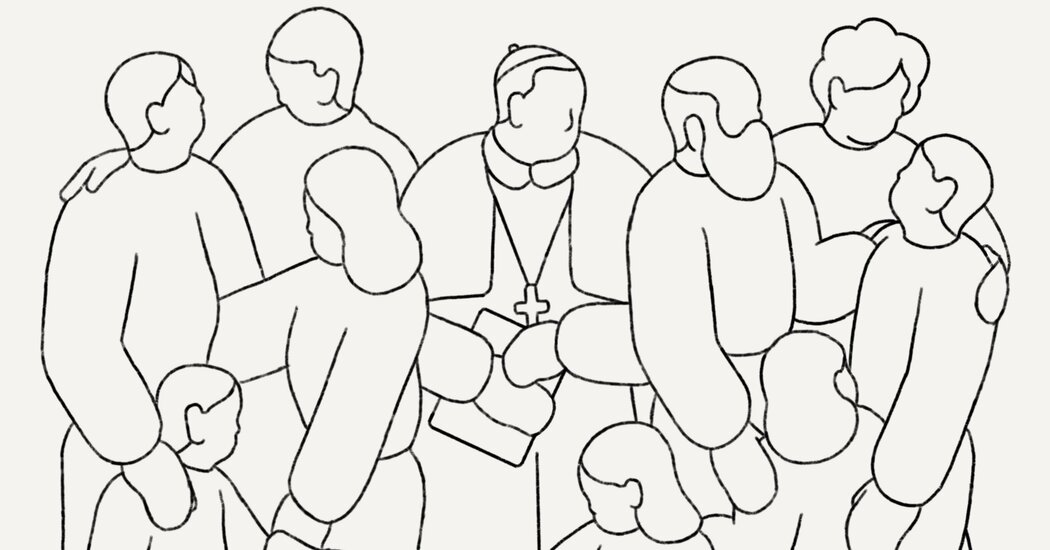
At the heart of Leo’s leadership is a profound and intensely human refusal to reduce complex human lives to mere political calculus or single-issue purity tests. This compassionate, holistic worldview was put to a severe test when the Archdiocese of Chicago chose to honor Senator Dick Durbin of Illinois, a lawmaker who had dedicated decades of his career to championing the rights of vulnerable immigrants, but who also identified as an abortion-rights Catholic. The announcement ignited an immediate firestorm of outrage among conservative Catholics, who viewed the award as an egregious betrayal of teachings on the sanctity of life. To these critics, Durbin’s political stance on reproductive rights was a disqualifying mark that rendered any of his other humanitarian efforts entirely irrelevant. Yet, rather than retreat into absolute dogma, Leo stepped boldly into this cultural crossfire to defend the Archdiocese’s decision. He did not minimize or compromise the traditional teachings against abortion, which he continues to uphold, but he insisted on placing them within a much broader, more merciful framework. Leo urged reporters and the faithful to look past modern politics and perceive the entirety of a person’s life, intentions, and contributions. He reminded a highly polarized society that human beings are vast, intricate, and deeply flawed packages of experiences and convictions. By honoring Durbin’s tireless advocacy for families fleeing persecution and poverty, the Church was not endorsing his stance on abortion, but rather celebrating a tangible manifestation of Christ’s call to welcome the stranger and care for the marginalized. Through this defense, Leo modeled a pastoral approach that seeks common ground over division, asserting that a truly moral life cannot be measured by a single metric, but must be appreciated in its full, complicated human reality, where grace works in unexpected and non-linear ways.
This pastoral philosophy became even more explicit and disruptive onboard the papal plane returning from a grueling voyage to Africa. Amid the low hum of the engines and the relaxed, intimate atmosphere that often characterizes these mid-air press conferences, a reporter asked Leo about the fierce global controversy surrounding priests offering blessings to gay couples. Rather than delivering a dry, bureaucratic response or retreating into rigid legalism, Leo offered a paradigm-shifting answer that cut directly to the core of what he believes the Church’s true spiritual mission should be. He observed with a touch of weariness that when modern society and many within the Church talk about morality, they automatically narrow their focus down to sexuality, as if the bedroom were the sole battleground of human virtue. Leo challenged this myopic view directly, asserting that there are far greater, more urgent moral issues facing humanity today, including the pursuit of social justice, systemic equality, the fundamental freedom of men and women, and the vital protection of religious liberty. To Leo, these communal struggles for human dignity must take absolute priority over policing the private, intimate lives of individuals. By elevating these systemic concerns, he sought to humanize a debate that has long been weaponized to exclude and marginalize people who are simply seeking a place of grace. His words were a refreshing, almost shocking reminder that a faith built on love cannot spend all its energy acting as a global hall monitor for sexual conduct while ignoring the crying, systemic needs of the poor, the oppressed, and the disenfranchised. It was a moment of profound theological clarity that sought to realign the spiritual compass of millions, pointing it away from obsessive exclusion and toward broad, life-giving inclusion.
Unsurprisingly, this expansive view of morality sent shockwaves through the religious landscape, provoking deep dismay and fury among social conservatives, both Catholic and Protestant, who had spent decades anchoring their movements to the battlements of sexual ethics. To these critics, Leo’s comments felt like a betrayal, a dangerous dilution of absolute truths that threatened to dissolve the moral fabric of the faith in a sea of modern relativism. Yet, what these outraged voices failed to grasp was that Leo was not inventing a trendy, progressive doctrine out of thin air; rather, he was reviving a deeply rooted, ancient theological tradition that had been overshadowed by centuries of cultural panic. Historically, Christian theology recognized that communal justice and the collective well-being of society were far more important than individual physical chastity, viewing the former as essential reflections of the divine order. As Jean-Pascal Gay, a distinguished professor of Christian history, brilliantly observed in the French Catholic newspaper La Croix, Leo’s statement would have seemed completely ordinary and even banal to a theologian living in the late sixteenth century. The profound irony of the current moment is that in the highly charged, polarized atmosphere of 2026, this ancient, orthodox hierarchy of truths has been transformed into something deemed radical and almost subversive. This shift reveals how far the modern religious imagination has drifted from its own intellectual heritage, trading a robust, justice-oriented gospel of love and community for a narrow, hyper-individualized obsession with personal purity. By unearthing this older tradition, Leo is not steering the Church into uncharted, secular waters, but is instead inviting it to return home to its richest, most compassionate roots, reminding believers that the truest measure of a society’s holiness is how it treats its most vulnerable members, not how strictly it polices its citizens’ private behaviors.
To understand how the Church’s moral focus became so intensely concentrated on sexuality, one must travel back to the tumultuous era of the sixteenth century, a period when the Catholic Counter-Reformation was in full swing and theologians were eager to regain control over a fractured herd. In their systematic efforts to codify, standardize, and streamline religious practice, these moral theologians began producing incredibly detailed, highly legalistic manuals designed to assist local parish priests in the delicate, daily art of hearing confessions. These manuals were intended to help confessional guides assess the gravity of various sins and prescribe the appropriate penance, but in doing so, they inadvertently and permanently warped the Church’s broader moral landscape. Sexual sins, ranging from adultery to masturbation, quickly became the favorites of these early catalogers of human weakness simply because they were incredibly easy to define, quantify, and judge. In the quiet, intimate darkness of the confessional booth, a priest could easily establish the clear factual boundaries of a sexual transgression; it was a neat, binary event where a line had either been crossed or not crossed. By contrast, trying to measure the subtle, insidious sins of greed, pride, structural exploitation, or an individual’s failure to show sufficient charity and mercy to their suffering neighbors was an intellectually grueling, deeply complex, and highly subjective task that resisted easy categorization. As a direct consequence of this practical, administrative convenience, sexual sins were elevated to a category of supreme gravity, gradually assuming an outsized, dramatic place in the sacred “hierarchy of truths” that governed daily Catholic belief and practice. Over the course of several centuries, this historical, administrative shortcut transformed the lived experience of faith for millions, teaching believers that personal holiness was primarily a matter of physical abstinence and control rather than an active, messy commitment to social justice and corporate love.
This rigid, highly legalistic focus on sexual conduct grew increasingly standardized over the centuries, but it was the profound cultural earthquakes of the mid-twentieth century that truly turbocharged this moral obsession, ultimately pushing matters of social justice to the absolute margins of the faith. The cultural landscape of the 1960s, defined by the rapid rise of the sexual revolution, the widespread availability of artificial contraception, and a general questioning of traditional authorities, sent shockwaves through religious institutions that felt their ancient influence rapidly slipping away. When this societal shift was followed closely in the 1970s by the sweeping liberalization of abortion laws across the Western world, the institutional Church entered a state of intense defensiveness, viewing these rapid changes as an existential threat to the very foundation of the moral order. In an urgent response to this perceived chaos, Church leaders and conservative thinkers retreated behind a heavily fortified wall of sexual ethics, turning these intimate issues into the primary litmus test for authentic Christian faith. In doing so, they unfortunately turned a blind eye to the rising, systemic tides of economic inequality, racism, and militarism. The immense nuance and richness of Catholic social teaching, which had historically supported labor unions, criticized unbridled capitalism, defended the immigrant, and championed the poor, were increasingly sidelined in favor of a loud, singular crusade to police personal morality and bedroom behavior. This defensive pivot transformed the public face of the Church from a beacon of universal hope, mercy, and systemic societal critique into an institution that appeared to outsiders as obsessed with legalism, control, and an active hostility toward the modern world. For everyday believers living through this turbulent era, the implicit message was clear: one’s standing before God was determined not by how deeply one cared for the vulnerable, but by how strictly one conformed to a highly specific, politically charged set of sexual rules.
This moral trajectory was further cemented and given immense global momentum by the historic election of Pope John Paul II in 1978, a charismatic Polish pontiff who, while a passionate defender of workers’ rights and human dignity in the face of Soviet communism, was also an uncompromising and exceptionally forceful moralist when it came to personal sexual ethics. Under his lengthy, highly influential papacy, American Catholic conservatives found a powerful global champion, which allowed them to align their unique theological priorities with the rapidly rising Protestant religious right in the United States, thereby creating a formidable, highly organized, and deeply politicized culture-war coalition. This potent alliance effectively rewrote the cultural script of religious engagement, convincing generations of believers that to be a person of faith meant focusing almost exclusively on a narrow set of pelvic issues, while completely ignoring the broader, urgent gospel demands of peace, economic equity, and environmental and social stewardship. It is this decades-long, deeply entrenched legacy of selective moral outrage that Leo is now courageously and deliberately attempting to dismantle and humanize in order to meet the needs of our current era. By shifting the central focus of Church teaching back toward the weightier, more difficult matters of structural justice, human equality, and active compassion, Leo is executing a brilliant, necessary historic recovery mission—not to destroy the ancient foundations of the faith, but to wash away the centuries’ worth of administrative dust and political manipulation that have for too long obscured its true, inclusive beauty. In doing so, he is offering a weary, fractured world a glimpse of a Church that is no longer characterized by a cold, exclusive, and mechanical legalism, but by a warm, inclusive, and deeply humanizing grace that walks hand-in-hand with every person through the messy, beautiful realities of daily life, ultimately prioritizing love, justice, and mercy above all else.