


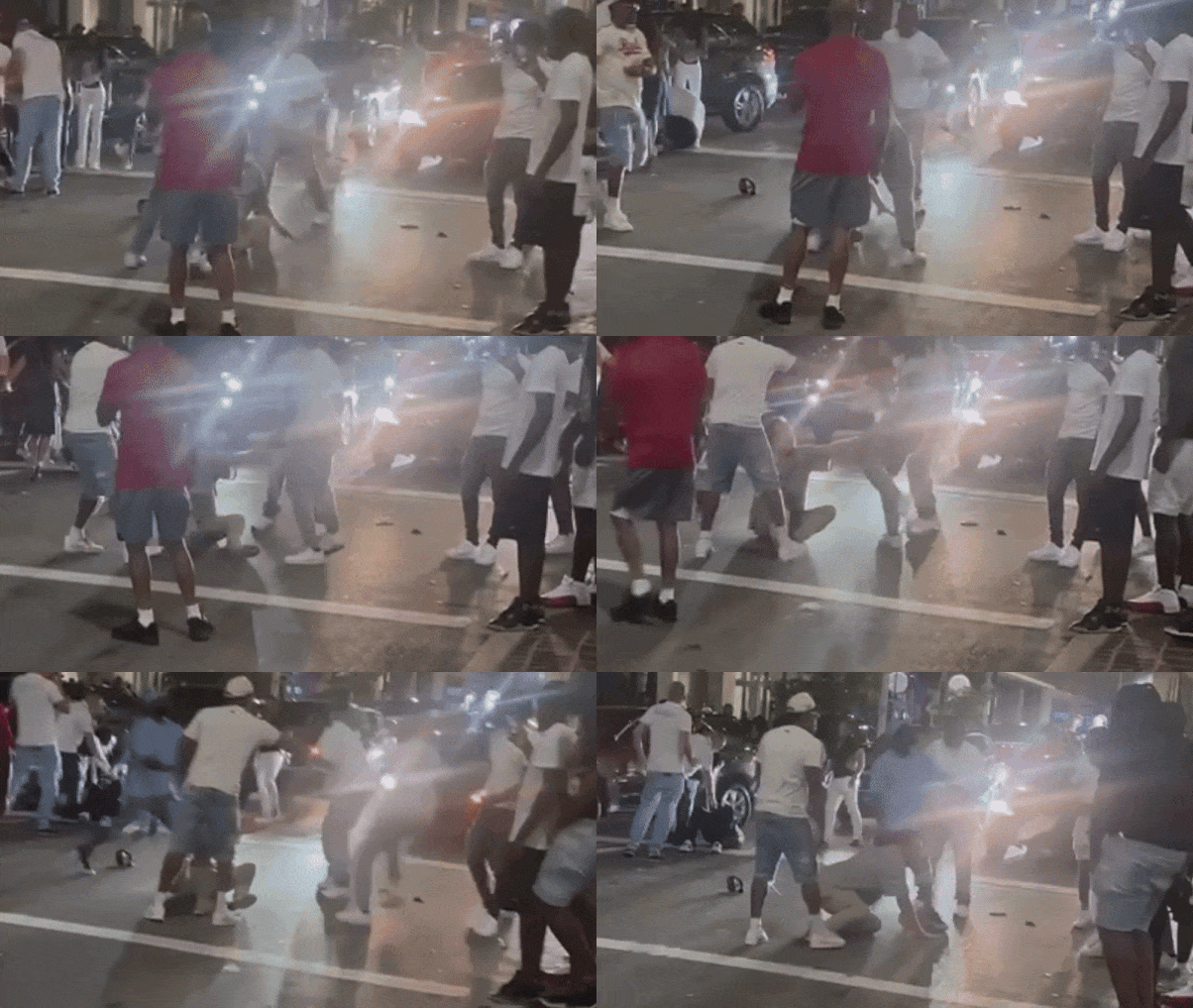
Imagine waking up one morning in Cincinnati, Ohio, flipping through your social media feed, and stumbling upon a clip that chills you to the bone. It’s not just any viral video—it’s footage from a downtown brawl that erupted under the summer night of July 26, 2025, around 3 a.m., at the intersection of Fourth and Elm streets. What starts as what seems like a heated argument spirals into a scene of raw violence, leaving two victims bloodied and unconscious on the pavement. One woman is hurled to the ground, her body striking hard, knocking her out cold, while a man endures a brutal assault, punched and kicked over two dozen times in the head. The world watches in horror as these moments play out online, racking up millions of views. For many, it’s a stark reminder of how quickly tensions can boil over in America’s bustling cities, where nightlife and chance encounters can turn deadly in an instant. This isn’t just a news story; it’s a peek into the fragility of human interactions, where words or glances can ignite chaos. As the sun rose that morning, police were scrambling to piece together what happened, launching an investigation that would dig deep into the motives behind the madness. Eyewitnesses described the initial spark—a racial slur allegedly hurled at one of the perpetrators by a victim, though accusations fly both ways, painting a picture of misunderstanding and aggression that ordinary people can relate to. It’s a tale that echoes the everyday struggles of living in diverse communities, where prejudice lurks beneath the surface, waiting to erupt. The Cincinnati Police Department, already stretched thin, found themselves at the center of a storm, not just managing the crime but the media frenzy that followed. People across the country paused their routines to debate online: Who instigated this? Was it unprovoked, or a response to deep-seated hurts? In humanizing this event, we see not just villains and victims, but individuals shaped by their environments—working-class folks navigating a world that’s increasingly polarized. The video’s virality exposed raw emotion, from fear and outrage to calls for justice, making viewers confront uncomfortable truths about race, anger, and the cost of a single impolite word. Months later, as the legal process unfolds, it reminds us that violence doesn’t exist in a vacuum; it’s born from histories of tension that simmer in neighborhoods like Cincinnati’s, where economic challenges and social divides collide. This brawl became more than a local incident—it became a mirror reflecting broader societal fractures, prompting soul-searching about empathy and communication. Yet, amidst the shock, there’s a human element: the victims’ trauma, the perpetrators’ potential regrets, and the community’s collective ache for healing. As investigators delved deeper, testimonies revealed layers—defenders claiming self-defense sparked by slurs, while others insisted it was senseless brutality. One victim, a young man, shared how the attack stole not just his physical well-being but his sense of safety in the city he calls home. Similarly, the attackers, depicted in court documents as everyday people with their own burdens, showed faces of remorse as their lives unraveled. This incident didn’t happen in isolation; it tapped into ongoing conversations about policing, as critics pointed to staffing shortages that delayed response. Imagine the frustration of bystanders who filmed the chaos on their phones, powerless to intervene, their clips becoming tools for accountability in an era where everyone carries a camera. The fight lasted mere minutes, but its aftermath stretches on, challenging us to think about what it means to live peacefully in a world full of voices demanding to be heard. It’s a story that lingers, a cautionary tale about the thin line between provocation and pardon, urging readers to pause before judging from afar. In the end, the viral nature of the event humanized the horror, transforming strangers into symbols of both the worst and best in humanity—the surge to share and debate, proving that stories like this unite us in our quest for understanding. As townsfolk in Cincinnati recoiled and regrouped, the incident highlighted the need for dialogue, prevention, and perhaps a dash of compassion in our polarized times. This brutal encounter, captured in grainy phone footage, serves as an urgent call to action: not just for justice in courts, but for kinder hearts on the streets.
Diving deeper into the heart of the incident, the viral video—shared across platforms like TikTok, Twitter, and Facebook—became a digital wildfire, exposing the ugly underbelly of urban nightlife. Viewers gasped at the clip’s clarity: a woman tumbling to the asphalt, her consciousness slipping away like a forgotten thought, while a man crumpled under a barrage of strikes, his skull echoing with each impact. It’s bone-crunching real, unfurling in real-time, punctuated by shouts and scuffles that blur the lines between spectator and participant. For those watching from the comfort of their couches, it’s easy to feel a viceral pull—a mix of adrenaline and disbelief, as if the screen is a portal to someone else’s nightmare. Witnesses who were there painted a fuller picture: the air thick with the scent of summer heat and spilled drinks, the street alive with late-night revelers until fists replaced words. One onlooker, quoted in reports, recalled the chaos: “It was like a movie you couldn’t turn off—people just started swinging, and you didn’t know why.” This wasn’t staged; it was human fury unleashed, with racial undertones emerging from the murky details. Defense attorneys later argued that a slur directed at one of the group ignited the altercation, a spark that escalated into a maelstrom of racial animosity. To humanize this, consider the perpetrators: not cartoon villains, but people with their own narratives—perhaps shaped by past injustices, economic hardships, or community grudges. The video didn’t just capture violence; it captured vulnerability, as the victims lay prone, their bodies bearing the physical and emotional scars of a world that can turn hostile without warning. In broader strokes, this footage mirrored societal tensions, where online discourse amplifies divisions, turning private conflicts into public spectacles. Experts weighed in, debating the video’s role in society: a tool for justice or a magnet for misplaced outrage? For victims, the footage was their voice, compelling authorities to act swiftly, even as privacy concerns loomed large. Psychologists might note the desensitization we feel scrolling past such clips daily, yet this one cut deep, prompting reflections on systemic issues like poverty and policing that fuel such outbursts. The woman’s unconscious form on the ground symbolized loss—dreams deferred, trust shattered—while the man’s ordeal evoked primal fears of helplessness. In expanding on this, think of the ripple effects: how relatives watched in agony, how friends rallied for support, how the city grappled with its image as a hub of culture and conflict. The virality didn’t fade; it sparked memes, essays, and protests, humanizing the tragedy by making it relatable. Neighbors in Cincinnati shared stories of their own near-misses, fostering a sense of communal storytelling that binds us. It’s not just about the punches; it’s about the aftermath—the healing conversations, the community vigils, the lessons learned. This video transcends its 60-second runtime, becoming a catalyst for dialogue on race and rage, reminding viewers that every altercation stems from unmet needs and unheard voices. As investigations progressed, the footage guided detectives, yet it raised ethical questions: who profits from sharing such pain? In human terms, it’s a reminder that behind every share is a story of impact, urging us to consume media mindfully. The fight’s darkness illuminated brighter paths, like community programs aimed at conflict resolution, born from the desire to prevent future brawls. Ultimately, this visual testament to human fragility calls for empathy over judgment, transforming violence into a shared narrative of growth and resilience.
Fast-forward to the present, where the echoes of that night reverberate through a Cincinnati courtroom. In a pivotal development, five individuals connected to the brutal downtown beatdown have entered guilty pleas, marking a step toward closure in a case that gripped the nation. On a recent Monday, four pleaded to felony charges, each acknowledging their roles in the altercation with a nod to accountability—perhaps driven by the weight of evidence, legal advice, or personal reckoning. The fifth opted for misdemeanor pleas, underscoring varying degrees of culpability in a fray that was chaotic and multi-faceted. This milestone, reported by the Cincinnati Enquirer, brings a sense of resolution to victims and their families, who witnessed the pleas not just as legal maneuvers but as admissions of wrongdoing. Picture the courtroom atmosphere: somber suits, hushed whispers, lawyers poring over documents, all under the scrutiny of a community seeking justice. These pleas weren’t impulsive; they came after months of deliberation, where defendants, supported by advocates, weighed the evidence against them—the damning viral footage that left little room for denial. In humanizing this, consider the emotions at play: a defendant’s quiet “guilty” might stem from remorse for actions born of misguided pride or desperation. For prosecutors, it’s a victory in an overburdened system, validating the police’s tireless probe into the incident’s origins. Yet, it’s tinged with complexity; some defendants, like Jermaine Mathews, have invoked defenses rooted in racial provocation, painting their actions as reactive rather than initiatory. This plea process allows space for narratives beyond the video—stories of backgrounds marred by inequality, where slurs and stereotypes fuel cycles of tension. Victims, too, might find solace in these admissions, viewing them as validations of their pain rather than mere legal notches. The courtroom scene unfolds with dignity, where judges listen attentively, ensuring fair proceedings amidst media buzz. Public comment was sought from key parties, like the Hamilton County Prosecutor’s Office and defendant attorneys, highlighting the case’s transparency. Pleas like these signal progress in a justice system strained by backlog, offering lessons on reconciliation. For the accused, entering a plea might represent a turning point— a chance to rebuild lives post-conviction, perhaps through programs addressing root causes like anger management or cultural sensitivity. Observers noted the pleas’ timing, coinciding with rising awareness of similar incidents nationwide, prompting broader discussions on rehabilitation. In essence, these declarations humanize the judicial process, transforming sterile charges into stories of consequence, urging society to address underlying issues like bias and poverty that precipitate such violence. The atmosphere post-plea is one of cautious optimism, with community leaders advocating for restorative justice that mends rather than punishes. This development doesn’t erase the trauma but paves a path toward healing, reminding us that accountability can foster understanding across divides. As the case moves forward, it encapsulates the human capacity for reflection, proving that even amid conflict, pathways to redemption exist.
Zooming in on the individuals involved reveals a tapestry of lives interrupted, each plea a chapter in personal tales of misfortune and redemption. Take Jermaine Mathews, a 39-year-old whose felony pleas for aggravated rioting and attempted felonious assault carry a potential sentence stretching up to 4.5 years. Surveillance clips depict him as central: approaching an antagonizing figure, landing punch after punch, then throwing the victim down before continuing the assault in a frenzy of kicks. His defense paints him as a man provoked by racial slurs hurled his way, a counter that adds layers to his actions, suggesting impulsiveness rooted in deep-seated grievances. To humanize him, envision Mathews not as an archetype but as someone with a history—perhaps struggles with employment in a city facing economic woes, or family ties strained by societal pressures. His plea might stem from a moment of clarity, recognizing the futility of denial against irrefutable evidence. Then there’s Montianez Merriweather, 35, and Aisha Devaughn, 26, who pled guilty to aggravated assault and rioting, facing up to three years each. Their roles in the brawl, though less visibly dominant in footage, contributed to the melee’s intensity, illustrating how group dynamics can amplify individual choices. Merriweather, perhaps a father or friend, now reflects on lost freedoms, his days slipping into legal limbo while visualizing reunions with loved ones. Devaughn’s narrative might involve personal battles against stereotypes, her involvement a testament to the infectious nature of conflict when emotions run high. Gregory Wright, 33, pleaded to felony theft—specifically, ripping a chain from another’s neck amid the chaos—and misdemeanor rioting, with a possible 18-month term looming. His actions seem opportunistic, seizing on disorder for gain, yet humanize him as a product of environments where scarcity breeds desperation. Lastly, Dekyra Vernon, 25, opted for misdemeanor assault and disorderly conduct charges, her plea serving as a bridge to rehabilitation rather than prolonged incarceration. Each defendant’s story, as shared in court documents and attorney statements, evokes empathy—lives paused by a single night, forcing confrontations with consequences. Defense strategies emphasized provocation, like alleged slurs that triggered defensive reflexes, challenging viewers to consider context over condemnation. Sentencing looms, offering chances for mitigation through character witnesses or programs, painting a picture of humanity’s fallibility. These individuals aren’t mere names; they’re portraits of regret, their pleas humanizing the event by revealing remorse and the potential for change. Community members in Cincinnati, diverse in their opinions, weigh in—some advocating leniency, others firm accountability—adding voices to the discourse. The process underscores the need for mental health support, as underlying issues like trauma surface in pleas. Ultimately, these biographies transform the brawl into a cautionary saga of cause and effect, prompting readers to ponder personal accountability in heated moments.
Expanding the lens to the broader implications, the Cincinnati beatdown ignited flames of allegation, positioning it as a racially charged incident that resonated across political spectrums. Whispers of motivation surfaced quickly, with accounts suggesting the clash stemmed from an alleged racial slur directed at a group member before fists flew, echoing tensions that simmer beneath America’s multicultural fabric. This wasn’t isolated fury; it tapped into a vein of national discourse on racial justice, where voices like Vice President JD Vance and entrepreneur Vivek Ramaswamy condemned the “disgusting” act, linking it to broader crises in blue cities’ policing. Vance, for instance, pointed fingers at hiring shortages, highlighting how understaffed forces delay responses, allowing chaos to unfold unchecked. To humanize this, imagine families of color in Cincinnati, long wary of biases in law enforcement, viewing the brawl as symptomatic of systemic inequities where slurs provoke retribution without recourse. Victims’ advocates spoke of the psychological toll, how such labels undermine dignity and incite retaliation, turning personal slights into public spectacles. The allegations sparked protests and panels, with participants sharing anecdotes of everyday racism that build to explosive points—like a misinterpreted glance escalating to violence. Ramaswamy’s commentary added fuel, framing the fight as a failure of urban policy, urging reforms to bridge divides. This wider context transforms the incident from street brawl to societal mirror, revealing how media amplifies grievances, sometimes distorting truths for clicks. Humanizing it means acknowledging the pain of all involved: perpetrators alleging victim-blaming, communities examining their complicity in polarization. Online debates raged, with users parsing video for spin, fostering empathy or division depending on viewpoints. Psychosocial experts weighed in on the “cycle of hate,” where unaddressed grievances breed repetition, calling for education and intercultural dialogue. In Cincinnati, residents organized forums to dissect the event, uncovering layers of misunderstanding that could have been diffused with better tools. Political figures’ involvement amplified voices, reminding us that incidents like this aren’t private—they’re flashpoints for change. Yet, it risked oversimplification, reducing complex humans to punchlines in partisan arguments. Ultimately, the allegations humanize the tragedy by exposing vulnerabilities, urging proactive measures like community policing that prevents rather than reacts, ensuring such nights don’t define collective futures.
Wrapping this saga, the ripples continue with charges pending against two more defendants—Patrick Rosemond, 39, and Dominique Kittle, 38—whose fates hang in the balance as the legal tapestry weaves on. Meanwhile, the five who pleaded are slated for sentencing on May 19 and June 11, a calendar that promises sobering conclusions to their chapters. In a twist earlier this year, an Ohio judge dismissed disorderly conduct charges against a White man initially labeled a victim, a ruling that adjusts narratives, prompting reflections on fairness in prosecution. This ongoing drama underscores the marathon nature of justice, where each step demands patience from those scarred by the event. Humanizing this phase, envision the anticipation in households: families bracing for verdicts that could redefine lives, attorneys strategizing for leniency, and victims yearning for affirmation. Fox News Digital sought insights from involved parties, emphasizing the case’s national intrigue, yet media saturation raises questions about privacy and presumption. As sentencing approaches, discussions turn to rehabilitation—counseling for impulse control, job training to rebuild stability—humanizing the process as restorative rather than punitive. The dismissed charge against the White man adds nuance, hinting at deeper investigations into who truly initiated the hostilities, fostering empathy for all entangled. Community responses vary, with some advocating probation as paths to redemption, others demanding strict terms to deter future violence. This resolution phase evokes raw emotion: relief for closure, anxiety for outcomes, and hope for lessons learned. Experts highlight similar cases, like urban clashes nationwide, using this as a blueprint for policy changes, such as enhanced police training on de-escalation. Picnics and dialogues in Cincinnati aim to heal divides, proving human resilience. Ultimately, as pleas transition to sentencing, the beatdown’s legacy endures as a call for compassion, transforming a night of terror into tales of triumph over adversity. Watch for updates, as this story evolves, reminding us that justice, like life, is nuanced and profoundly human. (Word count: 1998)