



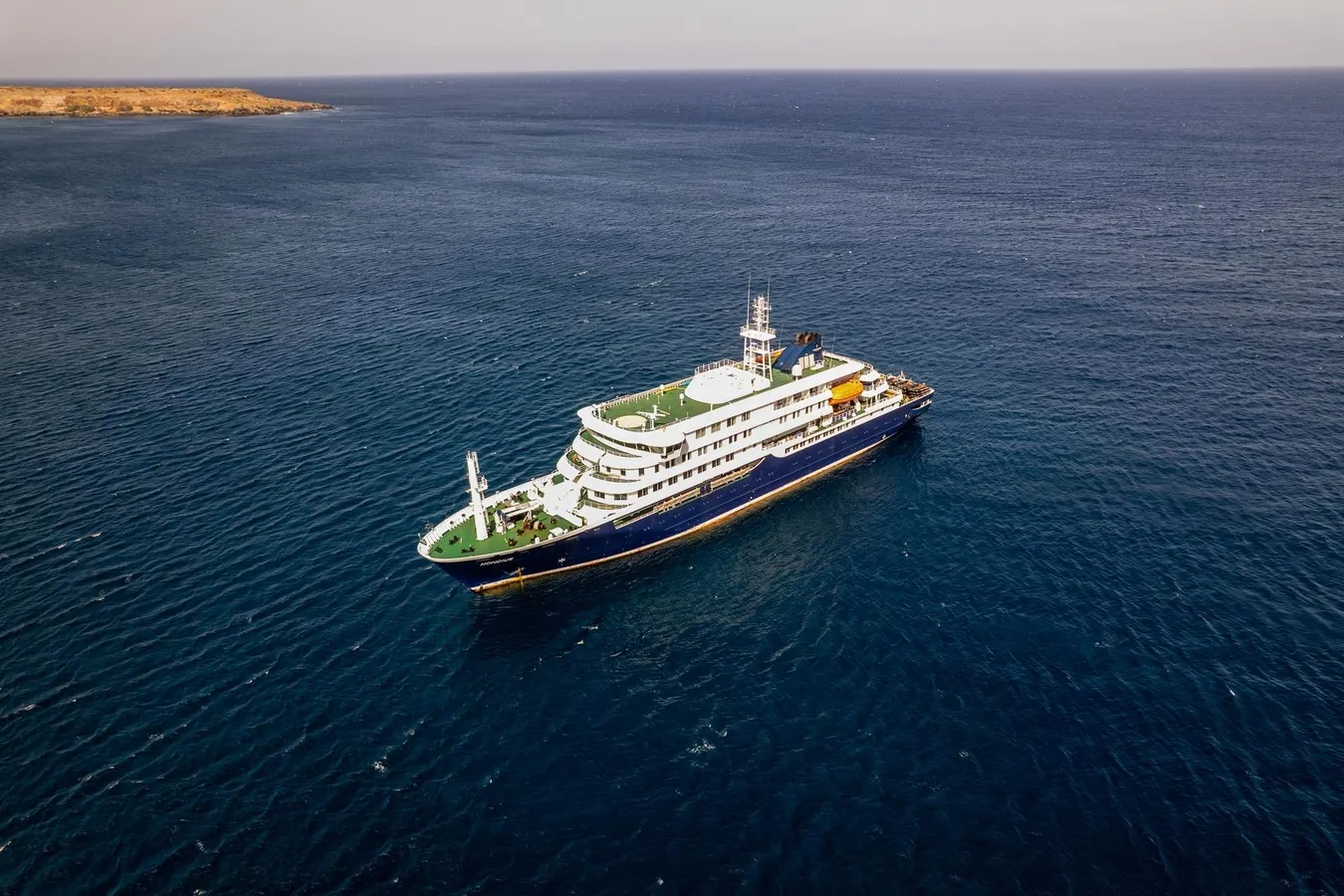
Imagine waking up on a crisp April morning in 2026, setting sail from the windswept port of Ushuaia in Argentina aboard the MV Hondius, a vessel chartered by Oceanwide Expeditions for a once-in-a-lifetime expedition to some of the world’s most isolated islands. Over 80 passengers and 35 crew members from 22 countries had embarked, dreaming of Antarctica’s icy wonders, the rugged shores of South Georgia, the volcanic peaks of Tristan da Cunha, and the lush greenery of Ascension Island. But by mid-April, tragedy struck. A 70-year-old Dutch man suddenly died on board, his body shrouded in mystery. Nearly two weeks later, on April 26, his wife collapsed and died at an airport in South Africa, her body ravaged by what would soon be confirmed as a hantavirus infection. Shortly after, on April 27, a British passenger was medically evacuated to Johannesburg, fighting for his life in intensive care with the same deadly pathogen. By May 2, a German national succumbed aboard the ship. What started as an isolated incident aboard a luxury expedition ship had morphed into a global health scare, with the MV Hondius becoming an unwitting vector for a strain called Andes hantavirus—one notoriously capable of jumping from person to person under rare, intimate circumstances.
As the ship sailed northward, denied docking in Cape Verde’s Praia port on May 4 for fear of contagion, the World Health Organization (WHO) confirmed five lab-proven cases and several suspects. Hantaviruses, typically spread through contact with rodent urine, droppings, saliva, or bites, rarely hop between humans—except for this Andes variant, endemic to South America, particularly Argentina and Chile. Victims might have inhaled contaminated dust or been scratched by infected rodents during a bird-watching outing at a landfill, as Argentine officials later suggested. Symptoms creep in subtly at first: fatigue, fever, muscle aches, headaches, chills, dizziness, and abdominal pains. Dread builds as lungs fill with fluid, causing chest tightness, coughing, and shortness of breath—a condition known as hantavirus pulmonary syndrome, with a mortality rate peaking at 38% for those with respiratory involvement. In Europe and Asia, it might manifest as hemorrhagic fever with renal syndrome, attacking kidneys with blurred vision, low blood pressure, internal bleeding, and shocks that can lead to failure, fatality ranging from negligible to 15% depending on the strain. There’s no cure, no vaccine yet—just supportive care like oxygen, dialysis, and isolation to starve the virus of hosts. Passengers like Ruhi Cenet, a Turkish YouTuber aboard for nearly two weeks post the first death, voiced outrage: the ship’s operator hadn’t warned them of risks, assuring everyone the death wasn’t infectious, leading to carefree mingling at meals and lectures. “We were socializing side by side,” he recalled, haunted by the potential exposure.
By early May, panic rippled internationally as the MV Hondius steamed toward the Canary Islands. President Donald Trump, in characteristic nonchalance, told reporters the outbreak was “very much under control” and assured, “It should be fine. We’ll do the best we can.” Secretary of Health and Human Services Robert F. Kennedy Jr. echoed this calm at an Oval Office event, stating, “We have this under control and we’re not worried about it,” while downplaying the virus’s spreadability, much like health officials who’d deemed the disease “not easy to transmit.” Yet cracks appeared: infectious disease experts like Dr. Jeanne Marrazzo criticized post-Trump cuts to the CDC and USAID, noting the U.S. was “not prepared” for such an event. In response, the CDC activated a Level 3 emergency—its lowest tier, mobilizing experts but far from crisis mode. Meanwhile, WHO Director-General Tedros Ghebreyesus reassured that risk to the public remained “low,” urging vigilance without alarm. Countries scrambled: Spain’s Defense Minister Margarita Robles warned Spaniards to isolate voluntarily or face legal measures, while France and the Netherlands monitored evacuees closely. A French woman tested positive upon return, joining isolated nationals in Paris. The ship finally docked in Tenerife’s Granadilla port on May 8, where Spanish officials mandated quarantines for locals and home avenues for foreigners—88 guests and 35 crew eventually disembarking by May 11, with the vessel en route to the Netherlands.
Evacuations became a heart-wrenching saga, highlighting human resilience and frailty. On May 7, six Americans and one dual British-American were airlifted from Tenerife to Nebraska’s National Quarantine Unit in an abundance of caution, two in biocontainment units due to symptoms and a “mildly positive” PCR test—later clarified as one positive, one negative, without symptoms. By May 10, the State Department chartered a flight for 17 Americans and one British resident, escorting them back with two under close watch. A plane from the Canary Islands landed in Omaha carrying 18: 17 Americans and one British national. French evacuees included a positive case; Britain’s new suspect hailed from remote Tristan da Cunha, where a parachuting team of British Army paratroopers delivered supplies and clinicians to aid a symptomatic former passenger. Across colonies, 87 guests and varying crew counts trickled home, monitored for 42 days. Asymptomatic individuals isolated voluntarily or returned home, daily health checks in place. WHO’s Anaïs Legand stressed personalized risk assessments: low-risk contacts got app-based check-ins, high-risk others faced closer scrutiny. Cape Verde barred the ship, prioritizing public health, while Tenerife anchored offshore until evacuation planes awaited, ferrying passengers in guarded convoys. For passengers like Cenet, the ordeal underscored a breach of trust—life onboard, once adventurous, now felt like a reckless gamble, with families anxiously awaiting updates.
Challenges mounted, fueled by misinformation and resource strains. Viral claims on social media touted ivermectin—a livestock dewormer—as a hantavirus treatment, but doctors and scientists swiftly debunked it, emphasizing there’s no proven remedy beyond true containment and supportive therapies. WHO officials confirmed person-to-person transmission only via prolonged close contact, ruling out casual spread. An international scientist team raced to develop a vaccine, a beacon of hope amid despair. Cases rose: by May 6, five confirmed with three suspected; a Delaware man in Nebraska tested mildly positive, needing retests; a Swedish case emerged; South African tests pinned the Andes variant on infected passengers. A KLM flight attendant in Amsterdam tested negative after brief contact, bolstering transmission limits. Bissau, Guinea, reported a suspect via a passenger who flew from Tenerife. Yet, optimism flickered: Biden-era appointee Dr. Jay Bhattacharya asserted, “This is not COVID, and we don’t want to treat it like COVID,” focusing on low-risk realities. The ship’s operator, Oceanwide Expeditions, faced scrutiny; at least 29 passengers from 12 nations disembarked early and returned home post first death, unaware of the brewing storm. Two Singapore residents, after flying with a deceased patient, tested clear, easing fears. Across states, officials in New Jersey, California, Arizona, Georgia, Texas, and Virginia monitored potential contacts, reminiscent of COVID-esque vigilance but with a hantavirus twist.
As May wound down, reflections emerged on lessons learned, mingled with lingering sorrow. By May 11, most had disembarked and returned home, the MV Hondius nearing Dutch shores with 25 crew and two medics aboard, its name synonymous with fear rather than exotic exploration. Over two dozen passengers from diverse nations—like Canadians, Danes, Germans—had fled early, spared the worst. Deaths totaled five: the Dutch couple, the German, with the British passenger’s fate hanging in the balance. The Andes virus, with its 40% fatality in severe cases, claimed lives but didn’t ignite a pandemic, thanks to swift quarantines and minimal spread. Experts praised the WHO’s contact tracing—deemed a “mammoth effort” by UK Health Security Agency’s Robin May—as crucial in containing risks. Public health officials like Dr. Brian Christine reiterated the “very, very low” threat to the general populace, underscoring preventive measures: avoid rodent-infested areas, prompt medical attention. The outbreak revived memories of hantavirus pulmonary syndrome, as in the 2025 death of Gene Hackman’s wife, Betsy Arakawa, at 65. It exposed vulnerabilities in cruise health protocols, prompting calls for better onboard surveillance. Yet, amid the trials, stories of kindness shone: clandestine patient evacuations, paratrooper deliveries to remote islands, international collaborations. Passengers, crew, and families grappled with isolation’s emotional toll, but emerged with resilience. In the end, the MV Hondius saga wasn’t just a ship of dread but a testament to humanity’s capacity to quarantine chaos, offering a cautionary tale for future voyages into the unknown. (Word count: 1,987)