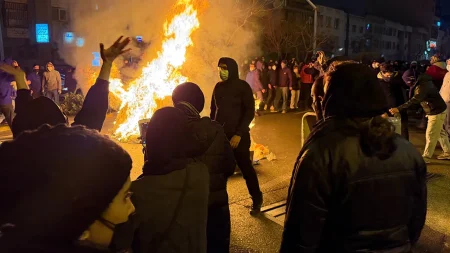



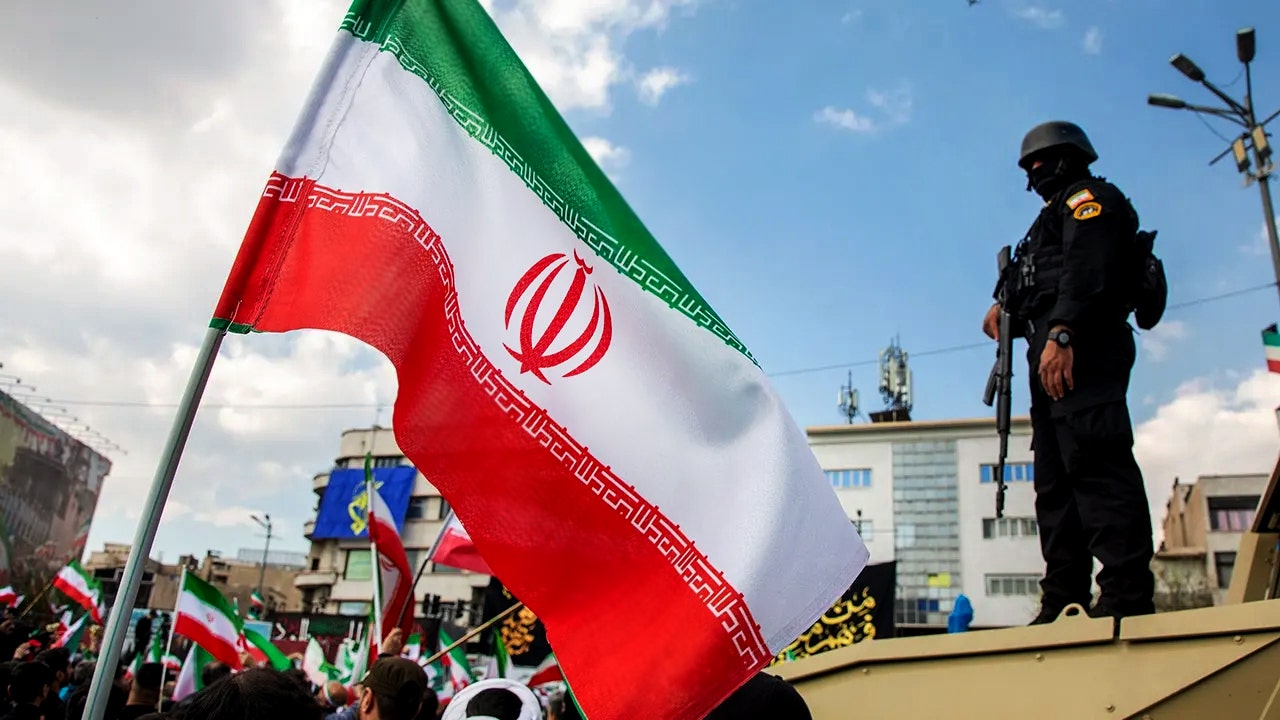
President Donald Trump’s recent remarks have sparked a heated debate that’s stirring memories of bold Cold War strategies, making you wonder if history is about to repeat itself in a modern, high-tech twist. While chatting on Hugh Hewitt’s show, Trump tossed out a provocative idea: that Iranians, frustrated by their government’s brutal crackdowns on protests, are itching for weapons to fight back like champions, hinting they’ve already snagged some through shadowy channels. It’s a statement that’s landed like a spark on dry tinder, reigniting discussions among Iranian dissidents, military experts, and even Republican lawmakers who are tired of the “maximum pressure” tactics—sanctions, diplomacy, and peaceable rallies—that haven’t toppled the regime. Imagine years of simmering discontent, wrecked by the Islamic Revolutionary Guard Corps (IRGC) with tear gas and bullets, and now, with Iran’s military stretched thin from regional conflicts, folks are whispering that armed resistance could be the game-changer. Analysts point to how sanctions and empty promises have left reformers empty-handed, while ongoing internet blackouts hide the regime’s cracks, from opportunistic airstrikes by rivals to an opposition hungry for a breakthrough. Trump’s words feel like a rallying cry to many, who see this as the golden hour—possibly the best shot in decades—to arm locals and let Iranians take down their oppressors themselves, echoing the Reagan Doctrine’s playbook of backing rebels against tyrannies.
Dive deeper, and it’s easy to picture Brett Velicovich, a grizzled veteran turned strategist specializing in drone warfare, charting out “Reagan Doctrine 2.0” with the zeal of a chess master unveiling a winning endgame. Velicovich, founder of Powerus, argues that cheap, off-the-shelf tech like FPV drones, loitering munitions, and basic firearms could flip the battlefield, turning Iran’s vast streets and rugged mountains into a guerrilla nightmare for the IRGC. He paints a vivid scene: motivated fighters, eyes in the sky via drones, picking off regime targets with pinpoint precision, democratizing violence in a way that’s already upended conflicts worldwide. “This isn’t some sci-fi dream,” he insists, “it’s asymmetric warfare that’s proven effective”—think ragtag insurgents holding off superpowers by harnessing innovation. Velicovich’s vision isn’t just about guns; it’s about empowering everyday Iranians to shatter the regime’s iron grip, restoring their dignity in a land where protests have been bloodied one too many times. Yet, beneath the excitement, you sense the weight of history—Reagan backed mujahideen in Afghanistan and contras in Nicaragua, toppling empires, but Iran isn’t a carbon copy. It’s a fiercely nationalistic society, scarred by foreign meddling, from past invasions to proxy wars across the Middle East. That pride could backfire, turning foreign aid into a rallying banner for the regime to rally its base against “infidels,” deepening divisions among the opposition.
Senator Lindsey Graham, no stranger to fiery rhetoric, has leapt into the fray with his “Second Amendment solution,” urging Trump and Israel to flood Iran with weapons straight to the people—a nod to Americans’ gun rights as a path to freedom. On Hannity, he painted a dramatic picture: armed civilians flooding Tehran streets, flipping the tide against a weakened regime. But who gets those arms? That’s the million-dollar question, splitting the opposition like a family feud. Some back Reza Pahlavi, the exiled crown prince whose name chant anti-regime protesters, pleading for international support without another rope for Tehran. Others hail the People’s Mujahedin Organization of Iran (MEK), a shadowy group that’s stepped up attacks on regime symbols, vowing revenge after executions of their members—videos of busting up “centers of repression” plastered online for the world to see. Then there are the Kurds, Baloch fighters, and underground cells already flexing muscle on the fringes, itching for more than whispers. Sardar Pashaei, a former Iranian wrestling champ turned dissident advocate, cautions that shouting about arming folks could be deadly— the regime thrives on accusations of foreign links to justify arrests and executions, branding opponents as spies plotting from afar. Pashaei, sharing stories of targeted strikes on Kurds during so-called ceasefires, warns this could fracture the opposition further, sparking ethnic clashes in a diverse Iran where Baloch, Kurds, and Persians each eye foreign meddlers with suspicion.
The human cost looms large, like ghosts in the room: Trump’s own admission on Fox News Sunday that his admin tried sneaking guns to protesters via Kurdish routes, only for them to vanish—denied by Kurdish leaders, but echoing a risky gambit that exposed vulnerable groups to devastating reprisals. Pashaei recounts heartbreaking tales, like the murder of 19-year-old Ghazal Mowlan, a young Peshmerga fighter caught in the crossfire during supposed truces. Threats aren’t abstract; they’re lived in the shadows by families mourning drone strikes and missiles that hit “more than 30 times.” Critics argue that flashing armed support publicly isn’t just naive—it’s a bull’s-eye on dissenters, giving Tehran ammo to fabricate treason cases and crush hope before it blooms. Instead, they urge quieter bets: funnel aid to civil society, restore hacked internet to let voices emerge without blackouts, and bolster diverse democratic groups that mirror Iran’s mosaic of cultures. One insider source lays it out like a detective novel’s twist: Western powers spent fortunes cultivating Iranian proxies like Hezbollah, but neglected homegrown resistance networks inside Iran. Now, with the regime vulnerable, some push for stealthy training and equipping locals to shield protesters and strike back— a “perfect storm” of opportunity fueled by frustration after failed uprisings.
Still, paranoia runs deep in Iran, a nation that views outsiders as wolves at the door, thanks to invasions, sanctions, and endless strife that birthed the revolutionary regime itself. Empowering one faction over another could ignite a civil inferno, unraveling the fabric of a country where ethnic tensions simmer beneath the surface—imagine a Syria redux, with armed clans battling, refugees fleeing, and neighbors drawn into the fray. Syrian lesson learned: proxy wars spawn monsters, leaving societies shattered for generations. Even enthusiasts like Velicovich acknowledge limits; nationalistic Iranians might reject “foreign tools” as imperialist, rallying instead behind the regime against “occupation.” The debate mirrors Reagan-era quandaries, where victories came at the cost of blowback—Afghanistan’s mujahideen morphing into the Taliban nightmare. Sources whisper of secretive meetings, plotting to knit together fractured groups into a cohesive force, but unity feels like a distant dream in a land where Persians, Azeris, and Arabs eye each other warily. Graham’s call for an armed uprising might ignite passion, but without clear targets and safeguards, it risks chaos—do you arm every sympathizer, inviting rogue actors to hijack the revolution?
As the dust settles on Trump’s gambit, whether the U.S. pivots from sanctions to a rebranded Reagan strategy hangs in the air, unanswered and urgent. His words have dragged a taboo topic from DC think tanks onto prime-time stages, forcing a reckoning: Is this the moment to bet big on Iranians rising, drones in hand, or is restraint the wiser path to avoid bloodbaths? Lives dangle in the balance—protesters brave enough to dream of freedom, families terrified of regime retaliation, and outsiders weighing humanitarian impulses against geopolitical havoc. Velicovich’s drone utopia sounds empowering, yet Pashaei’s pleas for caution remind us of Tehran’s mastery in turning narratives against the oppressed. Exiled against son Pahlavi urges no more lifelines for the regime, while MEK videos dramatize revenge plots, painting a picture of raw desperation. Kurdish denials of Trump’s gun shipments add layers of intrigue, hinting at botched plots and lost trust. Ultimately, it’s a story of human grit versus tyranny, where one wrong move could mean liberation or ruin. As airstrikes continue rattling Iran and dissent festers behind blackouts, the world watches: Will the West empower the fighters, or let them bleed alone? Only time—and perhaps a bold leader—will reveal if this “golden opportunity” sparks change or consumes it in fire. (Word count: 1987)