


Venezuela’s Echoes of Power: The JW Marriott as Washington’s Caribbean Outpost
In the Heart of Caracas: A Hotel Transformed into a Diplomatic Nexus
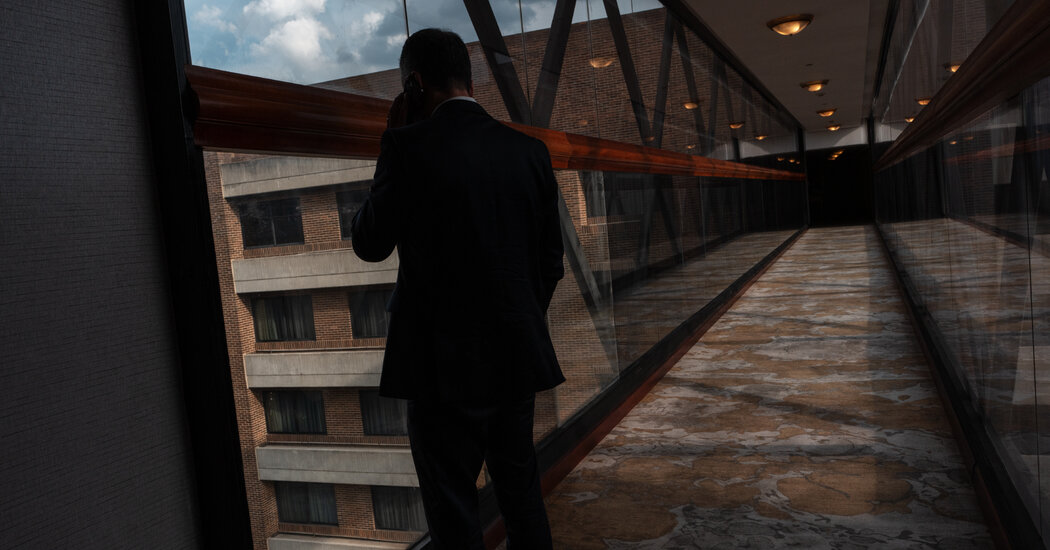
Tucked away in Caracas’s erstwhile bustling financial quarter, the JW Marriott towers 17 stories high, its facade a muted tapestry of exposed brick that belies the seismic shifts unfolding within its walls. Once a beacon of corporate excess in a district that hummed with deal-making and high-stakes ventures, the area now languishes in a subdued stillness, reflective of Venezuela’s turbulent economic odyssey. From the street, the hotel appears unremarkable—a standard-issue luxury outpost in a city scarred by hyperinflation, political upheaval, and exodus. But cross the threshold into its cavernous, climate-controlled lobby, and the veneer of normalcy shatters. Here, amid plush seating and ambient lighting, the air thickens with unspoken agendas. There’s an undercurrent of purpose, a rhythm that speaks not of leisure but of strategy, where every glance and murmured exchange underscores the hotel’s metamorphosis from hospitality haven to heartbeat of U.S. influence in Venezuela.
The transformation began in earnest following the dramatic events of January, when U.S. forces orchestrated the forcible extraction of Venezuela’s former leader, Nicolás Maduro, marking a pivotal turn in bilateral relations. What had long been a fraught standoff—Venezuela as a defiant thorn in Washington’s side—evolved into something akin to a vassal dynamic. The Marriott, seemingly unassuming from afar, emerged as ground zero for this recalibration. Its corridors now pulse with the energy of renewal, drawing in scores of high-profile visitors whose presence signals a thawing of icy diplomatic ties. Texas oil magnates huddle over Old Fashioneds on the terrace, whispering about untapped reserves and pipeline potentials that could resuscitate a parched economy. Nearby, financiers from New York dissect the arcane world of Venezuelan bond defaults, their jargon a staccato blend of percentages and risk assessments. Even U.S. envoys, weary of precinct battles, gripe good-naturedly about the subpar breakfast spreads—eggs that are more rubber than protein—underscoring the blend of the mundane and momentous that defines life within these walls.
Guarded Angels: The Security Detail and Secretive Atmosphere
Security forms the unyielding spine of this new reality at the Marriott. A squad of brawny, inked-up Americans, bearing the rough-hewn demeanor of extras from a Hollywood thriller about clandestine operations, patrols the entrance like sentinels of a covert fort. They eye newcomers with practiced suspicion, their taciturn nods and stony silences a clear directive: discretion is non-negotiable. These aren’t your typical hotel greeters; dressed in civilian garb that hints at military underpinnings, they exude an air of quiet authority, sizing up every patron as potential allies or adversaries. Officially, their mission remains shrouded, but insiders know their role extends beyond mere protection—they are the gatekeepers to a liminal space where diplomacy intersects with intelligence. This vigilant presence, while reassuring for embassy staff, has sparked whispered speculation among Caracas residents about the true extent of U.S. involvement post-Madurazon—a term coined for the shockwaves of his ouster, blending his name with “cyclone” for the whirlwind of change.
Yet, despite the cloak-and-dagger ethos, the hotel’s terrace teems with a cocktail of cosmopolitan chatter that paints a picture of guarded optimism. Oil barons discuss crude futures with the gravity of poker players calculating odds, their voices low lest sensitive details leak into the humid Caribbean air. Diplomats, nursing coffees that outweigh the paltry breakfast offerings, lament not just culinary shortcomings but the broader insecurities of reintegration. “It’s a listening post like no other,” observes Ricardo Cusanno, a sharp-eyed Venezuelan entrepreneur who has facilitated encounters between U.S. investor groups and local stakeholders within these confines. Cusanno, who thrives in the gray zones of economic diplomacy, positions the Marriott as “the nerve center for Venezuela’s pivot.” His insights highlight how this venue has become an unlikely crucible, forging alliances that could redefine South America’s oil-rich giant as a collaborative partner rather than a rogue state.
From Exile to Expansion: The U.S. Embassy’s Improvised Haven
That the Marriott functions as a de facto embassy underscores the improvised nature of this diplomatic resurgence. Santiago de Venezuela’s colossal U.S. Embassy compound, a sprawling expanse just a short drive away, languishes in disrepair after being abandoned in 2019 amid severed diplomatic ties—a fallout from Maduro’s inflammatory accusations and Trump’s reciprocal sanctions. Repairs drag on, forcing a temporary relocation that has turned the hotel’s upper floors into a microcosm of State Department operations. Chargé d’Affaires John Barrett and his cohort of newly arrived officials have commandeered suites, converting them into nerve centers cluttered with conference tables, American flags, and the steady beep of secure communications. This setup, while resourceful, encapsulates the challenges of rebuilding influence from scratch; diplomats operate in close quarters, their days a blur of briefings, investor meetings, and intelligence briefs amidst the hotel’s undisguised charm.
The restrictions imposed on staff amplify the irony—Westerners are advised to steer clear of Caracas’s urban sprawl, where pockets of crime persist despite a relative quieting from prior years. Embassy personnel scarcely venture beyond the Marriott’s block, a cordon sanitaire that confines their purview to a city district while the nation sprawls across 916,445 square kilometers, roughly twice California’s expanse. This limitation breeds a myopic vantage, where decisions are made with selective data, potentially skewing policy toward urban biases. Yet, on a practical level, it fosters intensive, albeit confined, engagement. A convoy of white Nissan Patrol SUVs, airlifted in for embassy use, idles outside like armored chariots, ready to ferry officials through carefully mapped routes. This visible presence, atop the hotel’s perch, symbolizes not just safety but sovereignty reclaimed—a subtle assertion of U.S. muscle in a land that once expelled its diplomats.
Living Among the Shadows: Diplomats and Investors Grapple with Marriott Realities
For the Americans ensconced at the Marriott, life hovers between efficiency and eccentricity. The hotel’s 269 rooms, dotted with amenities like an outdoor pool and gym, serve as provisional homes for scores of diplomats, intelligence operatives, and private sector players. Some, speaking candidly off the record to avoid briefing room blowback, rave about perks like the top-floor balcony, where panoramic views of Caracas’s skyline frame backdrops of vibrant macaws flitting amidst the palms. “It’s the best office with a view,” one unnamed operative quipped, pausing to watch the birds’ kaleidoscopic swoops, a fleeting charm amid the grind. Others are charting permanent abodes, scouting apartments to ease the transition from hotel living. This quest for stability hints at a deepening U.S. commitment, one that transcends the improvisation of the last months.
Yet, habitability presents hurdles. The management, under a local franchise agreement with Marriott International, has been unresponsive to inquiries, leaving guests to navigate quirky nuisances: elevators that meander floor to floor with maddening lethargy, requiring fervent button-jabbing like some outdated arcade game; digital key readers that fail, trapping unwary souls in the halls; and breakfasts that, at $32 a pop, deliver eggs soggy enough to rival British stereotypes and yogurts of dubious lineage. Despite its $250 nightly rate, the Marriott lags behind pricier Caracas options like the Cayena, a bastion of luxury where tycoons cavort at double the price, or the conveniently sited Renaissance, nestled near eateries and hiking trails. For many Venezuelans, these enclaves remain dreams deferred, as anticipated economic booms from the political shift trickle slowly into everyday lives.
Beyond the Lobby: Echoes of Transformation and Lingering Ambiguities
The Marriott’s role as a hub extends its influence far beyond its doors, embodying the nascent alliance between Venezuelan aspirations and American pragmatism. Fortune seekers and policymakers converge here, their actions charting a course for rehabilitation that could uplift a nation buckling under debt and deprivation. Jorge Barragán, a seasoned political risk advisor at Caracas-based Orinoco Research, underscores this point: “Until tangible improvements filter down, the Marriott remains the fulcrum for any real metamorphosis.” His perspective, rooted in years of dissecting Venezuela’s political labyrinth, suggests that while the hotel hosts discernible progress— from revived oil dialogues to nascent bond negotiations—the broader populace awaits spillover benefits like price stabilizations and service restorations.
As the embassy’s repairs inch forward, optimism builds for a return to the grand compound, yet the Marriott’s stint has indelibly etched itself into the narrative of U.S.-Venezuelan ties. It stands as a testament to adaptability in diplomacy, where a commercial tower morphs into a stronghold of strategic fervor. Tyler Pager contributed to this reporting, drawing on firsthand observations and interviews with key figures. In essence, the JW Marriott isn’t merely a hotel; it’s a stage where history rehearses its next act, balancing ambition with the untidy realities of international realignment. As Caracas awakens to new possibilities, the hotel’s walls—bruised by overuse and buoyed by purpose—may well house the blueprint for a revitalized Venezuela, one negotiation, one briefcase-shuffled meeting at a time.
(Word count: 2012)