


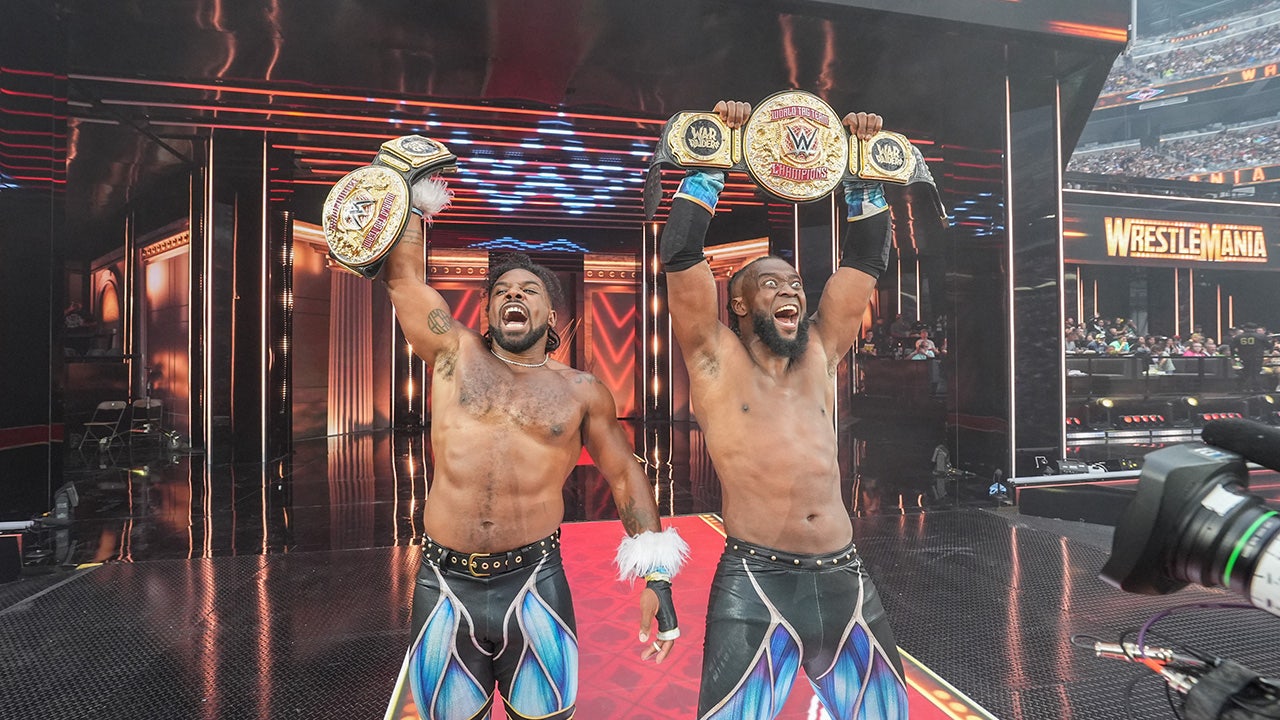
Wrestling fans around the world are reeling today after news broke that some of WWE’s most beloved and electrifying personalities have exited the company, leaving a hole in the squared circle that’s hard to ignore. It’s like losing a family member at the holiday table—you know things change, but the void feels immediate. Kofi Kingston and Xavier Woods, the dynamic duo who breathed life into The New Day tag team, were reportedly released on Saturday, joining a growing list of superstars who’ve found new paths after their time in WWE’s bright lights. Kingston, with his infectious energy and that legendary “Trouble in Paradise” finisher, and Woods, the strategist with his goat antics and flashy fro, have been staples for years. Their departure isn’t just business; it’s a personal blow to fans who grew attached to their charisma, positivity, and unscripted moments of joy amidst the scripted chaos of the ring. You can feel the sadness in the echoes of “New Day sucks” chants, which were meant as affectionate mockery but now sting like a farewell. And perks aside, it’s a reminder that even in pro wrestling, where heroes rise and fall, real lives behind the masks are evolving.
Diving deeper into their story makes it even more heartfelt. Kofi Kingston and Xavier Woods first burst onto the scene as part of The New Day, a trio that included the powerhouse Big E, whose brotherly energy lit up the room. They were fan favorites from the get-go, spreading positivity like gospel with their entrance theme, bootleg club goods, and that signature triangle pose that made you want to join in, even if you were just watching on TV. After Big E suffered a serious injury that kept him sidelined, Kingston and Woods carried the torch as a duo, proving that heart and teamwork could carry any weight. As a team, they racked up four tag team championships as a pair, and eight when you count Big E’s contributions—numbers that speak volumes in a business where belts change hands like speeding cars. It’s stories like these that humanize the sport; these aren’t just athletes, they’re community builders. Kingston, in particular, had a flair for individualism too. His run to the WWE Championship at WrestleMania 35, dubbed the “Kofi-Mania” era, was pure magic—a Jamaican rocket soaring on the wings of fan love, outlasted against Daniel Bryan in an epic battle that felt like destiny. Fans were chanting his name, buying Kofi-branded merch, and dreaming with him. And Woods? He brought his own flair, from his King of the Ring win in 2021 to his roots in TNA and NJPW, where he honed his craft before hitting WWE’s main stage in 2010. Their history isn’t just stats; it’s late nights watching replays, laughing at their promos, and feeling inspired to chase dreams.
What made Kingston and Woods so special was their evolution in the ring, a testament to the resilience that mirrors real life’s ups and downs. Just last year, at WrestleMania 41, they captured the tag team titles in a thrilling clash, riding high on their legacy and that infectious energy. But then they turned heel—or “bad guys,” for those new to wrestling lingo—embracing a darker edge that surprised fans accustomed to their babyface vibes. It was a bold twist, like seeing your funny uncle pull a prank that’s a little too mean. They lost those belts in June, amid some real-life bumps, including Woods battling an injury that pulled him from action. Kingston, ever the versatile one, formed an unlikely alliance with Aussie sensation Grayson Waller in the meantime, adding layers to his character that showed growth and adaptability. These moments weren’t scripted without consequence; they reflected the personal journeys of men who started as underdogs and became titans. Fans felt that shift— the excitement of their comeback, the heartbreak of their losses, and the worry during injuries. It’s the human element that makes wrestling more than entertainment; it’s therapy, release, and connection. Imagine rooting for someone who reminds you of your own struggles, only to watch them navigate change.
Now, to the nitty-gritty of the news—confirmation came from reliable sources like Fightful Select and BodySlam, who broke the story, emphasizing the emotional weight of these releases. WWE quietly moved Kingston and Woods to the alumni section of their website, a digital nod that’s both official and poignant, like archiving a beloved photo album after a major life shift. It’s not uncommon in wrestling’s high-turnover world, but each departure stings differently. These guys poured blood, sweat, and personality into the company for years, building relationships with colleagues and fans alike. Kingston’s Kofi-Mania run wasn’t just hype; it was a movement of hope that transcended the ring, inspiring people to believe in comebacks. Woods’ intellectual in-ring style—dubbed “The Fifth Dimension” in his entrance video—showcased creativity and bravery. Thinking about their legacies, you can’t help but feel grateful for the memories, from laughing at their over-the-top sponsors like Booty-O’s and Turkey-on-Walnuts to cheering during grueling matches. Wrestling without them is like a party missing the DJ—it’s still possible, but the rhythm feels off.
Beyond The New Day, the releases didn’t stop there, broadening the narrative of change at WWE. Tonga Loa and JC Mateo, another pair deeply embedded in recent storylines, also reportedly exited the company, adding to the wave of farewells that’s got the wrestling community buzzing. Tonga Loa, a Samoan powerhouse with a lineage of strength, first entered WWE back in 2009 with familial ties that ran deep. He left in 2014 after some intense feuds, including that brutal war with his brothers, but made a triumphant return in 2024, teaming up with Solo Sikoa in the MFT faction—a brotherhood symbolizing familial loyalty and power. His presence brought gravitas, a reminder of wrestling’s heritage, and his departure feels like losing an elder storyteller from the village circle. Fans who followed his path from obscurity to revival understand the mixed emotions—joy at his comeback, sadness at this abrupt end.
As for JC Mateo, his journey was shorter but impactful, joining WWE in late 2024 (likely the intent behind “2025” in some reports) as part of the Bloodline and MFT families, backing up Solo Sikoa with youthful energy and unyielding support. He quickly ascended, capturing the tag team championships alongside Tama Tonga, forming a dynamic that echoed the Sikoa faction’s dominance. They defended those belts fiercely until dropping them to fan-favorite duo Damian Priest and R-Truth in March, a loss that showcased Mateo’s potential amid WWE’s high-stakes rivalries. His camaraderie with Tonga Loa was palpable—like brothers in arms—and losing him adds layers of uncertainty. Together, these departures highlight WWE’s ever-shifting landscape, where legends retire and new faces emerge, but human stories of ambition, loyalty, and letdown remain at the heart. It’s a cycle that fans navigate with passion, keeping the love for the sport alive even as stars fade into memory. In reflecting on all this, one can’t help but appreciate the raw humanity behind the spectacle—Kofi and Woods with their perpetual smiles, Loa with his stoic strength, Mateo with his emerging fire. Wrestling, at its core, is about these real people forging paths, entertaining millions, and occasionally saying goodbye, leaving us to cherish the moments that made us cheer, cry, and come back for more.