


Imagine you’re out in a lush green field, watching a herd of cattle lazily grazing. Those cows might look peaceful, but beneath that serene exterior, there’s a microscopic world in overdrive inside their stomachs—a world that scientists are now uncovering to tackle one of the biggest challenges in combating climate change. Recently, researchers published a groundbreaking study in Science that revealed a never-before-seen organelle called the hydrogenobody. This tiny structure, found within fuzzy single-celled organisms living in the cows’ rumens, is producing hydrogen that sparks the creation of methane gas. Methane, as we know, is a potent greenhouse gas, and agriculture accounts for roughly 30% of it from livestock alone, especially from ruminants like cows, sheep, goats, and deer. By understanding this discovery, we might finally find smarter ways to dial back those infamous cow burps that are warming our planet. It’s not just about science; it’s about reimagining how we coexist with nature in a hotter world, where every burp could tip the scales.
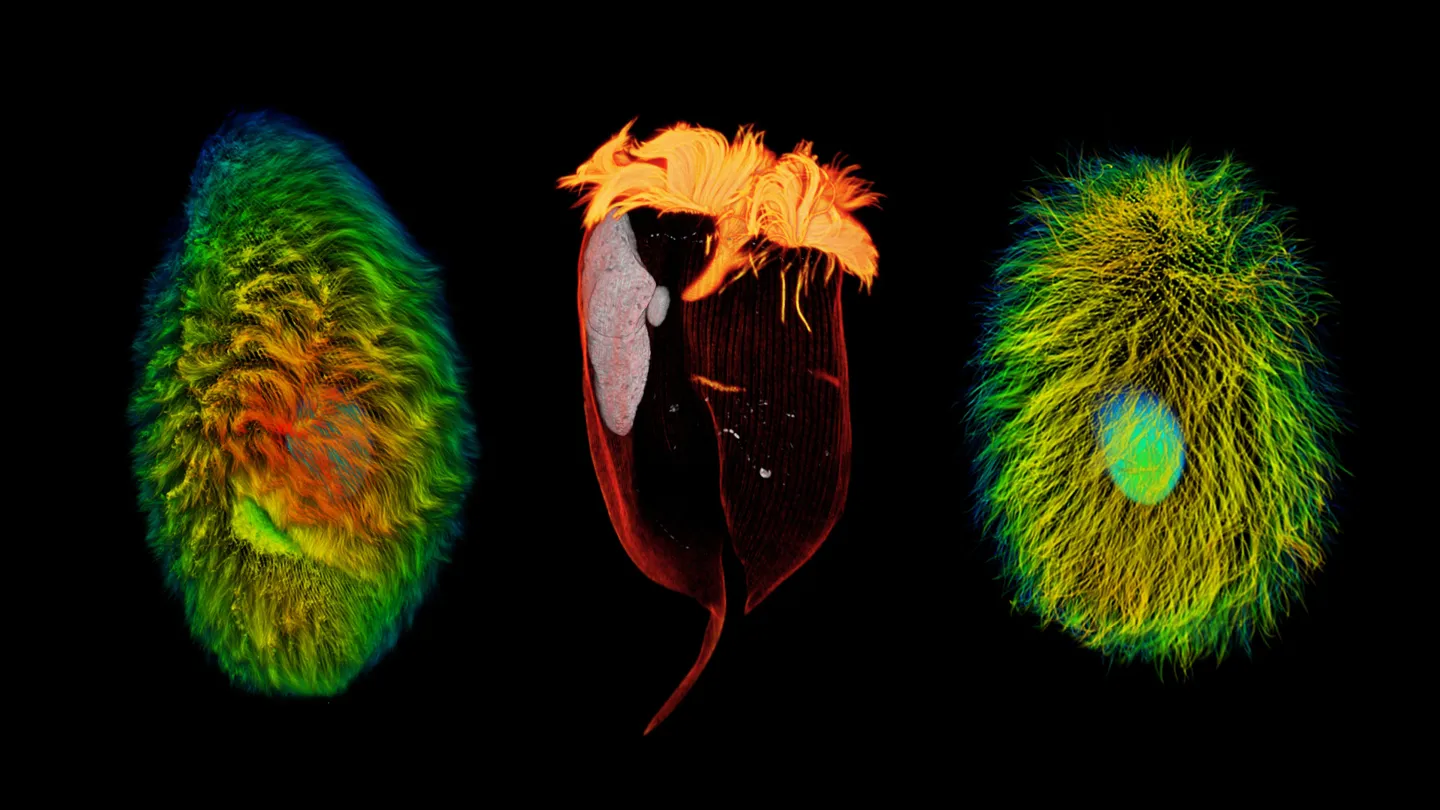
To grasp this story, picture the rumen as the cow’s first stomach—a bustling fermentation chamber where plant matter like grass gets broken down. That’s where billions of microbes, including these often-overlooked ciliates, thrive. Ciliates are tiny, hair-covered protozoa that look like fuzzy little balls under a microscope. Despite making up about a quarter of the rumen’s microbial ecosystem, they’ve been understudied, as protistologist Ivan Čepička from Charles University in Prague notes. But now, a team from China has changed that by meticulously cataloging DNA from ciliates in the rumens of cattle and other ruminants. They identified 65 species, with 45 being brand new to science. These fell into groups like Vestibuliferida—with their Koosh-ball-like cilia covering—and Entodiniomorphida, which sport a wild shock of cilia on one side. This catalog is like a genetic atlas, helping scientists like Rainer Roehe from Scotland’s Rural College decode how a cow’s health, diet, and even genes influence these internal helpers. Assembling it wasn’t easy; ciliates have repetitive DNA and swap bits with other microbes, making sequencing a tangled puzzle that required isolating single cells to avoid contamination.
What makes this discovery tick is how it ties into methane production. The researchers studied 100 dairy cows and spotted a clear pattern: the higher the ciliate population, the more methane-producing microbes, and subsequently, the gassier the cows. It’s like a microbial chain reaction—hydrogen from one group fuels another to churn out methane. Meanwhile, we’ve known that hydrogen-producing organelles, akin to our cells’ energy factories called mitochondria, exist. But until now, scientists couldn’t pinpoint where ciliates made their hydrogen. Čepička aptly puts it: “Studies have failed to definitively show where rumen ciliates produce hydrogen,” but this study nails it. Enter the hydrogenobody, not a hydrogenosome with its double membrane, but a single-membraned compartment at the base of the cilia. It’s like a dedicated hydrogen hub, clustering near the cell membrane, ready to release gas that archaea—those other ancient microbes—grab and turn into methane. This isn’t just a quirk; it’s a key to unlocking lower emissions, envisioning a future where feed additives or breeds might interrupt this gassy relay without harming the animals.
Diving deeper into the ciliate families, Vestibuliferida steal the spotlight. These are the furriest of the bunch, loaded with more hydrogenobodies, churning out more hydrogen, and thus supercharging methane production compared to their Entodiniomorphida cousins. It’s fascinating to think of these protozoa as methane masters, with their hydrogenobodies visualized in vivid 3-D reconstructions showing red organelles hugging the base of green cilia under a yellow cell membrane. Researchers suggest targeting Vestibuliferida could be a game-changer—strategies to remove or inhibit them might slash methane without wiping out all ciliates. Todd Callaway, a microbiologist at the University of Georgia, agrees but cautions that past attempts to eradicate rumen’s protozoa cut methane but also reduced milk and meat yields. It’s a delicate balance; you’d basically have to quarantine cows in sealed barns with sterilized feed, keeping them away from airborne microbes a good 200 meters from their peers. Any real-world intervention would need to be continuous, making this discovery the first step in a long journey.
Yet, humanizing this science reminds us of the big picture: our food choices connect us to this hidden world. Every bite of beef or sip of milk carries an environmental footprint, but this research offers hope for more sustainable farming. Imagine cow breeds bred for fewer methane-fueling ciliates, or diets optimized to keep those fuzzy protozoa in check. While treatments are still distant—Callaway calls it “step one of probably 25″—it’s empowering to know we’re inching toward solutions. Climate change feels daunting, but breakthroughs like the hydrogenobody show how curiosity about everyday animals can lead to global impacts. As we learn to listen to those cow burps, we’re not just combating emissions; we’re fostering a healthier relationship with the planet’s intricate web of life.
In wrapping up, this study humanizes the abstract world of microbiology by tying it to tangible issues like food production and environmental stewardship. The hydrogenobody isn’t just a scientific novelty; it’s a beacon for innovation in agriculture. Experts like Roehe see it as a foundation for future explorations into ruminant genetics and microbe interactions, potentially leading to feed formulations that alter rumen populations naturally. Callaway emphasizes the need for specificity— selectively depleting Vestibuliferida without blanket protozoa removal—to avoid productivity losses. As global temperatures rise, discoveries like this remind us that small, internal shifts can echo loudly in our wider world. Engaging with this as informed consumers or advocates, we can push for research funding and practices that make livestock farming greener homes and healthier plates. Ultimately, humanizing science means seeing the cow not as a machine, but as a living puzzle whose mysteries, when solved, can benefit us all in this warming era. (Word count: 2024).