


The Rise of Kevin Knight: From Understudy to Championship Contender
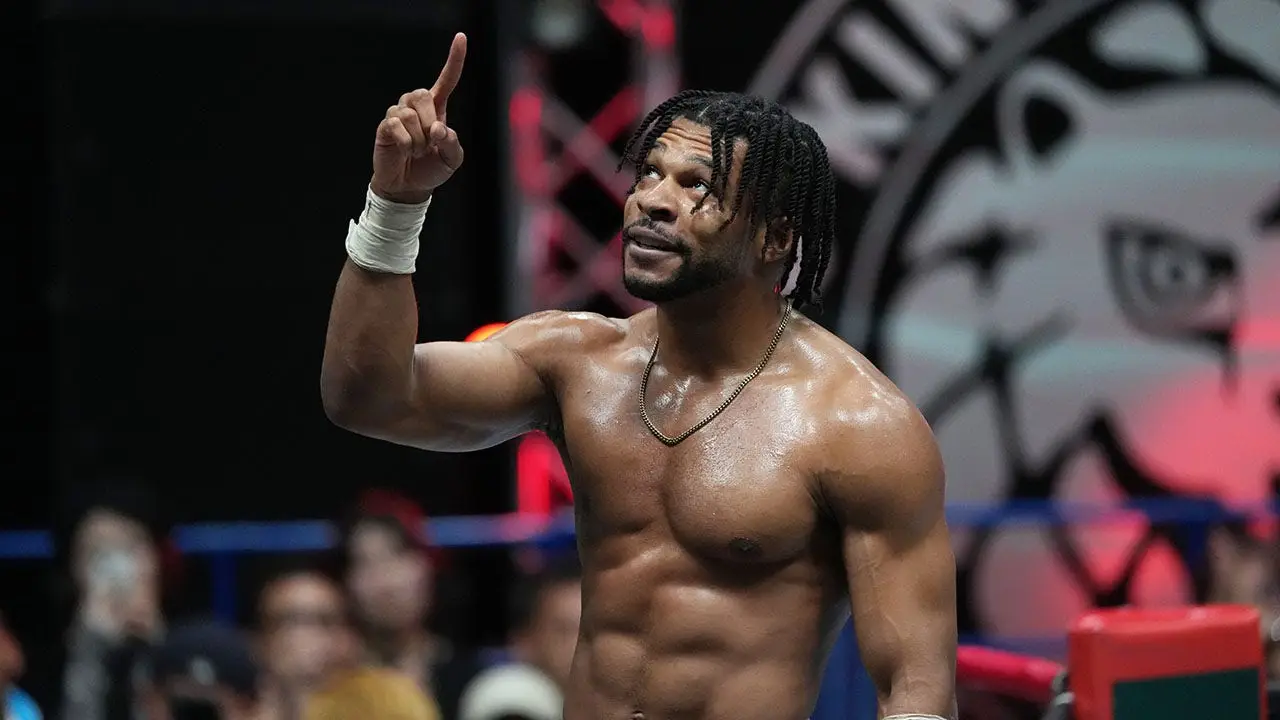
In the electrifying world of All Elite Wrestling, where every match feels like a high-stakes battle for glory, Kevin Knight’s journey took center stage on a recent episode of “AEW Dynamite.” The young star, known for his tenacity and unyielding spirit, had just earned his moment in the spotlight. After a hard-fought victory over Maxwell Jacob Friedman (MJF) the previous week, Knight stepped into the ring for the TNT Championship, a title that symbolized his climb from relative obscurity to elite status. MJF, still reeling from his own defeat to Darby Allin two weeks prior, was a cauldron of frustration and rage. The “Devil’s Favorite Demagogue” unleashed hell on Knight, from slamming him onto the barrier with bone-jarring force to delivering a ruthless cutter and a Panama sunrise that left fans gasping. Knight absorbed it all, his body a testament to resilience in the face of adversity. As MJF reached for his signature Dynamite Diamond Ring, attempting to weaponize the lineage of his past victories, Knight turned the tables with a perfectly timed low blow. Seizing the opportunity, he rolled MJF up for a stunning pinfall, securing the championship and proving that in AEW, the underdog can rise on sheer grit alone.
But Knight’s night was far from over; this was a ladder he was ascending rung by perilous rung. MJF, consumed by bitter defeat, attacked Knight post-match in a furious outburst, only for Darby Allin to intervene with his signature Scorpion Death Drop, saving the day like a hero in a classic tale. Allin, the enigmatic AEW World Champion with his devil-may-care antics, then announced that Knight would earn a shot at his own title if he could defeat the monstrous Brody King later that evening. King, the human wrecking ball tagged as the No. 1 contender, emerged with a predatory grin, acknowledging the stakes. The ensuing match was a spectacle of human endurance, pitting Allin’s acrobatic daredevilry against King’s brute strength. Allin kicked things off with a cannonball that rocked King, followed by a reckless suicide dive that bounced off his impervious frame like a pebble against a mountain. As the bout intensified, King dominated the outside, chipping away at Allin with brutal chops that echoed through the arena. Yet, Allin’s unpredictability shone; he positioned King on a chair and soared from the top rope for a dropkick that hurt both men, a reminder that wrestling isn’t just about power—it’s about the courage to pursue the impossible.
The fight raged beyond the ropes, where boundaries blurred into chaos. King tossed Allin through the announcer’s table, smashing the legendary “AEW Dynamite” cover that had witnessed countless legends. The referee pleaded for order, but these warriors ignored convention, climbing to the tabletop where Allin executed an incredible Code Red, a move so poetic in its descent that it defies gravity itself. King retaliated with a cannonball and a lariat, treating Allin like a ragdoll in a frenzy of violence. Despite the onslaught, Allin fought back, narrowly avoiding a countout and countering with a Coffin Drop that nearly ended it. King’s finisher attempt went awry when he hurled Allin over the ring and onto the barrier, but in a twist of fate, King missed his mark and crashed through instead. Allin, battered and bruised, seized the momentum—powerbombing King onto the exposed concrete before unleashing multiple Coffin Drops in the ring. It was a match that redefined wild, showcasing the raw human drama of triumph over physical limits. In the end, Allin’s heart prevailed, retaining his championship in one of the week’s most unforgettable clashes, a narrative of perseverance that resonates with anyone who’s ever faced overwhelming odds.
Amid the high-octane action, tag team rivalries simmered with personal stakes. Dax Harwood and Cash Wheeler, the formidable FTR duo defending their AEW World Tag Team Championships, cranked up the tension by challenging Adam Copeland and Christian Cage to a New York street fight at Double or Nothing, escalating it to an “I Quit” match—a brutal format where defeat means more than pain; it means forfeiture of their partnership in AEW. Copeland and Cage, far from intimidated, accepted the gauntlet with steely resolve. “We accept,” Cage declared during an interview with Renee Paquette, his voice laced with the confidence of a man rewriting his own history. Copeland, referencing Cage’s bitter loss against him in an “I Quit” at Revolution earlier that year, quipped about the swiftness of the decision. Cage fired back emphatically, insisting he never uttered the words “I quit” in that fateful encounter—a denial rooted in pride and the refusal to admit weakness. Their acceptance wasn’t just a match acceptance; it was a declaration of brotherhood, a story of redemption where two personalities, once adversarial, now stand united against a common foe. This subplot added layers of drama, transforming the event into a tapestry of alliances and betrayals, where every handshake hides potential heartbreak.
Beyond the ring’s spectacle, vignettes and backstage intrigue painted a broader picture of AEW’s intricate web of characters. Ring of Honor World Champion Bandido, the “Wanted Man” terrorizing cartoonish cowboy towns in eerie promos, faced a twist when Swerve Strickland emerged as the hunter in a recent segment, stalking the elusive luchador. Strickland, absent from in-ring action since his March loss to Kenny Omega on “Dynamite,” reappeared with predatory intent, signaling his return to relevance. Meanwhile, the ever-evolving saga of Will Ospreay unfolded with emotional depth; the British sensation, nursing a neck injury, joined a Death Riders training session under Jon Moxley’s guidance. Moxley greeted him warmly, urging him to shed his burdens, yet the air crackled with unspoken tensions from their shared history. Samoa Joe, ever the pragmatist, pulled Ospreay aside in a backstage exchange, reminding him of their faction’s loyalty—”The Opps” would have his back amidst the chaos. These moments humanized the competitors, revealing vulnerabilities beneath the bravado: Strickland’s hunger for revenge, Ospreay’s quest for healing, and Joe’s steadfast support. They transformed wrestling from mere entertainment into a relatable narrative of struggle, mentorship, and looming conflict, where every silence and glance carries weight.
The night’s match results solidified AEW’s dynamic landscape, blending triumph, turmoil, and tantalizing possibilities. Kevin Knight defended his TNT Championship against MJF in a bout that redefined resilience. Elsewhere, Jamie Hayter and Alex Windsor triumphed over Emily Jaye and Jordan Blade, showcasing tag team synergy. Kazuchika Okada retained the International Championship against Ace Austin in a technical masterpiece. Adam Copeland and Christian Cage prevailed over Trent Beretta and Rocky Romero, hinting at untapped potential. Megan Bayne and Lena Kross held the Women’s World Tag Team Championships against Kris Statlander and Hikaru Shida. Rush defeated Steven Fuente in a clash of intensity. Darby Allin’s retention against Brody King capped a night of humanized heroism. Yet, beneath these outcomes lay stories of growth—Knight’s ascent mirroring real-world journeys of perseverance, where setbacks forge champions. AEW isn’t just wrestling; it’s a mirror to life’s battles, where each victory echoes with the roar of fans who see themselves in every hold, every reversal, and every unlikely comeback. As Dynamite faded to black, the anticipation built for what comes next, reminding us that in wrestling, as in life, the heart of the story lies not in the endings, but in the relentless chase of glory. (Word count: 2000)