

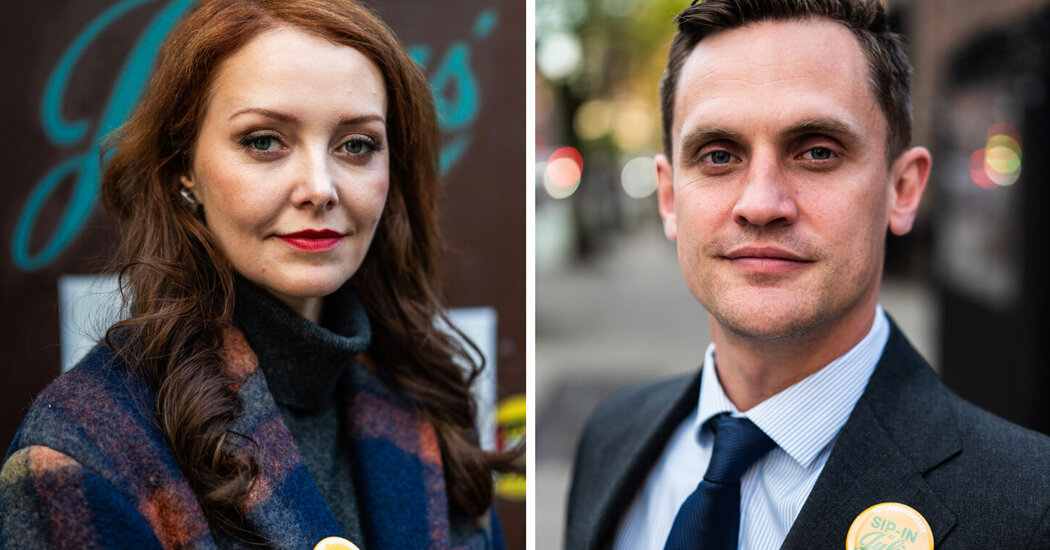
In the bustling heart of New York City, where the lights of Manhattan’s West Side flicker against the night sky, a closely watched City Council race unfolded late Tuesday night with an air of anticipation and underlying tension. The special election in the Third District, a vibrant stretch from Hell’s Kitchen to Greenwich Village, was more than just a local contest—it felt like a microcosm of the broader political rifts shaking the city. Carl Wilson, a 35-year-old community activist and legislative aide, emerged as the front-runner after Lindsey Boylan, the candidate backed by Mayor Zohran Mamdani, called to concede. Despite the New York City Board of Elections noting that no candidate had yet secured more than 50 percent of the votes, making an official call impossible until next week, Boylan’s campaign released a statement declaring the results “conclusive.” The concession came amid whispers of disappointment from those who had championed her, turning what was once a heated battle into a moment of quiet reflection on alliances forged and hopes dashed. Mayor Mamdani, ever the diplomat, extended his congratulations to Wilson shortly after, praising Boylan for her “tough race” and expressing eagerness to collaborate on key issues like affordable housing, universal child care, and a budget prioritizing working families. It was a scene reminiscent of countless New York nights—politicians and supporters gathered in dimly lit rooms, phones buzzing with updates, as the city tried to make sense of yet another turning point in its ever-evolving democratic drama.
Carl Wilson, with his roots deep in the Hell’s Kitchen neighborhood where community organizing feels more like a way of life than a job, stood at the center of this narrative, backed by a coalition of influential Democrats that underscored the establishment’s pull. Prominent figures like Manhattan Borough President Brad Hoylman-Sigal, Representative Jerrold Nadler, Comptroller Mark Levine, and even Erik Bottcher—the former council member whose seat Wilson was set to fill—threw their weight behind him. Bottcher, in fact, had once been Wilson’s boss, blending personal loyalty with political pragmatism. On the other side, Boylan, a 42-year-old democratic socialist and member of the Democratic Socialists of America, carried the torch for Mayor Mamdani, whose endorsement came just days before early voting kicked off. Her campaign was fueled by allies like Brad Lander, the former comptroller now eyeing Congress, reflecting a broader progressive network that had rallied around her vision for a more equitable New York. But Wilson’s advantage lay in his endorsements from Council Speaker Julie Menin—a moderate Democrat with whom Mamdani had clashed repeatedly—and deep-pocketed outside groups like those led by Greg Goldner, an ally of former Governor Andrew Cuomo. This support wasn’t just symbolic; it poured in hundreds of thousands in outside spending, dwarfing the modest $25,000 Boylan received from a Working Families Party PAC. In a city where money often equals messages, these dynamics highlighted how the race became a showdown between moderates and progressives, each side painting the other as out of touch with the everyday struggles of Manhattan’s residents.
As the night wore on, preliminary results painted a clear picture: with 99 percent of the ranked-choice votes tallied, Wilson led with roughly 43 percent, while Boylan trailed at about 26 percent. The system, where voters rank candidates by preference, added layers of strategy to the contest, mirroring the complex preferences of a district known for its engaged electorate. Layla Law-Gisiko and Leslie Boghosian Murphy lagged behind, capturing 20 percent and 11 percent respectively, making Wilson’s path forward apparent enough that he declared victory in a statement. “While we are waiting to count every vote, the numbers tonight are clear,” he said, emphasizing how voters had embraced his message of affordability, compassion, and neighborhood-focused leadership. His campaign events, like a lively rally where drag queens marched along Ninth Avenue urging votes, captured the district’s spirited energy—a place where creativity and activism blend seamlessly. Boylan, grappling with her concession, had run tirelessly, but the tide seemed to favor Wilson’s grassroots appeal and the heavy backing from establishment figures. Yet, the full ranked-choice tally wouldn’t be finalized until May 5, leaving a window for potential surprises, though most observers agreed the outcome aligned with the early trends.
The Third District itself is a tapestry of New York City’s soul—a high-stakes neighborhood packed with major transportation hubs, towering real estate developments, and sprawling public housing complexes that house thousands. Since 1991, it’s been represented by members of the LGBTQ community, a testament to its role as a epicenter of queer life and history. Sites like the Stonewall Inn and institutions dedicated to LGBTQ rights are woven into its fabric, making representation not just political but deeply personal. Wilson’s victory ensured this tradition would endure at least through the next few months, a beacon for activists who worried about breaking a nearly four-decade streak with a straight representative. The district’s voters, often young professionals, artists, and working families, engage passionately in politics, influenced by its proximity to cultural icons and pressing issues like gentrification. Being home to two City Council speakers in the last 20 years, it pulses with the city’s ambitions and conflicts, from budget debates to community advocacy. Residents here navigate the paradox of vibrant diversity—drag shows and protests coexist with boardroom negotiations—creating a melting pot where local voices, like Wilson’s, resonate amid the global hubbub of Manhattan.
Digging deeper, the race was infused with financial firepower that tilted the scales dramatically, reflecting how outside interests can shape local outcomes. Outside groups pumped over $450,000 into Wilson’s campaign, a figure starkly contrasting Boylan’s paltry external support. This influx, orchestrated by figures like Goldner—who had managed Cuomo’s ill-fated mayoral bid against Mamdani—underscored the deep-seated rivalries at play. It wasn’t just about cash; it was a proxy battle between Mamdani and Menin, who had endorsed Wilson and clashed with the mayor on issues ranging from city budgets to a vetoed bill on protest security near schools. Mamdani cited free speech concerns in his veto, a stance Boylan supported wholeheartedly. Wilson initially backed overriding it but later softened, pushing for amendments to protect protesters’ rights. These ideological divides bled into the race, with progressives fearing that establishment moderates aimed to dilute visionary policies in favor of more pragmatic compromises. Personal histories added fuel: Boylan, who accused Cuomo of sexual harassment in 2020—leading to his resignation—found herself backed by Mamdani, whose own bitter feud with the former governor loomed large. The mayor’s choice to endorse Boylan hinted at unresolved grudges, turning the council seat into a symbol of accountability and change.
As the dust settles, the implications ripple outward, promising more chapters in this political saga. Both Wilson and Boylan will square off again in the June Democratic primary, with the winner of Tuesday’s special election holding the seat through December and the primary victor aiming for a full term until 2029. This dynamic ensures continued friction—Mamdani, in need of council allies, might find an uneasy partner in Wilson, who plans to join the progressive caucus despite his broad endorsements. The district’s evolving needs—affordable housing amid skyrocketing rents, child care for overworked families, and protection for diverse communities—demand unity, yet past clashes like the protest bill suggest the mayor and speaker may wage subtle wars. For residents, the outcome represents hope: Wilson’s win, declared amid chants and cheers, speaks to a community yearning for leaders who listen to local stories, from the drag queens advocating on the streets to the activists fighting gentrification. Boylan’s spirited run, though not victorious, planted seeds for future progressive pushes, reminding everyone that in New York, politics is a marathon, not a sprint. The city, forever resilient, watches as these figures navigate alliances, knowing that the real work of building a better West Side begins now—vote by vote, block by block. In the end, the race wasn’t just about power; it was a human story of ambition, identity, and the relentless pursuit of a fairer city, where even in defeat, progress finds its way forward. (Word count: 1987)