


The Tragic Reality of Family Annihilations in America
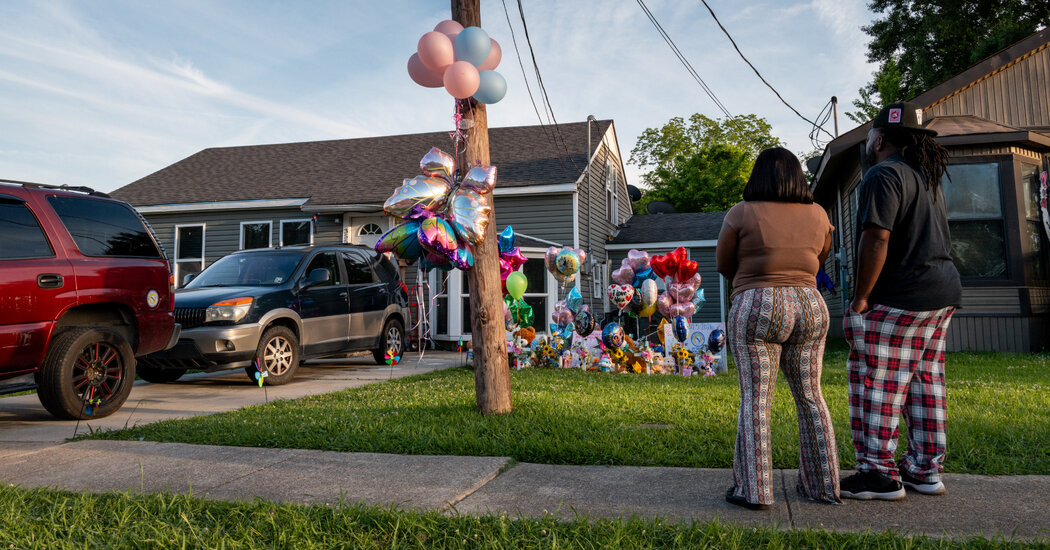
In the quiet chill of early January, a man in Clay County, Mississippi, unleashed unimaginable horror, gunning down six members of his own family—including his father, a brother, an uncle, and a 7-year-old second cousin. The weight of that child’s life cut short on a crisp winter morning lingers like a searing pain, a reminder that no door was barred, no love was enough to shield them from his rage. Just a month later, in February, a shooter stormed a hockey rink in Pawtucket, Rhode Island, ending the lives of his ex-wife and adult son before turning the gun on himself, leaving the ex-wife’s parents wounded and forever scarred by the echoing shots in a place meant for fun and family gatherings. And most recently, in the heart of Shreveport, Louisiana, a father systematically killed eight children under one roof—seven his own—and wounded their mothers, before extinguishing his own life. Sheriff Henry L. Whitehorn of Caddo Parish captured the collective grief: “The most heartbreaking tragedies that we have ever witnessed.” These aren’t isolated outbursts; they paint a grim picture of domestic violence morphing into something so brutal it defies comprehension. Family annihilation, or familicide, is the cold term experts use for the attempted or successful killing of multiple relatives, often in calculated acts that leave survivors grappling with why a loved one could become a monster overnight. It’s not rampant, thank goodness, but its frequency enough to demand we sit up and pay attention. Think of the shattered dreams—a birthday cake uneaten, a child’s laughter silenced forever, a mother’s arms empty when they should hold the world. Researchers piecing together data from news reports estimate around 22 such cases in the first half of 2025 alone, where three or more family members died, often culminating in suicide. Yet, the full scope eludes us because many incidents get lumped into broader categories like murder-suicides or mass shootings, or worse, go unnoticed. Law enforcement doesn’t always track familial ties in the aftermath of such chaos, and some tragedies unfold without guns or self-inflicted ends, like the tragic drowning of five children by their mentally ill mother, Andrea Yates, in 2001. Each story humanizes the statistics: fathers driven to the brink, turning homes into crime scenes, leaving behind voids in communities that ripple out like cracks in ice. We imagine the whispered arguments that led up, the nights of sleepless worry ignored by outsiders, and the final, irreversible choice that rewrites family legacies. Domestic violence is disturbingly common in America, but this subset—targeting one’s own blood—is a chilling escalation, where the perpetrator treats kin as expendable pawns in their own suffering. Experts emphasize that while we count the dead, we must remember the psychological toll on survivors, who question every memory, every missed sign, wondering if love could have rewritten the ending. Social workers and counselors often witness the fallout: children who lose parents through violence bearing lifelong emotional scars, or spouses left navigating life alone, haunted by “what ifs.” It’s a reminder that beneath the headlines are human stories of shattered trust and resilience, urging us to listen more deeply to the cries hiding in plain sight.
The overwhelming majority of family annihilators are men, and guns play a starring role in these tragedies, though not exclusively. Women perpetrators exist, like Yates, who, grappling with severe mental illness, ended five young lives in a bathtub, her desperation a testament to how untreated suffering can push anyone to the edge. But for men, patterns emerge that reveal the frailty of masculinity and mental health intertwined. Many harbor suicidal thoughts, triggered by the collapse of intimate relationships—divorce or abandonment that feels like the tearing apart of their very identity. We can almost hear the internal monologue: “I’m a failure as a husband, as a father; if I can’t provide, can’t hold it together, maybe my family is better off gone.” Depression from job loss or financial ruin fuels this distorted logic, where the gun becomes a twisted equalizer, sparing loved ones from perceived hardship. Experts like Neil Websdale from Arizona State University’s Family Violence Center describe how threats to a man’s sense of self—as provider, protector, patriarch—ignite this shame-fueled violence. It’s not just anger; it’s a profound destabilization, where humiliation from custody battles or social pressure drives them to reclaim control violently. Melina Milazzo, head of public policy at the National Network to End Domestic Violence, points to possessive beliefs: families as “property” to be possessed or destroyed, echoing the toxic mantra “if I can’t have you, no one can.” This ownership mentality extends beyond romantic partners to children and relatives, rooted in deep-seated insecurities passed down through generations. Imagine a man who grew up in a turbulent home, witness to his own father’s outbursts, internalizing that control means power at any cost. Or the executive laid off during an economic storm, now facing eviction and divorce, his world crumbling until the only option seems to eliminate the mirrors that reflect his inadequacies. These aren’t excuses; they’re insights into how untreated trauma—childhood abuse, head injuries causing brain damage, or PTSD—culminates in explosive acts. Jacquelyn Campbell from Johns Hopkins notes that abusers often carry their own scars, yet ignore warnings until it’s too late. By humanizing these perpetrators, we see them not as villains in a vacuum but as products of broken systems—men who felt invisible, supported inadequately, their cries for help drowned out by societal expectations to “suck it up.” The human cost? Families destroyed, yes, but also the killer himself, leaving behind a postmortem revelation of pain that could have been alleviated with compassion instead of judgment.
Red flags flutter like warning beacons in these tragedies, yet too often they’re dismissed as moments of weakness rather than imminent danger. Experts unanimously stress that expressed suicidal thoughts or threats of violence are not mere words but cries for intervention. In the Shreveport case, the gunman’s mother revealed his distress over a potential marriage breakup, his despair over losing his children driving him to the unthinkable. This mirrors the pattern: the most perilous moments in domestic situations often coincide with relationship endings, when possessiveness peaks and options dwindle. Neil Websdale highlights cases without prior violence histories, where identity crises—losing a job, custody, or status—amplify shame into action. Picture the father who was once the breadwinner, now humbled by unemployment, whispering threats born of fear to his partner: “I’ll end it all.” Milazzo warns that these beliefs stem from power-imbalanced dynamics, where abusers see relationships as dominion. Taking these signs seriously means proactive measures—hotlines, counseling, perhaps removing firearms—and dismantling the stigma around mental health. Communities must learn to recognize these signals in neighbors or friends: the isolated coworker spiraling after a breakup, the parent unusually withdrawn after financial blows. Humanizing means envisioning the prevention: a neighbor noticing changes, offering support; a therapist providing space for vulnerability. Lives saved could be as simple as a conversation that pierces the isolation. Yet, systemic barriers persist—lack of mental health funding, inadequate domestic violence resources—leaving far too many at risk. Educators and employers play roles too, fostering environments where emotions aren’t bottled up. By empathizing with the human fragility behind these acts, we empower ourselves to act when we see trouble brewing, not after the damage is done.
Data gaps compound the issue, making true prevention elusive. No comprehensive public database exists for family annihilations; groups like the Violence Policy Center rely on media reports, which miss quieter incidents or those overshadowed by larger events. Law enforcement rarely logs familial ties in detail, and crimes not involving suicides or guns slip through. This underreporting obscures patterns and hinders solutions, leaving experts to approximate: around 22 cases in early 2025, but reality likely higher. Humanizing this means acknowledging the unseen tragedies—the single-mother homicides blurred in domestic dispute logs, or suicidal acts masked as accidents. Survivors of familial killings often face compounded trauma: losing family to the perpetrator, then battling judgment or inadequate support. Think of cousins left orphaned, aunts grappling with funerals, their pain magnified by society’s glossing over. Systemic change is imperative, Milazzo urges; headlines grab attention, but hidden cases fester. Her advocacy calls for bolstering domestic violence networks, improving data collection, and integrating mental health into crisis responses. Education campaigns could normalize seeking help, reducing shame. Communities must unite—schools teaching healthy relationships, workplaces offering wellness programs—to nip issues in the bud. It’s about shifting culture from stoic individualism to collective care, ensuring no one feels doomed by their struggles. By valuing lives before they end, we honor the humanity in every family: mothers planning school lunches, fathers coaching little league, kids dreaming of futures cut short all too often. This systemic approach isn’t utopian; it’s necessary, transforming statistics into stories of prevention and hope.
In the wake of these events, calls for action resonate deeply. Experts like Milazzo emphasize that family annihilations demand societal commitment, from policymakers to everyday people. Enhanced funding for shelters, hotlines, and therapy can provide lifelines during crises. Gun control debates tie in, as firearms facilitate these tragic ends—stricter background checks, red-flag laws potentially averting escalation. Training for law enforcement to spot domestic signs early could intercept dangers. Familial connections mean ripple effects: counseling for survivors to rebuild, support for children who witnessed horrors. Humanizing drives empathy—imagining siblings planning memorials, grandparents rallying around kin, communities holding vigils not just for mourning, but for reflection and change. Eduardo Medina’s reporting underscores journalistic roles in spotlighting, pushing narratives from headlines to hearts. Yet, it’s we who must translate awareness into action, fostering dialogues that break cycles. Relationships built on equality, mental health prioritized over stigma—these are antidotes. Each life lost is a call to cherish connections, to intervene with kindness. In Mississippi, Rhode Island, Louisiana, and beyond, stories of annihilation urge us to humanize prevention: listening without dismissing, supporting without judgment, rebuilding lives one conversation at a time.
This violence, while rare statistically, embodies broader societal wounds—inequality, untreated trauma, crumbling supports—demanding we confront it holistically. Family annihilations shatter not just homes, but collective conscience, reminding us of vulnerabilities each family shares. Men like the ones in these cases may feel cornered by masculinity norms, women isolated by lack of resources, all exacerbated by insufficient mental health infrastructure. Experts’ voices echo: take threats seriously, address root causes. By humanizing, we see potential in every “red flag” moment—a chance for redemption, not destruction. Systemic reforms—from data tracking to cultural shifts—can avert tragedies. Ultimately, honoring the dead means safeguarding the living: through education, empathy, and unequivocal support. In the tapestry of American life, these stories weave threads of warning and hope, urging us to mend before breaking. (Word count: 2022)