



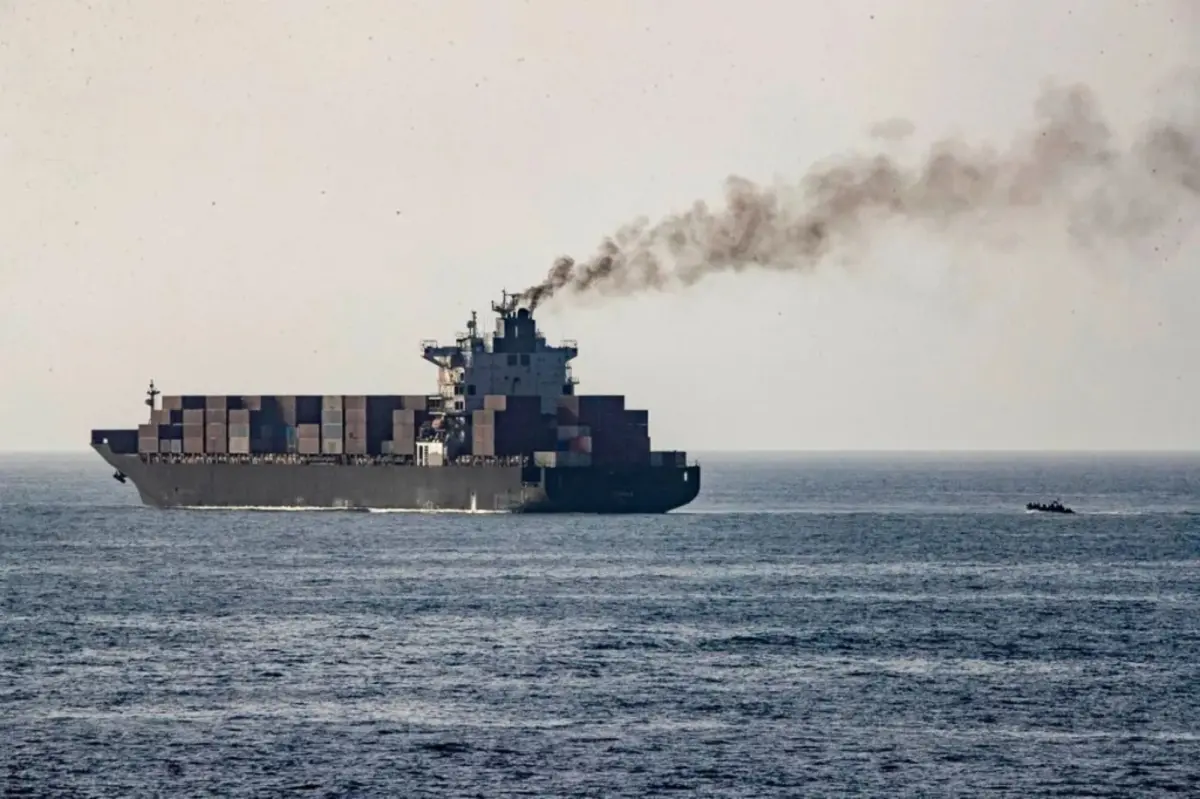
The Shadow of Conflict Over Oceans
In the vast expanse of the world’s oceans, where ancient maritime routes have long dictated the flow of global commerce, a modern shadow of war now looms, casting tension across the seas. Nearly two months into the conflict ignited by the United States and Israel against Iran, an uneasy ceasefire hangs in the air, more a fragile breath than a genuine pause. Diplomats huddle in air-conditioned rooms, exchanging hollow promises, while on the water, the reality is far harsher: warships patrol like predators, and merchant vessels dodge invisible lines of fire. This isn’t just a geopolitical standoff; it’s a human drama unfolding in real-time, affecting sailors from all corners who risk their lives hauling oil, grain, and goods through contested waters. Families back home listen for news, holding tightly to cell phones, unaware that a single missile or naval interception could upend lives in an instant. For instance, consider the Iranian crews aboard these tankers—hardened seamen who’ve spent decades on the waves, now navigating not just storms but the constant threat of capture. One such calloused hand on the wheel of an Iranian-flagged tanker might belong to a captain dreaming of retirement, only to be yanked from course by U.S. destroyers. Meanwhile, on the other side of the world, energy traders in New York and London wake to volatile commodities prices, their fortunes tied to the whims of distant fleets. The U.S. military, ever vigilant, has intercepted at least three Iranian-flagged tankers in Asian waters this week, redirecting them away from their intended destinations near India, Malaysia, and Sri Lanka. These aren’t random acts but calculated moves in a blockade that chokes Iran’s maritime lifeline, forcing ships to turn heel like errant children under stern watch. Shipping sources, whispering anonymously to journalists, confirm the pattern: vessels last sighted off coasts now vanishing from their plotted courses, their public tracking signals fading like ghosts into the ether. It’s a cat-and-mouse game where the stakes are barrels of crude and the human cost is untold stress, with reports of families in Tehran anxious for word of sons and brothers at sea. Broader still, this blockade echoes historical trade wars, reminiscent of the 19th-century opium disputes or even ancient Phoenician blockades, but with modern tech amplifying the chaos. Drones buzz overhead, satellites beam data, and AI predicts routes, yet beneath it all, veins of exhaustion pulse through maritime workers whose livelihoods swing with each command to alternate course. Imagine the exhaustion on deck: sleepless nights, rationed meals, and the perpetual roar of engines masking the dread of what lies ahead. The Ports of Singapore or Mumbai, typically bustling hubs of commerce where dockworkers unload container after container, now see fewer Iranian hulls, their absence a subtle economic wound. Locally in Asia, port towns from Kuala Lumpur to Colombo feel the ripple, as delayed deliveries mean empty warehouses and unemployed laborers scratching heads over unpaid bills. Sailors’ unions in Europe raise concerns for their members moonlighting on flagged ships, warning of hazardous pay and perilous journeys. Yet, this tension is also a canvas for resilience; some captains, pitching through swells, share tales of foiling prior interceptions, building a folklore of nautical defiance. Back on shore, anti-war protests simmer from Amsterdam to Abu Dhabi, with activists chanting for peace while economists scramble to calculate the fallout—lost revenues not just in petrodollars but in human potential squandered on conflict. The U.S., in its strategic calculus, views these interceptions as necessary blows to Iran’s economy, but for the ordinary seafarers, it’s a personal crucible, testing mettle within a geopolitical storm.
Blockades and Barrages: Life at the Chokepoints
At the heart of this naval chessboard lies the Strait of Hormuz, that narrow throat connecting the Persian Gulf to the wider Indian Ocean—a lifeline for about one-fifth of the world’s oil and gas, now a flashpoint of raw aggression. Here, the U.S. has imposed a sweeping blockade on Iran’s maritime trade, effectively strangling exports and imports, while Iran retaliates with gunfire, firing upon vessels daring to traverse the waters. It’s a symbiotic escalation: Washington locks down ports and reroutes ships, Tehran repays in kind by targeting those attempting egress, their actions painting a picture of deadlock where neither side blinks. Imagine the Strait’s turquoise canyons, once serene passages for supertankers laden with black gold that fuels global economies, now marred by occasional puffs of smoke from warning shots—flashes that at first glance seem harmless but signal deadly intent. Crews on neutral ships, like those from Denmark or Japan, huddle in safe rooms, hearts pounding, as bullets ricochet off hulls or missiles streak overhead, the stench of burnt powder mingling with the salt spray. For families loading cargo in Rotterdam, this means delayed paychecks and worried calls home, while Iranian families in Bandar Abbas face empty shelves as imported goods gather dust in impounded holds. Reports from security sources deep in the maritime underworld reveal that nearly two months ago, when the war’s drums first beat, there was scant movement toward peace talks—ceasesfires proving more illusion than accord, with diplomats too entrenched in rhetoric to negotiate meaningfully. This blockade’s shadow stretches far, disrupting not just oil flows but the intricate web of global supply chains, from the petrochemical plants of Texas relying on Iranian feedstocks to the kitchens of Mumbai short on imported spices stalled at sea. Energy analysts, poring over charts in dimly lit offices, warn of a cascading crisis: soaring fuel prices that hit hard on the working class, from taxi drivers in Delhi burning budget on petrol to pensioners in Paris rationing heat. Yet, amid this tumult, human stories emerge—like the story of a Greek sailor captured briefly in a past Iranian seizure, who returned home with tales of cramped cells and interrogations, his ordeal a testament to the personal toll. Iran’s latest move, just yesterday, involved capturing two container ships after firing upon them and another vessel, marking their first such actions since hostilities erupted. The ships, likely carrying vital goods from Europe to Asia, now sit in limbo, their crews held as pawns in the larger game, swapping shifts with uncertainty their constant companion. On the U.S. side, forces have seized Iranian cargo ships and oil tankers in swift operations, the boardings dramatic scenes of uniformed sailors rappelling onto decks amidst shouts and the clang of boots on metal. One can picture the adrenaline on both sides: American Marines, tense yet trained, securing holds while Iranian seamen raise arms in defiance, their lives intersecting in a high-stakes ballet of power. Farmers in the Heartland send silent thanks for temporarily stable energy, unaware the true cost is in lost opportunities overseas. Shipping magnates, like Onassis heirs in legacy firms, lament the financial hemorrhage, their fleets idling in ports from Dubai to Rotterdam. Activists in environmental circles decry the spills that micro-incidents might cause, threatening marine life in waters teeming with dolphins and turtles. Politically, this blockade hardens resolves in capitals far flung—strengthening alliances in the West while fermenting anti-Western sentiment in the Global South, where nations like India delicately balance trade ties. Workers in the energy sector, from rig hands in the North Sea to refinery operators in Iran’s Khuzestan province, face job insecurity, their futures clouded by naval maneuvers. The Strait, once a conduit of prosperity, now embodies the fragility of peace, where a single escalated exchange could ignite wider conflagrations. As night falls over the waters, radar screens glow with blips of potential danger, and weary watch officers rub eyes, dreaming perhaps of simpler times when ships sailed unchallenged.
Tankers in Trouble: Interceptions in the Indo-Pacific
Deep in the Indian Ocean’s azure depths, far from the crowded Strait of Hormuz, the U.S. military has waged a stealthier war, targeting Iranian vessels in open waters to sidestep treacherous minefields that litter the Gulf’s approaches. This calculated strategy, shared by maritime security insiders, underscores a pragmatic avoidance of high-risk engagements near volatile chokepoints, opting instead for pursuits that unfold like cinematic chases across vast expanses. At least three Iranian-flagged tankers have been intercepted in recent days, their trajectories bolldering redirected from prospective offloads near Indonesia’s and India’s shores. These aren’t impersonal assets but floating fortresses crammed with human vitality—captains, engineers, and cooks whose daily rhythms sync with engine purr and wave slap. Picture the captain of the Iranian-flagged Deep Sea supertanker, half-loaded with crude, his last public ping fading a week ago off Malaysia’s rugged coastline—a man who started as a deckhand in his youth, now gazing at choppy waters, perhaps muttering prayers in solitude. Alongside him sailed the smaller Sevin, pumped to 65% capacity with nearly a million barrels of oil, its final sighting a lunar month past near Penang, vessels emblematic of Iran’s stubborn effort to circumnavigate sanctions. These interceptions, confirmed by U.S. and Indian sources, ripple through local economies: Malaysian ports diverting to alternate suppliers, their laborers shifting from specialized unloading to makeshift duties, while Indian refineries grapple with supply gaps, forcing rationing that affects everything from gasoline stations to industrial plants. Crews on these ships, often multinational blends of Filipinos, Indians, and Iranians, bond over shared perils—sharing cigarettes on deck, swapping stories of past voyages to break the monotony of tension-turned-boredom. Families in Kuala Lumpur or Chennai tune into radio bulletins, anxious for any whisper of these ghostly ships’ fates, their hearts heavy with the dread of loved ones ensnared in geopolitical gambles. The psychological toll is profound: sleepless nights haunted by visions of boarding parties, the constant hum of uncertainty eroding morale like rust on hull plating. On the flipside, the U.S. Navy’s precision brings a professional pride to its sailors, who execute these diversions with the discipline of well-oiled machines, viewing them as extensions of national duty. Yet, interviews with ex-marines reveal the quiet unease—second-guesses about the human cost, like leaving families stranded or cargoes unradiated. Maritime unions in Europe advocate for better protections, highlighting how these actions strain international labor standards, with seafarers sometimes unpaid for weeks amid detours. Environmentally, the specter of spills looms if interceptions turn rough, endangering coral reefs and marine biodiversity vital to fishing communities from Sri Lanka to Sumatra. Culturally, these events weave into folklore: sailors framing detours as “ocean odysseys,” inspired by myths like Odysseus’s tempests. Economically, tankers such as these represent billions in potential revenue lost to Iran, tightening belts at home while fueling Western coffers. Politically, Asian nations like Malaysia and India navigate a tightrope, publicly neutral but privately calculating trade dependencies—prime ministers fielding private calls from embassies weighing diplomatic fallout. Ordinary people, from rickshaw drivers in Jakarta feeling fuel surcharges to shopkeepers in Mumbai awaiting shipments, sense the invisible hand of war in everyday price hikes. As the Deep Sea and Sevin drift under redirection, their paths exemplify resistance in the face of force, crews plotting unofficial logs of defiance, whispering hopes of elusive ports ahead.
The Dorena’s Escort and Beyond: Tales of Seizure and Command
Amid this mosaic of maritime maneuvers, the story grows more pointed with vessels like the Iranian-flagged supertanker Dorena, fully laden with 2 million barrels of crude, its last beacon flickering three days ago off India’s southern coast—a behemoth now under the vigilant eye of a U.S. Navy destroyer in the Indian Ocean. As detailed by shipping sources and real-time tracking data, the Dorena’s interception epitomizes the blockade’s surgical enforcement, with Central Command broadcasting its escort status on social platforms like X, framing it as a necessary thwarting of blockade violations. But behind the official tone lies a narrative rich with human layers: aboard the Dorena, a skeleton crew of perhaps 30 to 40, comprising engineers tuning massive pumps and navigators charting evasive arcs, all aware that one misstep could escalate into calamity. The captain, a grizzled veteran with sun-weathered face, might regale younger mates with sanitized wartime stories from his past, masking the inner turmoil of steering a vessel destined for seizure. Families tuning in from Tehran might receive cryptic signals or none at all, their uncertainties compounded by state media’s rosy spin, leaving rooms filled with prayers and pacing. On the U.S. destroyer, sailors embody the flip side: young officers fresh from naval academies, their days a blend of caffeine-fueled watches and high-tech tracking, yet grappling with the ethics of detaining fellow mariners, some sharing quiet doubts over meals. Broader implications crest here, as U.S. forces boast of directing 29 vessels to reverse course since blockade inception, a tally resonating as a testament to operational might but also sparking humanitarian pleas from organizations like the Red Cross for crew access rights. Unlisted interceptions, such as those of the Deyra and Deep Sea, add mystery, with the military mumbling silence on requests, fueling rumors in maritime echoes. The Deyra’s saga is particularly poignant—it failed to offload Iranian crude in India before U.S. waivers lapsed, its cargo of black nectar stranded off the subcontinent’s western facade until Friday’s sightings. Imagine the Indian importers, suit-clad executives in Mumbai boardrooms, cursing lost deals that dent quarterly profits, their sons and daughters facing tuition cuts or delayed dreams. Conversely, the deed brings cheers in Washington policy circles, where strategists view it as crippling wartime leverage. Yet, this enforcement breeds irony among global observers, who note how such actions echo colonial-era seizures, eroding goodwill in nations like Sri Lanka, where ports receive fewer visits, leading to layoff waves that afflict single parents and retirees relying on pensions. Environmental watchdogs warn of risks to sensitive ecosystems, with potential leaks threatening mangroves essential to local fisheries. Nautically, targeting remote waters mitigates mine perils, a decision praised by risk analysts but critiqued for extending operations into unprecedented reaches, straining logistical chains. Culturally, seafarers’ tales morph into legends, passed via radio swaps, of ships that “danced” away from pursuers. Economically, diverted crude exacerbates crunches, pushing analysts to predict double-digit inflation spikes in Europe and Asia, where consumers ration energy amidst bills ballooning like sails in storm. Personally, the Dorena’s escort symbolizes a new norm: ships as hostages in policy plays, their crews yielding autonomy for survival, whispering of homesick hearts longing for terra firma. As the tanker’s shadow elongates across horizons, it underscores war’s ripple effects, from Tehran teahouses debating defiance to American homes receiving benefits from steady jobs at armories— a dichotomy underscoring humanity’s resilience in chaos.
Ripples of Crisis: Energy and Economies in Turmoil
The blockade’s talons dig deep into the global economy, where the strait equitable to the world’s oil and gas lifeline now closed sporadically, its impact a 20% supply disruption fueling what experts term an “energy Armageddon.” Fuel prices vault at gas stations from Los Angeles to Luxembourg, leaving commuters grumbling over tripled tanks, while factories in Germany idle assembly lines, their workers furloughed amid curtailed production—echoes of 1970s oil shocks but amplified by today’s interconnected trade webs. Families across continents feel the pinch: in the U.S., retirees dip into savings to heat homes in winter gales, their canned stories of belt-tightening paralleling tales from drought-stricken regions reliant on irrigation pumps now sputtering with scarcity. Thermometers and utility bills become barometers of public mood, with protests swelling in European capitals, mothers pushing prams as they march against inflation’s bite. On the agricultural front, farmers in the Midwest face higher fertilizer costs, their harvests yielding thinner margins, while in Asia’s rice paddies, mechanized plowing grinds to a halt for lack of diesel. Broader markets convulse, stock indices plunging as commodity traders hedge bets, their screens a frenzy of red arrows signaling anxiety in boardrooms where executives leave ethically torn but financially constrained. Socially, this crisis exacerbates inequalities: the affluent jet from private hangars unaffected, while the working class scrimps on essentials, fostering resentment that simmers into political unrest. Diplomatically, nations like China and India, heavy importers of Middle Eastern energy, engage in shadow diplomacy, pressing for ceasefires that Washington shuns, their leaders balancing internal pressures against alliances. Humanitarian groups report spikes in aid requests, as displaced workers and struggling families seek relief in tented camps or soup kitchens, evoking imagery reminiscent of past famines induced by resource wars. Environmentally, the crisis spurs ironic urgency—renewable lobbies capitalize on perceptions of fossil fuel fragility, pushing solar and wind initiatives, yet ground realities see protests against hasty desert installations disrupting habitats. In Iran, state-run media spins narratives of resolve, rallying citizens with subsidized rations, but underground whispers reveal black markets surging, where forged papers buy contraband fuel at exorbitant rates. Ordinary Iranians, from taxi drivers in Shiraz to housewives in Isfahan, ration electricity, their evenings lit by kerosene lamps, fondly recalling pre-conflict luxuries. U.S. allies like Israel bolster support, their citizens shielded by domestic policies, yet international forums like the UN decry the economic warfare, urging talk over tanks. Personally, the human saga unfolds in diaries and calls: a Malaysian fisherman recounting fewer catches due to tanker diversions polluting waters, his livelihood tied to seas now silent of lucrative traffic. Traders in Tokyo lament canceled futures, their ambitious career plans delayed, while activists in London stage die-ins symbolizing energy-starved futures. As crises mount, innovation sparks—startups develop app-based fuel sharing, communities form bartering rings, human ingenuity turning scarcity into solidarity. Yet, the overarching toll is on mental health: reports of anxiety surges among OPEC-watchers and shipping brokers, their professions demanding constant vigilance. This energy maelstrom, born of blockade and war, magnifies geopolitics’ human face, where barrels mean more than black gold—they embody dreams deferred and resilience forged in adversity. Analysts predict lingering effects for years, urging investments in diversification, but for now, the world’s energy heartbeat stutters, a reminder that oceans divide as much as they connect.
Charting Ahead: Mines, Risks, and the Quest for Stability
As the U.S. military pivots operations away from the mine-infested waters near the Strait of Hormuz, targeting Iranian ships in expansive, open seas, a cautious pragmatism pervades naval strategies, per maritime experts interviewed in hushed tones. This shift, aimed at minimizing the lethal gamble of floating ordnance that could devastate vessels and lives, reflects a blend of tactical wisdom and humanitarian calculus—yet it extends the frontlines into distant expanses, where crews on both sides endure prolonged uncertainties. Imagine the strategic huddles in Pentagon war rooms, where admirals pore over maps, their fingers tracing potential routes, balancing interdiction with the looming threat of detonations that could spill oil fires and engulf innocent sailors in flames. On Iranian decks, engineers calibrate for evasion, their tools a mix of ingenuity and fear, while families back home exchange rooftop signals in place of reliable comms, fostering a culture of whispered resilience. U.S. directives to turn ships herald broader imperatives, forcing India’s and Malaysia’s ports to adapt with skeleton staffs and rerouted fleets, their workers adapting through makeshift training that echoes wartime shifts elsewhere. Socially, this ripple generates grassroots movements: sailors’ families forming support networks, sharing recipes and encouragement via apps, turning isolation into communal strength. Internationally, the UN pleads for de-escalation, their bulletins urging mined waterways’ clearance, but progress stalls amidst tit-for-tat accusations. Economically, the diverted tankers mean trade deficits ballooning for Iran, their GDP shrinking as imports dwindle—impacting everything from medical supplies reaching Basra hospitals to tech parts grounding in Tehran labs. Consumers worldwide absorb shocks, from inflationary грозd in currencies to supply shortages, prompting shifts to sustainable practices as a silver lining. Politically, the standoff fuels proxy debates in parliaments, with leaders like India’s Narendra Modi walking diplomatic tightropes, appealing privately for calm while publicly condemning seizures. Militarily, the 29 forced turnabouts showcase U.S. dominance, but insiders admit the toll: arrayed crews battling fatigue, their deployments lasting months, far from kin left to juggle childcare and bills. Environmentalists fear latent damage from spills, advocacy drives pushing for cleaner protocols amid crisis. Culturally, decentralized this conflict breeds art—street murals in Beirut depicting tanker escapades, sailors’ memoirs chronicling high-seas drama, bridging divides through storytelling. Looking forward, hope flickers in potential talks; leaked dispatches hint at backchannels opening, diplomats envisioning truces where tankers resume paths. Yet, without swift pacts, the human cost endures: seafarers’ unions report burnout rates climbing, mental health helplines buzzing with calls. Families, the true unspoken casualties, shore up with faith and grit, their stories of perseverance a counter-narrative to headlines. As destroyers shadow supertankers under tropical moons, the quest for stability looms— a global imperative where one ceasefire could mend oceans’ wounds, restoring flow to economies and hearts alike.