



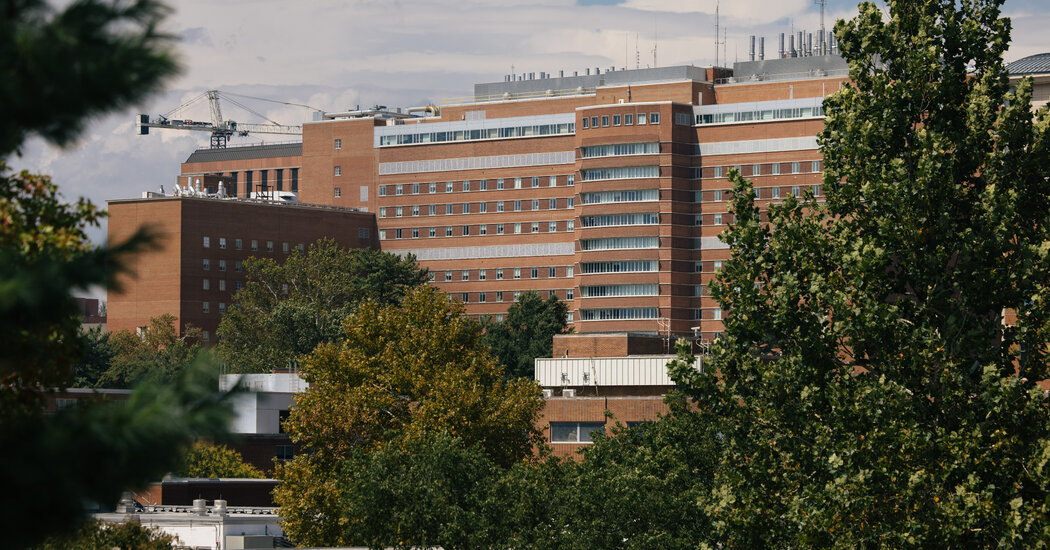
The National Institutes of Health (NIH), the beating heart of America’s medical research, is facing unprecedented challenges under the current administration. Imagine a powerhouse of innovation, where brilliant minds chase cures for diseases like cancer and Alzheimer’s, suddenly grinding to a halt. This isn’t just bureaucracy—it’s a story of delayed dreams and frustrated scientists. Spending on fresh research has plummeted by about $1 billion below normal levels, meaning thousands of projects are on hold. Researchers, who pour their souls into their work, are left twiddling their thumbs, wondering if their ideas for saving lives will ever get funded. At the core of this slowdown is a new tool—a computational text analyzer—that vets grant proposals for politically charged terms like “racism,” “gender,” and “vaccination refusal.” It’s meant to weed out “woke science,” as championed by figures like Elon Musk through the Department of Government Efficiency. But in practice, it’s creating bottlenecks, with the NIH awarding fewer than half the usual grants by late March. Take Dr. Joshua Gordon, a psychiatry professor at Columbia University and former director of the National Institute of Mental Health—he paints a stark picture: labs slashing budgets, people losing jobs, and critical health advances stalling. “It means research projects get stalled,” he says, his voice heavy with worry. This year’s delays worry him more than last year’s cancellations, echoing the fears of countless researchers who see their careers hanging in the balance.
The origins of this turmoil trace back to a political storm. Remember the government shutdown last fall? It threw the NIH into chaos, delaying grant reviews for months and forcing the agency to play catch-up. Worker losses from layoffs and retirements compounded the issue—some institutes now operate with barely half the staff needed for compliance checks. In chilling projections, officials warn that up to $500 million in congressional funds might go unspent, prompting a temporary shift of scientists from labs to administrative desks. Yet, this isn’t a straightforward tale of negligence; it’s a clash between fiscal realism and scientific ambition. NIH Director Dr. Jay Bhattacharya, appointed by Elon Musk’s allies, insists he’s rooting out “ideologically motivated” research that prioritized diversity, equity, and inclusion (DEI) under past administrations. Conservatives argue the agency wasted resources on topics like sexual and gender minorities. In an op-ed, Dr. Bhattacharya vowed scientists wouldn’t need to spout “DEI shibboleths” for grants. A health department spokesperson deflected blame to the “Democrat-led shutdown” but promised the NIH would use all allotted funds. Still, as Congress preserved the agency’s $47 billion budget despite proposed cuts, the frustration among lawmakers is palpable. Senator Angela Alsobrooks, a Maryland Democrat, laments how the administration sidesteps designated dollars, leaving scientists scrambling.
Delving deeper, the human cost reveals itself in the lives affected. Grants touching on cancer, diabetes, HIV, heart disease, and even nutrition are flagged if they mention health “inequities” or “minority” groups, branding them as misaligned with priorities. One grant was delayed a week simply because it used “sex” interchangeably with “gender”—a trivial hang-up in the eyes of researchers, but a major roadblock. Dr. Michael Lauer, former head of NIH’s grant division, points out that scientists already dedicate 40% of their time to paperwork; now, they’re drowning in rewrites. “Instead of doing science,” he says, “they’re rewriting applications.” Internally, staff grumble about emails from officials urging quick fixes, like stripping out flagged terms, which feels like erasing important context. Employees spoke anonymously about the toll—memos describe an agency straining to meet congressionally mandated spending, yet bogged down by new reviews. As one official emailed, the rework process is agonizingly slow, disrupting the flow of innovative ideas. This isn’t just about money; it’s about hope deferred for patients who rely on these breakthroughs, from cancer survivors to families grappling with Alzheimer’s. The Supreme Court’s recent upholding of a ruling against arbitrary grant cancellations was a brief victory, but it hasn’t stemmed the tide.
The broader implications ripple through the scientific community, painting a picture of an ecosystem under strain. Under Biden, the NIH was a well-oiled machine, awarding grants at a steady clip by mid-fiscal year. Now, comparisons from The Times’ analysis show a stark drop: the National Cancer Institute has doled out just $72 million for new grants, versus nearly $250 million in typical years. Fields ostensibly unaffected by the anti-DEI push, like basic biological sciences, suffer collateral damage. Researchers describe a scramble—laboratories tightening belts, promising young investigators shelving careers, and collaborations unraveling. Imagine a virologist whose HIV research stalls because a reference to health disparities triggers a red flag. Or a nutritionist studying prenatal care in underserved communities, her vital work paused indefinitely. This humanizes the crisis: these aren’t abstract stats; they’re people with families, mortgages, and a passion for healing. The Department of Health and Human Services, led by Secretary Robert F. Kennedy Jr., has stepped in to flag grants, amplifying scrutiny. Congressional hearings have seen bipartisan rebukes, with Mr. Kennedy facing two more sessions this week. Yet, for scientists, the personal stories underscore the stakes—each delay is a missed opportunity to combat diseases that touch everyone.
Behind the headlines, the NIH’s internal dynamics reveal a leadership grappling with conflicting imperatives. Prioritizing “rigorous” science means rejecting ideas tied to race, ethnicity, or equity—but at what cost? Roger Severino, a Heritage Foundation vice president and former Trump health official, defends it as pruning “politicization,” comparing it to scraping barnacles from a ship. He insists the slowdown reflects past “bloat,” not mismanagement. But employees counter that the text analysis tool, scanning for 235 flagged terms, flags up to half of grants in some divisions, forcing exhaustive revisions. Documents show flagged proposals across diverse diseases, often because they address inequities in care. This has led to an overburdened workforce, with scientists moonlighting as administrators—a far cry from their calling. Anonymous sources describe a demoralized agency, where morale dips as innovations lag. In meetings, officials admit the struggle to process grants, deploying stopgaps that strain resources. The human element shines through in notes about temporary resource shifts, blending science’s pure pursuit with the gritty realities of audits and compliance. It’s a tale of idealism clashing with politics, where the NIH’s role as a global research leader is tested by internal reforms.
Ultimately, this saga highlights the delicate balance between governmental oversight and scientific freedom, embodied in the experiences of those involved. From Dr. Gordon’s anxieties about job losses to Lauer’s frustration over administrative burdens, the narrative is one of resilience amidst adversity. Updates from April 2026 show the agency working to recover, with pledges for more hires and typical timelines. Yet, as Congress doles out funds and the administration wields its tools, scientists plead for stability. The NIH’s story is about real people—researchers sacrificing weekends on grants, patients awaiting cures, and a nation investing in its health future. While the tool combats perceived biases, its unintended slowdowns remind us of medicine’s fragility. Will the NIH emerge stronger, or will these delays scar a generation of discovery? Only time, and perhaps some policy recalibrations, will tell. For now, in labs and halls across America, the wait continues, a testament to human ingenuity’s endurance. This humanized account underscores the urgency: delays aren’t just financial—they’re lived experiences of hope on hold. As the fiscal year unfolds, the call for efficient, unbiased funding grows, ensuring that science’s torch doesn’t dim under the weight of politics. With methodologies from The Times confirming the data’s integrity, this portrait of the NIH urges reflection on how we nurture the minds unraveling life’s mysteries.