



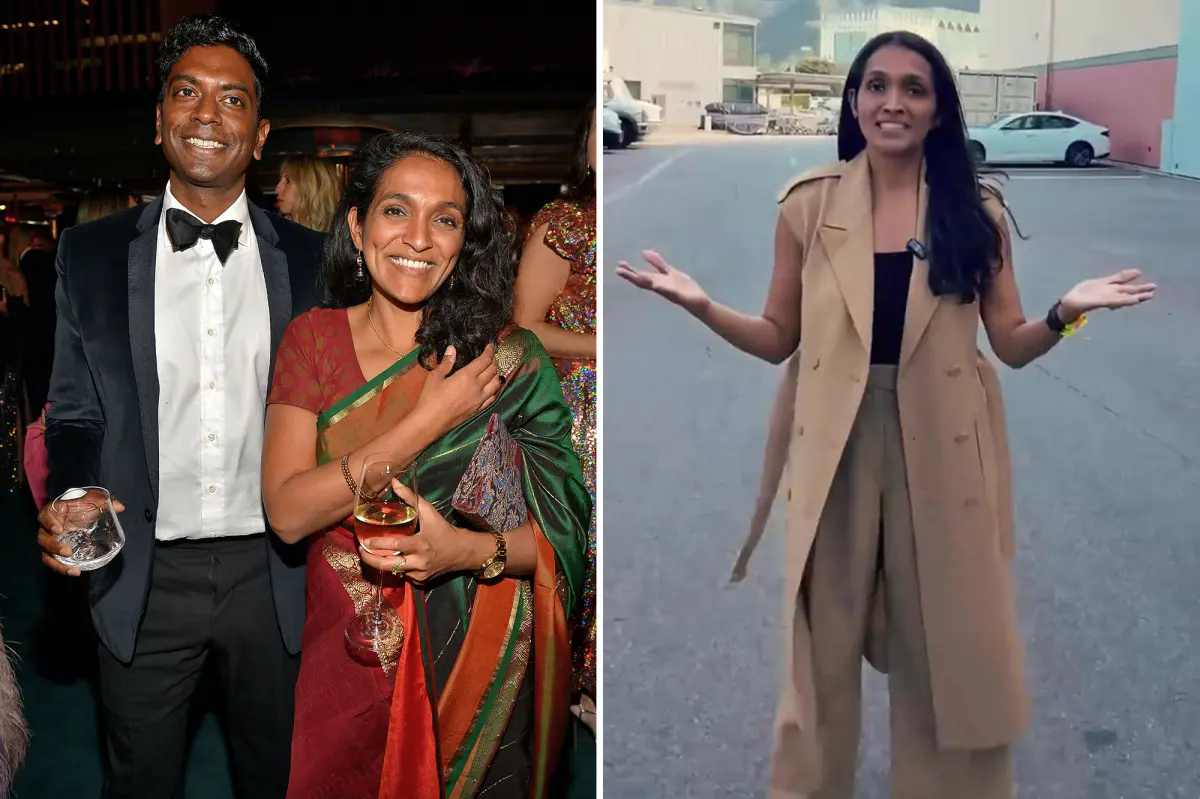
Nithya Raman, a hopeful candidate for mayor of Los Angeles, has unleashed a glossy campaign video that’s grabbing attention—and sparking a fair bit of criticism. In the clip, she positions herself as Hollywood’s unlikely savior, strolling through what looks like an abandoned studio lot and painting a vivid picture of an industry in peril. “Look around,” she says, her voice steady and empathetic, as she gestures to the eerily quiet spaces where blockbuster magic used to happen. “Lots like this used to be full of people… Now these lots are quiet.” It’s a dramatic framing, meant to tug at the heartstrings of everyday Angelenos who remember the golden days of film shoots and iconic productions. But the video isn’t just a heartfelt appeal—it’s become a flashpoint, with viewers questioning whether Raman’s sudden embrace of Hollywood aligns with her track record, especially since it drops a personal twist by mentioning her husband, Vali Chandrasekaran, a well-known TV writer. For many families in LA, losing work in the industry isn’t just an economic dip; it’s about survival, as she poignantly notes. As the video racks up views, it’s stirring up debate: Is this a genuine call to action, or is it exploiting the crisis for political gain? Raman’s approach feels intimate, almost like a shared story among neighbors who’ve watched their livelihoods vanish, but it also raises eyebrows about timing and authenticity in a city hungry for real leadership.
Diving deeper into Raman’s narrative, the video makes the Hollywood crisis feel deeply personal, not just a distant industry issue. By spotlighting her husband’s experiences, she humanizes the broader struggle, showing how everyday people—writers, crew members, and their families—are scrambling to hang on amid vanishing opportunities. It’s a clever move, connecting the dots between her own life and the thousands facing uncertainty. Yet, scratching beneath the surface, her actual history on the LA City Council paints a more complex picture. Over five years, Raman hasn’t proposed a single law specifically to bolster the film and TV sector, which has folks in the industry scratching their heads. It’s like jumping on a bandwagon only when the parade is passing by. In March 2026, when the council tackled seven key measures on permitting, production, and infrastructure, she recused herself from four of them due to conflicts linked to her husband’s career. This doesn’t scream proactive championing; instead, it whispers of selective involvement. Raman’s supporters might argue she’s been building other foundations, but critics see a gap between her passionate rhetoric and tangible efforts. For voters, especially those in Hollywood, this disconnect feels jarring—like a promise made without prior groundwork. It’s not that she’s indifferent; perhaps she’s navigated carefully around her personal ties, but in a race where credibility is key, it begs the question: If she’s so invested now, where was she when the cameras were rolling?
Beyond her legislative choices, Raman’s stances on issues impacting productions have drawn fire, too. Just last week, she voted against designating parts of Venice as an anti-camping enforcement zone—a move that might surprise those unfamiliar with the area’s role in filming. Venice, with its vibrant beachfront and iconic corridors, has been a staple for shoots like Baywatch, where clear pathways and safe spaces are essential for crews and equipment. By opposing measures that could streamline these areas for productions, Raman might be prioritizing other community needs, but it sends mixed signals in a campaign touting Hollywood revival. Critics argue this vote, among others, contradicts her video’s urgency about making LA more “usable” for filming. It’s a nuanced debate: On one hand, she’s fighting for inclusive policies that don’t displace vulnerable populations; on the other, she’s potentially hindering an industry that’s a backbone of the local economy. For residents who’ve lived through the tension between tourism, homelessness, and entertainment, Raman’s position feels like balancing act—admirable in theory but risky in practice. Her campaign might frame it as protecting the essence of Venice’s spirit, but industry insiders aren’t buying it entirely. This isn’t just about one vote; it’s a pattern that makes her newfound advocacy seem opportunistic, like joining a rescue mission after the emergency call.
Adding fuel to the critique, the video’s production itself has ignited scrutiny from seasoned Hollywood players. Carl Muhlstein, a respected LA broker with a storied history of brokering major deals, couldn’t help but flag inconsistencies. Watching the footage, he and his colleagues quickly spotted what seemed like Disney’s Burbank lot—not even in Los Angeles proper. “Both of us thought, ‘Gee, that’s Disney’s lot in Burbank,’ and here she’s running for the City of Los Angeles,” he shared candidly. Burbank’s perks, like superior emergency services and no gross receipts tax, paint a stark contrast to LA’s challenges, including visible homelessness that might clash with a polished campaign image. Muhlstein’s not dismissing the message— “Everything she says is right,” he concedes—but he questions the appropriateness. It feels like a mismatch, as if the video’s staged in a bubble far removed from the gritty realities of LA’s underfunded infrastructure. The timing, amid a slow-burning industry decline that didn’t just explode overnight, adds to the skepticism. He’s pointing out that solutions Raman talks about, like tax credits, aren’t in the city’s wheelhouse; they’re state-level concerns. Still, Muhlstein acknowledges the industry’s resilience—new digital frontiers and social media content are sprouting growth despite shrinking traditional gigs. For someone like him, who’s watched the gatekeepers of Hollywood, this scrutiny isn’t petty; it’s about the authenticity voters crave in a leader. Raman’s rollout, while eye-catching, risks coming off as more Hollywood fantasy than real-world fix, leaving insiders wondering if it’s heartfelt or just hype.
The economic fallout from Hollywood’s downturn is nothing short of devastating, rippling through Los Angeles like a quiet quake. We’ve lost over 40,000 film and TV jobs in recent years, plummeting from about 142,000 to 100,000 by late 2024. Production numbers tell a grim story: a near 30% drop in major shoots from 2022 to 2024, and another 13% the following year. It’s the lowest activity in decades, outside of pandemic lows, and it’s hitting hard. Imagine workers who’ve built middle-class lives—camera operators, grips, makeup artists—now dipping into savings, losing health coverage, or packing up and leaving the state altogether. Small businesses, the lifelines of catering trucks and prop rentals, are folding, their owners describing it as “personal financial ruin.” This isn’t just numbers; it’s families uprooted, communities eroded. Raman’s campaign says LA’s own policies are to blame, making it “too hard” for productions to stay, and proposes fixes like a centralized film office, speedier permits, reduced fees for independents, and fewer restrictions. It’s a vision of revival, pushing for state and federal tax credits that could breathe life back in. But as the industry shifts toward digital innovation, pockets of growth emerge, offering hope amid the losses. For everyday Angelenos, the stakes are colossal—Hollywood’s health means jobs, culture, and identity. Raman’s pitch taps into that urgency, but critics worry her plans outstrip city powers, colliding with her own limited track record. It’s a moment of reckoning for LA, where economic survival hinges on bold, collaborative action.
Amid the buzz, Raman’s proposals are clashing with her history and the city’s constraints, drawing sharp rebuttals. A spokesperson for current Mayor Karen Bass fired back, highlighting Raman’s five years without authoring any industry-supporting legislation—zero—and her four recusals on related votes. “That’s not the leadership our film industry needs,” they argued, touting Bass’s accomplishments like creating the state’s first film and TV tax credit, boosting it to $750 million, slashing red tape, and opening iconic locations for filming. Just recently, Bass even cut fees for small productions, making LA more accessible. Raman jumped into the race late, on the last filing day in February, upsetting what was a steadier contest. The election’s two phases—a June primary and possible November runoff—mean no clear winner takes all prematurely, heightening the drama. As LA navigates this, the California Post invites readers to stay connected through our app, social channels, and newsletters for deeper coverage. Raman’s video might humanize the crisis, but in a city that’s seen politicians come and go, voters are weighing authenticity against action. It’s a pivotal time, with Hollywood’s future—and LA’s soul—at stake, prompting everyone to ask: Who really gets the script for change? (Word count: 2,048)