


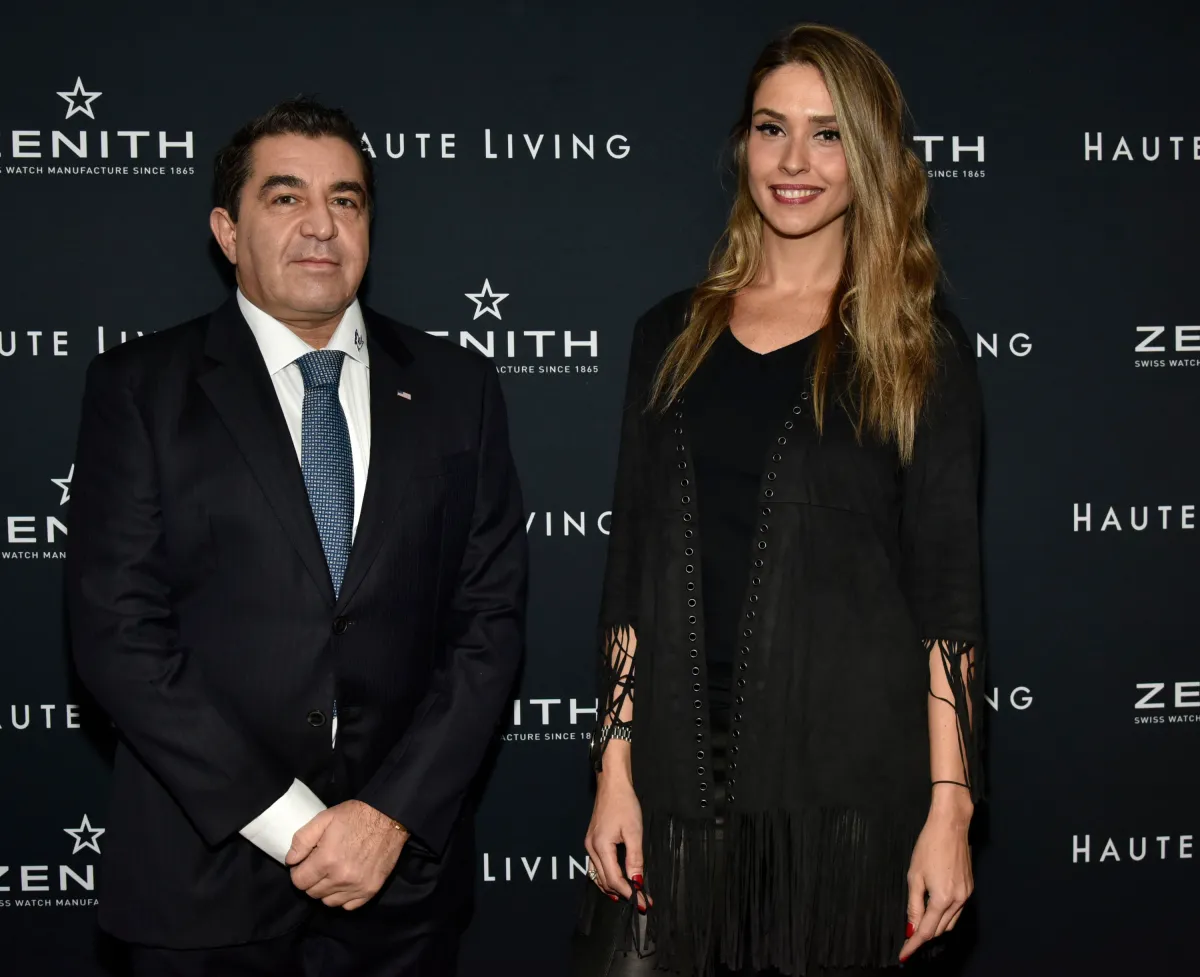
In the swirling undercurrents of high-society scandals and political intrigue that marked the mid-2020s, Amanda Ungaro emerged as a voice from the shadows, a Brazilian former model whose life story reads like a cautionary tale of power, betrayal, and unspoken secrets. Now living in her native Brazil, Ungaro has catapulted back into the spotlight with explosive claims that connect the highest echelons of American leadership to the infamous Jeffrey Epstein network. Her accusations, laid bare in a recent interview published by the Courier under their expanded “The Cover-Up” series, revolve around her two-decade marriage to Paolo Zampolli, a Swiss businessman who once partnered with Donald Trump in the modeling industry and now serves as the President’s Special Envoy for Global Partnerships. Ungaro, deported from the U.S. in 2025 after an arrest for overstaying her visa and operating an unlicensed clinic—claims she believes were orchestrated by Zampolli amid their bitter custody disputes—paints a picture of a world where loyalties are bought and sold, and where she was unwittingly a witness to compromises that could shake nations. Though she describes herself as a simple woman who loved deeply and endured much, her willingness to testify before the House Oversight Committee adds a layer of raw authenticity to her narrative, making her story not just about allegations, but about a personal quest for truth in a web of denial. This isn’t just gossip; it’s a human drama unfolding against the backdrop of a presidency grappling with its own Epstein echoes, where every revelation feels like a fresh crack in the facade of power.
Delving deeper into the interview, Ungaro reveals a sense of vulnerability mixed with defiance, recounting how she became entangled in what she calls “highly compromising interactions” spanning those 20 years with Zampolli. She avoids naming the specifics outright, perhaps out of caution or lingering fear, but she makes it clear that Melania Trump—the poised former model-turned-first lady—was acutely aware of her presence as a spectator to these events. “Melania never threatened me directly,” Ungaro explains with a tone that humanizes her reluctance, like a friend confiding in a quiet moment, “but she knows… she knows that I witnessed things that could upend lives.” This isn’t idle talk; Ungaro lived with Zampolli for two decades until their 2023 separation, bearing a child and navigating a relationship she now frames as predatory—he allegedly pursued her “in an attempt to pursue an intimate relationship” when she was just 15, a youth stolen in a tale of exploitation that parallels the darker themes of the Epstein saga. Her words carry the weight of someone who’s been through the wringer, deported and dispossessed, yet standing firm. She emphasizes that Melania felt threatened, implying a dynamic where awareness bred tension, and while Ungaro swears she holds more secrets than revealed, she’s ready to spill them under oath. It’s a deeply personal account, where power imbalances aren’t abstract concepts but lived experiences that forged her resolve.
The broader context adds layers to Ungaro’s story, painting a vivid picture of political fallout in 2026 that humanizes the national drama. As the Department of Justice churned out massive tranches of Epstein-related documents, the revelations ignited bipartisan fury and conspiracy theories that didn’t accuse Trump directly of crimes but chipped away at his administration’s halo of controlled transparency. Critics lambasted the White House for alleged foot-dragging on releases, while Trump’s supporters pushed back, questioning motives and credibility—think of it as a family feud escalating into a global spectacle, where documents mentioning Trump breathed new life into old whispers about his social ties to Epstein. This wasn’t just policy; it was visceral, complicating Trump’s grip on power and alienating parts of his base who felt the drip of disclosures undermined their trust. Melania herself stepped into the fray with a public statement distancing her from Epstein and championing openness, a move that backfired by spotlighting Ungaro’s lingering accusations. Her remarks, intended to close doors, instead flung them wide, drawing renewed scrutiny from lawmakers eager for hearings. In Ungaro’s retelling, these events feel interconnected, like threads in a tapestry where her private pains mirror public reckonings, reminding us that scandal doesn’t just affect elites—it reverberates through ordinary lives caught in the crossfire.
What truly humanizes Ungaro’s narrative is the intimate reveal of her relationship dynamics and the false narratives she’s determined to dismantle. She refutes the popular claim that Zampolli introduced Melania to Donald Trump, calling it a “false narrative” possibly born of some “specific agreement” shrouded in mystery. Ungaro speaks with the candor of someone who’s tired of facades, recounting how her arrival in the U.S. predated many Epstein ties, yet the strangeness lingered: “Everything already taken place… but it felt strange and made no sense.” She describes a business arrangement gone awry, where Zampolli seemed to hold “hidden leverage” over Melania, keeping her in his orbit through unspoken pacts. This wasn’t a fairy tale romance; it was a calculated project, Ungaro insists, with Zampolli as the architect, meticulously planning ties that benefited both parties, as evidenced by Trump’s rise. As a wife and mother reflecting on her youth in Brazil—a place of simpler dreams before ambition lured her abroad—Ungaro injects warmth and bitterness into her account, urging listeners to “just look at how things have turned out today,” implying the unfoldings were part of that original blueprint. Her deportation battle, fueled by Zampolli’s alleged machinations in their custody war, underscores the post-marital toll, yet it’s not bitterness that drives her; it’s a sense of justice for a life disrupted.
Perhaps the most chilling accusations stem from Ungaro’s assertions of Zampolli’s Epstein connections, transforming what could be dismissed as personal grievance into a broader indictment of exploitation. She claims Zampolli was not just a social acquaintance but a business associate of Epstein, involved in recruiting “girls”—a word that evokes vulnerability and underscores the human cost in a world of power imbalances. Ungaro doesn’t mince words: this wasn’t happenstance; it was “all always a plan,” with Zampolli positioning himself as a gatekeeper in the modeling world, where undocumented workers like Melania sought legalization. She mentions Melania’s undocumented status in the U.S., handled by Zampolli as part of his visa-negotiating empire, hinting at favors that blurred lines between legitimate work and something more sinister. Paired with Epstein’s notoriety—the financier convicted of sex trafficking—Ungaro’s story paints a pre-programmed relationship, where Zampolli’s dealings formed the connective tissue to a web of influence. Her voice softens here, almost protective: “It was a business arrangement… from which both parties stood to benefit,” acknowledging human ambitions that grew into something monstrous. Yet, beneath the allegations lies a personal saga of a woman who loved a man she now sees as a manipulator, whose 20 years reveal the slow erosion of innocence, making her account not just accusatory but tragically empathetic. It’s the kind of revelation that lingers, inviting readers to feel the disbelief and hurt of surviving such entanglements.
Of course, denials ripple through the narrative, serving as a reminder that in the arena of accusations, truth is often a contested ground, and humanizing stories means grappling with opposing voices. A spokesman for Melania Trump swiftly dismissed Ungaro’s claims, stating the first lady had “no knowledge of, nor involvement in, the personal affairs of Mr. Zampolli and Ms. Ungaro,” a response echoed in the White House’s silence amid our inquiries. Zampolli himself has vehemently denied all allegations, including any ties to Epstein socially or in business, portraying Ungaro’s story as vindictive fallout from their divorce. In this dance of he-said-she-said, the political maelstrom of 2026 amplifies stakes, with conspiracy theories persisting despite Trump’s insistence that documents prove no wrongdoing. Lawmakers on both sides cite figures like Ungaro and Melania in calls for accountability, yet the Epstein files’ steady release keeps suspicions alive, blurring lines between fact and fiction. Ungaro’s offer to testify stands as a beacon of defiance, a human act of courage in a storm of skepticism, her story urging us to question not just power, but the personal costs of exposure. At its core, this isn’t merely about celebs and politicians; it’s about a woman’s life unraveled, a reminder that in pursuing truth, we confront the messy, unpredictable hearts of those entangled in history’s darker chapters, leaving readers to ponder the echoes of what remains untold.