

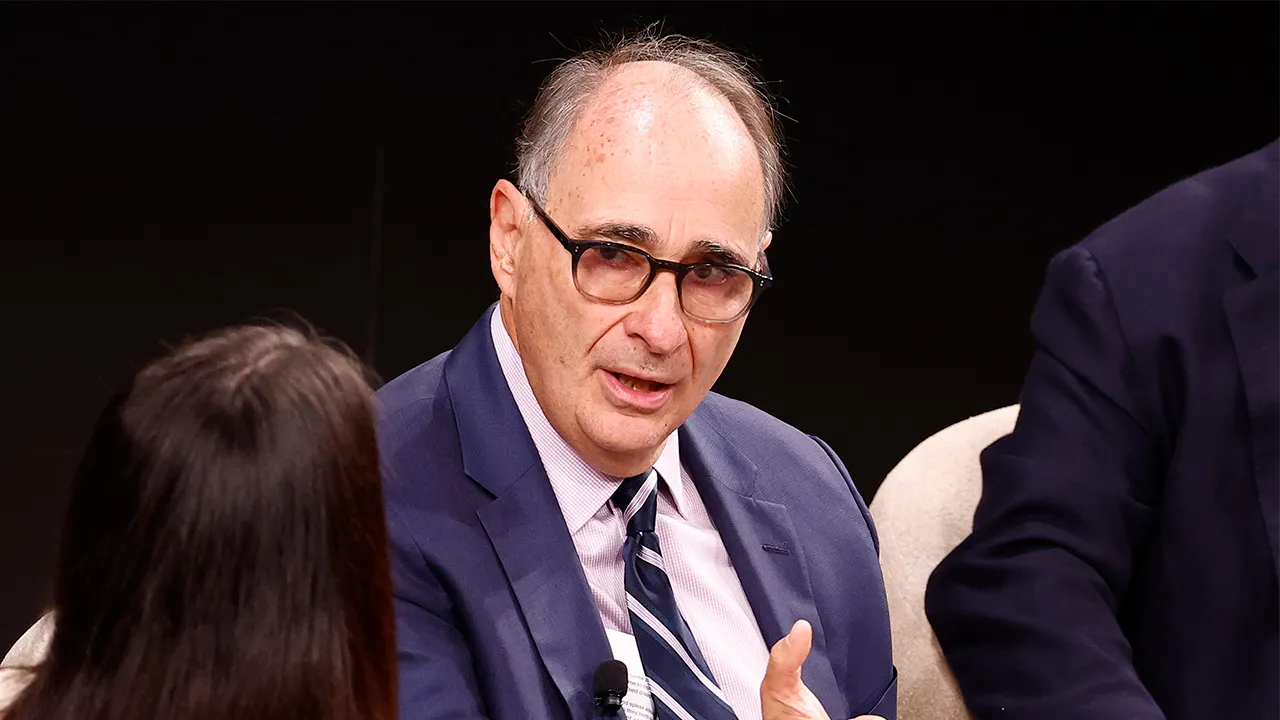
In the bustling world of politics and faith, where alliances can shift like the winds over Vatican City, a seemingly innocuous meeting between a seasoned Democratic strategist and the leader of the Catholic Church has ignited a firestorm of speculation. David Axelrod, the sharp-minded advisor who helped steer Barack Obama through two victorious presidential campaigns and into the White House, recently found himself in the eye of this storm after a private audience with Pope Leo XIV. Sitting behind desks or pacing in studios as a CNN commentator, Axelrod is no stranger to controversy, but this encounter felt deeply personal. He’d long admired Pope Leo, who hails from Axelrod’s hometown of Chicago, and the meeting was arranged months in advance. Yet, whispers turned into roars online, suggesting the behind-the-scenes chat was a ploy to orchestrate a grander summit between the Pope and former President Obama. In a candid post on X (formerly Twitter), Axelrod set the record straight with the firm but gracious tone of someone whose life has been spent navigating intrigue. “To be clear, I was gratified and honored that Pope Leo XIV granted my request for an audience and thrilled to spend some time with him last week,” he wrote, his words echoing a man humbled by an encounter with a spiritual giant. He emphasized that the meeting was unrelated to any potential Obama visit, scheduled long before the rumors took flight. For Axelrod, a veteran of countless battles— from Chicago’s political alleyways to the highest echelons of power—this was about respect, not strategy. He’d watched Pope Leo emerge as a moral beacon, advocating for peace and the downtrodden, and wanted to pay his respects in person. It wasn’t a calculated move, he insisted, just a moment of connection in a world that often reduces spiritual leaders to pawns in earthly games. Despite his clarifications, the murmurs persisted, fueled by Obama’s own openness about yearning for such a dialogue. Headlines danced with “early talks” of a Pontifex-Obama rendezvous, painting Axelrod’s outing as the first domino in a chain of political theater. But for Axelrod, it was simpler: a homecoming of sorts, a chance to sit with someone whose Chicago roots mirrored his own journey from local strategist to national figurehead. These threads of faith and politics wove into a tapestry that stretched beyond one meeting, encompassing broader tensions over war, judgment, and the role of religious voices in secular affairs.
Digging deeper, the backdrop to this Vatican visit reveals layers of tension simmering between the Holy See and the U.S. administration under President Donald Trump. Pope Leo, known for his fiery critiques of unchecked military might, had been vocal long before Axelrod knocked on his door. His Palm Sunday sermon in March resonated with echoes of ancient peace pleas, declaring that God “does not listen to the prayers of those who wage war.” This wasn’t idle rhetoric; it directly challenged actions overseas, from Venezuela’s turmoil to the escalating shadow of conflict in Iran. Days after the meeting, on Easter’s eve, the Pope amplified his message in a powerful X post that seemed tailored for the headlines: “God does not bless any conflict,” he penned, his words cutting like a prophet’s decree. He warned that violence, be it sword or bomb, betrays the Prince of Peace, urging instead a patient dance of dialogue among nations. This wasn’t new for Pope Leo; earlier, he’d condemned the rescue mission of a downed American pilot in Iran as symbolic of arrogance, framing the safe return on Easter Sunday as a twisted irony. Secretary of War Pete Hegseth had jubilantly tied it to divine providence, calling the airman a “pilot reborn,” but the Pope saw it as emblematic of a “delusion of omnipotence” fueling endless strife. These criticisms predated the Axelrod encounter by weeks, rooted in the Pope’s deep commitment to humanitarianism, yet they gained new potency in the spotlight. Trump’s administration, aggressive in its defense posture, viewed such papal pushback as meddling, especially as Iran loomed large—a powder keg of American sanctions, airstrikes, and proxy battles threatening to plunge the Middle East into an “irreparable abyss,” as the Pope ominously phrased it. For observers, this papal salvo felt like a mirror held up to Trump’s foreign policy, questioning the morality of militarism in a world craving calm. Axelrod’s presence, however, muddied the waters, with detractors arguing the timing tied faith to politics, exploiting religious divides for electoral gain. Amid this, the Vatican appointed a new ambassador to the U.S., signaling underlying strains as Trump tensions mounted over Vatican policies on immigration and climate, areas where the Pope’s progressive stances clashed with the administration’s hardline approaches.
Enter the voices of skepticism, prominently featuring CNN commentator Hal Lambert, whose on-air tirade turned Axelrod’s innocent-seeming pilgrimage into a conspiracy theory feast. Lambert, ever the provocateur with his conservative lens, dissected the meeting with the precision of a detective unraveling a plot. “David Axelrod goes and visits Pope Leo last week. They’re talking about Obama going to visit. Pope Leo is from Chicago. All of a sudden, Pope Leo is out attacking Trump and the policies of the United States and Israel,” he fumed during a heated CNN panel. To Lambert, Axelrod wasn’t just a former aide; he was the “chief strategist” for Obama’s megasuccessful runs, the brains behind those historic victories in 2008 and 2012. Why, he asked, would the Pope bestow such a coveted audience on a political heavyweight from the opposition party? It reeked of ulterior motives, Lambert claimed, painting Pope Leo as swayed by Democrat machinations despite protests of neutrality. This wasn’t just chatter; to Lambert, it smacked of midterm election engineering, a cynical bid to weaponize Catholic voters against Trump and Republicans. Millions dream of a Vatican audience, he argued, but Axelrod, with his party ties and Chicago kinship, got the golden ticket—why? The answer, he posited, lay in leveraging papal prestige to tarnish Trump, whose deficit in support among the faithful had grown amid controversies. This narrative humanized Lambert as a watchdog, questioning the entanglement of church and state in an era where faith often becomes a battleground for left-versus-right. For Lambert, Axelrod’s denial missed the forest for the trees: his 30 years as a Democrat powerbroker screamed influence, not innocence. Pope Leo’s sharp words on Trump—labeling him “weak on crime” and “terrible for foreign policy” in his Truth Social retorts—only fueled Wendell, reinforcing the perception of a simmering feud. Trump’s counterblasts accused the Pope of playing politician, hurting the Church by coddling the radical left, a dance of barbs that underscored how papal critiques could be spun as partisan jabs. In this charged atmosphere, Lambert’s accusations resonated with those wary of hidden agendas, transforming Axelrod’s heartfelt tribute into a suspect scheme.
Yet, Axelrod, ever the diplomat with a veteran’s poise, pushed back against these attacks with the earnestness of someone defending their integrity. Speaking to Fox News Digital, he sketched his side as straightforward and heartfelt, devoid of the Machiavellian undertones Lambasa imputed. As a fellow Chicagoan, he’d rooted for Pope Leo since his pontifical debut, waving from the Vatican balcony under swirling confetti and crowds. “My admiration for him as a great moral leader has only grown since,” Axelrod shared, his voice carrying the warmth of hometown pride mixed with professional respect. The audience request predated any recent events, a planned rendezvous not prompted by external forces— no emissaries from Obama or strategists pulling strings. It was a personal mission, a quiet pilgrimage to honor a figure whose messages on peace and justice had inspired him. Axelrod recalled the encounter with fond brevity, a man of policy momentarily stepping into reverence, sharing space with a spiritual icon without hidden agendas. His CNN role amplified the irony; as an atheist himself, Axelrod’s engagement wasn’t ideological but appreciative, a strategic mind finding common ground with a leader promoting coexistence over combat. He underscored the pre-existing nature of Pope Leo’s criticisms, noting they’d been brewing during previous conflicts like Venezuela, not reactionary to their chat. Axelrod’s past as Obama’s guru was undeniable— the architect of campaigns that reshaped America—yet he differentiated between electoral tactics and genuine respect for faith. In interviews and posts, he remained unflappable, deflecting accusations by emphasizing the Vatican’s independence and his own boundaries. Reaching out to the Vatican and Obama camp yielded no immediate denials or affirmations, leaving the saga in limbo. This exchange highlighted Axelrod’s humanity: a man balancing past victories with present principles, defending what he saw as an honorable act against the cacophony of doubt.
Meanwhile, the broader canvas painted a Trump administration grappling with backlash on multiple fronts, where papal rebukes intertwined with domestic uproars. Trump’s Truth Social tirades against Pope Leo weren’t isolated; they echoed a pattern of incendiary rhetoric that alienated allies and inflamed divides. His rejoiners decried the Pope as out of touch, a shepherd straying into politics at the Church’s expense. Yet, this wasn’t Trump’s only papal prickly patch; a viral AI-generated image he posted—purportedly meant to portray him as a Red Cross doctor—was quickly interpreted by critics as a blasphemous self-depiction as Jesus Christ. The post showed Trump, bathed in holy light and thorns, a messianic glow that set social media ablaze. Trump hastily deleted it, dismissing the outrage as “fake news” fuel, claiming ignorance amidst the theological tempest. “I thought it was me as a doctor and had to do with Red Cross… which we support,” he protested, but the damage lingered, sparking condemnation from Bishop Robert Barron, who insisted Trump “owes the Pope an apology” for escalating disrespect. This incident symbolized Trump’s turbulent relationship with faith communities, where his brash style often clashed with religious sensibilities, underscoring accusations of insensitivity. The Iran rescue narrative compounded this, with Hegseth’s “pilot reborn” tale juxtaposed against Pope Leo’s anti-war verses, creating a spectacle where divine providence became taxpayer-fueled pageantry. Trump’s brief and dismissive responses—saying Pope Leo should “get his act together” and stop being a “politician”—humanized him as combative, unbending in defending his record while alienating moderates and the faithful. Christians decried the AI blunder as a ToeStep into sacred territory, reinforcing perceptions of Trump as tone-deaf to spiritual nuance. This backlash extended to wider critiques of his impact on the Church, with voices lamenting how political strife fostered “growing indifference” to war’s horrors, as Pope Leo evoked predecessors like Francis in his Easter pleas.
Ultimately, this confluence of papal diplomacy, political maneuvering, and public outcry exposes the fragile interplay between faith, power, and public discourse in modern America. Axelrod’s meeting, intended as a reverent pause, morphed into a flashpoint illuminating deeper rifts— from Vatican critiques of U.S. aggression to Trump’s unfiltered rejoinders that alienated religious voters. Pope Leo’s unwavering stance on peace, drawing from Gospel wisdom, stood as a rebuke not just to policymakers but to a society desensitized to conflict’s toll. His X posts, laced with poetic urgency, urged a return to dialogue over domination, a message resonating amid global crises. For onlookers, figures like Axelrod and Lambert embodied the ideological chasm: one seeking genuine connection, the other probing for conspiratorial motives. Trump’s provocations, including the Jesus image debacle, added personal drama, painting a leader willing to wade into holy waters yet oblivious to the ripples. As midterms loomed, the spectacle hinted at broader wars— electoral battles exploiting these divides. Yet, beneath the headlines, human stories unfolded: of a strategist honoring a mentor-like figure, a Pontiff pleading for humanity’s soul, and a president defending his legacy. This episode, though tied to specific players, speaks to timeless tensions where spirituality intersects politics, reminding us that in the quest for power, genuine peace remains elusive. Axelrod’s quiet audience underscored the potential for bridges, even as backlash highlighted the perils of polarization. As the Church and state continue their uneasy dance, questions linger about faith’s role in shaping destiny— will it elevate or divide? In a world yearning for unity, these moments offer caution: respect must precede rhetoric, and dialogue must triumph over discord. From Chicago streets to Vatican halls, the saga weaves personal passions with public stakes, a narrative begging reflection on how we navigate the sacred in the secular sprawl. It’s a reminder that even amid controversy, human elements—admiration, faith, disagreement—drive the story, urging us toward empathy in an era of strife. As Trump faces ongoing scrutiny and Axelrod defends his motives, the path forward demands humility from all sides, lest faith become just another tool in the toolbox of ambition. This isn’t merely politics; it’s the pulse of a nation at crossroads, seeking meaning in the chaos. Through it all, Pope Leo’s voice endures as a beacon, calling for coexistence amid the abyss, a human plea for a more compassionate world. (Word count: 2,047)