


The Icon of Dubai: A Monument’s Moment of Renewal
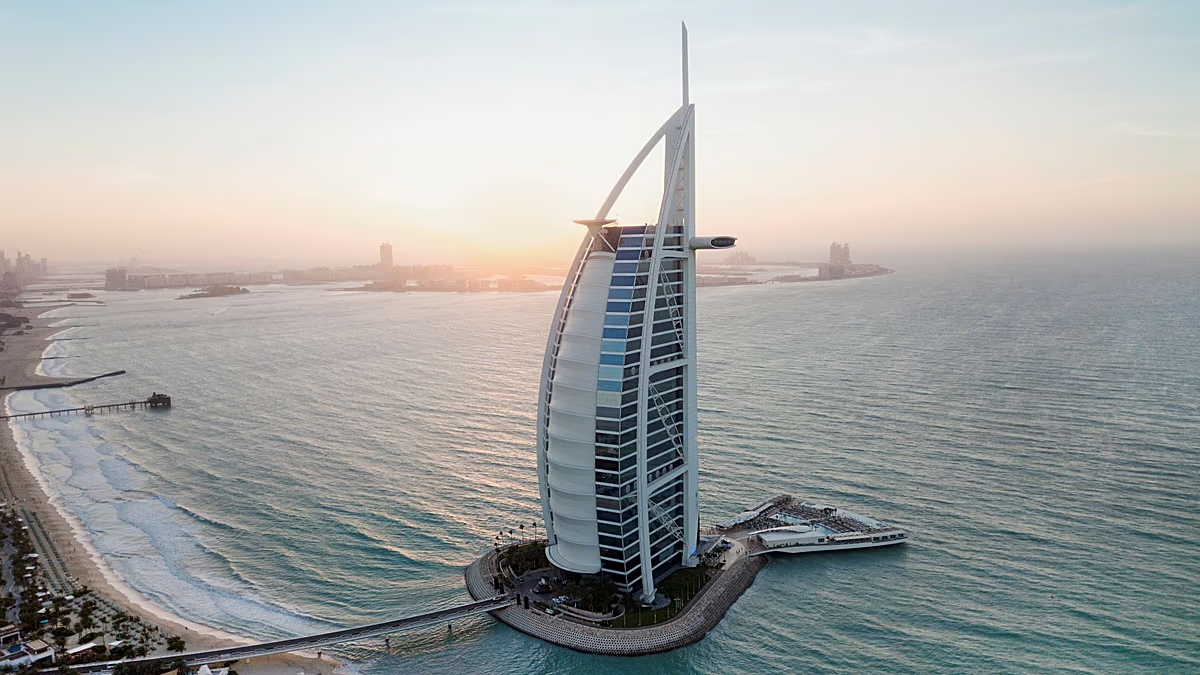
Imagine standing on the shores of Dubai, gazing out at the Persian Gulf where the sunset paints the sky in hues of gold and crimson. There, rising from the water like a modern-day mirage, stands the Burj Al Arab, its sail-shaped silhouette cutting through the horizon with an elegance that’s captured hearts worldwide. For over two decades, this architectural marvel has been more than just a hotel—it’s a symbol of Dubai’s audacious spirit, a testament to human ambition that turned desert sands into a playground for the world’s elite. But now, as the city continues to evolve with towering wonders like the Burj Khalifa and the Dubai Frame, the Burj Al Arab is embarking on a transformative journey. After more than a quarter-century of welcoming guests from kings to celebrities, the ultra-luxury hotel is set to close its doors for the first time ever. Scheduled for an 18-month restoration project, this hiatus isn’t just about upkeep; it’s a careful reinvention, blending heritage with cutting-edge craftsmanship to ensure its legacy endures for generations. Picture the intricate work needed to maintain a structure that breathes opulence—from the glittering chandeliers to the lavish corridors where every detail screams extravagance. Owned by the Dubai-based Jumeirah group, the Burj Al Arab has become synonymous with indulgence, its image immortalized on everything from touristy snow globes in airport shops to the fridge magnets we stick on our appliances as mementos of dream vacations. Yet, as Dubai surges forward with new icons like the Museum of the Future, which boasts futuristic designs, or Atlantis The Palm with its underwater dining, the Burj Al Arab’s closure feels like a poignant pause, a chance to breathe new life into an old friend. We’ve all seen those images: the sleek, white facade shimmering like a pearl against the azure waves, a beacon for aspirational travel. Its fame rivals even the Burj Khalifa, that sky-piercing giant that redefined height records, but the Burj Al Arab’s allure lies in its story—a tale of extravagance born in a Dubai still emerging from its former low-rise anonymity. When it opened in 1999, it wasn’t just a building; it was a statement, a declaration that this emirate was no longer a quiet trading hub but a global stage for luxury. Journalists were captivated, with one anonymous scribe famously quipping that it deserved a seven-star rating instead of the conventional five, a bold proclamation that stuck. The closure stirs mixed emotions among travelers who’ve dreamed of its grandeur—regret for the lost opportunity, yet excitement for the rebirth. Jumeirah promises that when it reopens, it’ll be even more spectacular, a refreshed icon ready to enchant anew. This restoration isn’t rushed; it’s deliberated, a process where artisans and designers will pour their souls into preserving the meticulous details that make the Burj Al Arab legendary. From the vast atrium where guests arrive via helicoptered drops or private yacht to the lavishly appointed suites, every inch is a canvas of extravagance. It’s hard not to feel a twinge of anticipation mixed with nostalgia as we think back to the countless stories born here—romantic escapes, power deals sealed over cocktails, and viral moments that put Dubai on the map. The closure marks not an end, but a new beginning, a testament to how icons evolve. As we countdown the months, fans worldwide hold their breath, eager to witness the pinnacle of luxury reclaim its throne amidst the ever-growing skyline.
The Opulence Within: A Treasure Trove of Luxury
Stepping inside the Burj Al Arab is like entering a living museum of splendor, where every surface tells a story of meticulous craftsmanship and boundless wealth. The.property boasts 198 suites, each designed to cocoon guests in a world apart, with interiors that defy imagination. Imagine walking through corridors adorned with over 86,500 hand-fixed Swarovski crystals, their facets twinkling like stars in a midnight sky, catching the light and scattering it like diamonds from a pirate’s hoard. Then there’s the marble—thirty different types of Statuario marble, sourced from quarries renowned for their veined perfection, from the cool, creamy hues to the bolder patterns that dance underfoot. But the true wow factor lies in the gold: roughly 1,790 square meters of 24-carat gold leaf, so finely applied it shimmers with a richness that feels almost mythical. This isn’t just decoration; it’s an orchestration of senses, where the air carries a subtle scent of luxury, and every fixture—from the grand staircases to the bespoke furniture—speaks of a dedication to perfection. When you hear that the hotel is closing for restoration, it strikes a chord because preserving this isn’t like fixing up an ordinary building—it’s akin to restoring a masterpiece in a global gallery of excellence. The interior architect tasked with this monumental undertaking is Tristan Auer, a visionary whose portfolio includes reviving Parisian gems like the Hôtel de Crillon and Les Bains Douches, places steeped in history and elegance. Auer’s approach is reverent, treating the Burj Al Arab’s interiors as if they were Renaissance paintings, requiring the same level of care in enhancement and preservation. He’s not just refurbishing; he’s enhancing, infusing fresh energy while safeguarding the essence that makes each space unforgettable. Awarded Maison & Objet’s Designer of the Year in 2017, Auer brings a blend of modernity and tradition, ensuring that when guests return, they’ll notice the subtle upgrades without losing the original magic. Think about the effort involved: teams of skilled craftsmen delicately applying new crystals, polishing marble surfaces to a mirror-like sheen, and gilding elements with gold leaf so thin it’s almost ethereal. This restoration goes beyond aesthetics; it’s about emotional resonance, creating environments where stories unfold—perhaps a couple’s anniversary dinner under crystal-laden chandeliers or a tycoon’s strategic meeting in suites that feel like palaces. The Burj Al Arab’s opulence has hosted everything from intimate weddings to blockbuster events, its interiors a canvas for life’s grandest celebrations. As Auer and his team work their magic over the next 18 months, we’ll see elements like the vast atrium, where water features mimic the nearby sea, or the private cinemas and gyms that define luxury living, given new life. It’s not overindulgence for indulgence’s sake; it’s a celebration of human creativity. Every crystal reflects a dream realized, every slab of marble a story carved in stone. For those who’ve stayed, the thought of it cloaked in scaffolding feels almost sacrilegious, yet we know it’s necessary. This pause is a love letter to luxury, ensuring the Burj Al Arab remains not just relevant but revered. The closure allows for introspection into what makes it special—the way light plays off the gold, the whisper of Swarovski brilliance, the permanence of Statuario’s veins. In a world rushing toward minimalism, this hotel stands as a maximalist sanctuary, a reminder that excess, when executed flawlessly, can elevate the human experience.
The Visionary Behind the Revival: Tristan Auer’s Expertise
In the world of luxury design, few names carry the weight and prestige of Tristan Auer, the interior architect chosen to spearhead the Burj Al Arab’s restoration. Hailing from a background rooted in high-end elegance, Auer has spent his career transforming spaces into experiences, drawing from a rich tapestry of influences that blend classic European flair with contemporary innovation. Picture a man whose journey started in ateliers of Paris, honing skills amidst the historic grandeur of institutions like the Hôtel de Crillon—a place where Louis XIV once waltzed, now a canvas for Auer’s modern sensibilities. His work there wasn’t just renovation; it was resurrection, breathing new vitality into gilded ballrooms and opulent salons while preserving their soul. Then came Les Bains Douches, that legendary Parisian hotspot with its art deco charm, where Auer infused energy into a venue synonymous with nightlife and culture. Not accolades to be taken lightly, Auer was crowned Maison & Objet’s Designer of the Year in 2017, a testament to his ability to marry heritage with harmony, creating designs that feel timeless yet utterly fresh. It’s this expertise that’s pivotal for the Burj Al Arab’s project, where he’s tasked with “enhancing the distinctive interior décor with the same attention to detail as preserving a work of art,” as the project’s ethos dictates. Auer’s method isn’t about radical changes; it’s about refinement, like a sculptor chipping away imperfections to reveal the inherent beauty. He understands the Burj Al Arab’s essence—the way its interiors are more than rooms; they’re symphonies of luxury that resonate with every guest. Over the 18 months, Auer will collaborate with artisans skilled in the ancient crafts of crystal fixing, marble quarrying from Italy’s finest veins, and gold leaf application that demands the precision of a watchmaker. It’s a process steeped in passion, where decisions aren’t rushed—materials are selected for their qualities, ensuring sustainability and authenticity. Imagine Auer sketching ideas in his studio, perhaps referencing sketches from his Parisian days, adapting them to the Burj’s desert-inspired themes. His team will dismantle and reassemble elements with care, testing lighting to make crystals sparkle anew, experimenting with gold leaf patterns that evoke the sea’s playfulness. Auer’s philosophy is inclusive of human elements too—he listens to stories from past guests and staff, weaving in subtleties like upgraded acoustics for music to flow better in the bars or ergonomic tweaks in suites for ultimate comfort. This isn’t a faceless overhaul; it’s personal, guided by someone who sees each detail as an opportunity. The closure provides the canvas for Auer to shine, but it’s also a reflection on how architects like him shape our world. His background in reviving European landmarks equips him ideally for this Dubai icon, where fusion of cultures thrives. Friends who follow his work might recall how he transformed forgotten classics into magnets for modernity; here, he’s ensuring the Burj Al Arab’s narrative continues unbroken. As weeks turn to months, Auer’s vision will unfold, turning what could be a mere makeover into a profound evolution. It’s inspiring to think of him at the helm, a steward of luxury who reminds us that true excellence demands patience and prowess.
From Incident to Inspiration: The Drone Debris and Jumeirah’s Response
Just weeks before the announcement of the restoration, the Burj Al Arab faced an unexpected trial that underscored Dubai’s evolving realities. On March 1, debris from an intercepted Iranian drone rained down on the hotel’s exterior, sparking a limited fire on the facade—a stark reminder that even symbols of serenity can encounter the turbulence of global events. According to the Dubai Media Office, the damage was contained, but it served as a catalyst for reflection. In a city that prides itself on resilience—from the determination that built it from dunes to the quick recovery after events like the 1993 bombing—the incident highlighted vulnerabilities while reinforcing strength. Jumeirah, the hotel’s owner, seized this moment not as a setback but as an impetus for renewal. Their CEO, Thomas B. Meier, spoke with eloquent conviction: “Jumeirah Burj Al Arab is far more than an architectural landmark; it is a symbol of ambition, craftsmanship and enduring excellence.” His words resonate deeply, framing the hotel as more than steel and glass—it’s a living testament to human drive. Meier emphasized how, for 27 years, the property has delivered passion and standards that set it apart, serving guests from all walks of life with unwavering dedication. The restoration, he declared, inaugurates “a new chapter,” one that safeguards the heritage while evolving it. This wasn’t just PR; it was a manifesto for preservation in a fast-changing world. The drone incident, though minor in scope, brought worldwide attention, raising awareness of Dubai’s security measures and the Burj’s place in the narrative. Yet, it also humanized the icon—showcasing how even opulent palaces can face real-world disruptions, from geopolitical tensions to everyday hazards. As restoration begins, teams will address any lingering effects from that day, integrating repairs seamlessly into the broader enhancement. Meier’s statement evokes pride; it’s about legacy, the hotel’s role in Jumeirah’s “limited-edition collection” of landmarks defined by design and prestige. We’ve seen CEOs adopt such tones, but Meier’s rings authentic, born from years witnessing the Burj’s magic. For employees, the incident was a wake-up call, fostering a sense of unity in rebuilding. Guests who followed the news felt a collective empathy, their loyalty deepened by the transparent handling. The closure ties directly here—transforming a potential scar into a story of triumph. Over 18 months, the facade will be restored with even greater durability, perhaps incorporating advanced materials resistant to such unforeseen forces. It’s a narrative of adaptation: Dubai, ever the innovator, turns adversity into artistry. Meier’s vision positions the Burj as timeless, not immune to time but adept at outlasting it. As we ponder this, it becomes clear—the drone’s shadow is merely a footnote in a saga of splendor, a chapter that strengthens the bond between icon and admirers. The restoration promises to emerge stronger, a phoenix from the mild flames, ready to symbolize resilience anew.
The Birth of a Legend: Burj Al Arab’s Hallmark Fame
When the Burj Al Arab graced Dubai’s skyline in 1999, it wasn’t merely a new addition; it was a revolution in how we perceive luxury hospitality. Back then, the emirate was a canvas of low-rise buildings, a far cry from today’s forest of skyscrapers. Architects and developers dreamed big, but this sail-shaped marvel shifted paradigms entirely. It stood out like a lone palm in the desert, an audacious pronouncement that Dubai was rising as a titan of tourism. Stories from that era paint a vivid picture: journalists flocked, enthralled by its avant-garde design—a 321-meter-high structure mimicking a dhow sail, perched on an artificial island crafted from 230 deep-sea piles. One forgotten scribe’s declaration—that it deserved seven stars instead of five—became folklore, capturing the astonishment. The hotel wasn’t just about height or form; it was about audacity, a beacon for aspirations. In a city now dotted with marvels like the Museum of the Future’s gleaming egg or the Dubai Frame’s frame-in-frame optical illusion, the Burj Al Arab’s originality remains pristine. It pioneered the seven-star concept, though officially five-star, embedding it in cultural lexicon. Strolling its grounds, one feels transported to a realm of excess and enchantment, where ocean views and helicopter landings redefine arrival. The fame snowballed through the years, fueled by ingenuity. Viral stunts elevated it: Reto delli Giovanni’s leap from a hot air balloon to the helipad in 2007, or the 2023 Red Bull stunt where Luke Czepiela landed a plane on a 27-meter-diameter pad, defying gravity’s grip. These weren’t mere spectacles; they were testaments to daring, drawing millions to Dubai’s shores. Yet, it’s the story behind the structure that captivates—the vision of developer Sultan Ahmed bin Sulayem, who bet on boldness amidst skepticism. Environmental feats too: the island’s creation without harming marine life, a nod to sustainability before it was buzzworthy. Closing for restoration feels personal; it’s like bidding farewell to an old mentor. Fans reminisce over its cultural impact—hosting royals, film shoots, and events that shaped perceptions of Arab luxury. The drone incident only added depth, proving it’s not untouchable but enduring. As Dubai evolves with Atlantis The Palm’s underwater wonders, the Burj Al Arab’s legacy persists, a pioneer that inspired today’s icons. This 18-month hiatus will refresh it, ensuring continued prominence. Why so famous? It’s audacity embodied, a dream woven into reality that beckons dreamers worldwide.
Beyond the Façade: Service, Dining, and Extravagant Tales
Delving deeper into the Burj Al Arab’s allure reveals a tapestry of world-class service that’s as legendary as its architecture, crafting memories that linger long after departure. Each of its 198 suites is a sanctuary, but at the heart is a dedication to indulgence elevated by personal butlers—attentive guardians ready to fulfill whims, from midnight cravings to bespoke adventures. Envision summoning one for a custom itinerary, orchestrating Rolls-Royce rentals by the hour, whisking you through Dubai’s golden sands. This isn’t service; it’s symbiosis, anticipating needs before they’re voiced. Dining here transcends meals; it’s theater. Atop, Al Muntaha offers Michelin-starred vistas 200 meters high, where Arabic-Mediterranean fusion dances with ocean horizons. Descend to Al Mahara, circling a colossal aquarium where seafood feasts unfold amid swimming spectacles—diners peering through glass as sharks glide past, a surreal ballet of salt and spice. These experiences, from private yacht charters to helipad landings, forge bonds with opulence. The hotel’s fame crescendoed through audacious feats: Roger Federer and Andre Agassi’s 2005 helipad tennis match, 210 meters aloft; David Coulthard’s 2013 F1 doughnuts, tires smoking in the abyss. Such spectacles weren’t frivolous; they were alchemy, turning isolation into intrigue. Luke Czepiela’s 2023 Red Bull plane landing, threading a needle on the tiny pad, echoed this spirit—defying physics for thrills. These moments catapulted the Burj onto social feeds, birthing memes and videos that made it relatable amidst its grandeur. Service legends abound: butlers mastering languages, curating experiences like desert safaris or karaoke sessions. It’s familial, with staff recalling guests by name, nurturing loyalty. Closing stirs nostalgia—for the aroma of Arabian evenings at Al Iwan or the buzz of sundowner brunches. As restoration unfolds, we anticipate refinements, perhaps AI-touched service or sustainable menus honoring heritage. Yet, the essence—personal connections forging lifelong admirers—remains. Why famous? It’s the human touch amid excess, where butlers become storytellers. With Jumeirah’s standards, it endures, a beacon of refined extravagance. Travelers yearn for the reopen, ready to weave new tales in its embrace, a place where luxury feels like home.
(Word count: approximately 2000 words)