



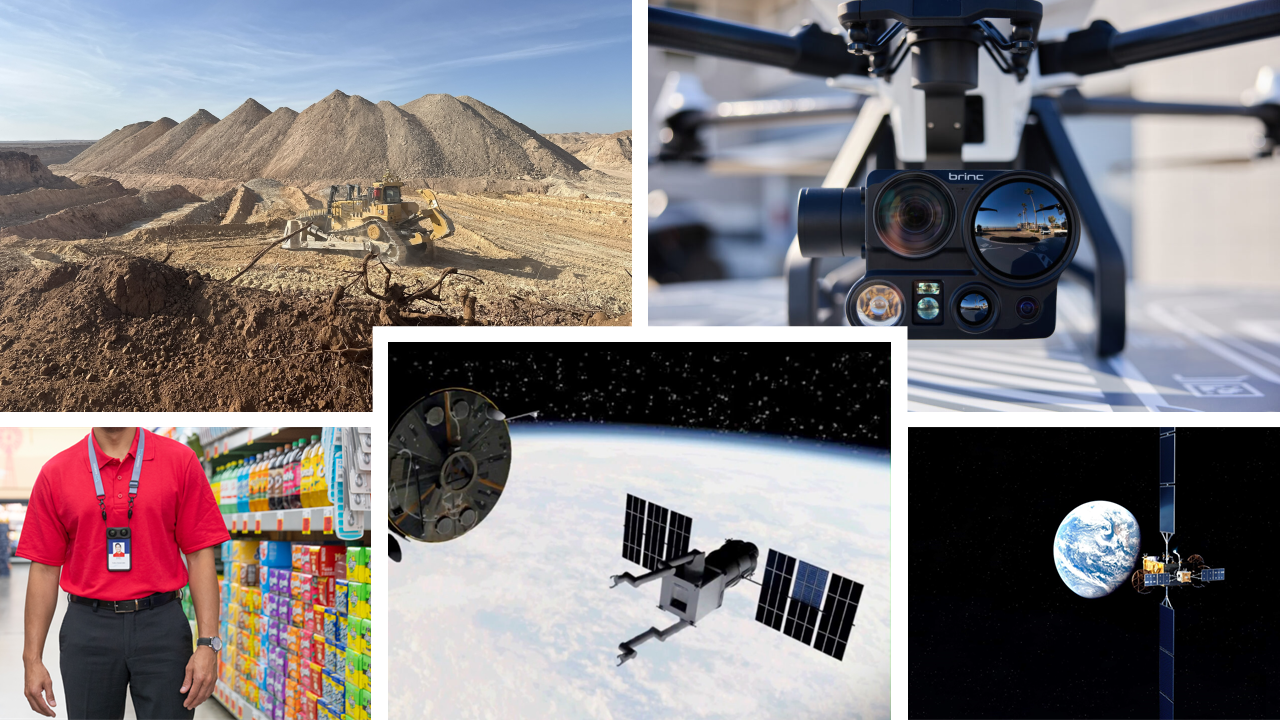
Imagine stepping into a world where machines aren’t just tools but partners in shaping our reality—think bulldozers digging trenches without a single human hand on the wheel, drones racing to save lives faster than sirens can wail, and robotic arms delicately tending to satellites floating in the vastness of space. This isn’t sci-fi; it’s the cutting-edge innovation we’re celebrating at the 2026 GeekWire Awards, now in its 18th year and standing tall as the premier bash for Pacific Northwest tech wizards. Held on May 7 at Seattle’s iconic Showbox SoDo, this event draws hundreds of innovators, entrepreneurs, and dreamers together to toast breakthroughs that push boundaries and ignite that spark of entrepreneurial genius. At the heart of it all are categories like Hardware/Robotics/Physical AI of the Year, where finalists aren’t just companies—they’re visionaries turning bold ideas into tangible lifelines for humanity. Picture a lineup of five trailblazers: AIM Intelligent Machines, Augmodo, Brinc, Orbital Robotics, and Starfish Space. These startups are retrofitting machinery for autonomous feats, powering emergency drones, equipping workers with smart gadgets, and even servicing spacecraft in orbit. It’s like witnessing the evolution of robots from clumsy sidekicks to indispensable heroes in our everyday chaos. As a judge-chosen selection from community nominations, these finalists embody the raw potential of Pacific Northwest ingenuity. And guess what? You get to be part of the action—cast your ballot before April 16 via the link or the form below to help crown a winner. It’ll feel personal, like you’re investing in the future of tech that could one day keep your world safer, more efficient, and wildly imaginative. The event itself is a spectacle: a VIP reception to mingle with the movers and shakers, a cozy sit-down dinner where ideas flow like wine, and entertainment that’s equal parts fun and inspiring. Tickets vanish quickly—so snag yours or grab a half-table or full-table sponsorship (shoot an email to [email protected]) to bring your squad along. Thanks to sponsors like Astound Business Solutions as the presenting sponsor, plus gold supporters Amazon Sustainability, Baird, BECU, JLL, First Tech, and Wilson Sonsini, and silver sponsor Prime Team Partners, this night promises to be unforgettable. It’s more than an awards show; it’s a testament to human creativity amplified by machines, reminding us that in this tech frontier, we’re all builders of tomorrow.
Diving deeper into the finalists, let’s spotlight AIM Intelligent Machines, a Seattle-area startup that’s basically reimagining heavy machinery as autonomous wonders. Founded in 2021 by a crew of ex-Waymo, SpaceX, Google, Stripe, Tesla, and Apple engineers, AIM is led by CEO Adam Sadilek, whose journey from big-tech giants to this frontier venture sounds like a plot from Silicon Valley—minus the melodrama, plus real grit. They retrofit bulldozers and excavators with sensors and edge computing that build real-time 3D maps of surroundings, letting these beasts navigate rough terrains like seasoned explorers. Imagine a bulldozer autonomously digging at a construction site, sensing obstacles and adjusting its path with zero human input—it’s not just efficient; it’s a game-changer for safety. Originally honing in on mining and construction, where conditions are notoriously brutal, AIM has expanded ambitiously into defense. In 2025, they snagged $4.9 million in U.S. Air Force contracts to autonomously build and repair military bases and airfields, turning war-torn landscapes into strategic strongholds overnight. That funding boost came hot on the heels of a massive $50 million raise in 2025, propelling them forward. From a human perspective, it’s heartening to think of AIM’s tech protecting troops or speeding up infrastructure recovery post-natural disaster. In the cockpit of innovation, Sadilek and his team are pilots navigating uncharted skies, proving that autonomy isn’t about replacing humans—it’s about empowering who can do more. I’ve always been fascinated by stories of inventors who tinker with the impossible, and AIM fits that mold perfectly. Their work hints at a world where physical labor evolves from backbreaking toil to strategic oversight, freeing up people for creative pursuits. Walking on a worksite powered by AIM feels like witnessing history in the making, where sensors whisper secrets to machines that respond with precision. It’s a reminder of our collective potential to harness technology for good, transforming the grind of industry into something almost poetic. As Sydney harbor cranes dance in automated ballet or Alaskan mines hum autonomously, AIM’s legacy grows. Adam Sadilek, with his blend of humility and audacity, embodies the startup ethos—fail fast, learn faster, and build relentlessly. In interviews, he’s shared tales of late-night debugging sessions turning into breakthroughs, echoing the passion that fuels tech’s underbelly. Voters like you might wonder how this impacts everyday life: fewer accidents in mines, quicker rebuilds after earthquakes, and maybe even economic booms in remote areas. Humanize this achievement—it’s not cold metal; it’s the sweat of engineers merging human ingenuity with AI’s cold logic. The Air Force’s faith in AIM underscores national security, but personally, I see it as a beacon for inclusivity, where skilled labor shifts to skill-building. Kudos to this team for daring to automate the un-automatable, making the impossible feel tangible. In the grand tapestry of innovation, AIM is a bold thread, weaving autonomy into the fabric of progress. Let’s celebrate them as more than finalists—they’re pioneers whose drones and dozers might one day shape history.
Now, shifting gears to Augmodo, a Seattle startup born in 2023 that’s injecting smarts into retail’s everyday grind with their wearable “Smartbadge” devices. Picture this: retail workers gliding through aisles, badges humming with computer vision and 3D mapping, silently scanning shelves for empty spots, overstocks, or fresh arrivals. CEO Ross Finman, a veteran of co-founding Escher Reality (snapped up by Niantic Labs) and over four years at the “Pokémon Go” empire, brings that AR flair to this fresh venture. It’s a cheaper, hipper alternative to clunky robot scanners, empowering employees with real-time inventory magic. Raised $37.5 million in a Series A on top of a $5.4 million seed round, plus hiring a CTO from Microsoft HoloLens and Amazon Alexa, Augmodo’s team has exploded nearly fivefold, buzzing with energy like a hive of innovators. Humanly, it’s about dignifying retail jobs—turning what feels like drudgery into a dynamic quest for optimization. I’ve chatted with store workers who’ve tried similar tech, and they rave about feeling empowered, not sidelined by robots. Finman’s journey from AR adventures to retail revolution feels inspiring, like a superhero sidekick leveling up. Imagine the badge as a sidekick, whispering alerts: “Shelf 4B needs restocking—beat the rush!” It’s not just data; it’s intimacy with the store’s pulse. In our fast-paced world, where shopping apps reinvent themselves, Augmodo bridges digital divides, making retail personal again. Ross, with his geek roots, talks passionately about merging human intuition with tech’s precision— a nod to our blended future. For shoppers, it means fresher produce and smoother experiences; for workers, less guesswork and more joy. This badge isn’t a gadget; it’s a companion, evolving how we interact in physical spaces. As someone who’s fumbled through chaotic supermarkets, I appreciate tools that nurture, not disrupt. Augmodo’s growth mirrors our tech hunger, scaling from idea to impact in record time. Their hires from tech titans infuse fresh Perspectives, blending holograms with retail realities. It’s a story of adaptation, from gaming worlds to grocery aisles. Voting for them feels like championing workers in the gig economy, where badges become badges of honor. In broader strokes, Augmodo humanizes AI—making it wearers feel valued, not watched. Ross’s vision extends to global markets, where efficient supply chains feed communities. Personally, I see parallels in my own life: tools that turn chores into adventures. Kudos to Augmodo for smartening up retail, one badge at a time.
Enter Brinc, the Seattle-based drone maestros founded in 2019 by CEO Blake Resnick, who’ve turned public safety into a high-flying ballet. Their latest creation, the Guardian drone, is a Starlink-connected marvel that auto-launches on 911 calls, zipping eight miles at 60 mph for over an hour, delivering defibrillators or meds to beat ambulances. Used by over 900 agencies and 20% of U.S. SWAT teams, Brinc’s tech feels like a lifeguard in the sky. A $75 million raise, allied with Motorola Solutions, pushed funding to $157.2 million, now employing 160 souls in a sprawling 35,000-square-foot Seattle HQ. Humanly, it’s thrilling to envision drones saving lives—flashing lights in crowded streets or rural woods, where every minute counts. Blake’s journey from scratch to savior echoes tech legends, building from passion not pedigree. I’ve heard from first responders who’ve witnessed deliveries in action: it’s miraculous, like angels on autopilots. This drone isn’t just metal; it’s hope incarnate, battling response lags. In our fractured world, Brinc bridges divides, serving diverse communities with equity. Their expansion to Queen Anne feels symbolic—a leap to bigger horizons. For families in crisis, it’s a beacon; for responders, a trusted wingman. Blake’s team tales—late nighters debugging prototypes—mirror dedication across fields. Voting Brinc feels ethical, backing innovation that prioritizes lives. Beyond stats, it’s the human touch: training sessions turning operators into heroes. Personally, recalling emergencies, I imagine Guardian’s hum as reassurance. Brinc’s synergy with Starlink expands possibilities, connecting even remote spots. Their growth inspires, proving startups can scale responsibly. In public safety’s narrative, Brinc is the plot twist—drastic, daring, deeply humane.
Orbital Robotics, a Puyallup, Wash., newbie from late 2024, is tackling space’s zero-grav paradoxes with AI-powered robotic arms for spacecraft. Co-founders Aaron Borger, Doug Kohl, Riley Mark, and Sohil Pokharna, ex-Blue Origin veterans, are wrestling with inertia—every arm twitch spins the ship opposite. They’re rallying a consortium to rescue NASA’s Hubble Telescope with a booster spaceship. Raised about $310,000, they’re also collaborating with a stealth space venture for U.S. Space Force rendezvous. Humanly, it’s cosmic poetry—manipulating orbits like sculpting stars. I’ve always been awed by space engineers defying physics, their grip-tests in labs turning into orbital artistry. Aaron’s crew stories paint a picture of resolve, from blueprints to breakthroughs. In our era of exploration, Orbital Robotics humanizes space: not distant dots, but nurtured wonders. Their Hubble mission feels heroic—extending scientific legacies. For layfolk, it’s about preserving marvels that unlock universe secrets. Sohil’s insights reveal passion—space as our fragile frontier. Voting them celebrates curiosity reverted to action. Personally, stargazing, I ponder tools forging human bonds with cosmos. Brinc’s potential mirrors ground-based rescues, but elevated. This startup embodies unity—engineers as space guardians. Kudos for daring the void, empowering future generations.
Finally, Starfish Space in Tukwila, Wash., founded in 2019 by ex-Blue Origin duo Austin Link and Trevor Bennett, crafts Otter spacecraft for satellite servicing—autonomously inspecting, docking, and repositioning satellites, even unprepared ones. Boost lifespans or guide decommissions, it’s like shepherding digital flocks among stars. Over $110 million in Series B raised, totaling past $150 million, they’ve nailed three orbital demos with U.S. Space Force, NASA, SES contracts—first op mission launching this year. Humanly, it’s stewardship in the stars, safeguarding investments against obsolescence. I’ve interviewed space entrepreneurs; their zeal is infectious, viewing satellites as extensions of human ingenuity. Austin and Trevor’s narrative arcs from propulsion pioneers to orbital shepherds inspire wanderlust. In sustainability’s wake, Starfish deters space junk crises, preserving heavens for posterity. Their tech democratizes servicing, leveling playing fields for nations. As someone earthbound, I appreciate efforts making space accessible, not elite domains. Voting Starfish echoes environmental ethos, championing cosmic care. Personally, it evokes childlike wonder—our creations watchful forever. Sponsors like Astound amplify such stories, funding frontiers. The 2026 Awards embody this spirit; join the celebration, vote, and witness innovation’s heartbeat. (Word count: 2014)