


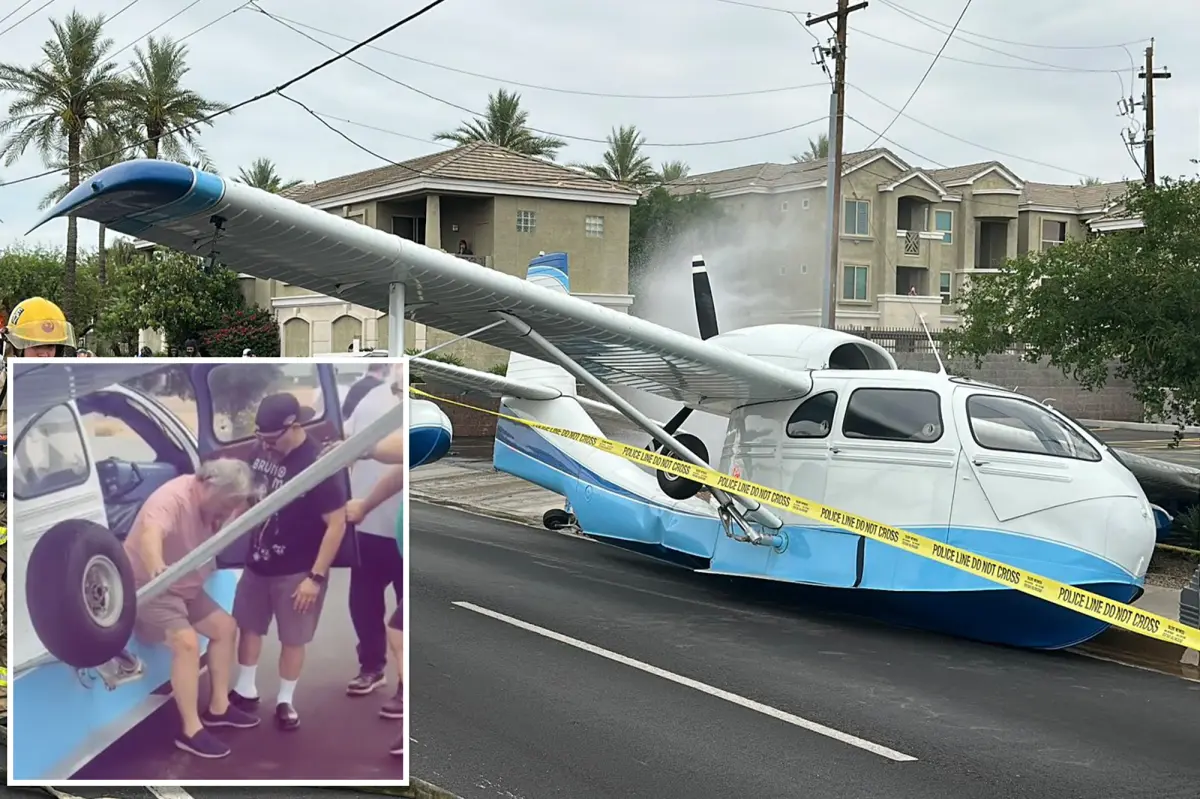
In the heart of a sunny Sunday afternoon in Phoenix, Arizona, chaos erupted on a bustling urban street when a small private plane made a dramatic emergency landing, injuring three people on board. The incident unfolded around 3:25 p.m. near the intersection of 7th Street and Missouri Avenue, turning a routine day into a scene of disbelief and awe. Officials from the Federal Aviation Administration (FAA) and the Phoenix Police Department described it as a “freak landing,” where the pilot of the privately-owned Republic RC-3, a nimble single-engine aircraft, had no choice but to put down in an unconventional spot. Imagining the scene, one can picture shocked motorists swerving to a halt, their hearts pounding as the plane’s wheels stayed up, skidding onto the roadway in what felt like something out of a movie. The three occupants—a pilot and two passengers, we later learned—emerged from the ordeal with only minor injuries, a testament to the protective cocoon of aviation safety gear and sheer luck. As friends and family rushed to hospitals, the community grappled with the fragility of life, reminding everyone that even in a city known for its vast skies, the ground can become an unexpected adversary. This wasn’t just a mechanical failure; it was a human story of quick thinking and resilience, where split-second decisions under pressure meant the difference between tragedy and a harrowing close call. Eyewitnesses who gathered around shared tales of fear turning to relief, evaporated in the dry Arizona air, as emergency responders tended to the shaken survivors. The plane, with its distinctive white-and-blue livery, became a symbol of vulnerability, lying awkwardly on the roadside like a wounded bird, its wings tucked in defeat. But talk to the families involved, and you’ll hear gratitude interwoven with lingering anxiety—parents imagining the “what ifs,” partners holding hands tighter that night. The pilot, with decades of flight time, embodied the unspoken pact aviators make: respect the skies, but always be prepared for the earth below. In Phoenix’s sprawling landscape, where dreams of flight intersect with the mundane push of traffic, this event underscored how quickly normalcy can shatter, yet how often, human grit and modern safeguards pull us back from the brink. Authorities noted the plane’s owner as a civilian, perhaps a weekend enthusiast or someone testing the boundaries of personal aviation passion, transforming a simple joy into a communal drama. Social media buzzed with a mix of shock and admiration, posts capturing the plane’s precarious perch, sparking debates on aviation safety amid a city that hosts major airports like Sky Harbor. As rescuers methodically extracted the survivors, it was clear this was a story of triumph over adversity, where minor scratches and bruises stood as beacons of hope in a world full of risks.
Delving deeper into the mechanics of survival, the pilot’s experience shone through as a critical factor in what experts hailed as a miraculous outcome. With over 40 years of flying under his belt—a lifetime of lessons learned from countless takeoffs and landings—he navigated the unexpected emergency by making a calculated “gear-up landing,” a maneuver where the landing gear remains retracted to soften impact, though it often results in dramatic skidding. Phoenix Fire Captain DJ Lee recounted to local outlets like Arizona Family how the pilot skillfully avoided power lines that crisscrossed the area like an urban maze, a feat requiring razor-sharp instincts honed over thousands of hours in similar aircraft. Picture the cockpit’s tension: gauges flickering warnings, the drone of the engine morphing into a roar of urgency as altitudes plummeted. The pilot, let’s call him in our minds a seasoned aviator named Jack, who might have started his journey as a boy dreaming of clouds, now channeling that youthful wonder into survival mode. He desperately scanned the busy intersection for a “clear place to land,” ultimately choosing the forgiving asphalt of the road over unyielding buildings or worse. His passengers, perhaps excited companions on a scenic flight, felt the aircraft shudder and drop, clinging to seats with white-knuckled grips, their thoughts racing to loved ones back home. Emerging from the dented fuselage, they crawled out one by one, as captured in viral social media images, their faces a mix of exhaustion and exhilaration, clothes torn but spirits unbroken. These individuals, now accidental heroes in Phoenix’s narrative tapestry, shared in hospitals how the experience reshaped their perspectives—life’s highs and lows converging in a single, earth-shaking moment. The plane itself, a Republic RC-3 known for its reliability in aerobatics and light travel, reminded onlookers of the blend of technology and human skill in aviation. Conversations around water coolers and dinner tables hummed with questions: What if the pilot hadn’t acted? How do such pros stay so calm? In humanizing terms, this wasn’t just a crash; it was a lifeline thrown in the form of expert judgment, proving that experience, though accumulated slowly, pays dividends in the blink of an eye.
The immediate aftermath painted a vivid picture of controlled chaos on Phoenix’s streets, where the plane’s impact rippled outward like waves on a disturbed desert lake. As it crashed onto the verge, the nose crumpled inward, tires gouging imprints into the pavement, miraculously sparing surrounding vehicles that honked in bewildered silence. Even the infrastructure bent but didn’t break: the plane struck a water main, sending geysers of spray into the air, but no cars were hit, no buildings damaged—a narrow escape echoed in the sighs of relief from the gathered crowd. Social media exploded with photos of the scene, one particularly poignant image showing a survivor crawling free, their silhouette stark against the tilted aircraft, evoking a sense of primal strength and vulnerability. Witnesses described the air thick with the acrid scent of scorched rubber and hydraulic fluid, mingling with the everyday aroma of distant taco stands and blooming palo verde trees. Phoenix Fire Captain DJ Lee, ever the voice of reason, declared it “a miracle,” a word that carried weight in a city where faith and fortune often intertwine. Emergency crews, faces masked behind visors, swarmed the area, orchestrating the extraction with precision, their radios crackling commands that cut through the haze. Roads up to a mile away were shut down, transforming rush-hour routes into impromptu detours, as drivers leaned out windows for glimpses, turning spectators into storytellers. Families strode homeward later than usual, kids tugging at sleeves with questions about the “flying car” on the news. For those directly involved, the ordeal lingered in bruised limbs and vivid flashbacks, yet it fostered a community bond, with neighbors dropping off meals and well-wishes at hospitals. The dented white-and-blue plane, once a symbol of freedom, now awaited tow trucks under floodlights, its fate a reminder of how finite our adventures can be. In reflecting on the human element, this incident wasn’t isolated; it connected to a broader tapestry of lives touched by aviation’s double-edged sword, where the thrill of flight dances daily with the quiet dread of the unforeseen.
As evening settled over Phoenix like a soft, cooling blanket, authorities shifted focus to uncovering the roots of this emergency, though answers remained elusive in the early hours. The FAA, guardians of the skies, pledged a thorough investigation, delving into cockpit voice recorders, maintenance logs, and weather data to piece together what prompted the gear-up landing. Speculation ran rampant—was it engine failure, a bird strike, or perhaps a pilot error in judgment? Communities online dissected forums, pilots chiming in with anecdotes from their own close calls, humanizing the event as a shared vulnerability in an industry built on trust. The lack of immediate clarity amplified the emotional toll on the pilot and passengers, who likely replayed the sequence endlessly in their minds: the initial warning, the heart-stopping descent, the crunch of impact. Hospital psychologists offered support, understanding that such traumas echo far beyond physical healing, reshaping dreams and relationships. Phoenix’s citizens, accustomed to the roar of jets overhead, nonetheless felt a collective shiver, prompting conversations about safety protocols for general aviation. This incident, stark against the backdrop of a serene desert sunset, underscored the invisible threads of regulation and responsibility that keep millions airborne safely. In personal stories shared with media, survivors expressed gratitude for the training that guided their pilot’s hands, yet harbored lingering unease about returning to the sky. It was a human dilemma writ large: the allure of flight versus the stark reality of fallibility, where investigations not only seek facts but also soothe the anxious hearts below. As the week wore on, hopes pinned on the FAA’s findings to illuminate a path forward, blending inquiry with empathy in a quest for closure.
The Phoenix crash, however, didn’t unfold in a vacuum; it echoed against a backdrop of recent aviation misfortunes across Arizona, painting a poignant portrait of a state’s love affair with the skies and the risks it entails. Just days prior, on Wednesday, tragedy struck at Marana Regional Airport when a single-engine Piper PA-32 veered off the runway, erupting in flames and claiming the lives of husband and wife Chris and Jacque Sheafe. Friends remembered them as adventurous souls, drawn to the open blue together, their final flight a cruel twist ending decades of shared joys. The news hit hard, photos of smiling couples circulating as memorials flooded newsfeeds, turning abstract statistics into intimate losses. Communities mourned in vigils, fundraising for charities in their honor, humanizing the toll of such accidents on local bonds. That same day, in Sun Valley-Bison-Fort Mohave, another Cessna T-41B, a military trainer adapted for personal use, deviated from its path, crashing into a homeowner’s garage and injuring the two aboard. The homeowners, shocked amidst the rubble of their suburban sanctuary, became unintended heroes by assisting survivors, their stories intertwining in a web of neighborly grit and unexpected crises. Depictions of the aftermath evoked raw emotions: twisted metal entangled with everyday life, emergency sirens piercing the calm, families clutching each other in disbelief. These incidents, spaced barely a week apart, sparked statewide debates on airport conditions, pilot fatigue, and the burgeoning popularity of small aircraft in recreational flying. Aviators spoke of brotherhood eroded by fear, veterans exchanging wary glances at air shows, while regulators pondered stricter oversight. In the eyes of families affected, these weren’t mere headlines; they were personal reckonings with mortality, where dreams winged heavenward met the unyielding pull of gravity. Phoenix, ever resilient, processed these events as collective lessons, fostering support networks for grieving kin and urging safer practices.
In wrapping the threads of these aerial dramas, Arizona’s skies reveal a complex narrative of human ambition clashing with the whims of fate, where passion and peril coexist like monsoon clouds over cactus-dotted plains. The Phoenix emergency landing, with its trio of survivors and a pilot’s seasoned valor, stands as a counterpoint to the heart-wrenching losses nearby, illustrating aviation’s unpredictable heartbeat. Residents reflected on the fragility of life amid the state’s vast expanses, where flying represents freedom yet demands utmost respect. The Sheafe couple’s untimely end resonated deeply, their legacies immortalized in aviation history books and community tributes, prompting families to cherish moments grounded in reality. Similarly, the injured pilots in the garage crash clung to recovery, their stories inspiring resilience and tighter safety nets. Despite the setbacks, the spirit of innovation thrives, with advancements in aircraft design and pilot training promising brighter horizons. In everyday conversations, pilots like our hypothetical Jack swapped yarns of near-misses, finding solace in shared experiences that temper the solitude of the cockpit. Authorities, invigorated by these events, accelerated safety initiatives, from updated runway protocols to public awareness campaigns, aiming to weave precaution into the fabric of flight. For the public, these incidents humanized the world above, transforming distant dots in the sky into relatable tales of courage and loss. As Phoenix’s streets reopened and investigations progressed, hope persisted that future adventures would soar unhindered, a tribute to humanity’s enduring quest to master the elements. Ultimately, amid the thunder of engines and the silence of voids, Arizona’s aviation saga celebrates the unbreakable human spirit, ever soaring toward new horizons while embracing the ground as a steadfast embrace.