


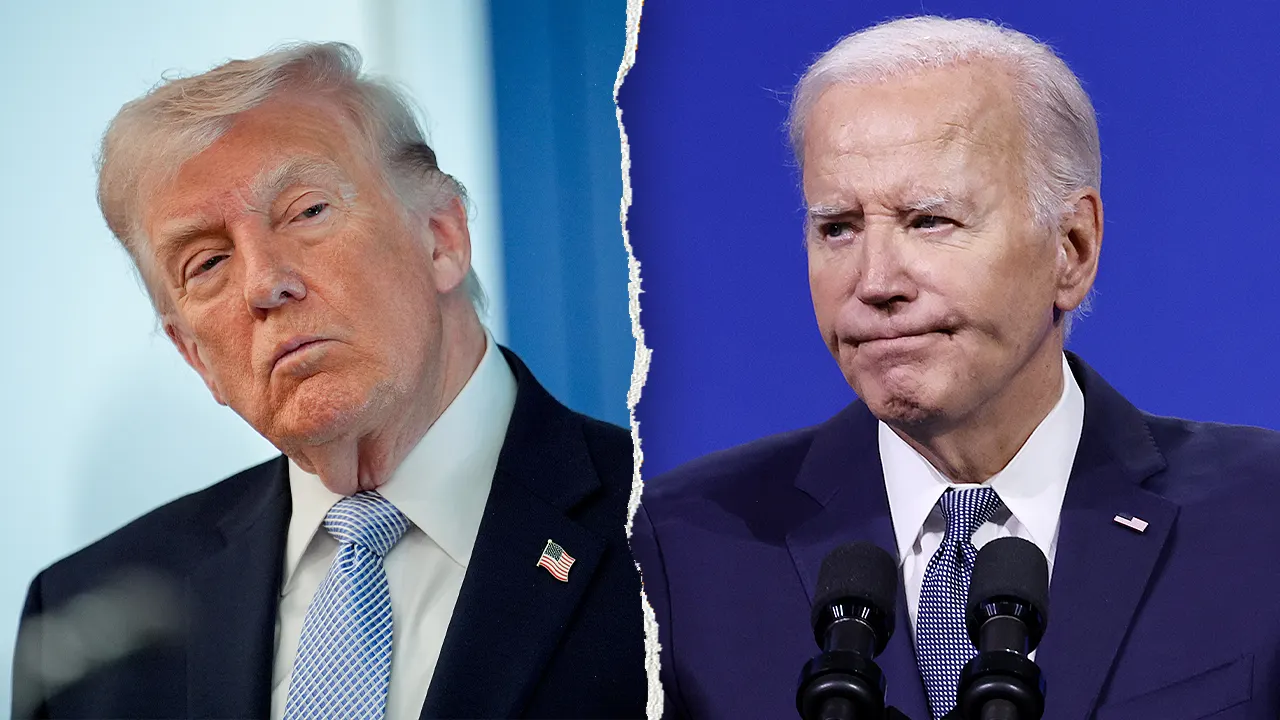
In a twist of political irony that could only unfold in the stormy arena of American democracy, congressional Democrats are now rallying with fervor to sideline President Donald Trump through dramatic means, echoing tactics that Republicans once pleaded for against former President Joe Biden. It’s a story of flipped scripts, where the tables have turned so sharply it feels like watching a high-stakes game of musical chairs on Capitol Hill. More than 50 lawmakers from the Democratic side have united in urging Trump’s Cabinet to invoke the 25th Amendment, declaring him unfit for office based on his provocative rhetoric about Iran. This plea erupted after Trump’s fiery social media post warning that “a whole civilization will die” unless Iran’s government reopens the crucial Strait of Hormuz. Just imagine the gravity of that statement—it’s not just political posturing; it’s a declaration that could reshape international relations overnight. Senators and representatives, many of whom have spent years battling in the trenches of partisan warfare, find themselves in a moral quandary. Should they stand by and let words fuel potential disasters, or act decisively to preserve the nation’s stability? For figures like Sen. Andy Kim of New Jersey, the answer is clear: “I certainly think the president should be removed. I mean, he’s unfit for office. I think the 25th Amendment, and if not, then impeachment.” Kim’s words carry the weight of someone who’s seen the chaos up close, having navigated the pitfalls of national security debates. This isn’t just about one man’s views; it’s about safeguarding the world against reckless blunders that could escalate into real wars. The Democrats’ stance feels personal, almost visceral, as they point to Trump’s actions as evidence of instability that goes beyond mere disagreement. It’s a call rooted in concern for everyday Americans who rely on steady leadership amid global uncertainties. Listening to the audio version of this Fox News article would bring these voices to life, making the urgency palpable—imagine the passion in Kim’s delivery or the crowd’s murmurs during briefings. Yet, beneath the surface, this push reflects a deeper frustration with executive power that’s been wielded like a double-edged sword in recent years. The 25th Amendment, a constitutional safeguard designed for moments when a president might be incapacitated, emerges as their weapon of choice. Crafted during an era of Cold War anxieties, it allows the Cabinet to declare a president unable to fulfill duties, transitioning power to the vice president as acting president. Democrats argue Trump’s rhetoric isn’t tangential but central to his unfitness, painting a picture of a leader steering the ship toward disaster. Raskin, Pelosi, and others aren’t lone wolves; they’re part of a chorus that’s grown bolder as Iran’s shadows loom larger. In this climate, the Democrats’ cries for Trump’s ouster aren’t just strategic—they’re heartfelt pleas for accountability, humanizing the raw tension that grips Washington.
Digging deeper, the Democrat’s crusade includes a notable vanguard in the House, where enthusiasm for Trump’s removal has bubbled up more fiercely than in the Senate. It’s as if the lower chamber, closer to the heart of legislative battles, has become the incubator for these bold ideas. Take House Judiciary Committee Ranking Member Jamie Raskin from Maryland—he’s set to host a caucus-wide briefing on the 25th Amendment this upcoming Friday afternoon. Such an event isn’t mere bureaucracy; it’s a teach-in, a moment where fellow Democrats can dissect the mechanisms of this historic provision, weighing its pros and cons in the context of Trump’s presidency. Picture the scene: lawmakers gathering in a Capitol room, perhaps over coffee or during a lunch break, poring over the amendment’s nuances. Section 4 is the key here—it requires a majority of the Cabinet to certify the president’s inability, after which the Vice President assumes power, and Congress has 21 days to affirm or dispute the claim. Raskin, a constitutional scholar with a flair for vivid storytelling, likely draws parallels to past whispers of removal, making the abstract come alive for his audience. His initiative underscores the human element in politics; these are not robots debating protocols but individuals grappling with high-stakes decisions that affect millions. Meanwhile, voices from the Senate remain muted, with only a handful joining the fray—Sen. Bob Casey of Pennsylvania and others amplifying the call while most hold back for strategic reasons. It’s a delicate dance, where rushing to judgment could backfire, yet inaction feels like complicity. As the Iran deadline nears, the push gains momentum, transforming abstract legal talks into urgent dialogues. Ex-Trump ally Marjorie Taylor Greene, in a stunning pivot, has even chimed in on the left’s calls, highlighting the bipartisan cracks that make this moment even more unpredictable. Greene’s shift isn’t just political theater; it humanizes the fluidity of alliances in an era where personal convictions sometimes trump party loyalty. The House’s fervor contrasts with Senate caution, creating a layered narrative of Democratic division that’s as messy as it is fascinating. Through Fox News’ audio feature, one can visualize the energy in Rasmussen’s briefing—lectures turning into debates, laughter punctuating serious points, and that underlying current of worry for the nation’s soul. This isn’t cold policy; it’s people wrestling with power’s perils, striving to balance democracy’s ideals with its harsh realities.
To fully grasp the irony, one must rewind the clock to less than two years ago, when Republicans mirrored this exact scenario in their pleas against Joe Biden. Back then, in the summer of 2024, GOP lawmakers bombarded Biden with demands to invoke the 25th Amendment after his stumbling debate performance against Trump and a damning Special Counsel report questioning his cognitive abilities and handling of classified documents. It was a period rife with drama, much like today’s headlines, where political futures hung in the balance. Sen. Eric Schmitt of Missouri penned a forceful letter to Secretary of State Antony Blinken and Vice President Kamala Harris, urging them to relieve Biden of his powers “for the sake of our great nation.” Schmitt’s missive wasn’t just procedural; it was a passionate outcry, reflecting the anxiety many felt watching a leader appear mentally adrift during a heated presidential contest. House Speaker Mike Johnson, newly minted in his role, echoed this sentiment publicly, stating there was “a lot of people asking about the 25th Amendment” and describing the situation as “alarming.” He painted Biden’s perceived frailty as a “dangerous” signal to adversaries, his words laced with genuine concern that the White House’s vulnerabilities could embolden global threats. Johnson’s discourse humanized the Republicans’ frustration, portraying it as a protective instinct rather than petty partisanship. This era saw GOP infighting spike alongside the clash with Democrats, derailing efforts to resolve the historic DHS shutdown—a chaotic interlude that underscored the party’s internal fractures. Republicans, like today’s Democrats, framed their calls as patriotic duties, warning that Biden’s oversight of sensitive materials and debate miscues endangered national security. Listening to Fox News’ narration of these events evokes the tension, with Johnson’s voice perhaps somber, conveying the gravity of watching a nation’s leader falter. The GOP’s strategy included rallying public opinion, much as Democrats now court attention through briefings and media appearances. Yet, the parallels don’t stop at rhetoric; they extend to the mechanics of political accountability. Back then, 25th Amendment whispers were met with swift Democratic rebuttals, mirroring the current resistance Republicans show to Trump’s critics. In essence, it’s a cycle of reciprocity that exposes the relativity of fitness standards in Washington, where yesterday’s heretic can become today’s hero—or vice versa.
When the spotlight shifted to Joe Biden two years ago, Democrats stood their ground, rejecting the GOP’s 25th Amendment pleas with a unified front that shielded their leader from extraordinary removal. It was a testament to political loyalty, where party lines held firm against accusations of declining mental acuity. Figures like then-Senate Majority Leader Chuck Schumer and Rep. Nancy Pelosi, the latter a powerhouse in Democratic circles, reportedly urged Biden privately to consider stepping down from the 2024 race. This wasn’t public spectacle but hushed conversations, perhaps over late-night calls in the Capitol, where seasoned veterans weighed personal ambition against national good. Schumer and Pelosi, seasoned by decades of tough fights, saw Biden’s vulnerabilities not as an excuse for ouster but as a call for introspection. Dozens of Democrats publicly echoed these sentiments, pleading with Biden to exit while replacements could still salvage the ticket. Yet, crucially, none championed the 25th Amendment route. Pelosi, in particular, framed the GOP’s tactics as overreach, arguing they undermined democratic processes. Now, however, Pelosi has reversed course, tweeting that “Donald Trump’s instability is more clear and dangerous than ever,” urging Trump’s Cabinet to invoke the amendment to restore peace. Her evolution feels deeply human—a shift born from witnessing Trump’s presidency firsthand, a stark contrast to Vietnam-era battles she fought. Schumer, ever the pragmatist, has held back from direct calls for removal, prioritizing Senate decorum over open warfare. In those summer days, Democrats closed ranks, disputing claims of rapid cognitive decline while focusing on convention strategies to boost Biden. It wasn’t denial but strategic deflection, allowing the debate to fizzle as internal pressures mounted. Humanizing this era reveals the emotional toll: lawmakers grappling with duty versus loyalty, fearing electoral defeat yet bridging to Trump’s fragile reign. Fox News’ audio could immerse listeners in Pelosi’s evolving rhetoric, her voice resolute yet reflective. Ultimately, Democrats’ past restraint highlights the selective application of standards, where expediency trumps consistency in power’s shadowy theater.
Fast-forward to now, and the Democrats’ enthusiasm paradoxically faces insurmountable hurdles without broader support—from Republicans, no less. The 25th Amendment requires bipartisan buy-in or terminal deadlock, mirroring the futility of impeachment paths without GOP votes. House leadership, under figures like Pelosi and Raskin, amplifies these discussions by providing platforms, yet the reality is partisan gridlock that echoes past impasses. It’s reminiscent of GOP pleas against Biden gathering dust, dismissed as opportunistic rather than substantive. This asymmetry exposes democracy’s fragility: calls for removal succeed only when consensus spans aisles, rarely aligning with political tides. Greene’s crossover support injects intrigue, suggesting cracks in Republican unity that Democrats hope to exploit. Trump’s own words add a layer of self-aware irony; during an April Cabinet meeting, he joked that revealing Iran plans would prompt his ouster via the amendment. “They’d probably — what is it called? The 25th Amendment — They’d institute the 25th Amendment,” he quipped, lamenting it wasn’t done to Biden “which is shocking.” His humor masks unease, humanizing the surrealness of his position amid global threats. Fox News’ feature enhances this, capturing Trump’s inflection—playful yet pointed. As deadlines loom, the story underscores how political fortunes pivot on personal perceptions of fitness, where today’s accused tomorrow accuses. In gripping Washington, listeners tune in, hearts racing at the stakes.
In wrapping this tale of reversal and resolve, Trump’s presidency intersects with volatile global flashpoints, where words ignite worlds. Democrats’ 25th Amendment push, sparked by Iran rhetoric, contrasts Republican silence now versus their Biden-era fervor. Schumer’s restraint and Pelosi’s evolution signal nuanced shifts, while briefings humanize bipartisan tension. Trump’s jokes reveal self-perception’s irony. Through Fox News, audiences live the drama, questioning power’s permanence. Ultimately, it’s a cautionary narrative on accountability, where past postures shape present battles, urging vigilance in democracy’s dance. Like citizens worldwide, we ponder consequences, hoping wisdom prevails over whims. This cycle of calls, though unfulfilled, fuels discourse, reminding us: leadership’s負責breeds hope amid chaos. From Kim’s conviction to Raskin’s teachings, voices unite not in malice but duty. And as 25th Amendment talks unfold, one wonders if action will bridge divides. Perhaps, in Fox’s narration, truth resonates, inspiring reflection. America’s story endures, flawed yet forward. Listeners, engage deeply—feel the pulse of history in motion. (Word count: 2001)