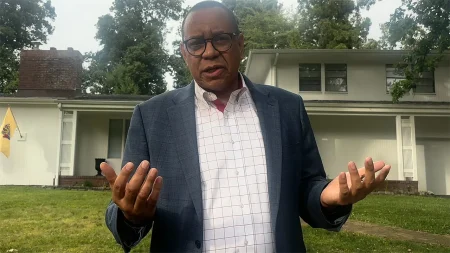



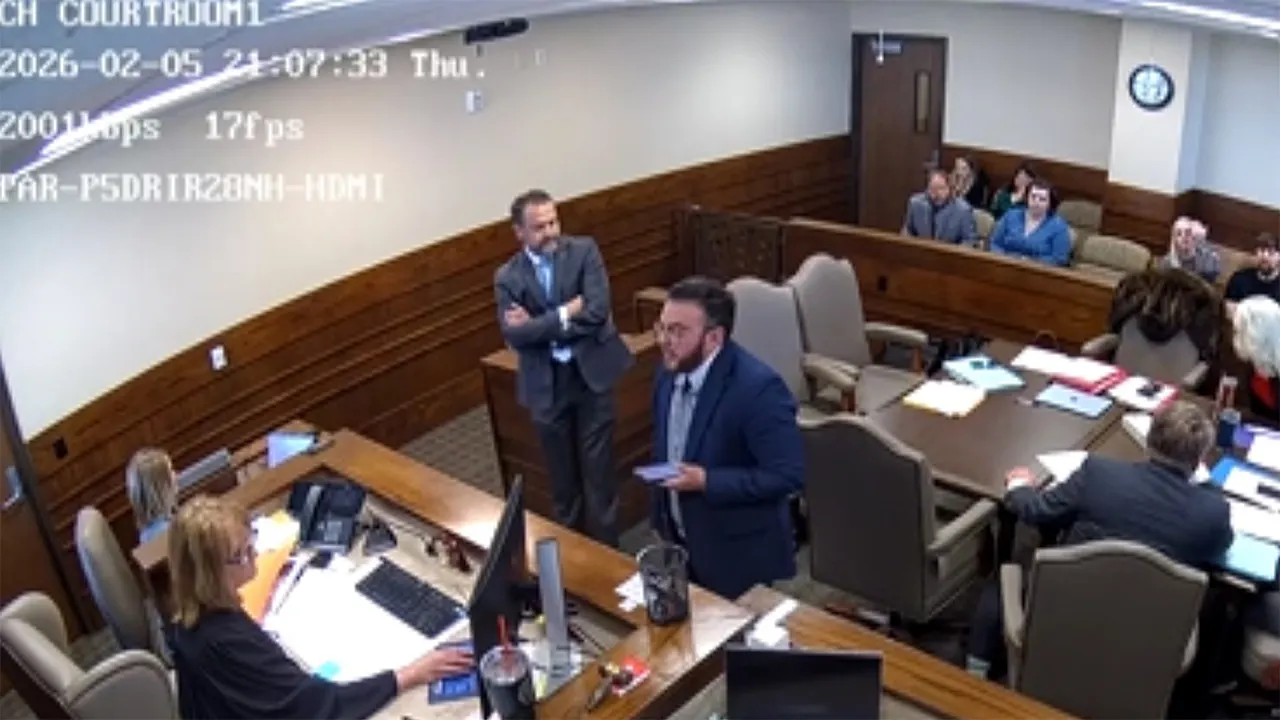
In the heart of Oklahoma’s rolling plains, nestled some 90 minutes southeast of the bustling city of Oklahoma City, lay the quiet county seat of Ada. It was here, in a modest courtroom within the Pontotoc County Courthouse, where an ordinary custody hearing last month spiraled into something profoundly unordinary—something that echoed across social media and local news outlets like a thunderclap in a summer storm. Picture a typical workday morning: families filing in all dressed in their Sunday best, lawyers shuffling papers, and the judge, Lori Jackson, presiding with her usual air of authority. Everything seemed routine at first, just another family dispute over who would care for a child after a breakup. But then, Rob Hopkins stepped into the spotlight, an attorney who had come to represent his client. What made Hopkins stand out—what had been making ripples in legal circles for years—was his identity; he identified as transgender, and he wore his life experiences like a badge. He’d told friends and colleagues stories of navigating a rigid, often unforgiving profession where biases lingered like fog on a valley road. That day, Hopkins hoped to advocate fiercely for his client, drawing on his own battles to fight systemic unfairness. Little did anyone know, the hearing would transform into a raw, visceral display of resistance and chaos, capturing not just courtroom drama but the deeper tensions simmering in American society today—around identity, power, and the human struggle for respect.
As the custody hearing unfolded, the room filled with the low murmur of voices and the occasional shuffle of chairs. Hopkins, a seasoned lawyer with years of trials under his belt, began asserting himself right away. He interrupted the proceedings multiple times, his voice rising with purpose, objecting to what he felt were inequities in how the case was being handled. Judge Jackson, a no-nonsense figure known for maintaining order, issued warnings that grew sharper with each disruption. “Counselor, you’re walking a fine line,” she cautioned, her tone firm but measured. It wasn’t long before hypoxia of words escalated; Hopkins alleged discrimination based on his transgender identity, claiming it was the real reason behind the judge’s scrutiny. “It’s because I’m a transgender attorney practicing all over the state,” he declared, his words cutting through the air like a blade. The judge, unfazed, retorted simply: “I don’t know what you are.” In that moment, the courtroom energy shifted. Attendees—witnesses, family members, and onlookers—exchanged uneasy glances. Hopkins, feeling the weight of perceived slights, doubled down, his advocacy for his client blending seamlessly into a personal stand. He described to acquaintances later how years of subtle prejudices, from misgendering in court to dismissive glances, had built up inside him like a pressure cooker. “I’ve fought for justice for others, but when it comes to my own truth, the system crumbles,” he’d reflect in quiet moments. The hearing, meant to resolve a family’s future, now teetered on the brink of full-blown confrontation, drawing in not just the parties involved but the collective frustrations of marginalized voices in places like rural Oklahoma, where progress and tradition clashed head-on.
Tensions boiled over as Judge Jackson, citing repeated contemptuous behavior, held Hopkins in contempt of court. The announcement hung in the air, heavy and irrevocable. Bailiffs, those everyday heroes of the courthouse, stepped forward, their presence a reminder that law and order would prevail, no matter the outburst. But Hopkins wasn’t ready to yield. Fueled by adrenaline and a fierce sense of injustice, he resisted with all the fervor of someone cornered and desperate. Surveillance footage captured it all in stark detail: Hopkins splaying across the judge’s bench, arms flailing, documents scattering like confetti across the polished wood surface. “You’re hurting me!” he bellowed, his voice raw and piercing, turning heads and scattering the complacency of the onlookers. Attendees watched in stunned silence as he twisted and contorted, evading the grip of handcuffs with a dexterity born of stubborn will. One bystander, voice trembling, murmured to the judge, “I felt very threatened by this person.” It was a scene straight out of a tense courtroom drama, but for those in the room, it was intensely real—a moment where personal identity collided with judicial authority. Hopkins later recounted to friends how it felt like the world was closing in, every arrest attempt a reminder of battles fought before, from advocacy in the LGBTQ+ community to standing up against discrimination in his professional life. In his mind, this wasn’t just defiance; it was defiance against a system that had often marginalized him. As he thrashed against the officers, shrieking about breathing and harm, the incident underscored the fragility of human interactions in spaces meant for resolution, highlighting how quickly emotions could erupt when deep-seated conflicts ignited.
The struggle intensified as more officers poured into the courtroom, their body cameras rolling, capturing the unfolding drama that would later flood local media and online forums. Hopkins, now on the floor, demanded a female officer, his voice echoing through the hallways where a growing crowd had gathered, drawn by the commotion. “Call 911!” he shrieked, the words a cry for intervention amid the tangle of limbs and attempts at restraint. He accused the officers of mishandling his glasses, insisting they be placed back on his face with urgent repetition. “Put them on my face! Put them on my face!” he screamed, his demands punctuating the chaos like insistent heartbeats. From the footage, it was clear Hopkins was resisting arrest vigorously, his body a whirlwind of motion as bailiffs wrestled to regain control. To him, it wasn’t just physical; it was symbolic—a stand against what he saw as another instance of dehumanization by those in power. Colleagues who knew him described a man who’d built a career advocating for others, using his experiences as a trans attorney to bridge gaps in understanding. Yet that day, the resistance felt like the culmination of pent-up frustrations, from jury trials that ended in shrugs to networking events where introductions went awry. The audience, a mix of locals and passersby, watched the scene unfold with a mix of disbelief and empathy. Some whispered prayers, others taped on their phones, turning a personal meltdown into a public spectacle. It was a reminder that beneath the badges and robes, everyone—judges, lawyers, laypeople—carried their own burdens, and in that moment, Hopkins’ story became a lens through which to view the struggles of identity in the American heartland.
As the commotion subsided and Hopkins was escorted from the court, the incident left an indelible mark on everyone involved. The hearing, once a mundane affair, had devolved into a spectacle that resonated far beyond the wood-paneled walls. Survivors of the drama, from the judge who upheld protocol to the bailiffs who bore the brunt of the resistance, reflected on the havoc it wrought. Hopkins, facing charges, shuttered his law firm in the aftermath, a decision that closed a chapter on years of dedicated service. He didn’t respond to inquiries, leaving friends and associates to ponder the toll of such events. “It’s like a storm that passes, but leaves wreckage in its wake,” one courtroom regular mused. The footage became a talking point, with analyses pouring in from legal experts who debated the finer points of contempt and resistance. For Hopkins’ client and the family in dispute, the hearing’s sidetracking delayed justice, adding layers of complexity to an already painful process. In broader society, it sparked discussions about trans rights in conservative states, where Ada stands as a microcosm of colliding worlds. People shared stories online, echoing Hopkins’ sentiment of feeling unheard. Yet, amid the outrage, there was a glimmer of human connection—neighbors offering support, forums for dialogue opening up. It was a case that, despite its eruption, prompted reflection on empathy in adversarial spaces, reminding us that every yell, every struggle, stems from unmet needs in the human soul.
In the days that followed, the echoes of that Ada courtroom reverberated through communities, sparking dialogues on fairness, identity, and the intersection of personal and professional lives. Hopkins’ arrest, witnessed by so many via footage, became a flashpoint for activism, with advocates rallying around themes of discrimination and dignity. Judge Jackson, steadfast in her account, emphasized inappropriate conduct over any identity-driven motive, a stance that drew both praise and criticism. Colleagues shared anecdotes of Hopkins as a passionate defender, a man who’d mentored young lawyers from underrepresented backgrounds, weaving his trans narrative into lessons on resilience. “He taught me that justice isn’t just about the law— it’s about the people behind it,” one protégé recalled. The incident highlighted the emotional toll on public servants, from judges navigating outbursts to bailiffs reliving high-stress moments. Victims of bias in similar settings found solace in speaking out, turning personal pains into collective calls for change. In Pontotoc County, community members gathered at local cafes, debating how such events could be prevented—through better training, more inclusive policies, or simply more understanding. Families like the one in the custody case navigated delayed proceedings, their stories now intertwined with the national conversation. For Hopkins, the firm’s closure meant a pause, perhaps a retreat to rebuild, drawing on the support of a network that had always seen the humanity beyond headlines. Ultimately, the ordeal humanized the headlines, showing that behind every courtroom clash lay stories of vulnerability, aspiration, and the quest for belonging in a world that didn’t always understand. It stood as a testament to the power of voices, even when raised in tumult, to shake foundations and inspire progress.