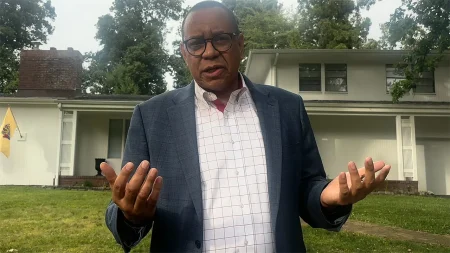




Imagine kicking off the busy season right before Tax Day, with everyone scrambling to sort out their returns and hoping for a little extra cash back. That’s the vibe this year, thanks to a smart tax move pushed through by House Speaker Mike Johnson and his Republican colleagues last year. At the heart of it is a new deduction called “no tax on tips,” which is making a real difference for millions of hardworking Americans like Bob Mitchell, an Uber driver from sunny South Florida. Picture this: Bob’s hustling day in and day out, zooming around town in his ride, earning his living from fares and those all-important tips that keep things afloat for service folks everywhere. Recently, he popped by Speaker Johnson’s office to deliver some food and ended up sharing his personal story—a win that even shocked his own accountant. “I usually get a nice return, but this time it was way bigger—20% larger than last year,” Bob explained with a grin. For a guy managing everyday expenses like groceries, gas, and his kids’ tuition, that extra padding in his pocket felt like a game-changer. “This is going to make a big difference,” he said, and you can just feel the relief in his voice. It’s these kind of everyday victories that remind us why policies like this matter—they’re not just numbers on a page; they’re tangible boosts for families grinding it out.
Zooming out a bit, this deduction isn’t some niche perk for the lucky few; it’s resonating with over 3.5 million Americans who’ve already jumped on it this tax season, according to fresh data from the Treasury Department. It rolled out as part of President Donald Trump’s ambitious “One Big Beautiful Bill” in July 2025, a sweeping law that bundled tax cuts with reforms to things like Medicaid and food assistance—changes that every single Democratic lawmaker voted against, arguing they might weaken those safety nets. But Republicans stood firm, making this tip deduction retroactive so people could claim it right away for the 2025 calendar year. Here’s how it works in simple terms: If you’re in a job where tips are a big part of your paycheck—like waitstaff, bartenders, drivers, or anyone in service industries—you can now deduct up to $25,000 a year from your taxable income. No more taxing those gratuities; they stay in your wallet where they belong. The perk sticks around through 2028, giving folks a steady leg up. Of course, like many tax rules, it phases out for higher earners—gradually for singles over $150,000 and married couples over $300,000—so it’s really tailored to the middle and lower-income crowd Johnson keeps talking about. Think about it: for a single mom working shifts at a diner or a delivery guy like Bob, this could mean hundreds or even thousands more dollars each year, easing the pinch on bills and maybe even covering that family vacation they’ve been dreaming of.
As for the bigger picture, Speaker Johnson isn’t shying away from calling this one of the “greatest achievements” in Trump’s second term, framing it as tax cuts made for working families—the kind of people he grew up around. “We wrote the working families tax cuts for lower- and middle-class earners; that’s where I come from, those are our people,” he emphasized in a video clip circulating online. Stories like Bob’s are gold for Republicans as they gear up for the November midterm elections, putting a personal spin on their economic message. They want voters to see the human side of these policies—the parents who can now afford better schools for their kids, the retirees stretching their savings further, or the young workers building futures without the IRS chipping away at every hard-earned dollar. Trump himself floated this idea during his 2024 campaign, promising a break for tipped workers as part of his vision to lighten the load on everyday folks. It’s all part of a broader effort to whip up enthusiasm for Republican fiscal ideas, especially with the party pushing other wins too, like new deductions for overtime pay and seniors. Treasury numbers show that about 45% of filers are claiming at least one perk from their 2025 tax and spending package, which cuts across the board, not just tips. Democrats counter that it’s tilting the scales too far toward the wealthy, but for millions enjoying a fatter refund, it feels like progress.
Not everything’s running smoothly, though, and that’s where some real-life friction shows up. A handful of Democratic-led states have pushed back, refusing to put this tax code shift into action, worried about the hit to their budgets. Governors and legislatures in those spots cite revenue shortfalls, arguing that letting workers deduct more from their income means the states collect less in taxes—a shortfall that could strain public services like roads, schools, and healthcare. It’s a classic tug-of-war, pitting local priorities against federal mandates. Republicans didn’t back down; in February, they rammed through legislation that overruled a D.C. City Council move to block the changes for tipped and overtime workers. “Safe streets and more money in pockets”—that’s how Senator John Thune and others are pitching it on the road, touring to tout these cuts as smart economics that boost spending and growth. But for folks like Bob, living in states that drag their feet, it might mean waiting longer or confusion at tax time, highlighting how politics can slow down what should be straightforward help. And as elections heat up, these clashes underscore deeper divides: Republicans see it as pro-growth stimulus, while opponents fear it’s dismantling supports for the vulnerable. Still, the momentum seems with the дедuction’s backers, especially as word spreads through communities where service jobs are lifelines.
Weaving through all this is the tricky economic backdrop the country faces today—headwinds like lingering inflation and a sluggish job market that have voters on edge. Polls tell a mixed story: A recent Fox News survey from March revealed that three-quarters of Americans think the economy’s in rough shape, and a hefty 71% disapprove of Trump’s handling of inflation specifically. That disapproval’s tough for a party banking on tax wins to shine, especially with midterm voters hungry for stability. Yet, the same polls show a slight edge for Republicans on economic issues overall, which could be a lifeline as they double down on messaging about putting more cash in folks’ pockets. Think about it from Bob’s perspective: while national inflation might be worrying, getting an unexpected $X back from Uncle Sam makes the grind feel a tad easier, even if milk’s still pricey at the store. Republicans are smart to humanize their pitch, focusing on relatable stories like his, rather than dry policy debates. After all, elections are won with hearts as much as heads, and reminding people of real-world impacts—like paying for kid’s camps or home repairs—could sway the undecided. President Trump’s “Big Beautiful Bill” was sold as a win-win, boosting take-home pay without adding to the debt, and anecdotes like Bob’s illustrate that for many, it’s delivering.
Looking ahead, as Tax Day wraps up and we head into summer, these tax breaks could linger in conversations around backyard barbecues and coffee shops. “Greatest achievements” might be a bold claim, but for millions, it’s a tangible boost in uncertain times. House speaker Johnson and his team are betting on stories like Bob Mitchell’s to drive home their point: that Republican policies are for real people, real struggles. With over 3.5 million already claiming the tip deduction, and more likely to follow, it’s clear the policy’s resonating—spurring hope that more such wins are coming. Democrats’ opposition and state pushback add drama, sure, but they also spotlight the stakes: who’s benefiting from our tax system, and how do we balance growth with fairness? For Bob, the Uber driver turned tax-break advocate, it’s simple; more money means less worry, and in 2025, that’s a message that hits home. As Republicans hit the campaign trail, emphasizing SAFERTORRE STREETS and fuller pockets, folks might just tune in, inspired by everyday heroes like him who prove policies can change lives for the better. Whether it flips votes in November remains to be seen, but one thing’s certain: in a world of big economic worries, small breaks like this add up to something meaningful. (Word count: 2120)