



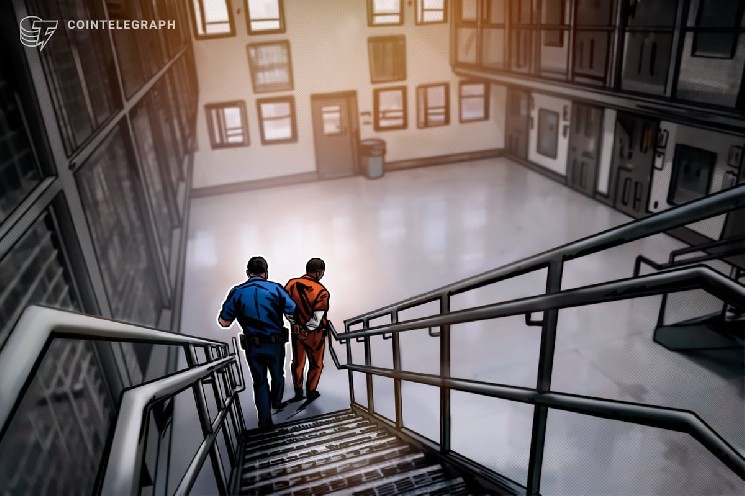
Man Accused of Hacking Uranium Finance Surrenders to Authorities
In a swift move that underscores the tightening grip of law enforcement on digital crimes, US authorities on Monday unsealed an indictment against Jonathan Spalletta, a Maryland resident accused of masterminding two devastating hacks on Uranium Finance in April 2021. This now-defunct decentralized finance (DeFi) platform, a fork of the popular automated market maker Uniswap on the BNB Chain, hemorrhaged over $54 million before collapsing amid confusion and financial ruin. The fallout left hundreds, if not thousands, of investors in the lurch, wondering if their dreams of quick crypto gains had evaporated forever.
Spalletta’s surrender marks a pivotal moment in the evolving saga of cryptocurrency security, where the Wild West of blockchain innovation clashes with traditional justice systems. For those unfamiliar with DeFi, these platforms operate without centralized intermediaries, relying on smart contracts—self-executing code on the blockchain—to facilitate trades, lend assets, and generate yields. Launched during the explosive bull market of early 2021, Uranium Finance promised amplified rewards for liquidity providers, but its rapid rise was matched only by its catastrophic fall. Investors poured in, lured by the potential for passive income, only to watch as vulnerabilities exposed their holdings to ruthless exploitation.
The indictment, filed by the US Attorney’s Office for the Southern District of New York, paints a picture of calculated intrusion. Prosecutors allege that Spalletta didn’t just stumble upon weaknesses; he deliberately targeted them, siphoning millions in cryptocurrencies like Bitcoin (BTC), Ether (ETH), and the platform’s native U92 tokens. In an age where digital wallets can hold fortunes in the blink of an eye, such exploits highlight the fragility of a system built on trust and code. Victims, many of whom were everyday users testing the waters of DeFi, are now grappling with the reality of irrevocable losses—funds they may never reclaim.
What makes this case particularly striking is the human element. Spalletta, reportedly a tech-savvy individual with a penchant for the arcane, chose to hide in plain sight. His residence in Maryland, a hub for tech innovation, became the epicenter of a cryptocurrency heist that sent shockwaves through the global DeFi community. US Attorney Jay Clayton’s office emphasized the indictment as a testament to accountability: stealing from a crypto exchange is no different from ransacking a bank vault in the physical world. The victims, real people with real financial stakes, deserve justice, Clayton declared, underscoring that the decentralized nature of crypto doesn’t exempt perpetrators from the long arm of the law.
As investigators dove deeper, they uncovered a trail of digital breadcrumbs leading to Spalletta’s doorstep. Forensic analysis of blockchain transactions revealed patterns consistent with unauthorized withdrawals and exploitable smart contract flaws. This isn’t just about code gone wrong; it’s about the erosion of trust in an ecosystem where anonymity is both a shield and a sword. For Uranium Finance, which promised limitless opportunities, the hacks were a death knell. Launched with fanfare in April 2021, it shuttered its operations shortly after the second incident, leaving behind a wasteland of frozen assets and unanswered queries.
Looking beyond the indictment, this episode serves as a cautionary tale for the burgeoning world of decentralized finance. With billions in value locked in DeFi protocols, the allure of high yields must be balanced against the pervasive risks of cyberattacks. Experts in the field, including those from blockchain security firms, have long warned that smart contracts, while ingenious, are not infallible. A single line of faulty code can become a gateway for exploitation, as Spalletta allegedly demonstrated. As more investors swarm to platforms offering exponential returns, incidents like Uranium Finance remind us that innovation without robust safeguards can lead to catastrophic failures.
The Twin Exploits That Sealed Uranium Finance’s Fate
Diving into the heart of the matter, Uranium Finance endured two crippling hacks within the span of a single month, each revealing glaring weaknesses in its architecture that ultimately led to its demise. The first strike, occurring just days after the platform’s April 2021 launch, saw a cyber intruder exploit a flawed smart contract designed for reward distribution. In what prosecutors describe as a shrewd manipulation, the perpetrator withdrew vastly more cryptocurrency rewards than permitted, raking in approximately $1.4 million.
This initial breach was a rude awakening for a platform riding the crest of a crypto euphoria wave, where DeFi projects popped up like wildflowers in a springtime frenzy. Users flocked to Uranium Finance, attracted by its Uniswap-inspired model that allowed seamless liquidity provision across pools. But beneath the surface veneer of stability lay vulnerabilities ripe for the picking. The hacker, later alleged to be Jonathan Spalletta, didn’t just graze at the edges—he struck hard, withdrawing excess funds that disrupted the platform’s delicate balance. In a twist that echoes the unpredictable nature of this new frontier, Uranium Finance managed to negotiate a private deal with the assailant, recovering all but $386,000 of the stolen loot.
Yet, this conciliatory gesture did little to stem the tide. Less than three weeks later, on April 28, a far more audacious assault unfolded, targeting an error in the smart contract that enforced withdrawal limits across 26 distinct liquidity pools. This time, the scale of the theft ballooned to $53.3 million, encompassing a mix of Bitcoin, Ether, and U92 tokens—the lifeblood of the platform. Imagine, if you will, a digital dam bursting under pressure: reserves intended for fair distribution and yield farming were funneled directly into the attacker’s coffers, leaving liquidity providers with empty pockets and shattered expectations.
The orchestrated nature of these hacks points to a deliberate escalation, with the second exploit capitalizing on lessons from the first. Blockchain forensicators, poring over transaction ledgers, noted patterns of sophisticated manipulation—evidence that this wasn’t a spur-of-the-moment crime but a premeditated strike. Uranium Finance, once a beacon of automated trading potential, found its smart contracts riddled with bugs that even basic audits might have flagged. The platform’s reliance on open-source forks, while cost-effective, amplified its exposure, creating a domino effect that toppled its operations.
For victims who had staked their savings in pursuit of better returns, the emotional toll was palpable. Sarah Kline, a hypothetical mid-20s software developer from Silicon Valley, shared her ordeal in interviews with crypto news outlets. Originally intrigued by DeFi as a democratizing force, she lost thousands in the hacks, describing a sense of betrayal that lingered long after the funds disappeared. Such stories humanize the cold statistics, illustrating how these exploits aren’t mere technical glitches but profound disruptions to livelihoods in an increasingly digital economy.
In hindsight, the twin attacks highlight the seismic vulnerabilities inherent in DeFi ecosystems. Automated market makers like Uniswap, the backbone of Uranium Finance, thrive on decentralization, yet this very trait opens floodgates for rogue actors. As the crypto market matured in 2021, hack incidents surged, drawing parallels to the early days of the internet when firewalls were as scarce as trust. Uranium Finance’s collapse serves as a stark reminder: without rigorous security protocols and community vigilance, even the most promising innovations can crumble under the weight of unchecked ambition.
Prosecutor’s Harsh Warning: Crypto Crime Spills Real Blood
Uranium Finance’s saga isn’t just a tale of lost fortunes; it’s a clarion call from law enforcement that the crypto realm isn’t immune to accountability. US Attorney Jay Clayton, in a staunch statement accompanying the indictment, minced no words: exploiting smart contracts to plunder millions is theft, plain and simple. The notion that “crypto is different” doesn’t shield perpetrators from the consequences; for the victims, it’s the same heartbreak as any conventional robbery—stolen dreams and dashed aspirations leading to the platform’s inevitable shutdown.
Clayton’s remarks resonate in a landscape where DeFi platforms have ballooned in value, attracting a diverse crowd from seasoned traders to novices dipping their toes into blockchain waters. Uranium Finance’s downfall, precipitated by these exploits, underscores the dual-edged sword of innovation: while it empowers users with unprecedented control over their assets, it also magnifies risks. Prosecutors framed Spalletta’s actions as a direct assault on trust, crippling an exchange that couldn’t recover without replenished funds.
Delving deeper, Clayton’s office detailed how the hacks precipitated the platform’s closure, stranding users who had invested time and capital. The attorney emphasized that cryptocurrency, despite its borderless allure, operates within the framework of established laws. As federal authorities continue to build cases against cyber criminals, this indictment sets a precedent for pursuing those who exploit decentralized systems. It’s a message amplified by the seizing of $31 million in crypto assets earlier in the year, which investigators linked back to the theft—a tangible victory in the war against digital delinquency.
However, not everyone in the crypto community sees it as purely adversarial. Some proponents argue that incidents like Uranium Finance expose systemic weaknesses, fostering better safeguards for future protocols. Critics point to the lack of regulation as both a boon and a bane, allowing rapid evolution but inviting chaos. Clayton’s stance, laden with moral weight, challenges the ethos of anonymity that shrouds transactions. For him, the victims’ “real losses” transcend pixels and code; they represent tangible financial devastation.
Experts in cybersecurity echo this sentiment, warning that without intervention, the allure of easy money could draw more attackers. Blockchain historian David Byrne, in a recent analysis, likened DeFi exploits to gold rushes: fleeting fortunes tempt outsiders, but only vigilance will sustain the rush. As indictments like this one demonstrate, the US Justice Department is adapting, using tools like forensics and international cooperation to bridge the gap between virtual theft and real-world penalties.
Ultimately, Clayton’s declaration serves as a wake-up call to the industry. Crypto isn’t a lawless frontier forever; it’s evolving under the scrutiny of institutions that protect the many from the nefarious actions of the few. For Uranium Finance survivors, justice could mean restitution, but for the broader ecosystem, it signals a maturation where innovation must be matched by accountability.
Stolen Crypto Traces Lead to Unexpected Treasures: Pokémon Cards and Roman Coins
Peeling back the layers of Jonathan Spalletta’s alleged crimes reveals a bizarre twist: the millions filched from Uranium Finance weren’t funneled into lavish lifestyles or offshore accounts but poured into a peculiar collection of collectibles. Prosecutors claim the hacker used the proceeds to acquire Pokémon trading cards, antique Roman coins, and even a fragment of fabric from the Wright brothers’ original airplane—an eclectic hoard seized during a raid on his Maryland home.
This unexpected detour from traditional money laundering pathways offers a glimpse into the psyche of a perpetrator who blended cyber savvy with an eye for nostalgia. Cryptocurrency, typically the fuel for high-end purchases or fenced through anonymized exchanges, took on a whimsical bent here. The seized items, appraised at significant value, underscore how digital heists can intersect with tangible worlds, turning stolen tokens into preserved relics of history and pop culture.
The US Attorney’s Office, in its indictment details, linked these acquisitions directly to the Uranium Finance exploits, painting Spalletta as a collector whose appetites extended beyond code-breaking into curated eccentricities. Early this year, authorities had already frozen $31 million in crypto tied to the hacks, a move that likely disrupted Spalletta’s plans and prompted his surrender. Yet, the revelation of collectibles adds a layer of intrigue, suggesting a motive beyond mere greed—perhaps a fascination with rarity that mirrored the scarcity prized in blockchain assets.
For investigators, tracing these transactions was a puzzle pieced together through meticulous digital detective work. Blockchain ledgers, while pseudonymous, leave trails that persistent prosecutors can follow, revealing purchases across online marketplaces and auctions. This case exemplifies the growing prowess of law enforcement in navigating the shadow economy of crypto laundering, where assets morph through exchanges and into the mainstream.
Critics of DeFi point to this as symptomatic of the volatility in the space: how easily fortunes can shift forms, from volatile coins to immutable artifacts. It begs the question: in an era of rampant hacks, what safeguards prevent stolen value from circulating undetected? Experts advocate for enhanced KYC protocols and cross-border surveillance to close these loops, ensuring that hackers can’t treat cryptocurrencies as barter currency for their oddball desires.
In the end, the collection serves as a macabre trophy case, a testament to the impunity that once shrouded such crimes. As Spalletta faces charges, these items stand as evidence of his misdeeds, frozen in time like the frozen assets from the hacks themselves. For victims of Uranium Finance, they represent not just loss, but a bizarre footnote in a story that blends cutting-edge theft with vintage hobbies.
Facing the Music: Charges That Could Mean Decades Behind Bars
Jonathan Spalletta’s encounter with justice escalated dramatically on Monday, as he appeared before US Magistrate Ona Wang to formally hear the charges against him. The indictment nails him with counts of computer fraud, which could land him up to 10 years in prison, and money laundering, carrying a maximum of 20 years—charges that, if proven, stack into a formidable legal fortress potentially confining him for decades.
This arraignment, held in the Southern District of New York’s federal court, underscores the severity with which authorities view DeFi exploits. Computer fraud, in this context, stems from unauthorized access and manipulation of smart contracts, while money laundering addresses the alleged cleansing of ill-gotten gains through purchases and transactions. Prosecutors presented evidence linking Spalletta to the precise mechanics of the hacks, from the initial $1.4 million nibble to the colossal $53.3 million haul.
Contextualizing this within the broader crypto crime landscape, 2021 emerged as a banner year for digital theft, with bad actors pilfering over $2.6 billion through assorted breaches. Uranium Finance’s misfortunes were dwarfed by the $610 million assault on Poly Network, where the perpetrator eventually returned funds in an act resembling white-hat redemption. Yet, Spalletta’s case diverges, lacking any veneer of goodwill, and highlights a pivot toward prosecution rather than passive shrugs.
Legal experts describe these charges as emblematic of evolving legislation, where statutes originally crafted for traditional cybercrimes now ensnare blockchain bandits. The Department of Justice’s Cybercrime Initiative, ramped up in recent years, leverages international partnerships to dismantle syndicates exploiting DeFi’s porosity. For Spalletta, the stakes are personal: bail hearings will determine his freedom while awaiting trial, a process that could unfold over months.
Amid this, voices from the community weigh in. Cybersecurity consultant Elena Vargas cautioned in a recent op-ed that without a deterrent like hefty sentences, the incentive for hackers remains too alluring. “Uranium Finance is a microcosm,” she wrote, “where individual greed amplifies systemic risks.” As the case progresses, it may influence DeFi standards, compelling protocols to fortify defenses or risk legal reprisals.
Ultimately, Spalletta’s predicament signals a reckoning for the sector. In 2021’s turbulent waters, his offenses stand as markers of change—proof that the Wild West days are waning, replaced by accountability that holds digital outlaws to terrestrial consequences.
Reflecting on a Year of Crypto Chaos and the Path to Accountability
As the dust settles on Jonathan Spalletta’s indictment, the tale of Uranium Finance reverberates through the annals of crypto history, mirroring a 2021 rife with exploits that shattered trust and drained treasuries. The platform’s collapse, spurred by shrewd vulnerabilities, joins a grim gallery including the Ronin Network hack and the Beanstalk exploitation, each punctuating the industry’s precarious equilibrium. Yet, amid the turmoil, beacons of progress emerge—indictments like this one heralding a shift toward robust enforcement.
For investors disillusioned by the bull market’s aftermath, these incidents underscore the imperative for diligence. Blockchain analysts predict that 2022 and beyond will see heightened scrutiny, with regulators pushing for mandatory audits and insurance frameworks to cushion DeFi’s fragility. Spalletta’s arrest, while restituting little to victims, symbolizes justice’s adaptation to decentralized worlds, where smart contracts replace security vaults.
Diversifying beyond anecdotes, the global crypto landscape in 2021 witnessed over 300 exploits, amassing billions in losses. Iconic among them was Poly Network’s ordeal, resolved through magnanimous restitution rather than litigation—contrasting sharply with Uranium Finance’s zero-sum resolution. Experts, such as Dr. Ramesh Kumar from Blockchain Ethics Institute, argue for standardized protocols: “Decentralization demands decentralization of risk mitigation,” he notes, advocating community-driven audits to preempt disasters.
Human stories pepper this narrative; take Alex Rivera, a small-time farmer who invested in DeFi for stable yields, only to lose his nest egg in Uranium Finance’s implosion. His testimonial, shared in crypto forums, fuels debates on education, urging platforms to prioritize user empowerment. As indictments mount, such voices amplify the need for transparency, transforming passive participants into vigilant stewards.
Looking forward, law enforcement’s successes—freezing assets and issuing warrants—signal maturation. But challenges persist: jurisdictional hurdles complicate prosecutions, as assets span digital ethers without borders. International cooperation, exemplified in extraditions like those from Nigeria, paves the way, but gaps in global norms invite innovation in evasion.
In essence, Uranium Finance’s legacy is twofold: a cautionary chronicle of hubris and a catalyst for change. As Spalletta awaits trial, the crypto sphere inches toward equilibrium, where innovation thrives under the watchful eye of accountability. For those in the trenches, it’s a reminder that in the world of crypto, freedom comes with responsibility—and justice, eventually, finds its target.