



The Troubled Life of a Young Repeat Offender
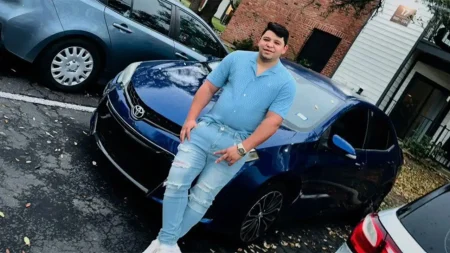
In the bustling, unforgiving streets of Houston, Texas, a young man’s cycle of crime and freedom collided tragically with a life lost. Johnnie Lillie, just 19 years old, found himself behind bars once again, this time for a shocking crime: the alleged murder of Jermarkus Johnson, a 29-year-old man gunned down on Aldine Bender Road during a heated game of dice on September 22, 2025. Lillie wasn’t some newcomer to the justice system; he was a notorious repeat offender, sporting over 20 prior charges that painted a picture of a life spiraling out of control. Growing up in a community plagued by poverty and violence, young Johnnie had faced the law repeatedly, starting with petty crimes that escalated into far more serious offenses. Friends and family might describe him as charismatic yet reckless, the kind of kid who always had a quick smile but a propensity for trouble, often turning to theft and other misdemeanors to survive. Despite multiple run-ins with the police, he kept slipping through the cracks, his youthful energy feeding into a pattern of bad decisions that left him in and out of custody. This latest incident highlighted a system that seemed to give him chance after chance, even as his actions grew deadlier. Jermarkus Johnson, by all accounts, was an ordinary guy—perhaps a father, a friend, someone trying to make ends meet in the same tough neighborhood—whose life ended abruptly over a trivial dispute. Witnesses described the scene as volatile: a group gathered for a game that turned fatal, with shots ringing out in the night. Lillie stood accused of pulling the trigger, but the story didn’t start there; it began long before, with a history that begged the question of why he was even free to make that choice.
Probation and the Illegal Gun
Lillie’s troubles intensified in June 2024 when he was sentenced for burglary of a motor vehicle, a charge that landed him on probation—a supposed reset button for his life. Probation meant supervision, rules, and a promise to reform, but for someone with Lillie’s record, it often felt like a loose guideline rather than a strict leash. While under that watchful eye, he reportedly made a grave error: purchasing a gun illegally and possessing a prohibited weapon—a machine gun, no less. This wasn’t just any violation; it was a red flag waving wildly in the face of authorities. Andy Kahan, the director of victim services and advocacy for Houston’s Crime Stoppers, expressed his frustration to FOX 26: “While he’s on probation, he picks up a possession of a prohibited weapon, a machine gun. That’s pretty serious.” Kahan’s voice carried the weight of years advocating for victims, his tone a mix of exasperation and sorrow, knowing all too well how such lapses could lead to tragedies. Despite this serious charge, Lillie was granted bond and released from jail, stepping back into a world where his actions weren’t curbed. It begs a human question: what kind of support network—or lack thereof—left a young man like him making these choices? Perhaps it was the absence of robust rehabilitation programs, or maybe a probation system overburdened and underresourced. Lillie could have been struggling with addiction, mental health issues, or simply the allure of street life, where quick money and respect trumped long-term consequences. This release wasn’t the end; it was just another chapter in a saga of overlooked warnings, setting the stage for more chaos. In the community, stories swirled about how probation was meant to guide youth back on track, but for some, it only delayed the inevitable crash.
Escalating Charges and Multiple Bonds
Far from reforming, Lillie reportedly continued his risky behavior, picking up yet another charge just as serious as the first: the burglary of a second motor vehicle. This occurred while he was out on bond for the illegal gun possession and still tethered to probation oversight from the county’s probation department and pretrial services. Now, he was juggling not one, but two separate bonds, a precarious balancing act that spoke volumes about systemic lapses. Kahan, ever the vocal critic, told FOX 26, “Now he’s out on not one, but two bonds, and is still on probation.” His words underscored a frustrating reality: a young offender like Lillie could accumulate bonding contracts like credit cards, each one a supposed safeguard that instead provided loopholes. Court documents revealed at least half a dozen violations of those bonds after his releases, from missed check-ins to further infractions that showed he wasn’t conforming to the conditions set before him. Pretrial services, meant to monitor high-risk individuals, admitted they couldn’t keep up, leaving Lillie free to roam despite clear signs of noncompliance. Kahan blasted the system, emphasizing how easy it could have been to revoke that probation or bond: “Pretrial services says we cannot monitor him. He’s not abiding by any of his conditions. And, again, he’s allowed to remain on probation and multiple bonds.” It humanizes the story to consider the burden on officials—overworked probation officers dealing with overcrowded caseloads—yet it also exposes missed opportunities. For Lillie, each release might have felt like a win, a momentary freedom that erased the guilt of past mistakes, but it also deepened his entanglement with danger. Neighbors and local advocates whispered about a “revolving door” justice system, where repeat offenders were set free to offend again, turning streets into war zones for innocent bystanders.
The Tragic Killing Over a Game of Dice
The culmination of this downward spiral came last year when Lillie, still ostensibly under supervision, allegedly turned to violence in an altercation over a mundane game of dice. Described as a heated dispute, the incident spiraled into gunfire, culminating in the death of Jermarkus Johnson on Aldine Bender Road. Reports from FOX 26 painted a grim picture of the scene: friends gathered for what should have been harmless entertainment, but underlying tensions boiled over, perhaps fueled by alcohol, ego, or unresolved grudges. Lillie, with his history of brushes with the law, was reportedly the one who discharged the fatal shots, ending Johnson’s life and leaving a community in shock. Humanizing this moment requires imagining the terror: Johnson’s family notified by grim-faced officers, a void left in homes where laughter once echoed. Was this murder premeditated, or a burst of rage in an overcharged atmosphere? The dice game, a staple of street culture, became a metaphor for life’s unpredictability—something as innocent as gambling turning deadly. Kahan poignantly remarked, “All you had to do on one occasion was either revoke his probation or revoke his bond. That would’ve taken him out of being in the community. It would have had him locked up, and Jermarkus Johnson would be alive today.” That statement cuts deep, evoking a sense of what-ifs, a reminder that systems designed to protect had failed both the perpetrator and the victim. For Lillie, this act might stem from a cycle of impulsivity, perhaps intensified by the repeated freedom that emboldened him. Johnson’s friends recalled him as a decent guy, someone who steered clear of trouble, now a statistic in a wave of gun violence that haunts cities like Houston. The irony lingers: a probation meant to rehabilitate instead paved the way for ruin.
Critiques of the Judicial Process
Andy Kahan’s critiques of the Houston justice system echoed broader frustrations, shining a light on failures that allowed a repeat offender like Lillie to remain at large. He emphasized how simple actions—revoking probation or bonds—could have prevented this tragedy, turning a preventable loss into a wake-up call for reform. Many in victim advocacy circles shared his sentiment, pointing to overloaded pretrial services unable to vigilantly monitor individuals flouting conditions. Court records laid bare Lillie’s noncompliance, yet releases continued, raising questions about judicial priorities: were resources diverted elsewhere, or was there a overarching leniency that backfired? Humanizing this means recognizing the toll on advocates like Kahan, whose passion stemmed from tireless work with victims’ families, each case a personal blow. Perhaps it was the sheer volume of cases flooding the system, leaving little room for individualized attention. Local residents and community leaders debated openly: does a young offender deserve multiple chances, or do repeated violations demand stricter consequences? The “revolving door” narrative gained traction, with anecdotes of similar offenders slipping through, emboldening calls for changes like enhanced probation tracking via technology or more rigorous bond conditions. Kahan’s voice symbolized hope amid despair, urging reforms that weigh the scales more evenly between justice for offenders and safety for society. In essence, Lillie’s case underscored systemic flaws, prompting reflections on how to break cycles of recidivism and protect vulnerable communities.
Current Status and Unanswered Questions
As of the latest reports, Johnnie Lillie remained in custody for the alleged murder, held on a $250,000 bond—a steep financial barrier that reflected the severity of the charge. This incarceration, while a closure for now, left lingering questions about what happens next in his young life and how such incidents could be averted in the future. The Harris County Prosecutor’s Office, approached for comment by Fox News Digital, did not respond immediately, adding to the silence surrounding the case. Families affected—Lillie’s own and Johnson’s—grappled with grief and anger, humanizing a story of loss that rippled through a city already scarred by crime. For Lillie, incarceration offered a chance at reflection, perhaps therapy or education that probation never provided. Advocates hoped for rehabilitation programs targeting youth like him, addressing root causes like lack of opportunity or support. Yet, the specter of future releases loomed, depending on plea deals or trial outcomes. Johnson’s loved ones faced memorials and memorials, turning their tragedy into advocacy for better gun control and community safety. The case sparked media buzz, with outlets like FOX 26 amplifying the calls for change, including listening features to make stories more accessible. Ultimately, Lillie’s story serves as a cautionary tale, a human drama of paths not taken, reminding us that behind headlines lie real lives—lost, changed, and forever altered by a flawed system’s oversight. As investigations continued, the community held its breath, yearning for accountability that transcends bonds and barriers.