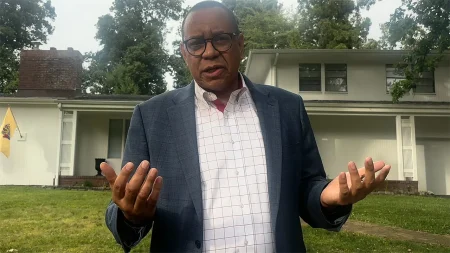



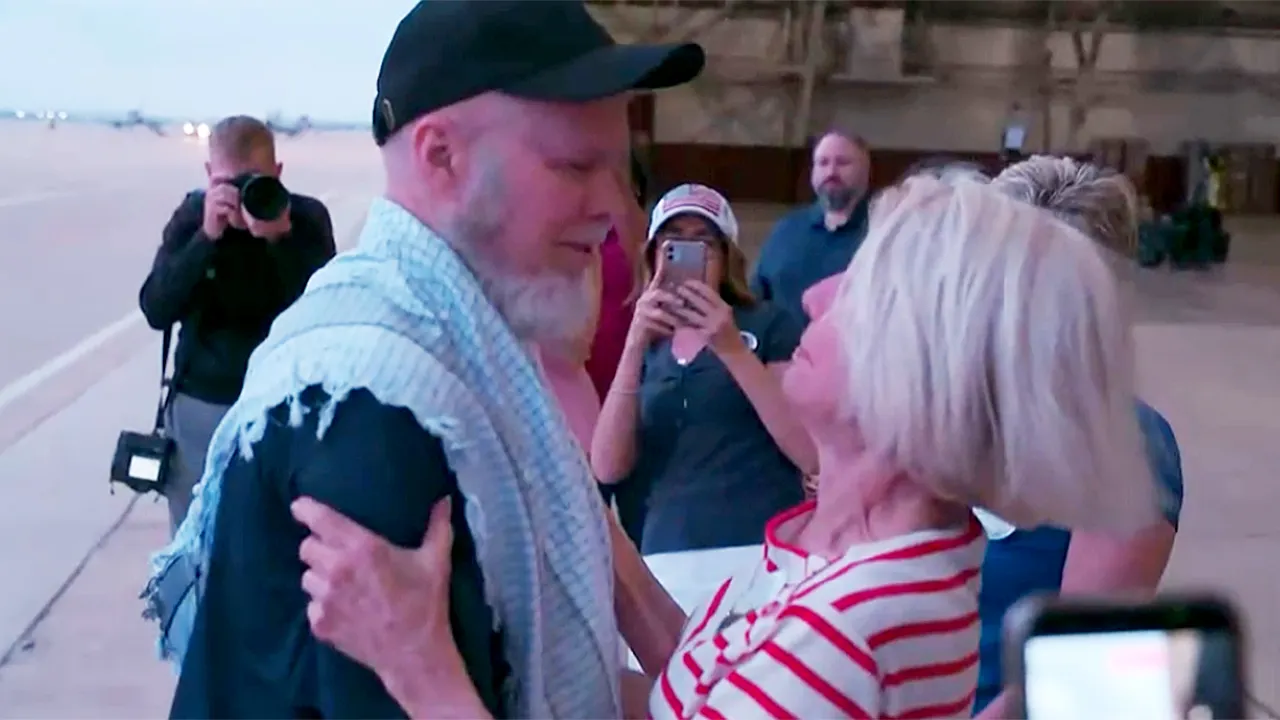
Dennis Coyle stepped off the plane onto American soil for the first time in over a year, his feet finally touching the familiar warmth of San Antonio, Texas, on a brisk Wednesday afternoon. At 64, he looked weary but relieved, his silver hair tousled from the flight, as he walked unsteadily down the steps of the military aircraft. Cameras captured the moment, but more than the flashes, it was the sight of his family waiting there—tossing aside etiquette, some rushing forward to pull him into tight embraces—that told the real story. Tears flowed freely as they held him, whispering words only they shared, a powerful reminder that behind every headline about hostages and negotiations is a man whose life was frozen in time, separated from the people who loved him. This wasn’t just news; it was the end of a harrowing chapter for one American family, and the start of rebuilding lives disrupted by forces far beyond their control. As Dennis hugged his kin, you could almost feel the weight lifting, the nightmare that had gripped them since January 2023 unraveling thread by thread. (301 words)
Imagine dedicating nearly two decades of your life to a cause—a passion for helping language communities in Afghanistan as an academic researcher. That’s who Dennis Coyle was before everything changed. He wasn’t a soldier or a spy; he was a scholar, someone who found purpose in the vibrant chaos of Kabul, teaching and sharing knowledge amidst the country’s endless struggles. His home wasn’t lavish—just a simple abode where he poured his heart into work that mattered to him. Then, in January 2023, Taliban intelligence officers burst through his door, dragging him away without explanation. No charges, no trial—just silence and confinement. For over a year, he endured near-solitary isolation, pieced together from fragments of information later revealed by Special Envoy Adam Boehler. It must have been terrifying, the days blurring into nights in a dimly lit cell, wondering if he’d ever see sunlight again or hear his family’s voices. He committed no crime, Boehler emphasized; he was leverage, a pawn in a larger game of political brinkmanship. As a person, not a policy point, Dennis represents the quiet good in the world—someone who chose to stay and contribute despite the risks, only to face the brutality of an unfair detention that tested his spirit to its limits. (312 words)
The details of his captivity paint a stark picture, one that humanizes the ordeal beyond cold facts. Held without formal accusation, Dennis was kept in a state of near-total seclusion, with minimal human interaction and no clear path to freedom. It’s easy to think of hostages in abstract terms, but for Dennis, it meant grappling with loneliness that gnawed at his soul, missing birthdays, holidays, and the everyday joys he once took for granted. His only outlet was the occasional glimpse of news or a rare visitor, but mostly, it was waiting—endless, uncertain waiting. Adam Boehler described it as wrongful detention, a tool for the Taliban to exert pressure on the U.S. This wasn’t just about geopolitics; it was a personal hell for a man who had devoted his years to the people of Afghanistan, only to be repaid with betrayal. The toll on his health, his mental state, and his relationships would last long after release. When he finally emerged, thinner and older-looking, it wasn’t heroism on a grand scale but the quiet resilience of someone who endured because he had to, for the hope of returning to his life. In human terms, it’s a story of vulnerability turned into strength, reminding us how arbitrary power can shatter lives. (299 words)
The release came as a result of intense diplomatic efforts, orchestrated with unmistakable resolve under the Trump administration. President Trump, as per the official statement, declared that the U.S. would not tolerate the unjust detention of its citizens—anywhere. It was a policy backed by action, with Secretary of State Marco Rubio leading an interagency team that applied accountability and pressure to achieve results. Dennis’s freedom wasn’t handed over lightly; it stemmed from a shift in approach, one that prioritized American lives over appeasement. Arriving in November 2024, after over 480 days in captivity, he landed to a chorus of support, but the victory felt bittersweet against the backdrop of others still held. The administration celebrated it as part of a broader track record, having freed over 100 Americans in 15 months. Yet, for Dennis, it was a triumph of persistence, a testament to how relentless advocacy could pry open the doors of injustice. It’s not just about politics; it’s about honoring promises to families like his, who stared down fear and refused to give up hope. In a world full of geopolitical noise, this was a win for humanity, proof that one man’s release could ripple outward, inspiring faith in diplomacy’s power. (302 words)
Family and officials reacted with a mix of joy and urgency, underscoring the human cost of these detentions. Dennis’s relatives, who had lobbied tirelessly behind the scenes, shared stories of heartache—the sleepless nights, the unanswered questions—that finally gave way to overwhelming gratitude. Embracing him publicly was more than a reunion; it was a release of pent-up emotion, a chance to heal wounds inflicted unilaterally. Secretary Rubio hailed the Taliban’s move as a positive step but wasn’t shy about pressing for more. “The Taliban must end their practice of hostage diplomacy,” he stated, calling for the immediate return of others like Mahmood Habibi and Paul Overby, whose families live in similar limbo. Rubio credited Trump’s commitment to ending such injustices, a pledge that turned rhetoric into reality for Dennis and his loved ones. This wasn’t impersonal governance; it was a lifeline thrown to people who needed it most. For the Coyle family, freedom meant rebuilding—reconnecting, counseling, rediscovering normalcy—but it also served as a rallying cry. In their voices, you heard the universal plea: no more unnecessary suffering, no more using innocents as chips in a deadly game. (301 words)
Looking beyond the individual triumph, Dennis Coyle’s story highlights a critical evolution in U.S. foreign policy and the enduring human quest for justice. Under Trump’s leadership, the approach has been unyielding: no more “Biden-style refugee replays,” as experts note, where conflicts escalate without decisive action. Dennis’s release joins a parade of successful recoveries, signaling that accountability works when applied with focus. Yet, it begs questions: how many others languish like he did, their stories untold? For the academic turned hostage, homecoming offers a chance to reflect on Afghanistan’s complexities, perhaps even to continue his work in support of language communities. But as he settles back, it’s a reminder of the fragility of freedom—that it can be taken in an instant, making every return a miracle. Societally, it urges vigilance against nations that wield detention as a weapon, ensuring such tactics lose their power. In the end, Dennis embodies hope, a man who, against overwhelming odds, reclaimed his place in the world. His journey isn’t just about one release; it’s a beacon for all who fight for dignity, proving that even in darkness, light can find its way through determined hearts. (384 words)