


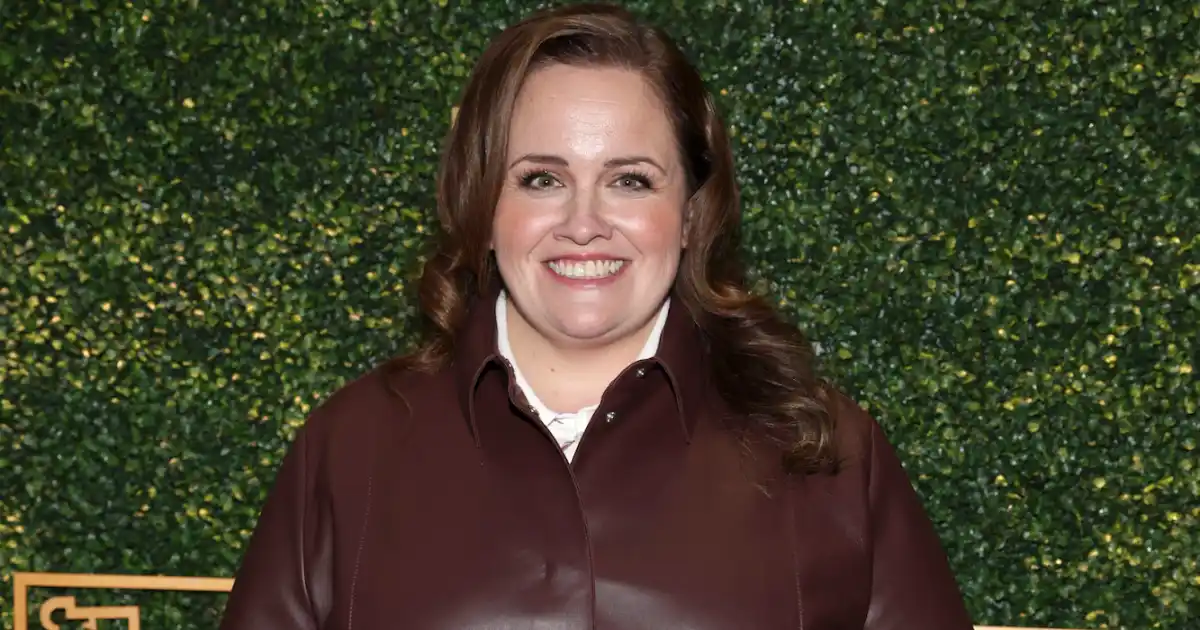
Jessica Gunning, the brilliant actress who captured hearts in Baby Reindeer, has always sailed through life as a steadfast single woman, and it’s a choice that’s shaped her in profound, personal ways. At 40, she’s often pondered why romance never quite clicked, and it all starts with something as simple yet complex as self-discovery. She told The Times of London in a candid March 22 profile that she’s never been in a relationship—not even once. Growing up, she was surrounded by gay friends, but she never imagined that label might apply to her. “Everyone around me was gay. I just didn’t think I could be,” she reflected, her voice carrying a mix of hindsight wisdom and gentle surprise. It wasn’t until 2022 that she publicly came out as gay, a step that felt like unlocking a door she’d been standing in front of for years without the key. For Gunning, being single wasn’t a void; it was a conscious detour, born from the quiet uncertainty of her inner world. Imagine navigating your twenties and thirties in a sea of social expectations, where dates are like milestones everyone else hits with ease, but for her, it felt like a path littered with unspoken questions. She dodged the spotlight of heteronormative dating not out of fear, but from a deep, unfettered curiosity about who she really was. In those early days, her life was a tapestry of platonic bonds, late-night chats with friends, and a self-imposed exile from the dating scene that now makes perfect sense in hindsight. It’s the story of a woman who prioritized authenticity over societal scripts, allowing her to bloom on her own timeline. As she looks back, she wears her journey like a badge, not of isolation, but of fierce independence that ultimately led her to embrace love and life on her terms. And in sharing this, she invites us to see celibacy not as a burden, but as a canvas for self-exploration, where the heart learns to beat to its own rhythm before it ever syncs with another’s.
Delving deeper into why relationships eluded her for so long, Gunning opens up about a subtle avoidance tactic that stemmed from her sexuality. She wasn’t actively dodging love out of malice; it was more like a instinctive shield against confusion. “Well, not to get too deep,” she chuckled to The Times, “but it was probably that I didn’t want to go out with guys and so I was finding a way to avoid it.” Picture a young woman in social settings, surrounded by potential suitors, yet feeling entirely disconnected from the spark everyone else seems to crave. Flirting? That was never her game. “I never knew how to flirt, I didn’t get it,” she admitted with a self-deprecating laugh, her eyes probably twinkling with the memory. Instead of pursuing romantic entanglements, she’d default to friendship mode, effortlessly setting up guys with other friends, thinking, “Great, because I’m not interested.” It’s a relatable tale of someone who played matchmaker for others while quietly questioning her own desires, all while the world spun on with its heteronormative assumptions. This wasn’t rebellion; it was survival in a era that didn’t always make space for sexuality to unfold gradually. For Gunning, it manifested as a life of deliberate solitude where dates were off the table, replaced by bonds that didn’t demand the vulnerability of romance. She recalls evenings out with trusted companions, laughing and sharing dreams without the pressure of labels or expectations. In her story, there’s a quiet empowerment in choosing to sidestep the dance when the music doesn’t feel right, allowing her to focus on what genuinely lit her up inside. It’s about honoring an internal compass that points away from forced paths, creating room for a narrative where love, when it arrives, feels earned and true. Her journey reminds us that not every detour is a dead end—sometimes, it’s just the scenic route to self-understanding, paved with small acts of authenticity in a world that often rushes toward partnership.
Tying into this tapestry of self-preservation is Gunning’s thoughtful link between her single status and her body image, a connection that adds layers of vulnerability to her path. She delicately shared with The Times how weight played a role, though not in the way society might assume. “It might be connected to size, maybe because I was bigger,” she said softly, careful to frame it without negativity. It’s not about shame or insecurity; it’s about the protective cocoon of “otherness” that kept her from confronting deeper truths. “I didn’t feel like an alien in a negative way, but it was, like, an otherness,” she explained, evoking the feeling of standing slightly outside the mainstream spotlight. For her, this perceived difference shielded her from the awkwardness of romantic advances she didn’t want, allowing her to brush off suitors with excuses like “It’s not the time for me.” Suddenly, without realizing it, she was in her thirties, her singleness a soft armor against the external pressures that could have forced her to define her desires sooner. Imagine carrying an invisible shield crafted from body positivity and quiet self-acceptance, one that turns potential rejection into a neutral space of “oh, another time.” Gunning’s reflection here is a gentle testament to how physical perceptions intersect with identity, creating a buffer that, while protective, delayed the conversation with herself about sexuality and attraction. Yet, in sharing this, she challenges the narrative that singleness must stem from brokenness; instead, it’s woven from threads of self-kindness, where feeling different becomes a strength. This part of her story speaks to countless others who have navigated weight-related stereotypes or societal ideals, finding in their “otherness” not isolation, but a sanctuary for growth. It’s a reminder that bodies and hearts are intertwined, and sometimes, owning one paves the way for embracing the other, turning what could have been pain into a poignant chapter of personal evolution.
As the years unfolded without a romantic partner, Gunning channeled her energy into something deeply fulfilling: her acting career, embracing a celibate life that felt rich and purposeful. Her job became her passion, her love affair with the stage replacing the void many assume in singles like her. She thrived in a world of scripts and spotlights, where characters allowed her to explore the human experience vicariously. “The characters I got to play, I felt like I maybe lived vicariously through a lot of them,” she mused to The Times, a warmth in her voice that reveals the joy of embodying roles that resonated with her soul. In this solitude, she discovered a vibrant connection to herself, feeling “very sexual and very connected,” not in a partnered way, but through the raw authenticity of performance. It’s a beautifully intimate confession: a woman whose life outside romance was vibrant, sharing a home with her best mate, laughing, creating, and finding a contentment that defied stereotypes. No loneliness haunted her; instead, she felt “fulfilled” and whole, her celibacy not a punishment but a proactive choice that freed her to pour into her craft. Think of late-night rehearsals, the camaraderie of the theater world, and the thrill of stepping into another’s shoes—all fueling a life less ordinary, where partnership wasn’t the goal, but artistic expression was the heartbeat. Gunning’s story here dismantles the myth that singledom equates to emptiness; it’s a celebration of self-directed passion, where the absence of romance amplifies other loves. This phase of her life underscores the power of focusing inward, allowing her to build a foundation of self-worth that would later support her public journey of coming out and beyond.
Without the distractions or dramas of romantic entanglements, Gunning built a life brimming with purpose and joy, living as a testament to fulfilled singleness. She painted her days with friendships that anchored her, a steady income from gigs that kept her financially secure, and a routine that honored her mental and physical well-being. Socially, she was never isolated; outings with pals, impromptu adventures, and a circle that cherished her quirks filled her calendar with genuine connection. Emotionally, she describes a rich inner landscape where art and self-care overlap, making loneliness an alien concept. “I didn’t feel like I was lacking anything,” she shared, and it’s easy to envision a life enriched by hobbies like reading scripts by candlelight or long walks pondering future roles. Her best mate, her constant companion, added a layer of stability, turning everyday solitude into shared camaraderie. This wasn’t austerity; it was abundance in disguise, where celibacy afforded her the freedom to prioritize personal growth over fleeting affections. She recalls moments of quiet reflection, perhaps journaling after auditions or yoga sessions that grounded her spirit. In her narrative, singleness emerges not as a limitation, but as a superpower, enabling her to invest fully in causes she believed in, like body positivity and queer visibility. Her experiences mirror those of many who find profound peace in solo paths, proving that a life without partnership can be extraordinarily vibrant. Gunning’s reflections invite us to reevaluate societal pressures, seeing in her story the beauty of self-sufficiency and the depth of ‘alone’ as ‘all one.’
The pinnacle of her journey thus far came with the groundbreaking role in Baby Reindeer, a miniseries that catapulted her into the spotlight and brought her story full circle in the most unexpected ways. Adapted from Richard Gadd’s one-man show about his harrowing stalker experience, the show allowed Gunning to pour her depth into Martha, a character layered with empathy and raw emotion. “I felt very protective of Richard,” she told The Times, her voice thick with camaraderie, highlighting the bond formed on set where vulnerability met authenticity. Filming wasn’t just work; it was a profound shared experience, where getting to know the crew became a highlight. “I love filming, I love getting to know the crew. We get so close, I always grieve it when it’s over,” she confessed, evoking images of wrap parties, heartfelt hugs, and the bittersweet ache of endings. This role wasn’t merely a career leap; it was a mirror reflecting her own protections against vulnerability, now channeled into storytelling that resonates worldwide. As she delves into the show’s themes of obsession and boundaries, Gunning sees echoes of her life—times when she shielded herself from romantic intrusions, much like her character’s struggles. Yet, through it all, she emerged with a renewed sense of self, the grief of parting from the production team mingling with pride. Her success waves a flag for queer stories, proving that delayed self-discovery can lead to brilliant bloom. In interviews and public appearances, she shares with grace, humanizing the limelight by acknowledging its toll. Today, as Baby Reindeer garners acclaim, Gunning stands as a beacon for those still navigating their paths, her words a comforting reminder: it’s never too late to embrace who you are, and sometimes, the most profound love letters are written to oneself first. Her future chapters promise more roles, perhaps even new personal revelations, all built on the foundation of fearless authenticity.