



National parks in the United States are like open-air time capsules, preserving breathtaking landscapes that have shaped the nation’s identity and captured the imaginations of generations. In 2025, despite the challenges posed by a 43-day government shutdown that tested the resilience of these cherished sites, more than 323 million recreation visits were logged across 406 national park locations by the National Park Service (NPS). This staggering figure underscores the enduring allure of these natural havens, where families, adventurers, and dreamers alike converge to forge memories amidst towering mountains, thundering waterfalls, and serene valleys. Imagine a young family from Ohio, loaded into their minivan with backpacks and cameras, pulling up to a park entrance after a long drive, their eyes wide with anticipation as they step into a world where the pace slows and the wonders unfold naturally. With over 13 million overnight stays and a record-breaking 26 parks shattering previous visitation highs, visitors collectively invested nearly 1.4 billion hours—think of that as millions of personal stories, from the exhilaration of a first solo hike to the quiet communion with wildlife. NPS Comptroller Jessica Bowron, speaking on behalf of the NPS Director, aptly captured the spirit: “America’s national parks continue to be places where people come to experience our country’s history, landscapes and shared heritage. We are committed to keeping parks open, accessible and well-managed so visitors can safely enjoy these extraordinary places today and for generations to come.” This commitment isn’t just rhetorical; it’s a lifeline for communities and a bridge connecting diverse Americans to the wild roots of their land. As the shutdown temporarily dimmed the lights, volunteers and rangers held the fort, guiding tours and educating children about the fragile ecosystems that sustain life far beyond the human visitors. For many, these parks are sanctuaries where everyday stressors melt away, replaced by the raw power of nature— the crunch of gravel under boots, the scent of pine after rain, and the unspoken bond with ancestors who walked these same trails. By diving into the 2025 visitation data, we uncover not just numbers but narratives of human connection, resilience, and the unyielding draw of the outdoors that refuses to fade even in turbulent times.
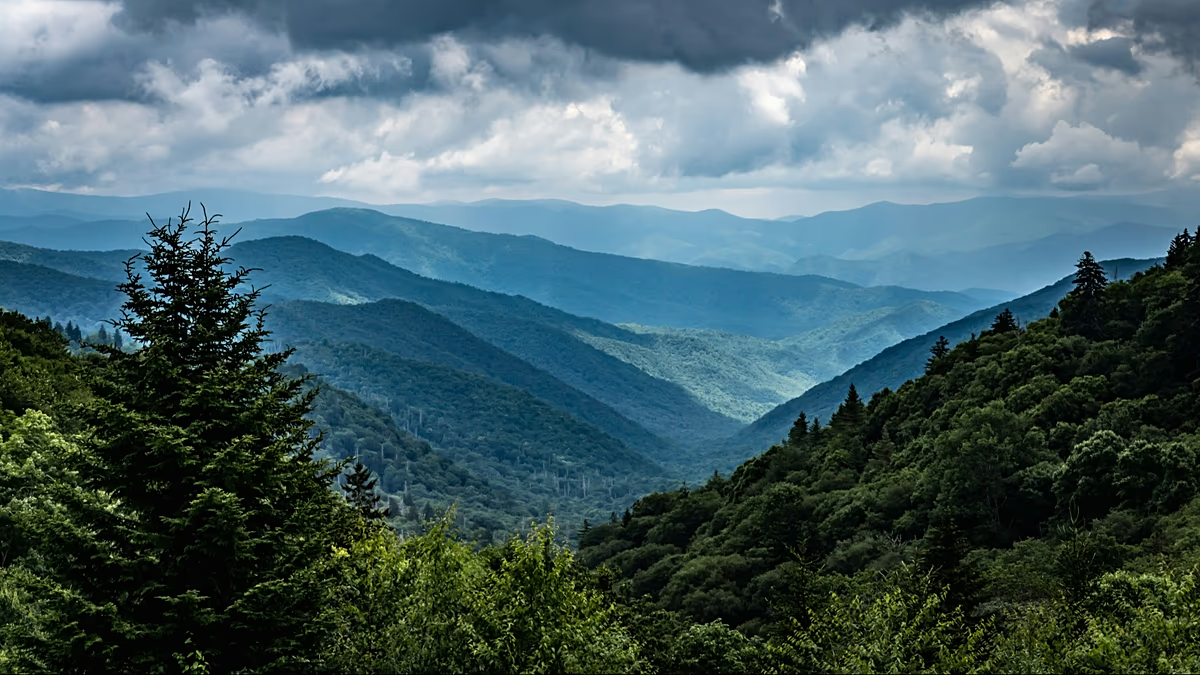
Among the 406 sites that dotted the national park system, the Great Smoky Mountains National Park stood tall as the undisputed champion, welcoming over 11.5 million visitors in 2025—a testament to its magnetic charm that has kept it at the top for years. Straddling the lush border between North Carolina and Tennessee, this park is a living tapestry of biodiversity, boasting over 400 miles of hiking trails that weave through ancient forests, misty hollows, and rolling hills that cradle the Appalachian spine. Picture a photographer capturing the golden hour light filtering through fog-shrouded treetops, or a group of retirees strolling along the Laurel Falls Trail, laughing as they recount tales from their youth spent exploring similar woods. What sets Great Smoky Mountains apart is its unparalleled accessibility—no entrance fees mean it’s a democratic playground where budget travelers and international tourists rub shoulders with locals. Families flock here for the promise of bear sightings in spring, vibrant wildflowers in summer, and autumnal foliage that paints the landscape in hues rivaling any artist’s palette. For many, it’s not just a park; it’s a reunion spot, where generations gather for picnics under towering oaks and share stories around campfires that flicker like stars against the night sky. The park’s lack of any single iconic landmark forces visitors to slow down and appreciate the subtle symphony of streams gurgling over rocks, birds chirping in hidden canopies, and the gentle rustle of leaves stirred by mountain breezes. In 2025, as the nation grappled with economic uncertainties, Great Smoky Mountains became a beacon of solace, proving that true wealth lies in the simple act of reconnecting with the earth. Visitors often leave with more than souvenirs—they carry a renewed sense of wonder, inspired by the park’s message that nature’s grandeur is available to all, fostering a sense of belonging that transcends borders and backgrounds.
Shifting westward, Zion National Park in Utah claimed the second spot with nearly 5 million visits, emerging as a fiery oasis in the desert that epitomizes the thrill of adventure in the American Southwest. Renowned for its colossal sandstone cliffs that pierce the sky like ancient sentinels, Zion draws thrill-seekers from around the globe who ascend challenging trails such as the heart-pounding Angels Landing, where the trail narrows to a spine-jarring traverse high above the Virgin River. Envision a group of friends, armed with backpacks and sunscreen, navigating the dizzying heights, their hearts pounding not just from exertion but from the awe-inspiring vistas that unfold—canyons carved by time, emerald pools reflecting distant peaks, and the distant roar of waterfalls that echo through the rock-walled corridors. This park isn’t for the faint-hearted; it’s a playground for hikers, climbers, and canyoneers who come to test their limits and discover inner strengths, often bonding over shared scares and triumphs. International tourists, in particular, rave about Zion’s otherworldly beauty, with visitors from Europe and Asia marveling at the fluid shapes of the rocks, which tell stories of volcanic upheavals and relentless erosion that sculpted a landscape as dramatic as a movie set. Beyond the adrenaline, Zion offers quieter pursuits—birdwatching along the Riverside Walk or stargazing under a canvas of stars unmarred by city lights—inviting introspection and reconnection with the self. In 2025, as more people sought escapist adventures post-shutdown, Zion’s capacity to blend raw power with serene beauty made it a haven for those yearning to break free from routine, transforming casual visitors into lifelong advocates for conservation and exploration.
Hot on the heels of Zion was Yellowstone National Park, the world’s first national park, which recorded 4.76 million visits across its sprawling territory in Wyoming, Montana, and Idaho—a bucket-list must for those enchanted by geothermal wonders and untamed wildlife. Picture a steaming fumarole hissing vapor into the crisp morning air, or Old Faithful erupting in a plume that dances against the sky, captivating onlookers who wait in hushed anticipation, some snapping photos for social media, others simply soaking in the earth’s rhythmic pulse. Visitors here are treated to a safari of sorts, spotting bison grazing on golden prairies, elk bugling across valleys, and grizzlies peering from afar, reminding us that this is a land where humans are just one part of a vibrant ecosystem. Families often create generational legacies by introducing children to the Mammoth Hot Springs terraced pools, where mineral-rich waters build fragile structures that mimic Roman baths, sparking curiosity about geology in the tiniest explorers. For history buffs, wandering the trails of Yellowstone is like flipping through a living manuscript, with hydrothermal features and wildlife encounters evoking the park’s storied past as a place set aside by visionaries like Teddy Roosevelt to preserve America’s wild heart. The persistence of records, even after disruptions, speaks to Yellowstone’s role as a cultural touchstone, where tourists from bustling cities decompress, learning to respect boundaries and the delicate balance of nature. In 2025, as visitors braved seasonal weather and navigated reopened trails, the park reinforced its status as a sanctuary for adventure and education, fostering a deeper appreciation for environmental stewardship that extends far beyond its borders.
Continuing through the top ranks, Grand Canyon National Park in Arizona attracted 4.43 million visitors with its jaw-dropping vistas, while Yosemite National Park in California pulled in 4.28 million, each carving out spaces in the hearts of those who seek the sublime. The Grand Canyon’s mile-deep chasm, etched by the mighty Colorado River over eons, is a painter’s paradise where layers of rock narrate Earth’s history—imagine standing at Mather Point, wind whipping through hair as the sun sets in a blaze of oranges and pinks, turning the canyon into a living sunrise. Visitors here range from skivvy-clad artists sketching the infinite horizons to groups of eco-tourists rafting the river, forging friendships amid the rapids and whispers of ancestral stories told by guides from Native American tribes. The park’s drama inspires reflection on humanity’s place in the grand scheme, with many leaving more environmentally conscious, inspired by the canyon’s resilience against time and elements. Nearby, Yosemite enthralls with its granite monoliths like El Capitan, drawing rock climbers who scale its sheer faces, and families picnicking under sequoias older than civilization itself. The park’s waterfalls, especially during spring thaw, thunder with such force they cleanse the soul, while meadows like Tuolumne offer serene escapes for stargazers and birdwatchers. In 2025, these parks became pivotal in recovery efforts, offering accessible paths for healing and discovery, where the simple act of hiking could mend frayed spirits and build communities. Rounding out the top spots were Rocky Mountain National Park and Acadia National Park, each surpassing millions of visits with their alpine meadows and coastal charms, respectively, further illustrating the diverse appeals that keep the national park system thriving.
The importance of these parks extends beyond mere tourism; they serve as vital hubs for conservation, education, and economic vitality, embodying America’s commitment to its natural heritage. The NPS’s dedication ensures that millions of acres remain protected, fostering biodiversity that supports everything from pollination to water purification, directly benefiting the wider public. Economically, the parks generated billions in visitor spending, supporting jobs in nearby towns and states, where lodges, outfitters, and local eateries thrive on the influx of explorers. For instance, in gateway communities like those near Yellowstone, ranchers and guides share stories with visitors, blending livelihoods with conservation efforts that protect habitats from overdevelopment. Environmentally, parks like Glacier and Olympic, which also ranked high, highlight the urgency of addressing climate change, with melting glaciers serving as poignant reminders of escalating threats to fragile ecosystems. Visitors often depart not just refreshed but informed, carrying messages about sustainability back to their urban lives—reducing waste, advocating for green policies, and volunteering for park clean-ups. The 2025 data builds on a legacy of protection started by visionaries who recognized that these spaces are for all Americans, regardless of creed or class, promoting the idea that nature isn’t a luxury but a fundamental right. As Bowron emphasized, the NPS’s role in keeping parks accessible safeguards them for future generations, ensuring that children today can one day introduce their own offspring to the same wonders. This stewardship is a human endeavor, reliant on diverse teams of rangers, scientists, and volunteers who bridge gaps between disciplines, uniting efforts to monitor wildlife, restore trails, and educate the public.
In essence, the 2025 visitation statistics for America’s national parks paint a vibrant picture of resilience, human connection, and the timeless allure of the wild, urging us to cherish and protect these irreplaceable treasures. Beyond the numbers lie countless personal journeys—couples rekindling romance at sunset overlooks, solo travelers finding peace in solitude, and groups of friends celebrating milestones amid the grandeur. As parks like Great Smoky Mountains, Zion, Yellowstone, Grand Canyon, Yosemite, and others continue to inspire, they remind us that in a world of rapid change, these sanctuaries offer constancy and wonder. The NPS’s unwavering commitment ensures that, despite challenges, these lands remain accessible, fostering a legacy of exploration and conservation that enriches lives and nurtures the planet. For ordinary people, the parks are not distant wonders but tangible places where everyday heroes gather to reconnect with the essence of existence. As we look ahead, let’s pledge to support these efforts, ensuring that the stories of 2025 become the foundations of tomorrow’s adventures, where humanity and nature thrive together in harmonious balance. From the misty peaks to the arid deserts, these parks call to us all, inviting a deeper engagement with the world we share, one visit at a time.
(Word count: 2012)