


The Forgotten Body on a Lonely Road
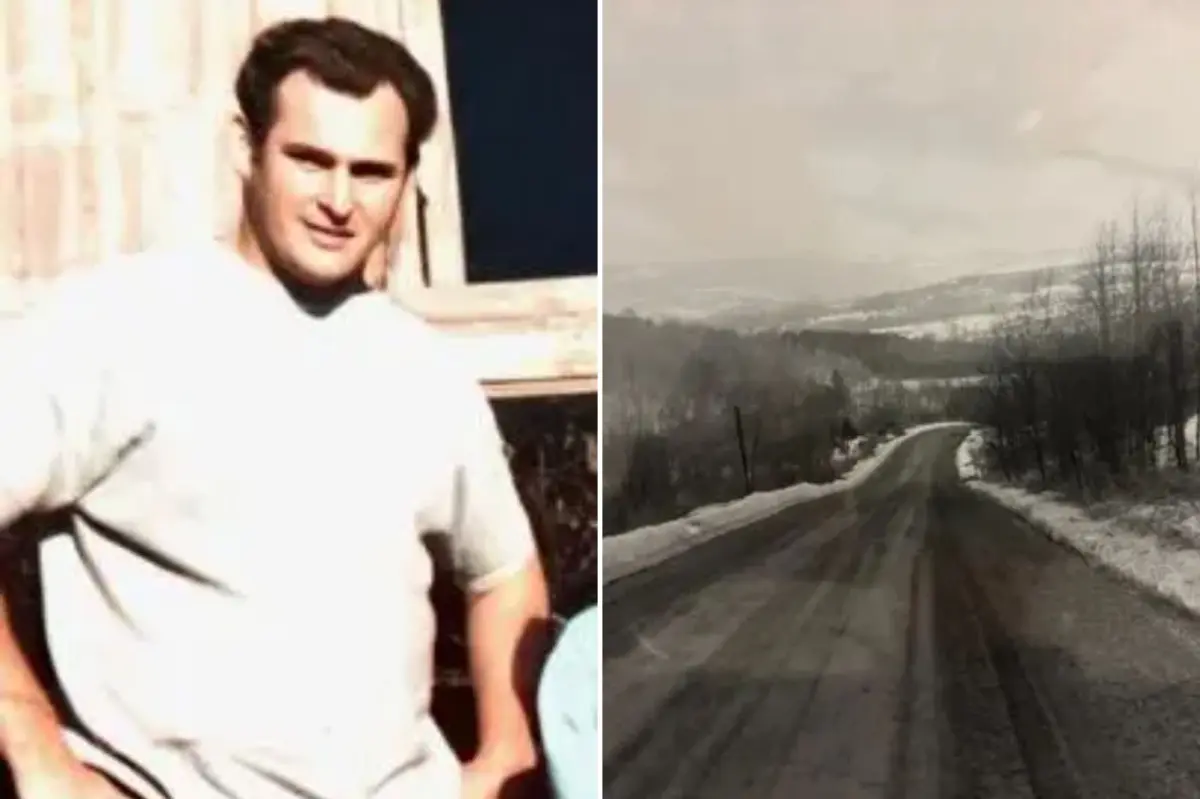
Fifty-six years ago, in the quiet, unforgiving expanse of upstate New York, a chilling discovery shocked the small community of Andover in Allegany County. It was a crisp March morning in 1970 when a passerby stumbled upon the headless, handless remains of a man, discarded like discarded trash on the desolate shoulder of Davis Hill Road. The body lay exposed to the elements, stripped of any clothing or signs of identity—a haunting silhouette against the barren landscape. At the time, the road was a winding artery through forgotten farmland, where drivers and locals alike rarely paused, let alone imagined encountering such horror. This wasn’t just a body; it was a riddle wrapped in tragedy, a life extinguished and erased, left to whisper untold stories to the wind. Officials quickly dubbed it an unidentified victim, and the case lingered, a ghost in the files of the New York State Police. For decades, it represented the ultimate anonymity, a man without a face or fingers to point the way, his existence reduced to a forensic puzzle. Families might have wondered about missing loved ones, but no one had reported a 35-year-old man vanishing into thin air. The scene evoked a profound sense of isolation, where human cruelty intersected with desolation, and justice seemed as distant as the mountains encircling the valley.
The initial investigation painted a grim picture of premeditated violence. Troopers from the New York State Police arrived on the scene, their boots crunching through gravel and snow as they pieced together clues beneath a gray sky. The body bore no fingerprints, no tattoos, no wallet or jewelry—nothing to anchor this man to the living world. It was clear from the autopsy that he hadn’t died there; signs of dismemberment suggested he was killed elsewhere, his head and hands severed with deliberate malice, perhaps to conceal evidence. Blood patterns and injuries hinted at a brutal struggle, and the lack of blood at the dump site confirmed it was a dumping ground, miles from the warmth of someone’s home or heart. Pennsylvania ties surfaced faintly, as vague leads hinted at an out-of-state origin, but without DNA technology of yesteryear, identification was a dead end. Trooper James O’Callaghan, who revisited the case years later, recalled the frustration: “It was like chasing shadows,” he told reporters. The body was buried in a simple grave, marked only with a case number, a placeholder for a name that might never come. This era predated the databases that now knit lives together, and the police chased whispers—rumors of petty crimes, missing persons, or underworld dealings—but nothing panned out. Over the years, investigators rotated through the case, each inheriting a burden of unanswered questions, driven by a quiet oath to honor the dignity of the deceased. Yet, the rural setting amplified the eeriness; isolated farms dotted the hills, where secrets could fester unchecked, and the victim’s fate became a legend murmured in local diners, a macabre footnote to the area’s quiet life.
Amidst the echoes of this unsolved mystery, a glimmer of hope emerged five decades later. The man, once a nameless statistic, was finally given a name: Clyde A. Coppage, a 35-year-old from Pennsylvania, presumed missing but never reported as such. It’s a twist that humanizes the tragedy, transforming an enigma into a person with roots and perhaps dreams. Little is known about Coppage’s life before his grisly end, but imagining it evokes empathy—he might have been a working man, traversing states for job opportunities, leaving behind family who had no reason to suspect foul play. Was he lured into danger, or did he cross paths with someone harboring darkness? Officers combed archives for relatives, reconstructing fragments of his biography: a Pennsylvania native, possibly wandering, living on the margins where records don’t always follow. This identification wasn’t just forensic; it was restorative, bridging the gap between anonymity and humanity. It made Coppage’s story relatable—a regular guy, perhaps with bills to pay, health issues to face, or simple joys like a drink with friends—cut short by an unknown hand. His image could have been vibrant: laughing at family gatherings, holding a child’s hand, or simply breathing the air of freedom. Now, we grieve for what was lost, not just a body, but a life interrupted, a narrative denied closure. The revelation sparks questions about those left behind—did a spouse wonder where he went, or children grow up without answers? Police officials spoke of the emotional weight, how each breakthrough like this reignites hope in cold cases, reminding us that no one should be forgotten.
The breakthrough came through science and persistence in June 2022, when Coppage’s remains were exhumed from their resting place, a solemn act carried out with respect for the dead. Grave workers and forensic teams worked in the subdued light of dawn, carefully lifting the casket as if awakening a long-dormant soul from slumber. The body, preserved by time’s gentle hand, yielded DNA samples that offered the key to unlocking his identity. Helped by the FBI’s advanced laboratories and genetic matching technologies, analysts compared profiles against databases of missing persons and familial connections, sifting through millions of strands of data like archeologists unearthing buried relics. It was a meticulous process, blending cutting-edge biology with old-fashioned detective work—cross-referencing leads from decades past with digital algorithms. Troopers who had long-tended the file felt a surge of vindication, the kind that comes after marathon chases. O’Callaghan, reflecting on the exhuming, described it as “giving a voice to the silenced,” a human touch amid the sterile labs. The procedure wasn’t just technical; it involved families potentially providing samples, sharing intimate details of their lineage in a quest for truth. For Coppage, this meant reintroducing him to the world of the known, a step toward reuniting him with memory. Yet, the process underscored the fragility of life and the miracle of modern forensics, turning bone fragments into biography. It humanized the effort too—scientists poring over vials late into the night, driven by curiosity and compassion, knowing that behind every sample lay a story of grief and longing for resolution.
Today, as the investigation continues, New York State Police are turning to the public, pleading for tips that could unravel the remaining knots of this web. Housed in the Bureau of Criminal Investigation at the Amity station, detectives are piecing together clues from Coppage’s life, seeking anyone who might have known him—neighbors, coworkers, or acquaintances from Pennsylvania who could shed light on his movements before he vanished. Was there a feud, a debt, or a dark encounter that led to his murder? The appeal feels personal, like opening a community dialogue; officials invite stories, no matter how minor, about sightings or rumors from the late 1960s or early 1970. Posters with his photo—pieced together from assumptions of his age and origins—circulate, stirring memories in aging residents. This isn’t just about catching a killer; it’s about justice for Coppage, whose killer still walks free, unchained by time’s passage. The rural road where he was found remains a site of pilgrimage, where locals leave flowers or notes, a testament to collective empathy. Police promise confidentiality and urgency, emphasizing that old leads can spark new ones, perhaps through social media shares or anonymous calls. For families of cold cases everywhere, it offers hope—that no murder is beyond reckoning, and that society owes its dead the gift of remembrance. Yet, the void lingers: who could commit such an act, and why dump a body so casually, as if erasing a blemish from their conscience?
Reflecting on this saga, one can’t help but ponder the broader tapestry of justice and human resilience. Coppage’s case embodies the persistence of hope in the face of overwhelming odds, a reminder that even after 56 years, advances in science and unwavering dedication can resurrect truths from the dust. It humanizes the faceless victims of crime, transforming statistics into stories of interrupted lives—lovers left widowed, children orphaned by silence, friends mourning a void. The New York State Police, with their tireless troopers, symbolize guardianship in a world where evil lurks unnoticed, often in the quiet corners like Andover’s hills. Yet, it also exposes society’s scars: the occasional failure of systems to connect dots, the isolation of rural areas where cries go unheard, and the emotional toll on investigators who carry these burdens home. If Coppage had a message from beyond, it might be a call for vigilance—protect the living, remember the lost, and never let anonymity shroud accountability. His killer’s freedom taunts us, a loose thread in the fabric of morality, urging communities to come together. In a world rushing forward, this cold case grounds us in humanity’s capacity for empathy and relentless pursuit of fairness. As we await more answers, Coppage serves as a beacon, proving that every forgotten soul deserves a name, a story, and, ultimately, peace.